Hear from Our Customers
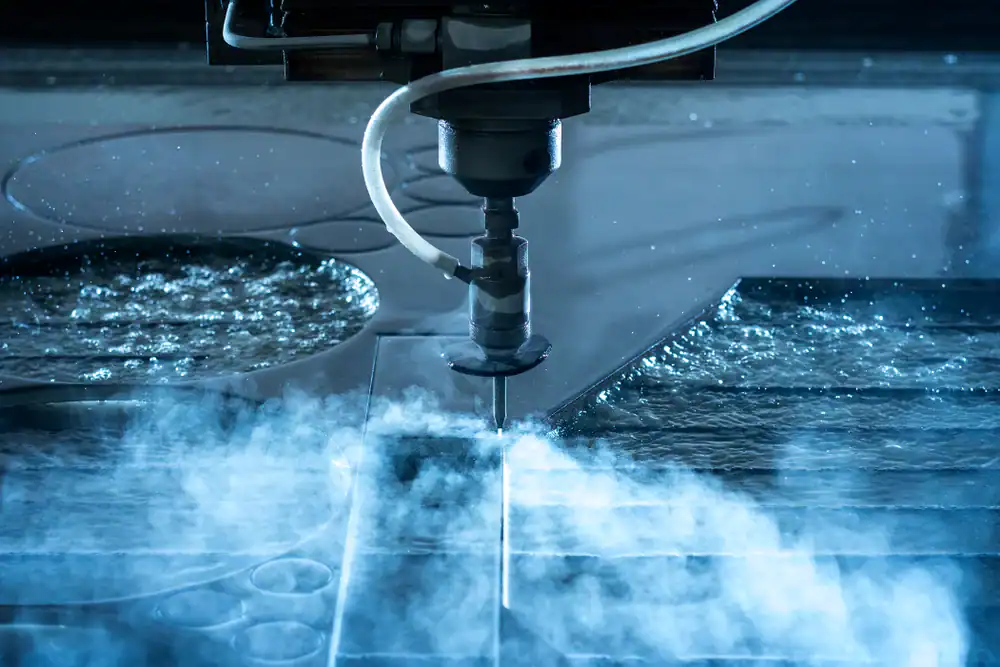
You get parts cut to exact specs without the thermal damage that comes from lasers or plasma. No warping. No microscopic cracks. No heat-affected zones that compromise your material integrity down the line.
Our waterjet cutting services in Hauppauge handle everything from 6-inch steel plate to delicate glass and composites. The abrasive waterjet cutting process leaves edges so clean you can often skip deburring entirely, which means faster turnaround and lower costs on your end.
If you’re working with materials that can’t tolerate heat, or you need complex shapes with tight tolerances, this is how you get it done. The cut quality is there. The dimensional accuracy is there. And you’re not adding extra steps to fix problems that other cutting methods create.
We serve the 3,600+ manufacturing companies across Long Island, and we understand what you’re up against. Skilled labor is hard to find. Equipment downtime costs you money. And precision isn’t negotiable when you’re supplying aerospace, medical, or automotive clients.
We’ve built our operation around the realities of manufacturing in this region. You need fast quotes, realistic lead times, and someone who understands your material challenges without a long explanation. That’s what we do, and we do it consistently for architects, designers, contractors, and fabricators who can’t afford rework or delays.
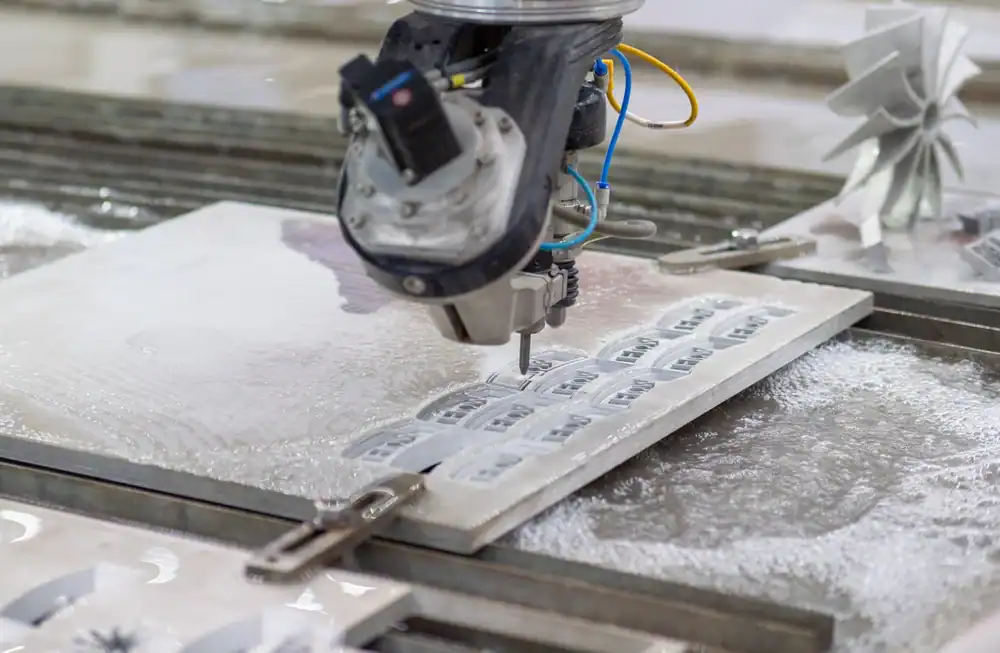
You send us your design file or specs. We review it for manufacturability and flag any potential issues before we start cutting. If your tolerances are tight or your material is tricky, we’ll tell you up front what’s realistic.
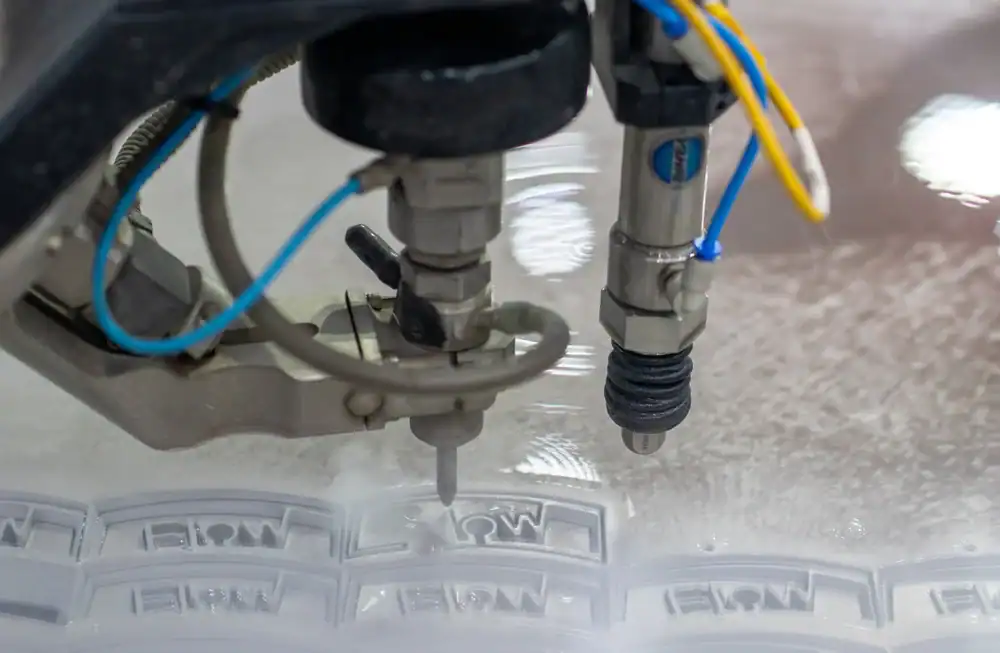
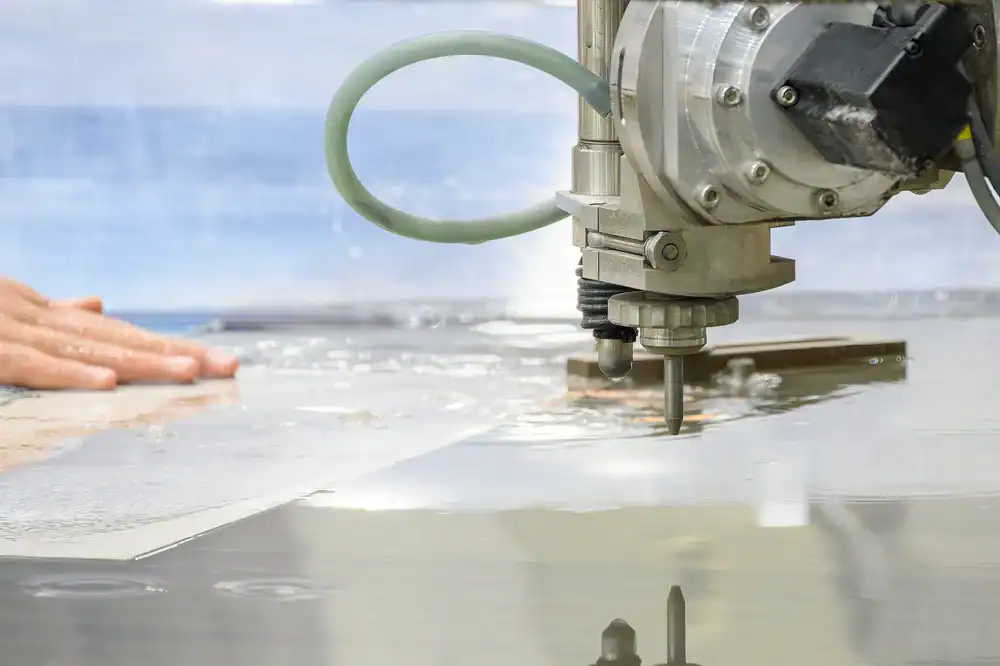
Once we’re aligned, we program the CNC waterjet system with your exact dimensions. High-pressure water mixed with abrasive garnet cuts through your material at up to 60,000 PSI. The stream is thinner than a human hair but powerful enough to slice through 6 inches of steel or 12 inches of softer materials like foam and rubber.
Because there’s no heat involved, your material properties stay intact. No hardening. No softening. No warping. You get the part you designed, not a close approximation that needs rework. Most projects move from file to finished part faster than traditional methods because you’re eliminating secondary operations.
Ready to get started?
You get material consultation before we cut. Not every material behaves the same under high-pressure water, and thickness matters. We’ll walk you through what works best for your application, whether that’s stainless steel, titanium, glass, stone, ceramics, plastics, or composites.
Custom waterjet cutting in Hauppauge means we handle short runs and high-volume orders. If you need one prototype or 500 production parts, the setup works the same way. You’re not paying for tooling or dies, which keeps costs down for smaller batches.
For Long Island manufacturers dealing with supply chain disruptions and aging equipment, waterjet cutting offers flexibility. You can test designs without committing to expensive tooling. You can cut materials that would destroy traditional blades or create hazardous fumes. And because the process is CNC-controlled, repeatability is built in. Part 500 matches part one.
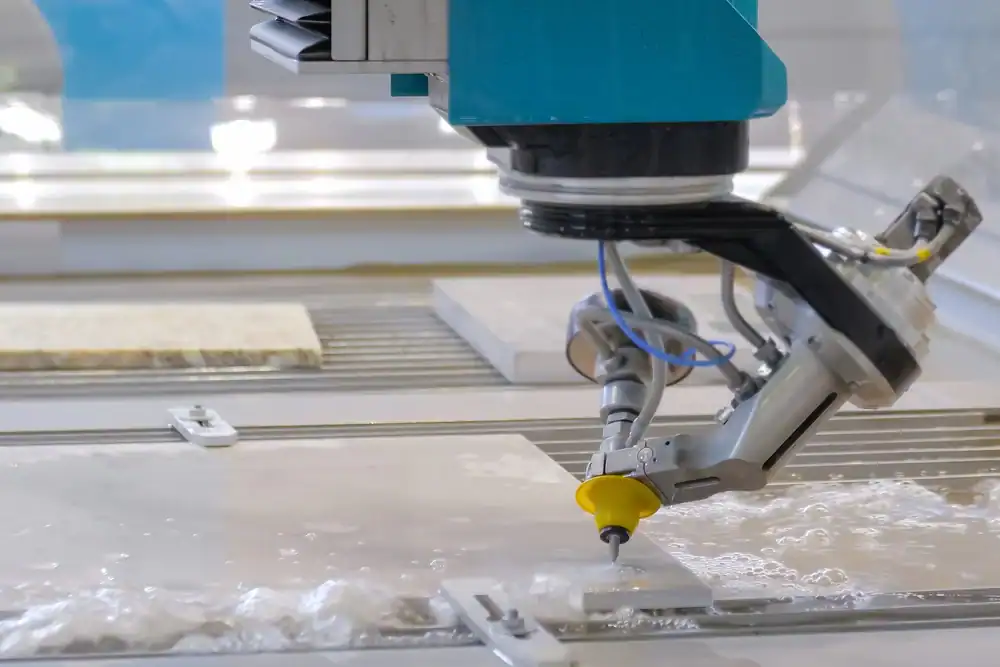
We cut virtually any material you’re working with. Metals like steel, aluminum, titanium, brass, and copper. Hard materials like glass, stone, granite, marble, and ceramics. Composites, plastics, rubber, foam, and gasket materials.
The process works because it’s mechanical, not thermal. There’s no melting, no burning, no chemical reaction. Water and abrasive garnet physically erode the material along your cut path, which means material hardness matters less than it does with other cutting methods.
Thickness capacity depends on the material. We can cut steel up to 6 inches thick. Softer materials like rubber or foam can go up to 12 inches or more. If you’re not sure whether your material or thickness will work, send us the specs and we’ll give you a straight answer.
Waterjet cutting delivers tolerances down to ±0.003 inches on most materials, which is tighter than plasma and comparable to laser. The difference is that you get that accuracy without heat distortion.
Laser and plasma both create heat-affected zones. That heat can warp thin materials, change hardness properties, or create microcracks that lead to failure later. Waterjet cutting stays cold, so your material properties remain consistent from edge to edge.
For industries where precision is non-negotiable—aerospace, medical devices, automotive—waterjet is often the only method that meets both dimensional and material integrity requirements. You’re not just getting an accurate cut. You’re getting a part that performs the way your engineers designed it to perform.
Most of the time, no. Waterjet cutting produces clean, burr-free edges that are ready to use. You’re skipping deburring, grinding, and other secondary finishing operations that add time and cost.
The edge quality depends on your speed and abrasive settings. For roughing cuts where edge finish isn’t critical, we can run faster. For parts that need smooth edges or tight tolerances, we slow down and increase abrasive flow. Either way, you’re getting a better edge than you would from flame cutting, plasma, or even many laser applications.
If you do need a specific edge finish for aesthetic or functional reasons, we can discuss that up front. But for most manufacturing applications, the edge quality straight off the waterjet is good enough to move directly to assembly or coating.
Turnaround depends on material availability, complexity, and our current queue. Simple parts in common materials can often be done within a few days. More complex projects or specialty materials might take a week or two.
What speeds things up is sending us clean CAD files and being clear about your tolerances and finish requirements. If we have to redraw your design or guess at your specs, that adds time. If you send us a DXF or DWG file with dimensions and material callouts, we can quote it and schedule it faster.
For Hauppauge-area manufacturers dealing with tight deadlines, we prioritize communication. If your timeline is aggressive, tell us up front. We’ll let you know if it’s doable or what we’d need to make it happen. No surprises, no missed deadlines.
Yes, because there’s no tooling cost. With stamping, punching, or die-cutting, you’re paying for dies or molds before you cut a single part. Those costs only make sense when you’re spreading them across thousands of units.
Waterjet cutting is CNC-programmed. Setup cost is minimal, which makes it viable for prototypes, short runs, or one-off custom parts. If you need 10 parts to test a design before committing to high-volume production, waterjet lets you do that without a huge upfront investment.
For Long Island manufacturers, this flexibility matters. You’re not locked into large production runs to justify tooling costs. You can iterate designs, test materials, and respond to customer requests without the financial risk that comes with traditional manufacturing methods.
You choose waterjet when material integrity and precision both matter. If you’re cutting materials that can’t handle heat, waterjet is often your only option. If you need complex shapes with tight tolerances and minimal waste, waterjet delivers.
The process doesn’t create hazardous fumes, doesn’t harden or soften your material, and doesn’t require expensive consumables like laser cutting does. You’re getting environmentally friendly technology that produces less waste and fewer emissions than thermal cutting methods.
For manufacturers in Hauppauge competing in aerospace, medical, automotive, or custom fabrication markets, waterjet cutting gives you the quality and flexibility you need to meet spec without rework. You’re not compromising on precision to save time, and you’re not adding secondary operations to fix heat damage. You’re getting it right the first time.
Useful Links
Other Services we provide in Hauppauge