Hear from Our Customers
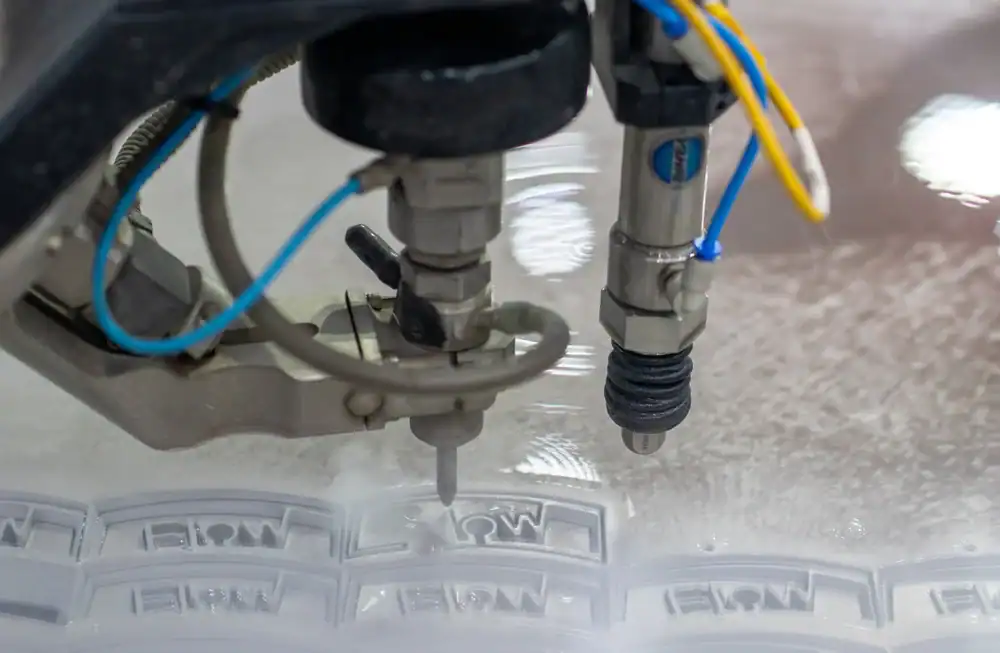
You need parts that match your specs without the headaches of warping, rough edges, or secondary finishing work eating into your timeline. Our waterjet cutting services in Islip, NY give you that precision because there’s no heat involved—just high pressure water cutting through your material cleanly.
Our Flow Mach 500 CNC system reads directly from your CAD files. That means what you design is what you get, down to tight tolerances that other cutting methods can’t hold consistently. No guessing. No rework.
Whether you’re working with metals for aerospace components, stone for architectural projects, or composites that can’t handle thermal stress, the process stays the same: accurate, clean, and fast. You get parts ready to use, not parts that need more work before they’re functional.
We operate out of West Islip, right in the middle of Long Island’s manufacturing corridor. That’s not by accident. This area has over 4,000 acres zoned for industrial use, with aerospace companies, precision manufacturers, and fabrication shops that need reliable cutting services.
We’re here because you’re here. The aerospace and defense industries on Long Island process some of the most demanding materials in the country—hi-temp alloys, nickel composites, materials that don’t forgive sloppy work. Our custom waterjet cutting in Islip, NY handles those materials without introducing heat or surface stress that compromises integrity.
You’ll work with people who understand CAD files, material properties, and what happens when a design moves from screen to shop floor. No learning curve. No explaining the basics.
You send over your CAD file or design specs. If you’re still working through the design, that’s fine too—we can help translate your concept into a production-ready plan using computer-aided design tools. You’re not on your own figuring out what’s possible.
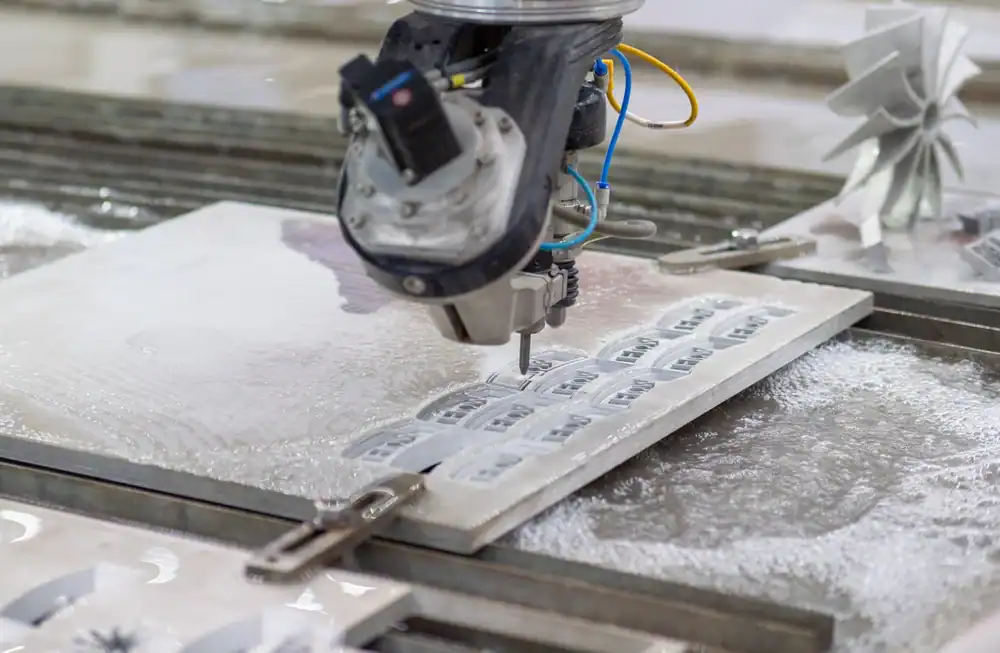
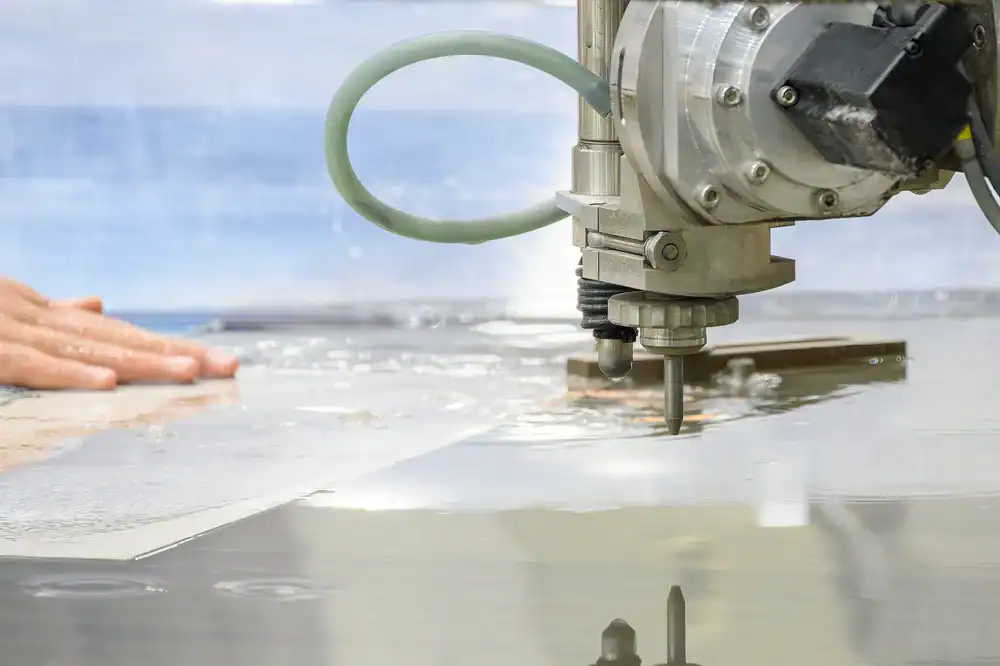
Once the design is locked, it goes straight into our Flow Mach 500 CNC system. The cutting head uses a high-pressure stream of water mixed with abrasive garnet to cut through your material. No blades wearing down. No heat zones affecting the edges. Just water and abrasive doing the work with precision you can measure.
The system follows your design exactly, handling intricate shapes and tight inside corners that would break or chip with other methods. You get parts with clean edges, minimal kerf, and no need for secondary grinding or finishing unless your application specifically requires it. Most of the time, what comes off the table is ready to go.
Ready to get started?
Our waterjet cutting in Islip, NY handles materials other processes can’t touch without damaging them. Metals, stone, glass, plastics, composites—if you can draw it, we can cut it. The abrasive waterjet cutting process doesn’t care about hardness or thickness within reason. It just cuts.
You also get material efficiency. Minimal kerf width means less waste, which matters when you’re working with expensive raw materials. Long Island’s aerospace sector knows this well—when you’re cutting nickel alloys or titanium, every inch of scrap costs real money. Better material utilization keeps your project costs down.
The local manufacturing environment here demands quick turnarounds without sacrificing quality. Production runs and one-off prototypes both get the same level of precision because the CNC system doesn’t need retooling between jobs. You’re not waiting for setup changes or dealing with minimum order quantities that don’t match your actual needs.
And because there’s no heat-affected zone, your materials keep their original properties. No warping. No hardening along the cut line. No brittleness from thermal stress. For contractors and architects working on custom installations, that consistency matters when pieces need to fit together perfectly on site.
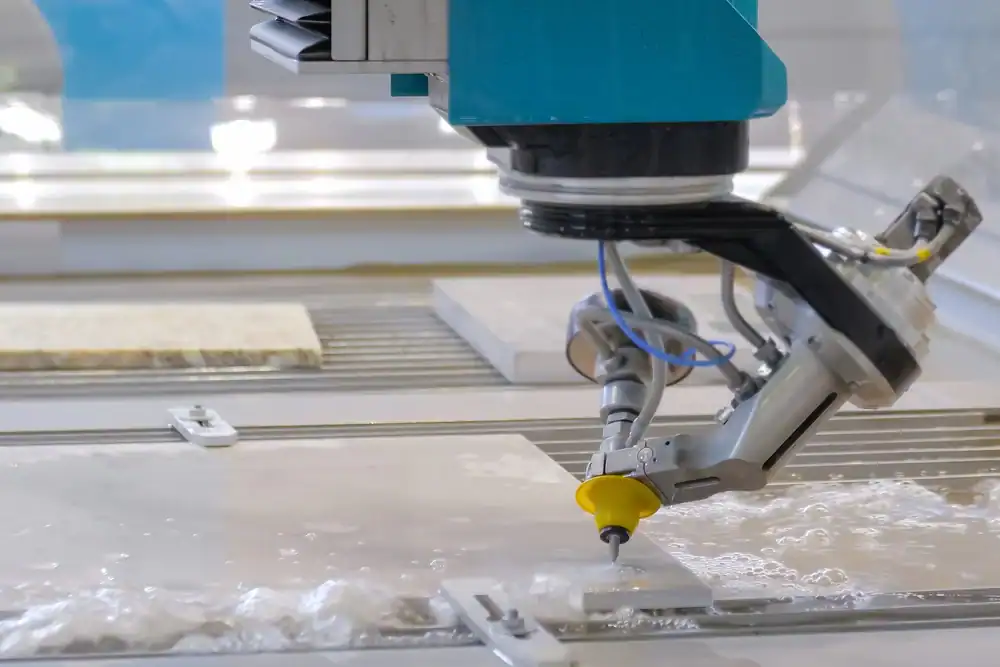
Waterjet cutting works on pretty much anything because it’s a cold cutting process. There’s no heat, so materials that would warp, melt, or change properties under thermal cutting stay intact. That includes metals like aluminum, steel, stainless, titanium, and nickel alloys common in aerospace work. It also cuts stone, glass, ceramics, plastics, rubber, foam, and composites without cracking or delaminating.
The reason this matters for your project is versatility. If you’re combining different materials in one design—say, metal brackets with glass panels or composite parts with rubber gaskets—you can use the same cutting process for all of them. No switching between different shops or methods.
Thickness isn’t usually a limiting factor either, at least not for most applications. The high pressure water cutting process can handle several inches of material depth, though cutting speed slows down as thickness increases. For the typical parts used in manufacturing, construction, and custom fabrication around Islip, you’re well within the capability range.
The CNC control system reads your CAD file and translates it into precise cutting paths. Our Flow Mach 500 moves the cutting head along those paths with repeatable accuracy, so each part comes out the same as the last one. There’s no operator error from hand-guiding a tool, and no drift from blade wear since there’s no blade.
Complex shapes—tight radiuses, sharp inside corners, intricate curves—are where waterjet cutting really separates itself from mechanical methods. The water stream is thin, so it can navigate detailed patterns without the tool size limitations you’d face with a router bit or saw blade. You’re not simplifying your design to accommodate the cutting process. You design what you need, and the process handles it.
For aerospace and precision manufacturing work common in this area, holding tolerances isn’t optional. Parts either fit or they don’t. Our abrasive waterjet cutting process in Islip, NY delivers that consistency because the variables are controlled—water pressure, abrasive flow rate, cutting speed are all managed by the CNC program. You get the same result on part one and part one hundred.
Turnaround depends on complexity, material, thickness, and how many parts you need. A simple prototype cut from thin material might be same-day or next-day. A production run of intricate parts from thick stock will take longer. The advantage with CNC waterjet cutting is that there’s minimal setup time between different jobs.
Unlike processes that require custom tooling or extensive machine setup, waterjet cutting just needs your CAD file loaded into the system. That means smaller jobs don’t get stuck waiting behind larger ones, and rush projects can often be accommodated without completely disrupting the schedule.
For contractors working on installation deadlines or manufacturers with just-in-time production needs, knowing you can get parts cut quickly without sacrificing quality keeps projects moving. Our local presence here in West Islip also helps—you’re not shipping materials across the country and waiting for freight schedules. You can drop off material, review the design in person if needed, and pick up finished parts without the logistics headaches.
The edge quality from waterjet cutting is typically smooth enough to use as-is for most applications. You won’t see the rough, torn edges that come from plasma cutting or the burrs from mechanical sawing. The water and abrasive create a clean cut, and because there’s no heat, there’s no melted material re-solidifying along the edge.
That said, edge finish does vary slightly depending on material type, thickness, and cutting speed. Thicker materials or faster cutting speeds might show some texture on the bottom edge where the stream exits. For parts where that matters—precision mating surfaces, visible edges on architectural elements—you can specify slower cutting speeds for a finer finish, or plan for light deburring if your application requires it.
For the majority of work—brackets, panels, gaskets, custom shapes for construction or manufacturing—the edge quality straight off the waterjet is functional. You’re not adding time and cost for grinding, sanding, or secondary machining unless your specs specifically call for it. That’s one of the reasons our waterjet cutting services in Islip, NY work well for both prototype and production environments. Less secondary work means faster completion and lower total cost.
Cost depends on what you’re comparing and what your project actually needs. For materials that can’t handle heat, waterjet cutting might be your only option that doesn’t damage the part, so cost comparison becomes irrelevant. For materials where you have options—like mild steel or aluminum—waterjet typically costs more per cut than plasma or laser, but saves money by eliminating secondary operations.
Here’s what that looks like in practice: plasma cutting is fast and cheap per linear inch, but it leaves rough edges, creates a heat-affected zone, and can warp thin materials. You’ll spend time and money grinding edges smooth and possibly dealing with distortion. Laser is precise but struggles with reflective materials and thicker stock. Waterjet handles all of it without those issues, so your part is done when it comes off the table.
Material utilization also factors into real cost. The thin kerf from high pressure water cutting means less waste, which adds up when you’re working with expensive materials common in aerospace and precision manufacturing. And because the CNC system cuts complex nesting patterns efficiently, you get more parts per sheet. For our custom waterjet cutting in Islip, NY, you’re paying for precision and versatility that keeps your total project cost down even if the per-cut price looks higher on paper.
Yes, our Flow Mach 500 CNC system runs directly from CAD files. If you’re working in AutoCAD, SolidWorks, or any standard CAD format, you can send that file over and it translates straight into the cutting program. No manual re-drawing or interpretation errors. What you designed is what gets cut.
If you’re earlier in the design process—maybe you have sketches, measurements, or just a concept—that works too. We can take your input and create the CAD file needed for production. You’re not stuck if you don’t have finished technical drawings. This is especially useful for custom architectural work or one-off fabrication projects where you know what you need but haven’t formalized it into a CAD model yet.
The benefit of working from CAD files is accuracy and repeatability. Once the file is right, every part cut from it will be identical. If you need revisions, they happen in the file before cutting starts, not after you’ve already wasted material. For contractors, architects, and manufacturers around Islip working on projects where precision matters, that direct CAD-to-cut workflow eliminates a lot of the communication gaps and errors that happen when designs get translated multiple times between different people and processes.
Useful Links
Other Services we provide in Islip