Hear from Our Customers
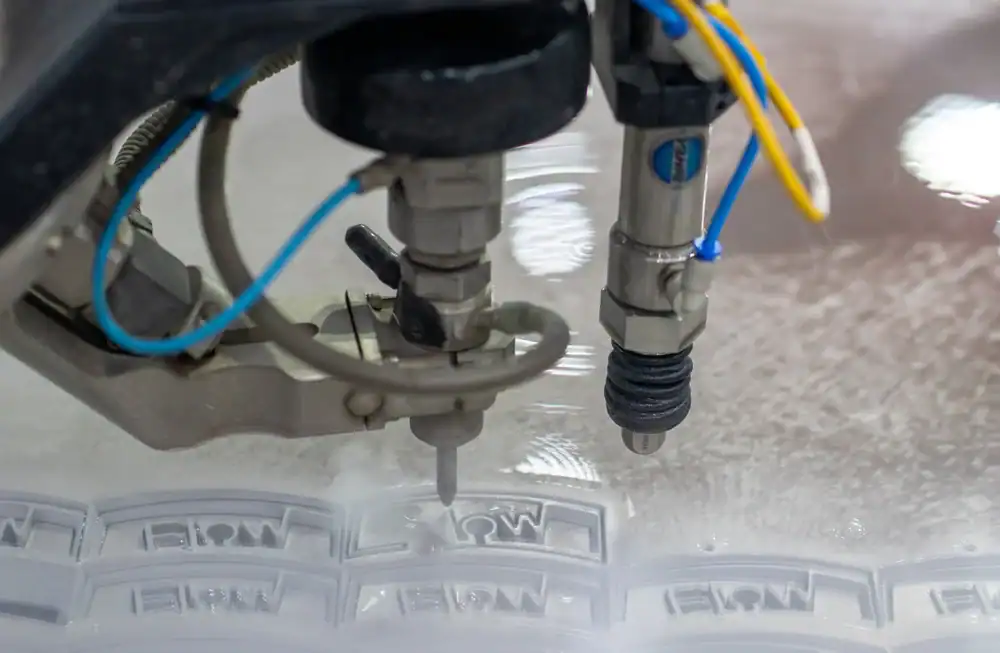
You’re not looking for close enough. You need parts that fit, edges that don’t need rework, and materials that maintain their properties after cutting.
That’s what high pressure water cutting does. No heat-affected zones that create microscopic cracks. No warping from thermal stress. No secondary grinding or deburring that eats into your timeline and budget.
You send us your file, we cut it to +/- 0.001″ accuracy, and you get back parts ready to use. Whether you’re working with aluminum, stainless steel, titanium, composites, glass, or stone, the process stays cold and the edges come out smooth. Most jobs turn around in 2-3 business days, so you’re not waiting weeks for precision work.
We’ve been serving manufacturers, architects, and fabricators throughout Lynbrook, NY and the surrounding tri-state area since the early 2000s. We’re owner-operated, which means when you call, you’re talking to people who actually run the machines and review your files.
Our shop uses state-of-the-art OMAX waterjet systems with Dynamic Waterjet technology. That’s not marketing talk—it’s active tolerance compensation that keeps cuts accurate even on complex geometries. Our design team reviews every file before it hits the cutting table, catching potential issues before they become expensive mistakes.
We’ve cut everything from architectural panels for Manhattan projects to aerospace prototypes requiring tight tolerances. Lynbrook’s mix of industrial shops and design firms means we understand both production runs and one-off custom work.
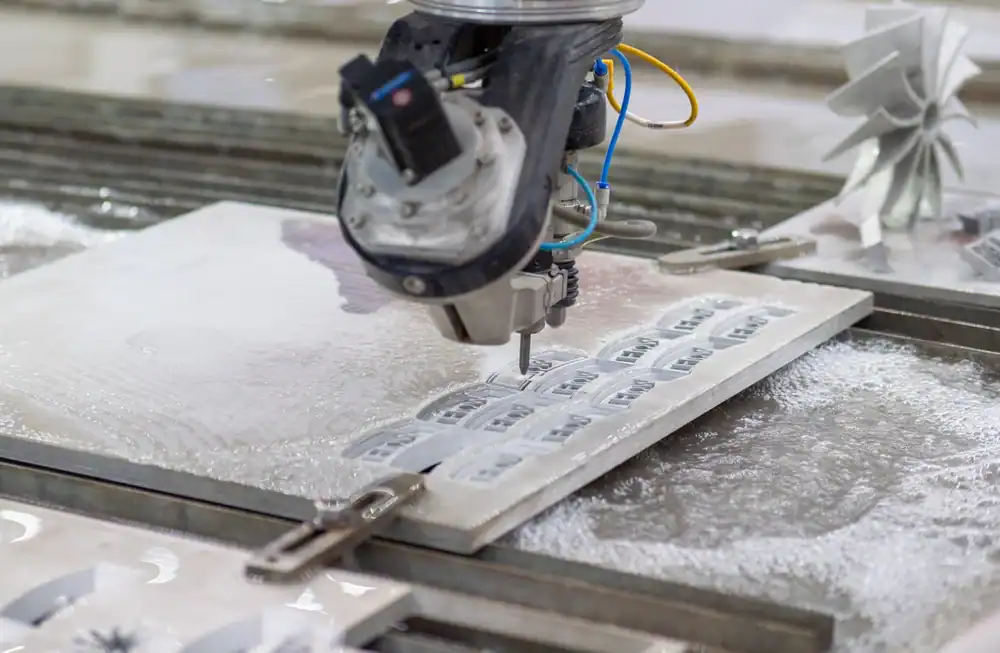
You start by sending us your design file. We accept DXF, DWG, STEP, IGES, and most common CAD formats. If you need help converting 3D models to 2D cut paths, our team handles that too.
Once we receive your file, our design team reviews it for manufacturability. We’re looking at kerf width, lead-ins, and any geometry that might cause issues during cutting. If something won’t work as drawn, we’ll call you before we start—not after we’ve already cut it wrong.
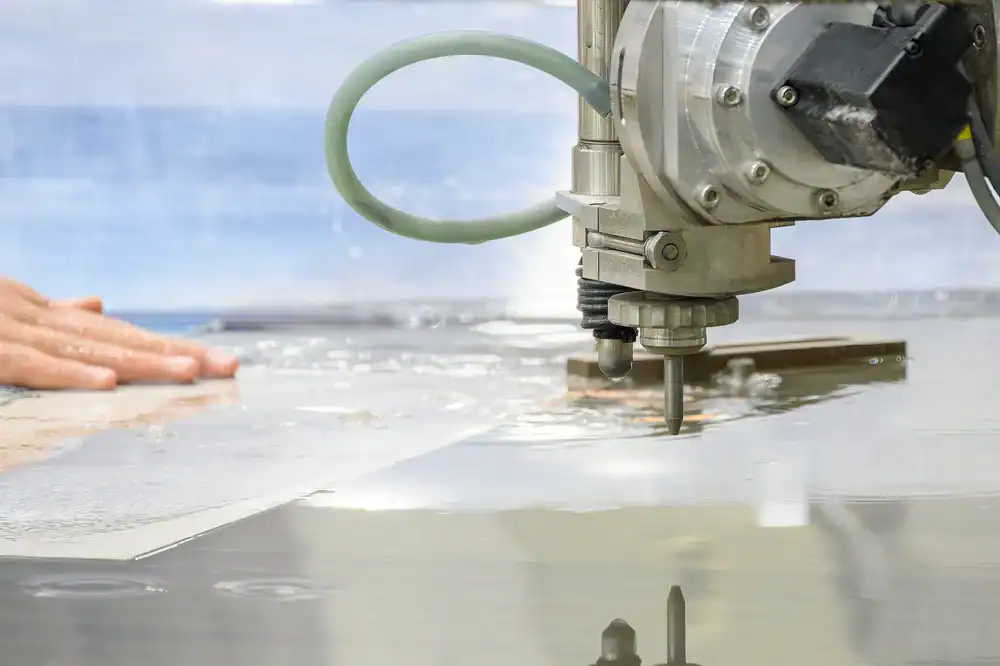
The actual cutting uses a stream of water pressurized to 60,000 PSI, mixed with garnet abrasive. The stream is thinner than a mechanical saw blade, which means less material waste and tighter nesting of parts. There’s no heat, so your material properties stay intact. No hardening, no softening, no thermal distortion.
After cutting, most parts come off the table ready to use. The edges are smooth and burr-free. If you need additional fabrication—bending, welding, finishing—we can handle that in-house or send you parts ready for your next operation.
Ready to get started?
You get cuts that hold +/- 0.001″ tolerances across the entire part. That level of accuracy matters when you’re building assemblies, creating architectural features, or producing components that need to meet spec without adjustment.
You get material versatility that other cutting methods can’t match. Metals up to 6″ thick. Glass and stone that would crack under thermal cutting. Composites and plastics that would melt or deform with heat. All cut with the same process, often in the same setup.
Long Island’s aerospace and marine industries have specific needs—corrosion-resistant alloys, tight tolerances, and clean edges that won’t initiate cracks. Our waterjet cutting services in Lynbrook, NY address those requirements without the limitations of laser or plasma cutting. You’re not choosing between speed and quality. The process delivers both.
You also get less waste. The narrow kerf means more parts per sheet. The cold cutting means no scrap from heat-damaged edges. For production runs or expensive materials, that adds up quickly.
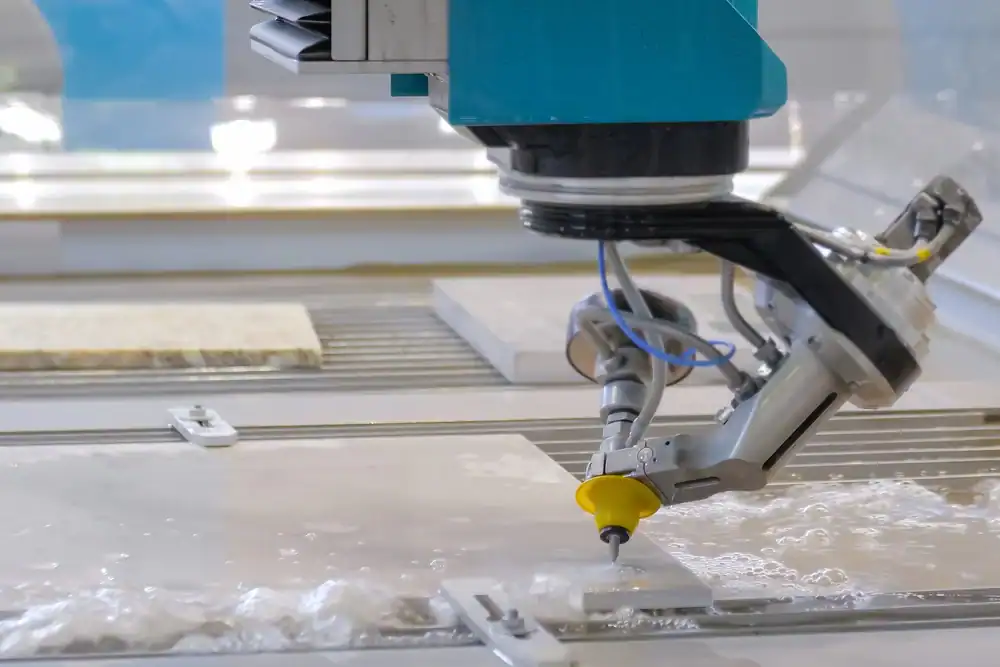
We cut virtually any material you need—metals, composites, glass, stone, and plastics. That includes aluminum, stainless steel, titanium, Inconel, carbon steel, brass, and copper in thicknesses up to 6 inches.
For non-metals, we handle tempered glass, granite, marble, quartz, carbon fiber, fiberglass, G10, Kevlar, acrylic, polycarbonate, and rubber. The process works because it’s mechanical cutting, not thermal. There’s no melting point to worry about and no material hardness that stops the cut.
The only materials we typically avoid are tempered glass (it shatters from internal stress) and certain ceramics that are too brittle. If you’re unsure about a specific material, send us the specs and we’ll tell you straight whether waterjet is the right process.
Our OMAX systems with Dynamic Waterjet technology hold tolerances of +/- 0.001 inch consistently. That’s one-thousandth of an inch, which is tighter than most mechanical cutting processes and comparable to CNC milling for 2D profiles.
The accuracy stays consistent because the system actively compensates for taper during cutting. Standard waterjet can produce a slight taper (wider at top, narrower at bottom) on thick materials. Dynamic Waterjet adjusts the cutting head angle in real-time to keep edges perpendicular and dimensions accurate through the entire thickness.
For context, aerospace components often require +/- 0.005″ tolerances. We’re cutting five times tighter than that. If your application needs even tighter tolerances or specific edge finish requirements, talk to us during quoting. We’ll tell you what’s achievable and what might need secondary operations.
No. That’s the main advantage over laser, plasma, or torch cutting. The water stream stays cold, so there’s no heat input into your material. No heat-affected zones, no hardening or softening, no oxide layers, and no thermal distortion.
This matters most when you’re cutting materials that are heat-sensitive or already heat-treated. Stainless steel won’t develop carbide precipitation. Aluminum won’t lose temper. Titanium won’t form alpha case. Composites and plastics won’t melt, char, or release fumes.
For precision parts, eliminating thermal distortion means parts come off the table flat and to dimension. You’re not fighting warping or trying to fixture parts that moved during cutting. For assemblies, that means better fit and less time adjusting components to work together.
Most waterjet work gets completed in approximately 2-3 business days from file approval. That includes design review, programming, cutting, and quality check. Rush jobs can often be accommodated if you’re up against a deadline.
Turnaround depends on material availability, current shop load, and job complexity. Simple 2D profiles in common materials are faster than intricate patterns in specialty alloys. Thicker materials take longer to cut than thin sheets.
We’ll give you a realistic timeline when you request a quote. If your schedule is tight, let us know up front. We’ve handled plenty of last-minute aerospace prototypes and architectural deadlines. We’d rather know your actual needs than promise something we can’t deliver.
Waterjet cuts more materials, produces no heat-affected zones, and handles thicker stock than laser or plasma. Laser is faster on thin metals and produces slightly smoother edges on steel, but it can’t cut reflective materials like aluminum or copper effectively, and it creates heat that can warp thin parts.
Plasma is fast and economical for thick steel, but accuracy is limited to about +/- 0.030″ and edge quality requires grinding. The heat-affected zone can extend 0.125″ from the cut edge, which matters if you’re welding or need specific material properties.
Waterjet sits between them on speed but exceeds both on versatility and edge quality. You get smooth, square edges without secondary finishing. You can cut stacked materials or multiple parts in a single setup. And you’re not limited to conductive materials or worried about reflective surfaces. For precision work across diverse materials, waterjet is often the only process that meets all requirements.
Yes. We cut single prototypes and production runs regularly. The process works for both because there’s no hard tooling required. Your CAD file is the “tool,” so design changes don’t mean expensive die modifications.
For prototypes, that flexibility matters. You can iterate designs quickly without committing to dedicated tooling. For small production runs—especially in aerospace where design evolution happens fast—waterjet makes sense economically.
For larger production runs, we evaluate whether waterjet is your most cost-effective option. Sometimes it is, especially for complex geometries or expensive materials where waste reduction matters. Sometimes stamping or laser makes more sense. We’ll tell you honestly which process fits your volume, timeline, and budget. We’d rather point you toward the right solution than sell you cutting that doesn’t make sense for your application.
Useful Links
Other Services we provide in Lynbrook