Hear from Our Customers
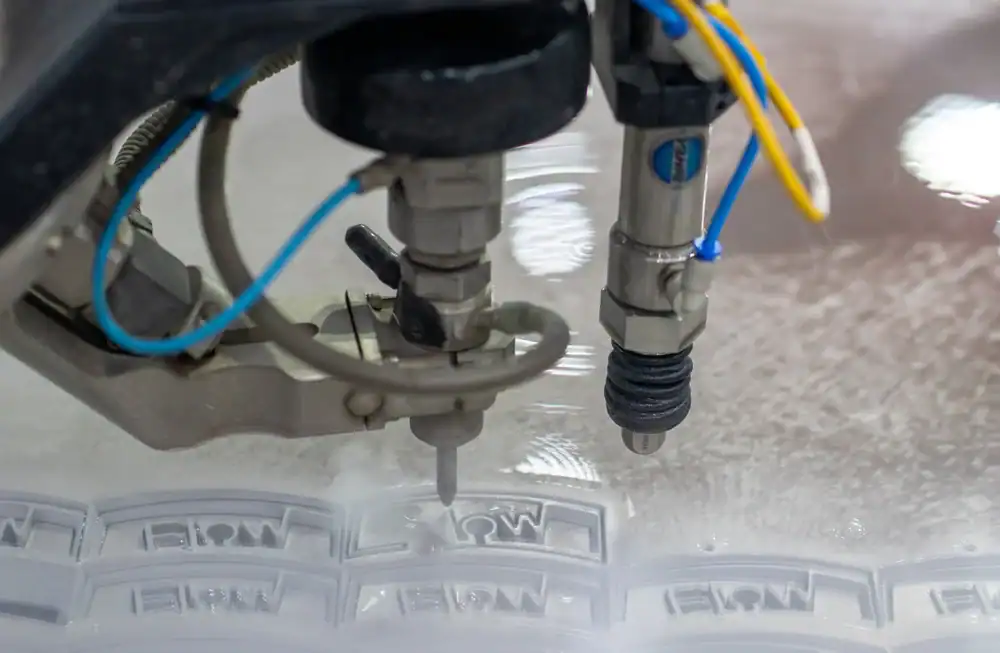
Your parts come back with tolerances of ±.005″ or better. No warping from heat. No secondary grinding to clean up burned edges. No material hardening that makes your job harder down the line.
Abrasive waterjet cutting handles stainless steel, aluminum, copper, brass, acrylic, carbon fiber, and wood with the same precision. The cut quality stays consistent whether you’re working with quarter-inch plate or two-inch thick material.
You’re also looking at faster project completion. The cutting process itself runs up to four times faster than conventional methods, and because the edge comes out clean, you skip the deburring and finishing steps that eat up time and labor costs.
We operate right here in the Long Island area, serving manufacturers, contractors, architects, and fabrication shops throughout Malverne, NY and surrounding communities. We’ve built our reputation on accuracy and turnaround time.
The region has one of the highest concentrations of manufacturing and fabrication businesses outside Silicon Valley, especially around the Hauppauge Innovation Park. That means you’re working in a competitive market where precision and speed matter.
We run CNC-controlled waterjet systems that handle complex geometries and tight tolerances without the limitations of traditional cutting methods. Your designs get executed as specified.
You send over your design files or specifications. We review the material type, thickness, and tolerance requirements to determine the right cutting parameters.
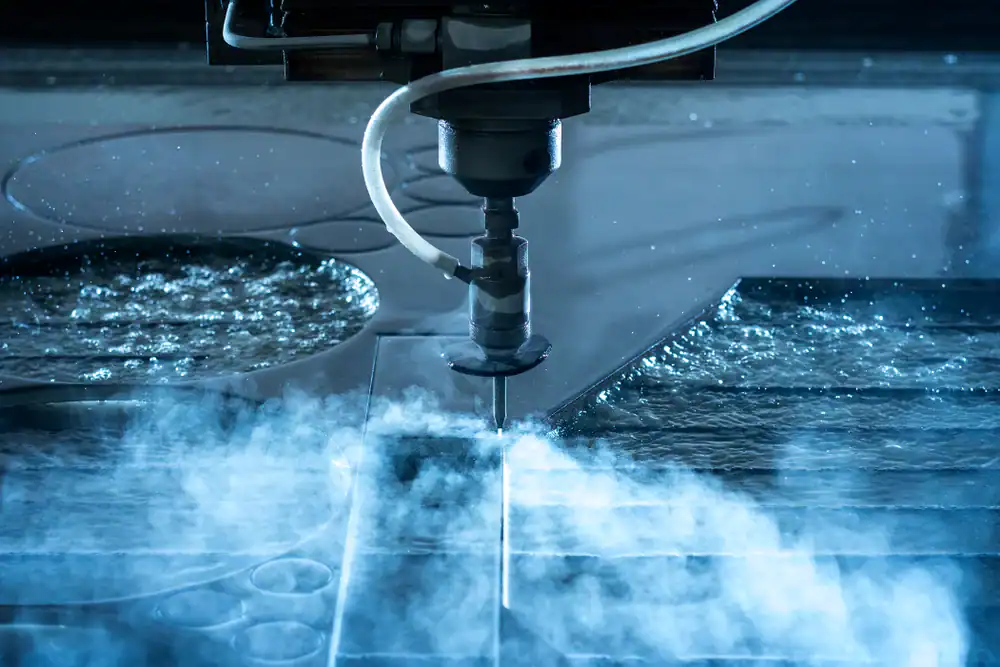
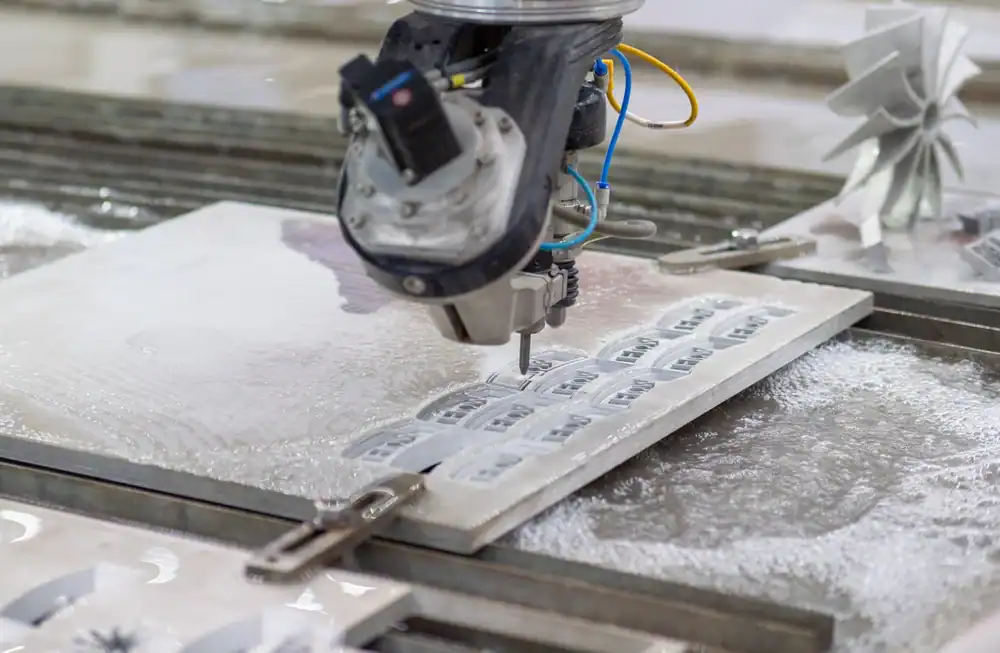
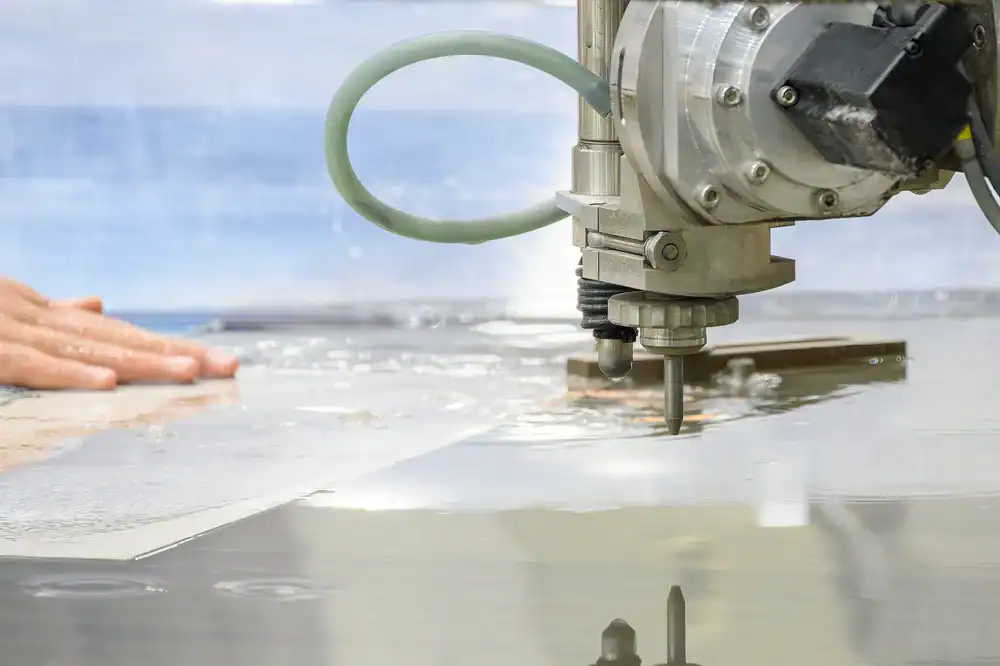
Our waterjet system uses a high-pressure pump to force water through a small nozzle at speeds up to three times the speed of sound. For harder materials, we add abrasive garnet to the stream. The CNC controls guide the cutting head along your programmed path with precision motion control.
Because there’s no heat involved, your material properties stay intact. No hardened edges. No thermal expansion. No warped parts that need rework. The kerf width stays minimal, so you get more parts per sheet and less waste.
Once cutting finishes, parts come off the table ready for assembly or installation. Most jobs don’t need additional finishing unless you’re looking for a specific surface treatment beyond the standard waterjet edge quality.
Ready to get started?
Our waterjet handles metals including stainless steel, aluminum plate, copper, brass, bronze, Hastelloy, and Inconel. It cuts plastics, composites, stone, ceramics, and wood without issue. Thickness capacity goes up to several inches depending on material density.
For manufacturers and fabricators in Malverne, NY, this means you can consolidate cutting operations instead of sending different materials to different shops. One process covers your steel brackets, aluminum panels, and acrylic components.
Tolerance capability sits at ±.005″ for most metals and ±.009″ for composites. Edge quality comes out smooth enough that many applications don’t require secondary finishing. That directly reduces your cost per part and speeds up production timelines.
The local manufacturing sector continues to adopt waterjet technology specifically because it reduces material waste by up to 30% compared to conventional cutting. With material costs climbing, that waste reduction translates to real savings on every job.
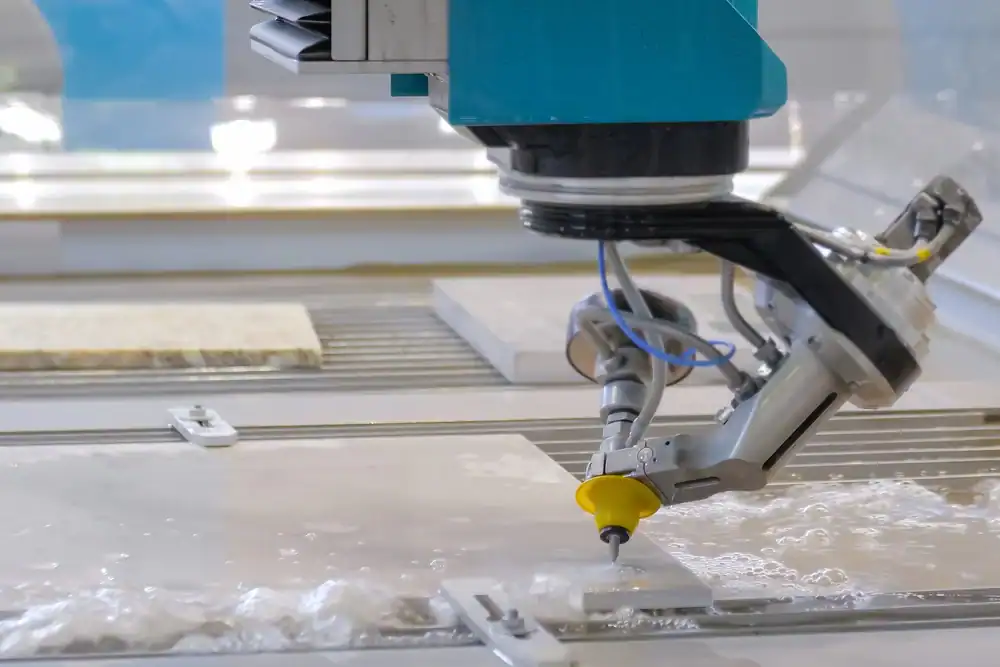
Waterjet cuts materials that would crack, melt, or deform under traditional cutting methods. That includes tempered glass, stone, thick rubber, composite laminates, and heat-sensitive plastics.
The process works because there’s zero heat-affected zone. Laser and plasma cutting both generate intense heat that changes material properties near the cut line. Metals can harden. Plastics melt and create rough edges. Composites delaminate.
With waterjet, the material temperature barely rises during cutting. You can cut acrylic without edge melting, carbon fiber without fraying, and hardened steel without creating a brittle heat-affected zone. For fabricators working with mixed materials or specialty alloys, this opens up design options that wouldn’t be practical with thermal cutting methods.
Laser works well for thinner metals and high-volume production runs with simple geometries. Waterjet handles thicker materials and eliminates heat distortion completely.
On material over one inch thick, waterjet maintains better edge quality and cutting speed than laser. There’s no dross formation on the bottom edge, no oxide layer to remove, and no thermal warping that throws parts out of tolerance.
The other consideration is material versatility. A laser system optimized for steel won’t cut aluminum or copper efficiently because of how those metals reflect the beam. Waterjet cuts all metals with the same process, so you’re not limited by material reflectivity or thermal conductivity. For shops in Malverne, NY handling diverse projects, that flexibility means fewer limitations on the jobs you can take.
Standard waterjet cutting delivers tolerances of ±.005″ on metals like aluminum, steel, stainless, brass, and copper. For composite materials including carbon fiber and fiberglass, expect ±.009″ or better.
Those numbers hold true across the full thickness range of the material. A two-inch steel plate gets the same tolerance capability as quarter-inch plate because the cutting mechanism doesn’t change with thickness.
The tolerance actually comes from the CNC motion control system and the cutting head mechanics, not the water stream itself. Modern waterjet systems use precision linear guides and servo motors that position the cutting head with repeatable accuracy. Some systems include taper compensation that angles the cutting head to offset the natural taper in the kerf, giving you truly vertical edges even on thicker materials. For precision work in manufacturing and architectural applications, this level of accuracy eliminates the need for post-cut machining on most parts.
Cutting time depends on material type, thickness, and total linear inches of cutting required. Abrasive waterjet typically cuts steel at 4-12 inches per minute depending on thickness.
A simple bracket cut from half-inch steel plate might take 10-15 minutes of actual cutting time. Complex parts with intricate interior cutouts take longer because of the total path length and the number of pierce points needed.
The bigger factor for most customers is total turnaround time from file submission to finished parts. Simple jobs with standard materials often ship within a few days. Complex projects or specialty materials may need a week or more depending on current shop capacity. For manufacturers in Malverne, NY working with project deadlines, getting clarity on turnaround during the quoting process helps you plan production schedules accurately. Rush service is typically available when you’re up against a tight deadline.
Waterjet cutting reduces material waste by up to 30% compared to traditional cutting methods. The kerf width runs between .030″ and .050″ depending on nozzle size, which is narrower than plasma or torch cutting.
That narrow kerf means you can nest parts closer together on the sheet. Better nesting efficiency translates directly to more parts per sheet and lower material costs per piece.
The process also doesn’t create the wide heat-affected zones that force you to space parts farther apart to avoid warping. There’s no scale or dross to account for in your nesting layout. For fabrication shops managing material costs, this efficiency matters especially when working with expensive alloys or specialty materials. The abrasive garnet used in the cutting process is recyclable and doesn’t create hazardous waste, so disposal costs stay minimal compared to cutting methods that generate metal fumes or require coolant management.
Waterjet excels at intricate cuts including tight radius corners, complex curves, and detailed interior cutouts. The cutting stream diameter typically measures .030″ to .040″, which determines the smallest inside radius possible.
For practical purposes, you can achieve inside corner radii as tight as .020″ in most materials. That’s sharp enough for detailed architectural metalwork, precision brackets, and decorative panels with fine detail.
The CNC programming handles complex geometries without tool changes or special fixturing. You can cut parts with dozens of interior holes, sharp corners, and curved edges in a single setup. For designers and architects working on custom projects in Malverne, NY, this means your CAD design translates directly to the finished part without compromise. The system follows your programmed path exactly, maintaining dimensional accuracy even through complex geometry changes and tight-tolerance features.
Useful Links
Other Services we provide in Malverne