Hear from Our Customers
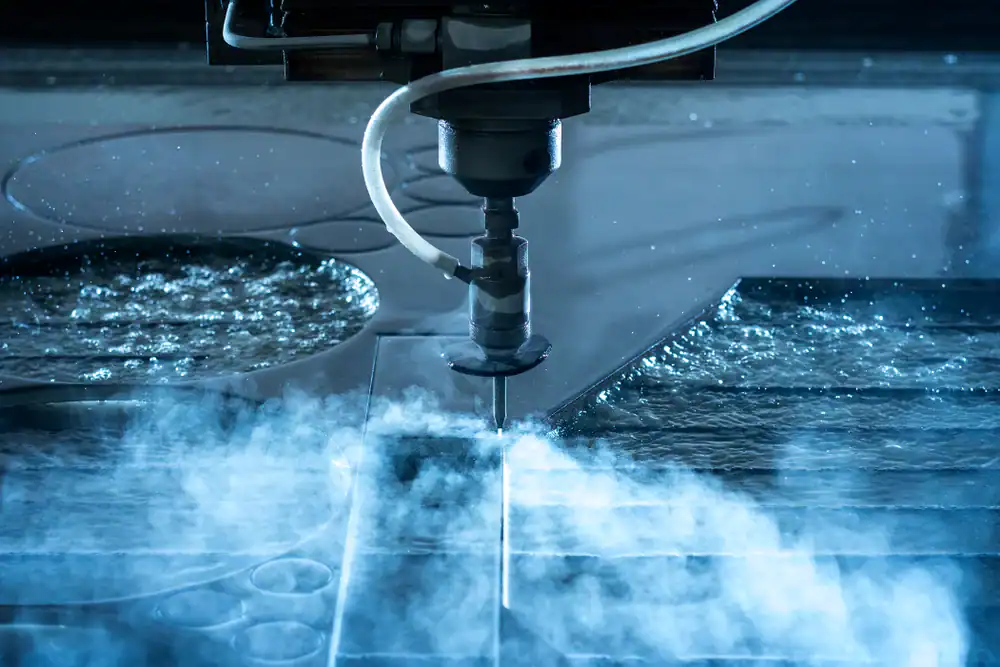
You’re working with materials that don’t forgive mistakes. Steel, glass, stone, titanium, composites—each one expensive, each cut permanent. Traditional cutting methods introduce heat. Heat warps metal, cracks stone, and changes material properties in ways that show up later as failures.
Our waterjet cutting in Manhasset, NY solves that problem with cold cutting technology. No torches, no blades generating friction, no thermal stress. Just pressurized water mixed with abrasive cutting through your material at tolerances down to ±0.003 inches. The edge comes out clean, burr-free, ready to install without secondary finishing that eats into your schedule.
Your CAD file goes in. Production-ready components come out. Intricate curves, tight inside corners, complex geometries—the kind of cuts that would require multiple setups and tool changes with conventional methods happen in one pass. That’s fewer touchpoints, less room for error, faster turnaround when your project’s already behind.
We work with architects, designers, and contractors across Manhasset, NY who need precision cutting they can count on. You’re not just ordering parts—you’re managing client expectations, coordinating trades, and keeping projects moving. One bad cut can cascade into delays, rework, and difficult conversations.
That’s why our process starts with understanding what you’re building, not just what you need cut. Material consultation matters when you’re working with unfamiliar substrates or pushing design boundaries. We’ve cut everything from decorative architectural panels to structural components that need to meet exact specifications.
Manhasset’s design and construction community demands quality that holds up under scrutiny. Your reputation depends on delivering work that looks right and performs as specified. So does ours.
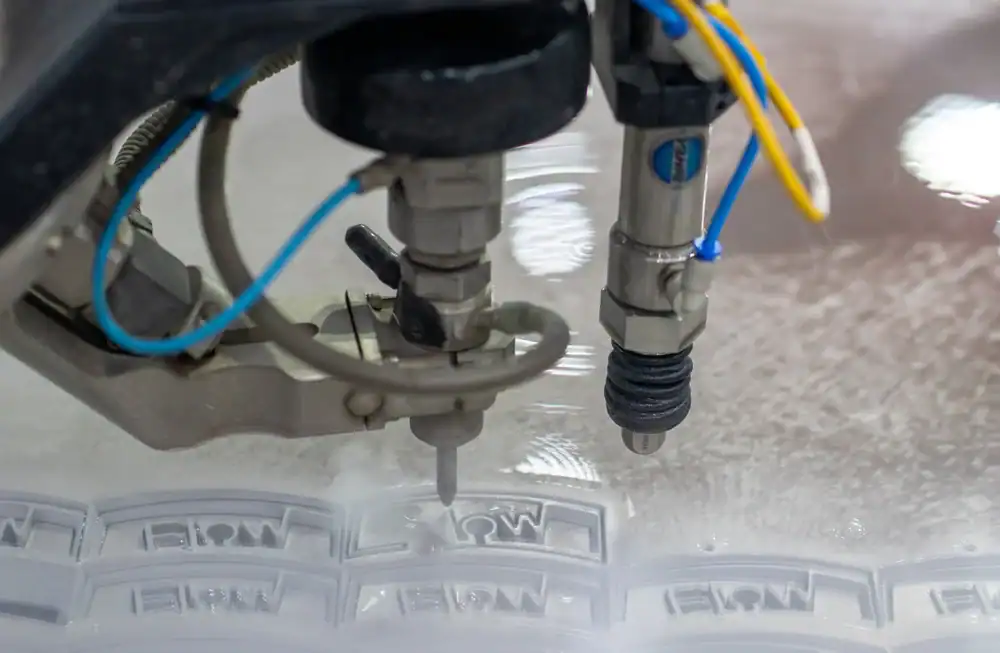
You send us your CAD file—DXF, DWG, or whatever format you’re working in. We review it for cuttability, flagging any potential issues before we start. Corners too tight for the kerf width, details that won’t hold structural integrity, tolerances that don’t match your material choice—better to catch these in the file review than after we’ve cut your material.
Next comes material selection and setup. If you’re supplying the material, we verify dimensions and quality before cutting. If we’re sourcing it, we make sure what arrives matches your specifications exactly. The material gets secured to the cutting bed, and we program the tool path. Feed rates adjust based on material type and thickness—softer materials cut faster, harder materials need slower, more controlled passes.
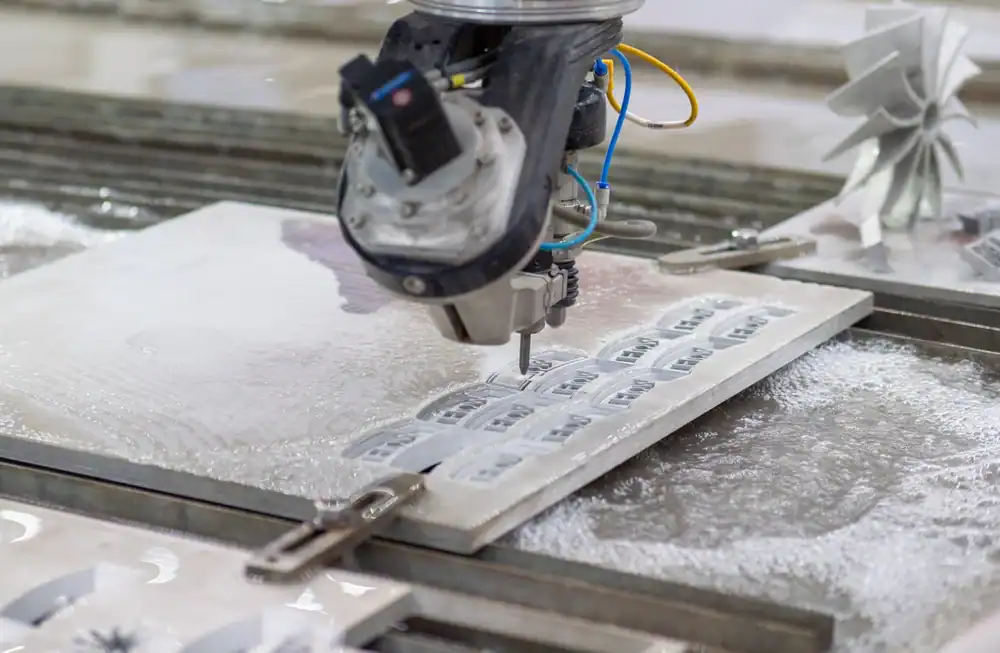
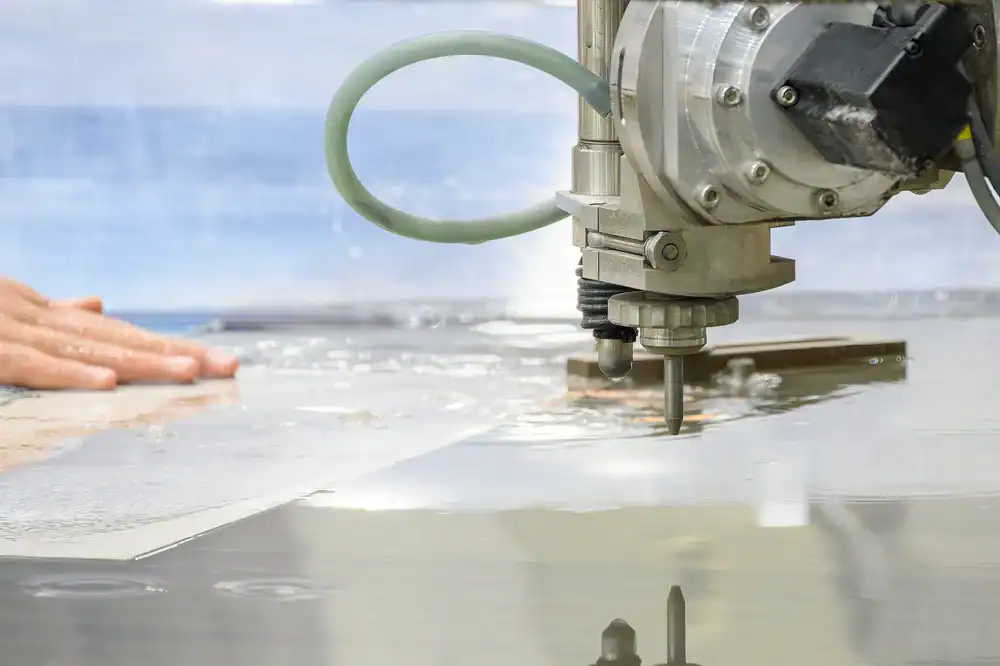
The cutting happens with water pressurized to 60,000 PSI mixed with garnet abrasive. The stream is thinner than a credit card but cuts through steel up to 6 inches thick. No heat means no distortion. No hardened edges that dull your tools during installation. No discoloration or warping that shows up after the fact.
You get parts that match your specifications, edges that don’t need grinding or finishing, and components that fit together the first time. That’s what custom waterjet cutting in Manhasset, NY should deliver every time.
Ready to get started?
Every waterjet cutting service we provide in Manhasset, NY includes material consultation before you commit to a cutting method. Some materials cut better with pure water, others need abrasive. Thickness, hardness, and your tolerance requirements all factor into the approach. You’re not expected to know the technical details—that’s our job.
Design review catches problems while they’re still fixable. We look at your file for manufacturability, not just whether we can cut it. A design might be technically cuttable but create weak points that fail under load or during installation. Better to adjust the design than discover the problem on site.
The Long Island manufacturing landscape has shifted toward precision fabrication. Architectural projects in Manhasset increasingly specify custom metalwork, stone inlays, and composite panels that require cutting accuracy traditional methods can’t match. Our waterjet cutting handles these materials without the heat-affected zones that compromise structural integrity or create visible defects in finished surfaces.
You also get versatility that eliminates the need for multiple vendors. One job might require stainless steel brackets, glass panels, and rubber gaskets. Our abrasive waterjet cutting in Manhasset, NY handles all three without changing equipment or setup. That’s fewer coordination headaches and faster project completion when you’re juggling multiple trades.
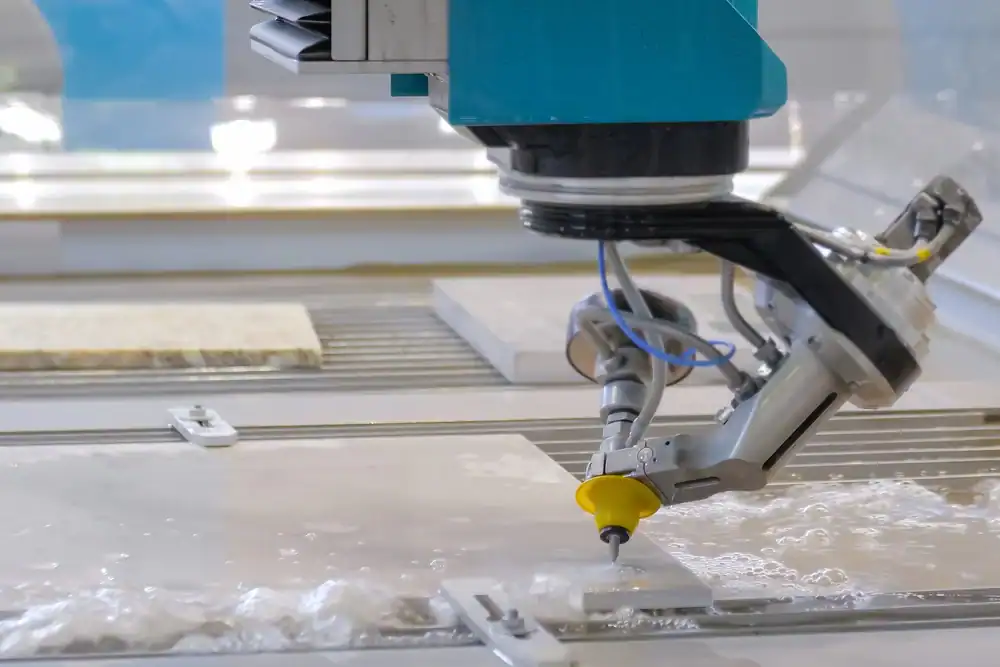
Waterjet cuts materials that would crack, melt, or distort with heat-based methods. Glass and stone are obvious examples—try cutting intricate patterns in tempered glass with a saw and you’ll understand why cold cutting technology matters. But the real advantage shows up with composites, laminates, and materials that sandwich different substrates together.
Carbon fiber, fiberglass, and other composite materials delaminate when heat gets introduced. The resin melts, layers separate, and structural integrity disappears. Our waterjet cutting in Manhasset, NY keeps these materials intact because there’s no thermal stress pulling layers apart.
Rubber, foam, and gasket materials are another category where waterjet excels. These materials compress under blade pressure, making clean cuts nearly impossible with conventional tools. The waterjet stream doesn’t compress the material—it just cuts through, leaving clean edges without the ragged tears you get from blades or punches.
Titanium and other exotic metals machine poorly because of work hardening. Each pass with a cutting tool makes the material harder and tougher to cut. Waterjet doesn’t create work hardening because there’s no tool contact and no heat generation. You get consistent cuts from start to finish, even on materials that fight traditional machining methods.
Accuracy comes from controlling three variables: water pressure, abrasive flow rate, and cutting speed. Thicker materials need slower traverse speeds to give the stream time to cut all the way through without deflecting. The stream naturally wants to lag behind the cutting head as it penetrates deeper into material—this is called stream lag, and it’s predictable.
Our system compensates for stream lag by adjusting the tool path based on material thickness and hardness. A 1-inch steel plate cuts differently than a 1-inch aluminum plate, even though they’re the same thickness. Steel is harder, so the stream deflects more. The software accounts for this deflection and adjusts the path to maintain dimensional accuracy.
Tolerances of ±0.003 inches are achievable on most materials when the setup is right. That means your parts fit together without forcing, shimming, or field modifications. For architectural work in Manhasset, NY, this accuracy matters when you’re installing panels that need to align perfectly or fabricating brackets that mate with structural steel.
Thicker materials—we’re talking 4 to 6 inches of steel—require multiple passes or slower cutting speeds. The accuracy stays consistent, but the process takes longer. That’s the tradeoff with waterjet cutting: you get precision and versatility, but it’s not always the fastest method for simple, thick cuts. For complex geometries or materials that can’t handle heat, though, it’s often the only method that works.
The edge quality comes from how the cutting happens. Abrasive waterjet cutting uses garnet particles suspended in high-pressure water. These particles erode the material rather than shearing or melting it. The result is a surface that’s smooth and free of burrs, with no heat-affected zone that creates hardness variations or discoloration.
Compare that to plasma or laser cutting, which both melt material to create the cut. The melted edge re-solidifies harder than the base material. This hardened edge dulls drill bits and taps when you try to do secondary operations. It also creates visible discoloration on stainless steel and aluminum that shows up in finished assemblies unless you grind it off.
Mechanical cutting methods like saws and shears create burrs—raised edges where material gets pushed rather than cleanly separated. These burrs catch on things during installation, create gaps in assemblies, and need deburring before the part is usable. Our waterjet cutting in Manhasset, NY eliminates this step entirely because the erosion process doesn’t create burrs in the first place.
For architectural applications, this edge quality means you can install components as-cut without worrying about sharp edges or visible defects. Stone and glass especially benefit—the edges come out polished enough for exposed installations without additional grinding or finishing work that adds time and cost to your project.
Turnaround depends on three factors: material availability, cutting complexity, and our current queue. Simple cuts on common materials we stock—quarter-inch steel or aluminum plate, for example—can often turn around in a few days. Complex geometries on materials we need to source take longer, sometimes a week or two depending on supplier lead times.
The cutting itself is usually the fastest part of the process. A typical part might take anywhere from a few minutes to an hour or two on the machine, depending on material thickness and design complexity. What takes time is the setup: programming the tool path, securing the material properly, and doing test cuts to verify everything’s dialed in correctly.
For projects in Manhasset, NY where you’re coordinating multiple trades and working against tight deadlines, communication matters more than raw speed. If we know your installation date upfront, we can schedule cutting to hit that window. Last-minute rush jobs are possible but not ideal—they disrupt the queue and increase the chance of errors when we’re working too fast.
Production runs are more predictable than one-offs. Once the first part is cut and verified, the rest of the run happens at a consistent pace. If you need 50 identical brackets, we can give you an accurate timeline because there’s no additional programming or setup after the first piece. Our custom waterjet cutting services in Manhasset, NY work best when you plan ahead, but we understand that construction schedules don’t always cooperate.
Waterjet cutting costs more per hour than plasma or oxy-fuel cutting but less than laser cutting for thicker materials. The real cost comparison, though, needs to factor in what happens after the cut. If you’re paying for secondary finishing, deburring, or rework because the cut quality wasn’t good enough, your “cheaper” cutting method just got expensive.
Material waste is another hidden cost. Waterjet cutting has a narrow kerf—the width of material removed during cutting—which means you can nest parts closer together and get more components from each sheet. Plasma cutting removes more material and creates larger heat-affected zones that you need to account for in your nesting. That wasted material adds up, especially on expensive substrates like stainless or titanium.
For materials that can’t handle heat, waterjet isn’t more expensive—it’s often the only option that works. You can’t plasma cut glass or stone. You can’t laser cut thick rubber without melting it. When our high pressure water cutting in Manhasset, NY is the only method that produces usable parts, cost comparison becomes irrelevant.
The other factor is versatility. If you need multiple materials cut for one project, waterjet handles all of them without changing equipment or vendors. That consolidation saves coordination time and reduces the number of moving parts in your project schedule. Sometimes paying slightly more per cut saves money overall by simplifying logistics and reducing delays.
Yes, and that’s one of the main advantages. Prototype work needs flexibility—designs change, quantities are small, and you’re often testing different materials or configurations. Waterjet cutting doesn’t require expensive tooling or dies, so there’s no setup cost that needs to be amortized over hundreds of parts. You can cut one piece, evaluate it, make design changes, and cut another without financial penalty.
Production runs benefit from the repeatability. Once the program is set and the first part is verified, every subsequent part comes out identical. The system doesn’t drift or wear like cutting tools do. Part number 100 matches part number 1 within the same tolerances. For architectural installations in Manhasset, NY where panels need to align across large surfaces, this consistency matters.
The transition from prototype to production is seamless. You don’t need to change manufacturing methods or vendors when you go from testing a design to producing the final quantity. The same CAD file that cut your prototype cuts your production run. That eliminates the risk of variations creeping in when you switch processes.
Volume does affect pricing—larger runs get better per-part pricing because setup time gets distributed across more pieces. But even small production runs of 10 or 20 parts are economically viable with our waterjet cutting services in Manhasset, NY. You’re not locked into minimum quantities that force you to order more than you need just to make the unit cost reasonable.
Useful Links
Other Services we provide in Manhasset