Hear from Our Customers
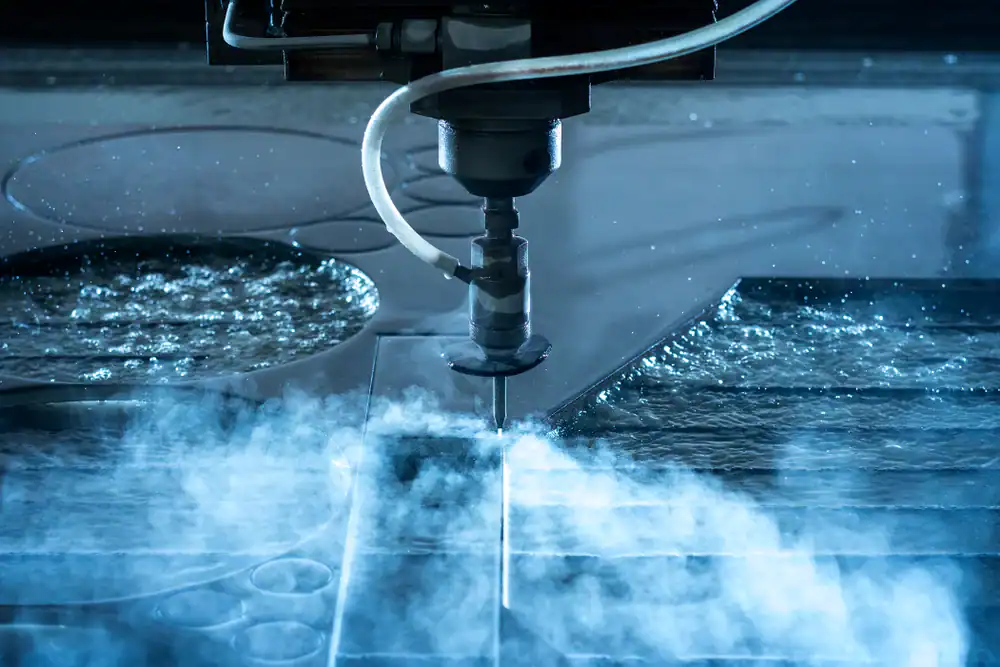
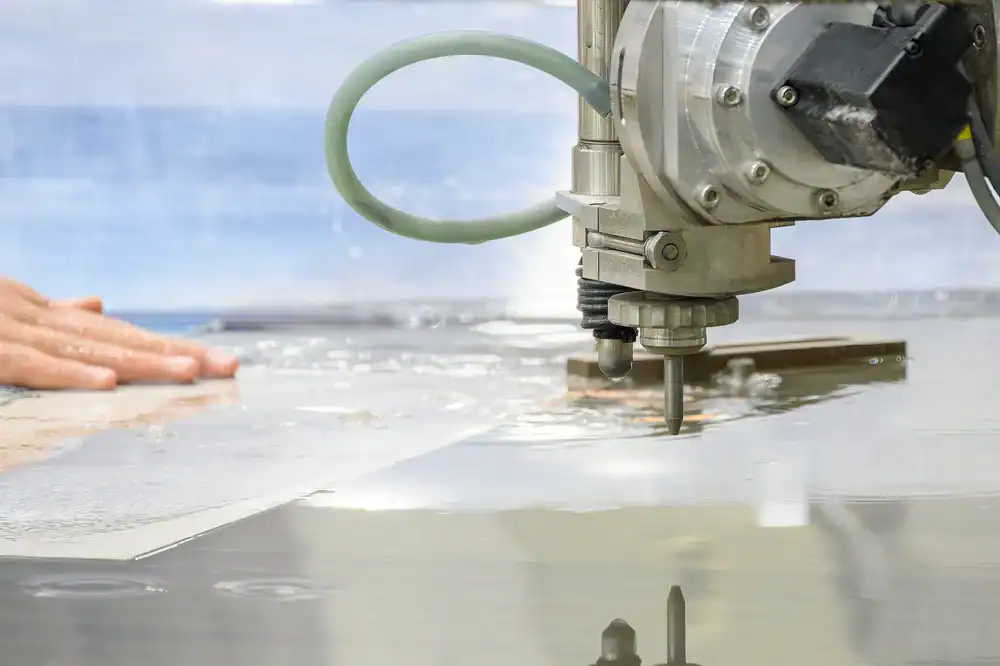
When you’re working with expensive materials, you can’t afford heat-affected zones that ruin the integrity of your parts. Our waterjet cutting in North Hempstead, NY uses pressurized water—up to 90,000 PSI—forced through a precision nozzle to cut clean without altering your material properties.
No warping. No melting. No secondary finishing in most cases.
That means your aerospace components, architectural panels, or custom fabrication projects come out right the first time. You’re not throwing away ruined sheets or scheduling rework. The edge quality is smooth enough that deburring becomes optional, not mandatory.
Whether you’re cutting half-inch aluminum or two-inch stainless, the process adapts without changing tooling or setup. You get the same clean result across metals, composites, glass, stone—basically anything that needs a precise cut. And because there’s no heat, even heat-sensitive materials stay dimensionally accurate.
We serve architects, designers, and contractors across North Hempstead, NY and the surrounding Nassau County area. We’re not a massive production facility trying to squeeze your custom job into a cookie-cutter process.
You work directly with people who understand material properties and can consult on design feasibility before you commit to a full run. That matters when you’re dealing with tight project deadlines or complex geometries that other shops turn away.
From concept through completion, you get the same team handling your project. No handoffs. No miscommunication. Just accurate cuts delivered when you need them.
You send us your design file—DXF, DWG, or even a sketch if you’re still working through the concept. We review it for manufacturability and flag anything that might cause issues before cutting starts.
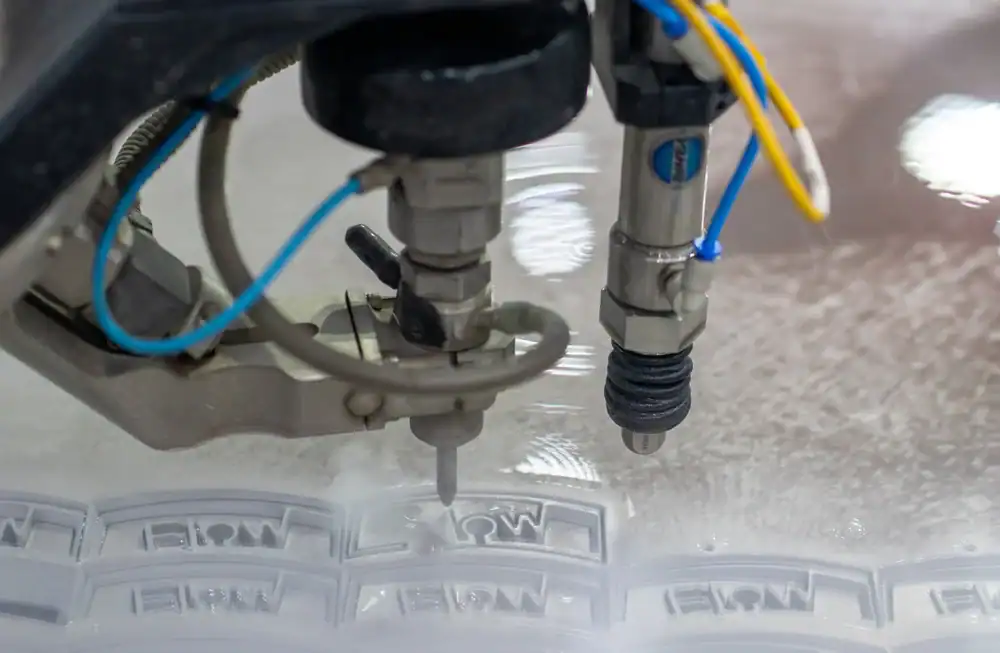
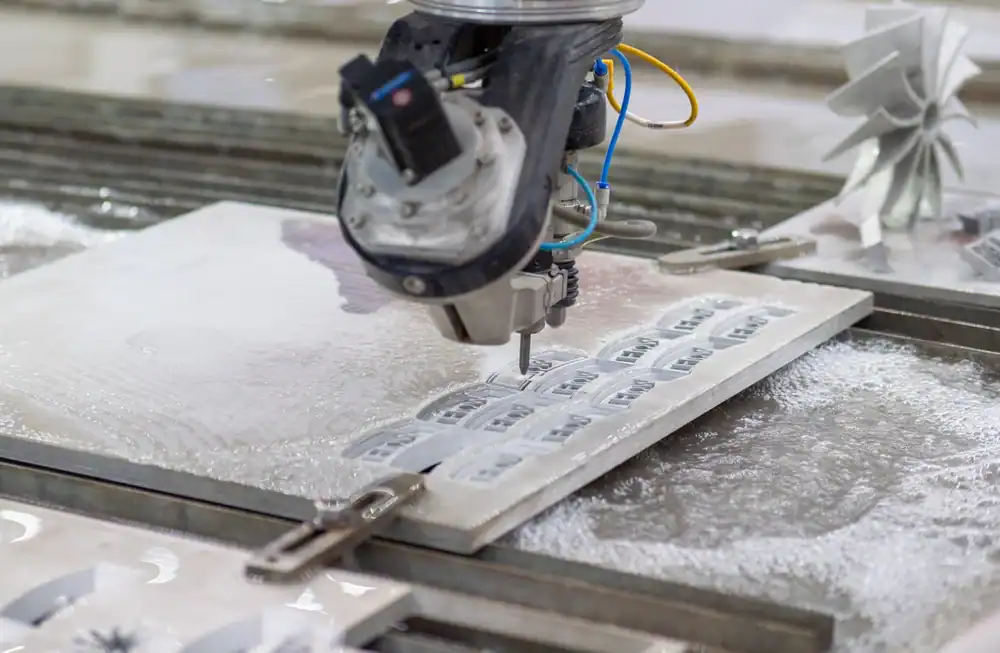
Once the design is locked, we program the CNC waterjet system with your specifications. The machine pressurizes water to extreme levels and forces it through a gemstone nozzle—usually diamond or sapphire—creating a supersonic stream. For harder materials, we add an abrasive garnet to the stream.
Setup is fast because there’s no custom tooling required. We secure your material, run the program, and the waterjet follows the programmed path with precision down to a few thousandths of an inch.
After cutting, most parts are ready to go. The edges come out smooth and burr-free. If your project needs multiple pieces nested on a single sheet, we optimize the layout to minimize waste and keep your material costs down.
Ready to get started?
You get access to abrasive waterjet cutting in North Hempstead, NY that handles materials up to eight inches thick. That covers most architectural metalwork, industrial components, and custom fabrication needs in the area.
We cut ferrous and non-ferrous metals, composites, stone, glass, plastics—materials that would normally require multiple vendors with different cutting methods. You’re not coordinating between a laser shop for thin gauge and a plasma cutter for thick plate. One process handles it all.
North Hempstead’s mix of commercial construction, aerospace suppliers, and custom design firms means projects here often require non-standard shapes and tight tolerances. Our CNC waterjet systems maintain consistent accuracy whether you need one prototype part or a production run of a hundred.
Material consultation is included. If you’re unsure whether your specified material will work for the application, or if there’s a more cost-effective option that still meets your requirements, we’ll tell you before you order the raw stock.
Turnaround depends on complexity and queue, but most custom waterjet cutting services get completed within a few days. Rush jobs get handled when your timeline demands it.
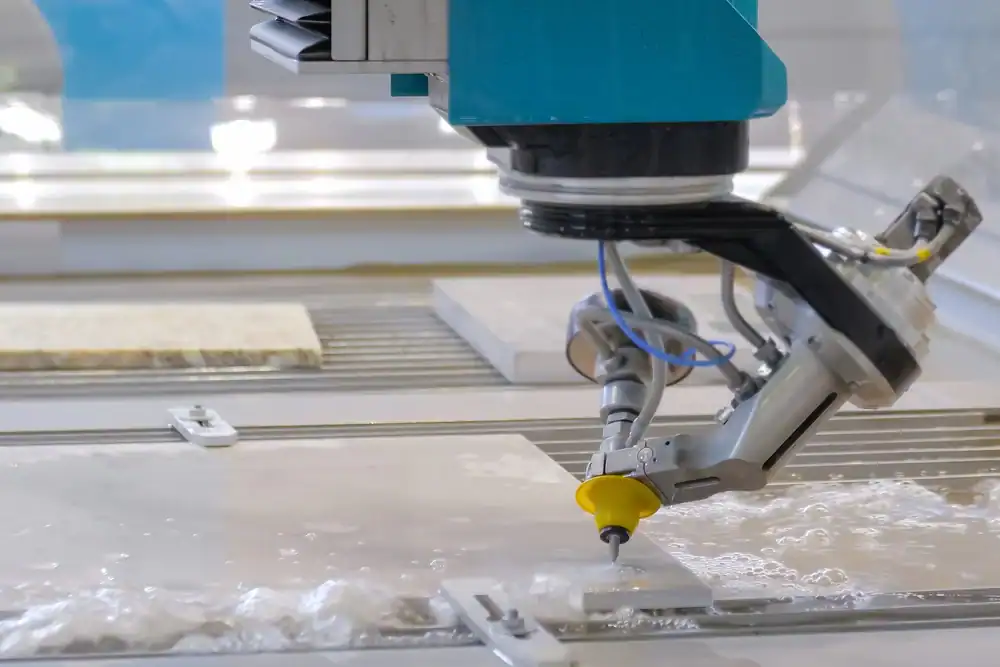
Waterjet cuts anything that doesn’t dissolve in water. That includes materials that are too reflective for lasers, too thick for plasma, or too brittle for mechanical cutting.
You can cut titanium, Inconel, and hardened tool steels without worrying about heat-affected zones that change the material properties. Composites and laminates stay bonded because there’s no heat to delaminate the layers. Glass and stone cut clean without cracking.
The real advantage shows up when you’re working with mixed-material assemblies or expensive exotics. You’re not risking a $500 sheet of material on a cutting method that might warp or burn it. The cold cutting process means what goes on the table comes off exactly as designed.
Laser cutting works well for thinner metals—generally under half an inch—and it’s fast for high-volume production runs of simple shapes. But it creates a heat-affected zone that can warp your part or change the metal’s hardness near the cut edge.
Our waterjet cutting in North Hempstead, NY doesn’t generate heat, so there’s no warping and no hardness variation. You can cut thicker materials—up to several inches—without losing edge quality. The kerf width is narrower, which means you can nest parts closer together and reduce material waste.
For prototype work or custom jobs where you’re cutting expensive alloys, waterjet eliminates the risk of heat damage. You’re also not limited by reflectivity issues that cause problems with laser cutting aluminum or copper. If your project involves multiple material types or thicknesses, waterjet handles them all without changing equipment.
Standard waterjet cutting holds tolerances around ±0.005 inches for most applications. That’s tight enough for functional parts, brackets, and architectural components that need to fit together without excessive gap filling or adjustment.
If your project requires tighter tolerances—down to ±0.001 inches—that’s achievable with specialized nozzles and slower cutting speeds, though it increases processing time. For most commercial and industrial applications in North Hempstead, standard tolerances work fine.
The consistency matters as much as the absolute tolerance. Because the process is CNC-controlled and doesn’t involve tool wear like mechanical cutting, part number fifty comes out the same as part number one. You’re not dealing with dimensional drift across a production run or between repeat orders months apart.
In most cases, no. The edge quality from abrasive waterjet cutting comes out smooth enough to use as-is for functional parts. You’re not looking at the rough, oxidized edge you get from plasma cutting or the burrs from mechanical sawing.
For visible architectural applications or parts that need a specific surface finish, you might want light deburring or polishing. But that’s a five-minute touch-up, not a full secondary operation that requires additional equipment and labor.
The lack of heat-affected zones means you’re also not dealing with hardness variations that require annealing or stress-relieving. Parts come off the waterjet table ready for welding, forming, or assembly. That saves time and reduces your total project cost compared to cutting methods that require extensive post-processing.
Setup time for waterjet cutting is minimal because there’s no custom tooling to fabricate. Once we have your approved design file and material on hand, most jobs start cutting within a day or two.
Simple parts with straightforward geometries might take an hour or less of actual cutting time. Complex shapes with intricate details or very thick materials take longer because the cutting speed slows down to maintain edge quality. A typical custom project—say, a dozen parts with moderate complexity—usually completes within three to five business days from file approval to pickup.
If you’re on a tight deadline, rush service is available. We’ve handled same-day turnarounds for emergency repairs and critical project needs. The key is communication—let us know your timeline upfront, and we’ll tell you whether it’s achievable or what adjustments might speed things up.
Per-cut cost for waterjet sits between plasma and laser in most cases. You’re paying more than plasma but often less than laser, especially for thicker materials. But that’s not the full picture.
Our waterjet cutting services in North Hempstead, NY eliminate costs that other methods create. You’re not paying for secondary deburring, stress relieving, or rework on warped parts. Material waste drops because the narrow kerf lets you nest parts tighter. And you’re not scrapping expensive sheets because heat damage ruined the material properties.
For prototype and custom work, waterjet often costs less overall because setup is fast and there’s no minimum run quantity where it makes economic sense. You can cut one part or one hundred without the setup costs that make short runs prohibitively expensive with other methods. When you factor in total project cost—including material waste, secondary operations, and rework—waterjet frequently comes out ahead.
Useful Links
Other Services we provide in North Hempstead