Hear from Our Customers
Your components fit together the first time. No secondary finishing eating into your timeline. No heat-affected zones compromising material integrity.
Waterjet cutting services in North Massapequa, NY give you tolerances within +/- 0.005 inches. That’s the difference between parts that assemble smoothly and parts that need rework. Between meeting your deadline and explaining why you’re behind schedule.
The cold cutting process means your materials stay true. Metals don’t warp. Composites don’t delaminate. Glass doesn’t crack at the edges. You get smooth, burr-free edges that often eliminate grinding, sanding, or additional machining steps.
This matters when you’re working with expensive materials or tight project timelines. One ruined piece of specialty metal or stone can blow your budget. One delay in getting precision parts can cost you the entire job. Abrasive waterjet cutting removes those risks because there’s no thermal stress changing your material properties mid-cut.
We serve architects, designers, contractors, and manufacturers throughout North Massapequa, NY and the broader Long Island area. We’ve built our reputation on delivering what we promise: accurate cuts, reasonable turnaround times, and straight answers about what’s possible with your materials.
North Massapequa’s mix of manufacturing facilities, construction projects, and custom fabrication shops means you need a cutting service that understands production demands. You’re not looking for someone to hold your hand through basic concepts. You need a shop that can handle your specifications, work with your materials, and deliver on schedule.
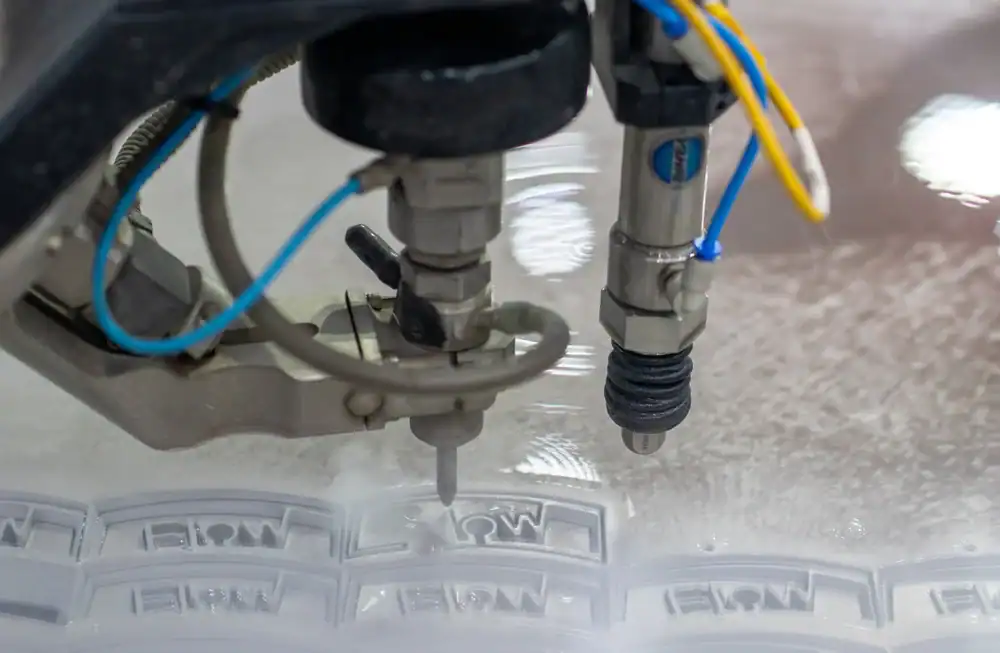
We work with state-of-the-art Flow waterjet systems because they offer the cutting speeds and accuracy your projects require. From concept through completion, we focus on getting your parts right so you can focus on your next steps.
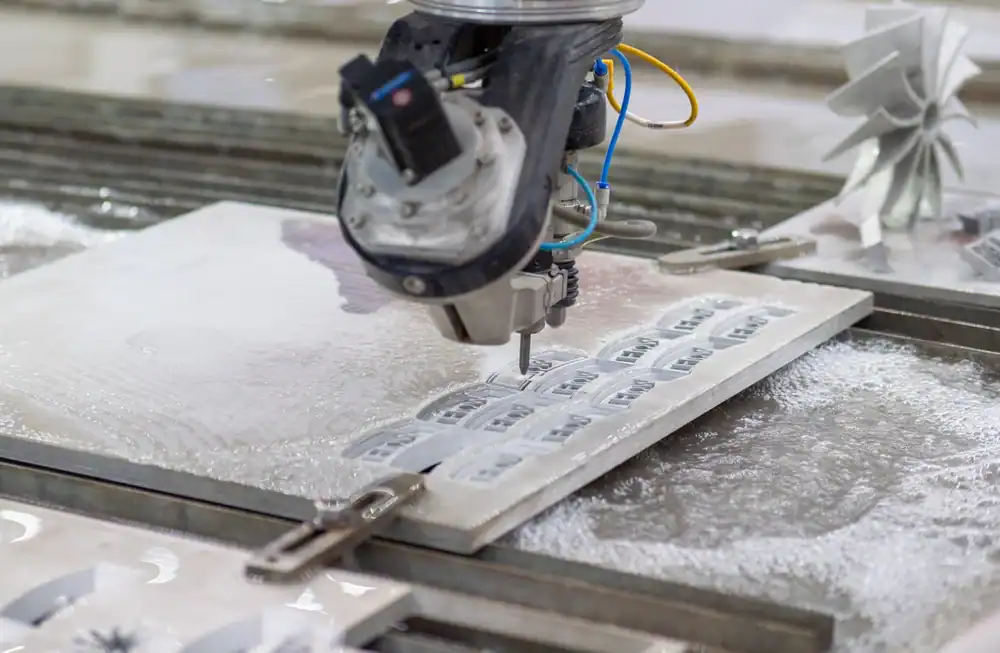
You send us your design files or specifications. We review them for any potential issues with material choice, thickness, or design features that might affect the cut quality. If something won’t work as drawn, we tell you before we start cutting.
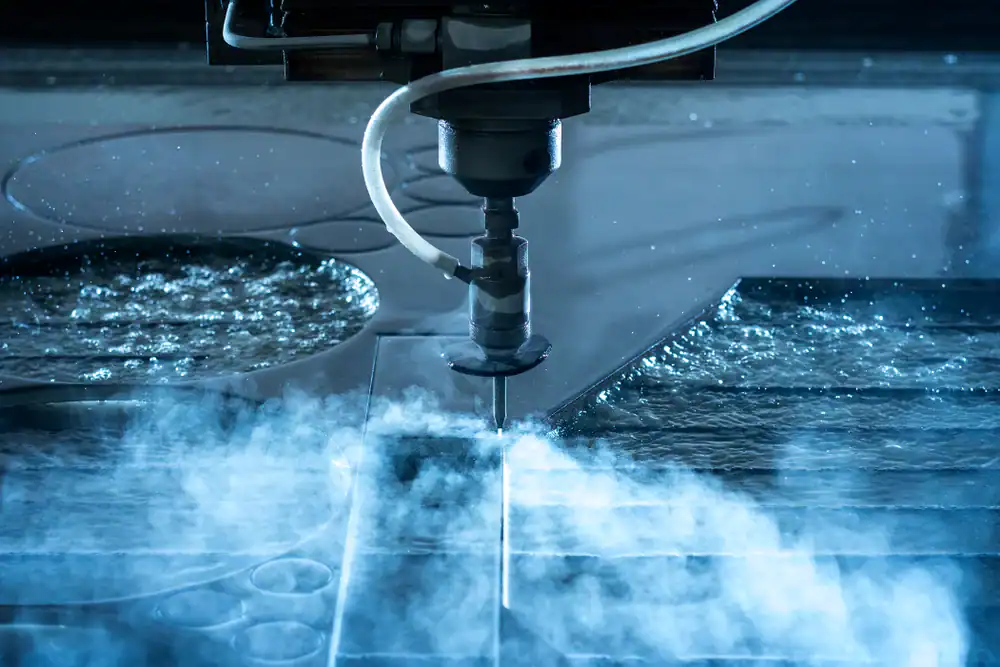
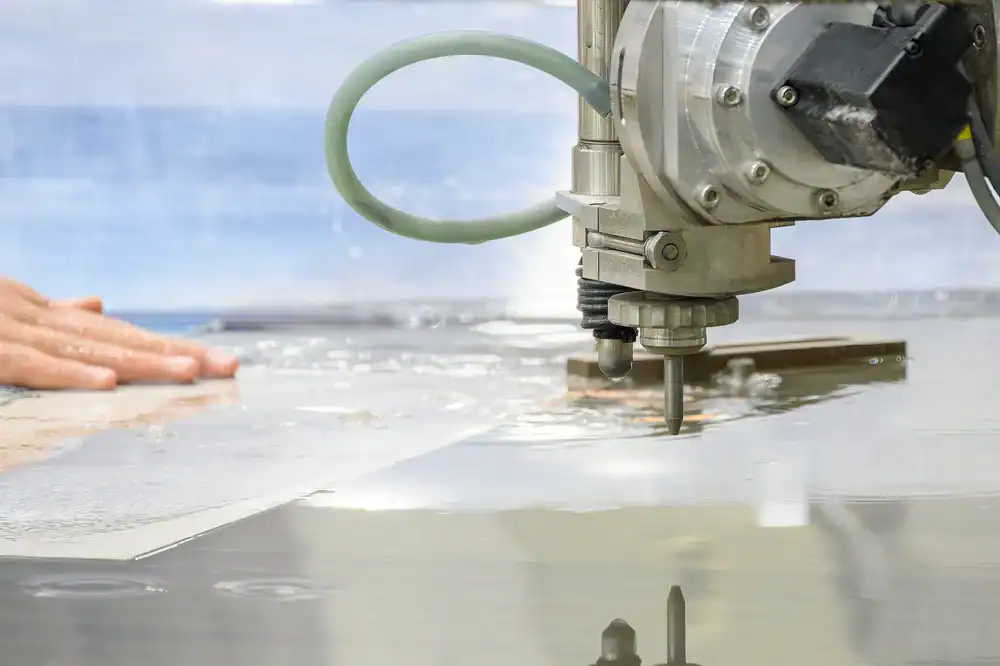
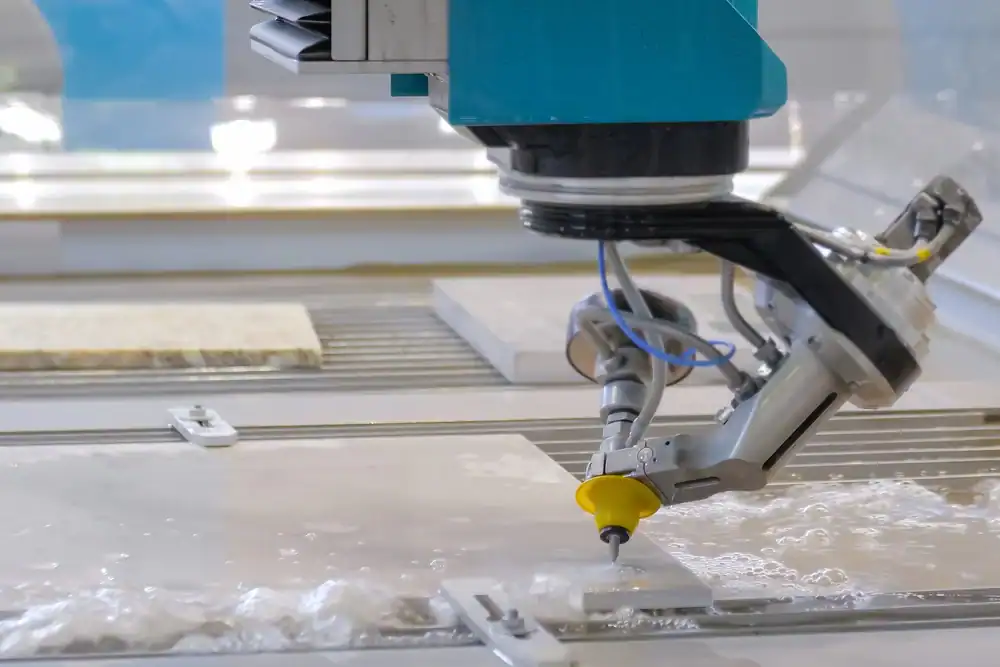
Once we’ve confirmed everything checks out, we program the cutting path and set up your material. Our waterjet system uses a stream of water mixed with abrasive garnet particles, pressurized up to 60,000 PSI, to cut through your material. The stream is thin enough to create intricate shapes but powerful enough to slice through several inches of steel, stone, or composite materials.
During cutting, the material stays cool. There’s no heat buildup, no melting, no hardening of edges. What you get is a clean cut with minimal material waste and edges that are ready to use. For most projects, you’re looking at smooth finishes that don’t require additional processing.
After cutting, we inspect dimensions to verify they match your specifications. Then your parts are ready for pickup or delivery. The entire process from file to finished part typically takes days, not weeks, depending on material availability and current production schedule.
Ready to get started?
Custom waterjet cutting in North Massapequa, NY handles the materials your projects demand. Stainless steel, aluminum, titanium, and tool steels cut cleanly without work hardening the edges. Granite, marble, and engineered stone for architectural elements. Composites, plastics, and rubber for specialized components. Glass and ceramics when you need intricate shapes without cracking.
Thickness capacity ranges from thin gauge sheet up to several inches, depending on material hardness. Complex geometries, tight inside corners, and intricate patterns are all manageable because the cutting stream is only about 0.04 inches in diameter.
Long Island’s manufacturing sector includes aerospace components, marine fabrication, medical device parts, and custom architectural elements. Each industry has specific requirements. Aerospace needs documented material traceability and tight tolerances. Marine applications require corrosion-resistant materials cut without introducing stress points. Medical devices demand clean cuts that won’t contaminate or compromise biocompatible materials.
Our waterjet process meets these requirements because it’s a cold cutting method. No heat means no changes to material microstructure, no hardened edges that are difficult to machine further, and no toxic fumes from burning through coatings or composites. For North Massapequa businesses working with specialty materials or serving regulated industries, this matters more than just getting a cut that looks good.
Most straightforward cutting projects take between 3-5 business days from approved files to finished parts. That assumes your material is in stock or readily available from suppliers.
Complex projects with multiple material types, very thick materials, or extremely intricate cut patterns may take longer. Rush services can often accommodate tighter deadlines when production schedule allows, but that requires advance communication about your timeline.
The biggest variable is usually material availability, not cutting time. If you’re working with specialty metals, exotic composites, or specific stone varieties, sourcing can add days to the timeline. Bringing your own material eliminates that variable entirely. Either way, you’ll get a realistic timeline upfront based on your specific project requirements, not vague estimates that change later.
Waterjet cutting consistently achieves tolerances of +/- 0.005 inches for most materials and applications. For context, that’s tight enough for precision mechanical components, aerospace parts, and medical device elements that need to fit together without gaps or interference.
The actual tolerance you’ll achieve depends on several factors: material type, thickness, and the complexity of your geometry. Thicker materials or very hard materials may have slightly wider tolerances. Extremely thin materials can sometimes shift slightly during cutting, affecting precision.
What matters more than theoretical capabilities is whether the process meets your specific needs. If your project requires tolerances tighter than +/- 0.005 inches, waterjet cutting might not be the right choice, and you should know that before committing to the process. If your tolerances are wider, you’re well within the capability range. Bring your specifications and we’ll give you a straight answer about what’s achievable with your materials and design.
The main difference is heat. Laser and plasma cutting both use extreme temperatures to melt or burn through materials. That creates heat-affected zones where the material’s properties change near the cut edge. You’ll see discoloration, hardening, and sometimes warping, especially with thinner materials.
Waterjet cutting uses abrasive particles in high-pressure water, so there’s no heat buildup. Your material stays at room temperature throughout the process. This matters significantly when you’re working with materials that are heat-sensitive, when you need to maintain specific material properties right to the edge, or when you’re cutting materials that release toxic fumes when burned.
Laser cutting is faster for thin materials and can be more cost-effective for high-volume production of simple shapes in sheet metal. Plasma works well for thick steel plate when edge quality isn’t critical. But if you’re cutting composites, stone, glass, titanium, or anything where heat distortion would ruin the part, waterjet is often the only viable option. The process you choose should match your material and application requirements, not just what’s cheapest or fastest.
DXF and DWG files work best because they contain the vector paths that translate directly into cutting instructions. These CAD formats preserve the precise geometry and dimensions your project requires.
PDF files can work if they’re created from CAD software and contain actual vector data, not just images of drawings. However, PDFs sometimes require additional conversion steps that can introduce small errors, so native CAD formats are preferred when possible.
If you’re working from hand sketches or don’t have CAD files, that’s manageable. You’ll need to provide clear dimensions and specifications, and there may be additional time needed to create the cutting files from your drawings. For complex or high-precision projects, investing in proper CAD files upfront prevents miscommunication and ensures your parts come out exactly as intended. Most design professionals and engineers already work in compatible formats, so file preparation is usually straightforward.
Yes, because there’s no expensive tooling or setup required like you’d have with stamping or molding. You can cut a single prototype part to test fit and function, then move directly into production quantities using the same process and programming.
This flexibility matters when you’re developing new products or custom solutions. You’re not locked into minimum quantities to justify tooling costs. You can iterate on designs quickly, making adjustments between small batches without significant cost penalties.
For production runs, waterjet cutting becomes more cost-effective as your quantities increase, though it typically won’t match the per-part cost of high-volume stamping or molding once you reach very large quantities. The sweet spot is often low to medium production volumes, custom parts, or situations where design changes are likely. Many North Massapequa manufacturers use waterjet cutting for their initial production runs, then evaluate whether higher-volume processes make sense once demand is proven and designs are finalized.
Material damage from the cutting process itself is rare because waterjet cutting is a controlled, cold process. The risks that do exist usually come from material defects that weren’t visible before cutting, improper material handling, or design issues that create weak points in the finished part.
Before cutting expensive or specialty materials, the design gets reviewed for potential problems. Thin sections that might break during handling, inside corners that create stress concentrations, or features that are too delicate for the material thickness all get flagged. This review happens before any cutting starts, giving you the chance to adjust the design or accept the risks.
If damage does occur due to process error rather than material defects or design limitations, that’s a different situation that gets handled on a case-by-case basis. What you won’t get is surprise damage discovered after the fact with no explanation. Communication about risks, material condition, and design concerns happens upfront, so you can make informed decisions about how to proceed with your project and materials.
Useful Links
Other Services we provide in North Massapequa