Hear from Our Customers
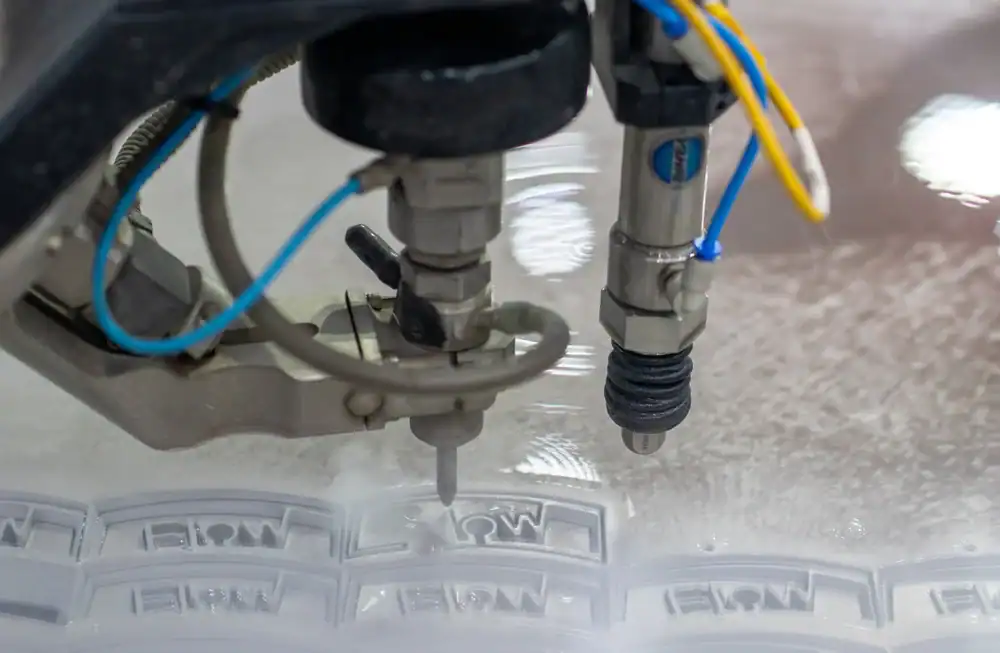
Your parts arrive ready to weld, assemble, or install. No secondary deburring. No heat-affected zones causing problems down the line. No warping that throws off your tolerances.
High pressure water cutting in North Merrick gives you accuracy within 0.005 inches on materials your plasma cutter can’t touch without damage. Titanium for aerospace components. Composites for defense applications. Thick stainless for architectural installations. Stone and glass for custom design work.
The process is cold, so your material properties stay intact. That matters when you’re working with heat-sensitive alloys or when metallurgical specs are part of the job requirement. You get smooth edges that often eliminate grinding and finishing steps entirely.
Most waterjet cutting services in North Merrick turn jobs around in 2-3 business days. That’s fast enough to keep your production schedule on track without paying rush fees or compromising on quality.
We review every CAD file before programming. That catches tolerance issues, nesting problems, and design conflicts before they become expensive mistakes on your material.
North Merrick sits in Long Island’s aerospace and defense manufacturing corridor. The precision standards here aren’t negotiable, and the industries don’t tolerate rework or missed specs. That’s the environment we operate in daily.
You’re working with a team that understands both the engineering side and the real-world fabrication challenges. We know what works on screen doesn’t always work on the shop floor, and we’ll tell you before cutting starts.
You send your CAD file. We review it for manufacturability, checking tolerances, kerf compensation, and potential nesting efficiencies. If something won’t work as drawn, you hear about it now, not after the material is scrap.
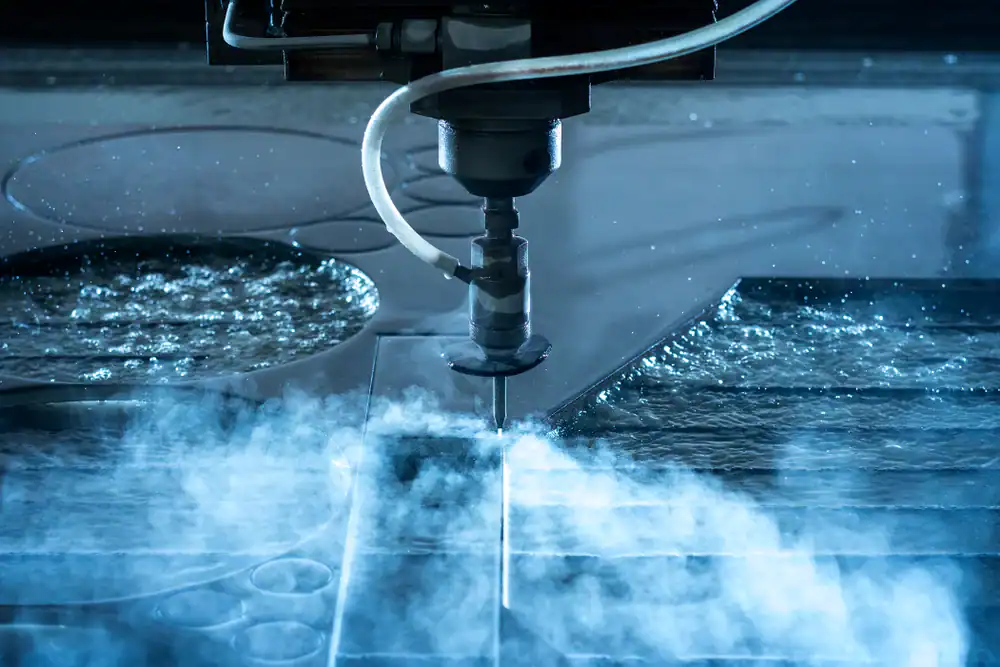
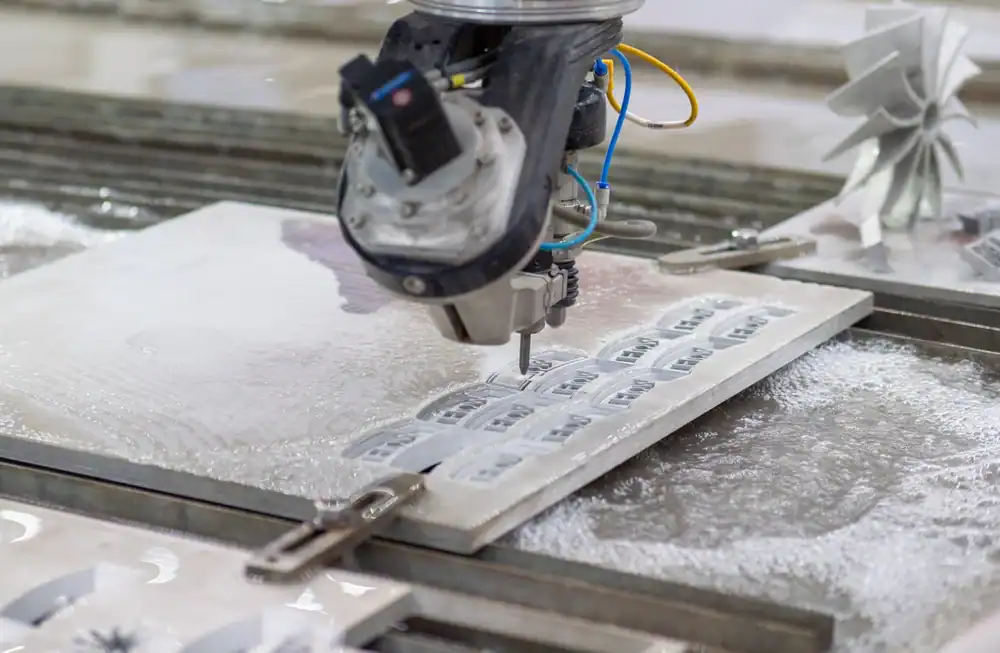
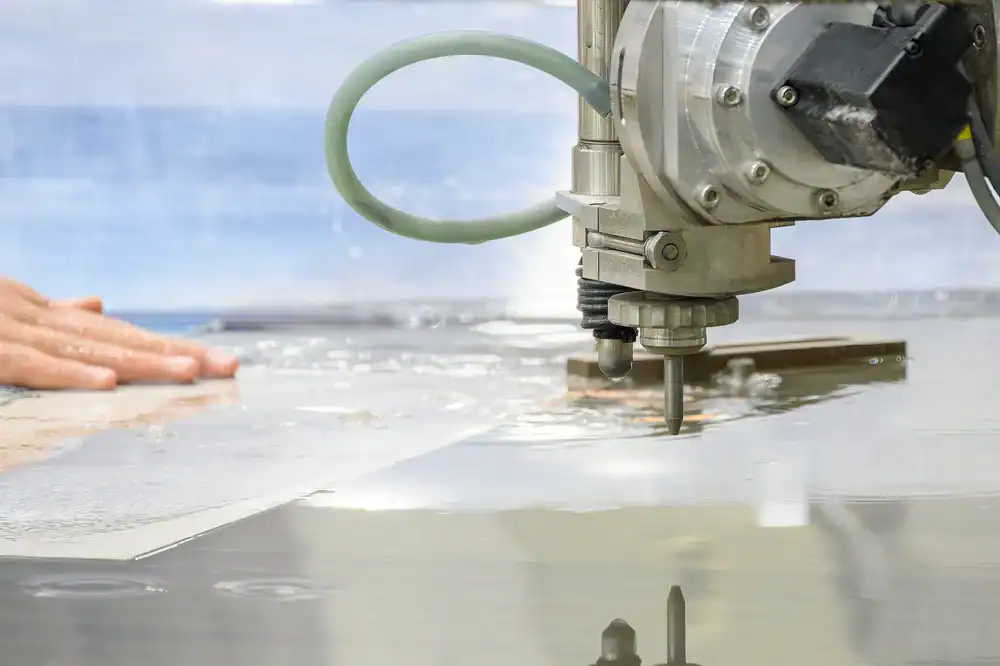
Once the file is approved, it gets programmed into the CNC waterjet system. The cutting head combines ultra-high pressure water with garnet abrasive, creating a stream that cuts through your material with precision a mechanical blade can’t match.
The abrasive waterjet cutting in North Merrick operates at pressures up to 90,000 PSI. Water speed, pressure, nozzle size, and abrasive flow rate all adjust based on your material type and thickness. That’s how you get clean cuts on 6-inch steel plate and delicate work on thin composites using the same machine.
Your parts come off the table ready for the next operation. No heat treatment to reverse thermal damage. No secondary machining to true up warped edges. Just accurate parts that match your specifications.
Ready to get started?
Custom waterjet cutting in North Merrick handles aluminum, stainless steel, titanium, copper, brass, tool steel, and specialty alloys without changing your material’s properties. It also cuts stone, glass, ceramics, plastics, and composites that would crack, melt, or delaminate under traditional cutting methods.
Thickness capacity ranges from thin gauge sheet to plate several inches thick. The process doesn’t care if you’re cutting 1/16-inch aluminum or 6-inch stainless. Accuracy holds at ±0.005 inches regardless.
Long Island’s aerospace and defense manufacturers rely on waterjet cutting in North Merrick because it meets their compliance requirements. No heat-affected zone means no metallurgical changes that would require documentation or re-certification. That saves time and eliminates risk on controlled materials.
You also get complex geometry in a single setup. Intricate curves, sharp internal corners, and detailed patterns that would require multiple operations on a mill or router happen in one pass. That reduces handling, eliminates alignment errors, and speeds up your total production time.
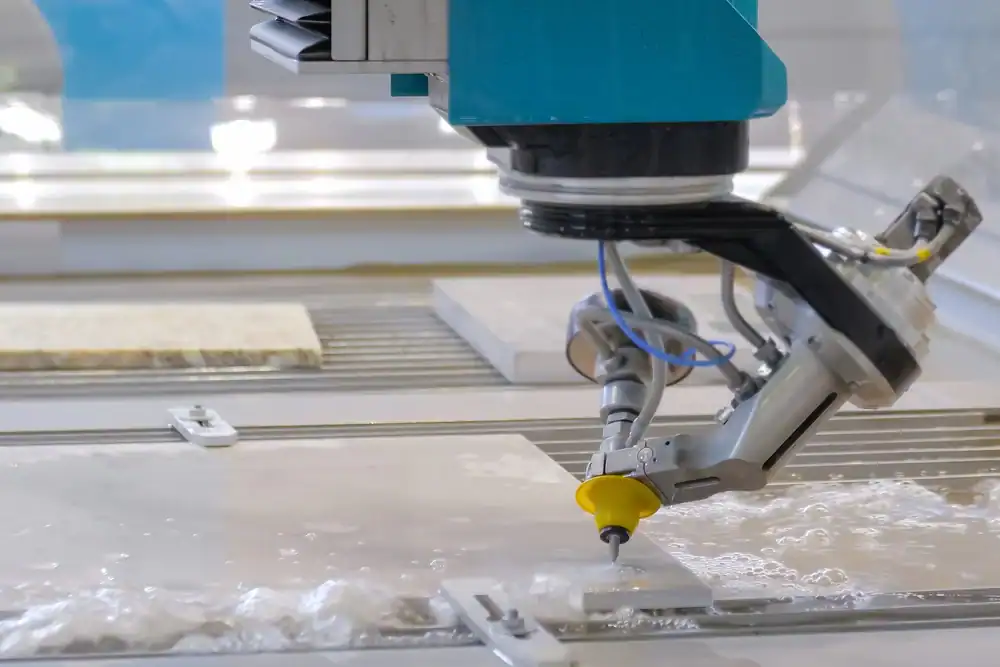
Waterjet cuts materials that are too hard, too brittle, or too heat-sensitive for saws, lasers, or plasma. Titanium and high-nickel alloys used in aerospace don’t work-harden under the cutting stream like they do with mechanical tools. Tempered glass and stone won’t crack from thermal shock because there’s no heat.
Composites and laminates stay bonded. Plastics don’t melt. Rubber and foam don’t compress or tear. If you’re working with materials where heat creates problems—warping thin sheet, changing hardness in tool steel, burning edges on acrylic—waterjet solves it.
The process also handles stacked cutting. You can nest multiple sheets of different materials and cut them simultaneously, which matters when you’re producing small runs of varied parts without wanting to set up the machine multiple times.
CNC control manages the cutting head position with extreme precision while the software compensates for kerf width and taper. The system adjusts water pressure, abrasive flow, and cutting speed in real-time based on material feedback.
There’s no tool deflection like you get with end mills, no blade wander like you see with bandsaws, and no heat expansion throwing off dimensions. The cutting stream is consistent, and the machine follows the programmed path exactly.
Tolerances of ±0.005 inches are standard. On thinner materials with optimized parameters, you can get even tighter. That level of accuracy means parts fit together without force, holes align for fasteners, and assemblies go together as designed. You’re not spending time filing, grinding, or adjusting because the cut was off.
Heat changes metal. It alters grain structure, creates internal stresses, and can change hardness in the area around the cut. For welding, that heat-affected zone often becomes the weak point where cracks start. For precision assemblies, thermal distortion means parts don’t fit right.
Waterjet cutting in North Merrick produces virtually no heat-affected zone. Your material keeps its original properties right to the edge. That’s critical for aerospace and defense work where material certifications matter and any alteration requires documentation and re-testing.
It also matters for parts that get welded. Clean base material at the joint means better weld quality and fewer failures. For parts that need to hold tight tolerances after cutting—like flanges, brackets, or precision fixtures—no thermal distortion means no post-cut correction work.
Most jobs turn around in 2-3 business days from file approval to finished parts. That assumes standard materials and reasonable complexity. Simple cuts on stock material can be faster. Large production runs or specialty materials might take longer.
The timeline starts when your CAD file is reviewed and approved. If there are design issues that need addressing, that conversation happens immediately so you can make revisions without losing days. Once programming starts, the actual cutting time depends on material thickness and part complexity.
Rush work is possible when the schedule allows. If you’re facing a deadline, communicate that upfront. We can often accommodate tight timelines, but you need to ask rather than assume. Having your file ready to go—proper format, correct tolerances, verified dimensions—speeds everything up.
Send DXF or DWG files with all dimensions in the units you’re working in. Make sure your file shows finished part dimensions, not cut path. We’ll add kerf compensation based on material and thickness.
Call out your tolerance requirements clearly. If certain dimensions are critical and others have more room for variance, note that. It affects how the job gets nested and programmed. Also specify material type and thickness so the cutting parameters get set correctly.
If you’re unsure whether your design will work as drawn, send it anyway and ask. The file review process exists specifically to catch problems before cutting starts. It’s faster to revise a file than to recut parts, and we’ve seen most design challenges before. We’ll tell you what needs to change and why.
Operating cost for waterjet runs under a dollar per minute including labor. The real cost comparison depends on what happens after the cut. If plasma or laser leaves you with secondary operations—deburring, grinding, heat treatment correction, or rework because of warped parts—waterjet often costs less overall.
You’re also comparing capability. Plasma can’t cut stone, glass, or composites. Laser struggles with reflective metals and thick plate. Waterjet handles all of it without material restrictions. If you need one process that covers everything, the versatility has value.
For high-precision work, waterjet eliminates the cost of missed tolerances. Parts fit correctly the first time, assemblies don’t need adjustment, and you’re not scrapping expensive material because the cut quality wasn’t good enough. That reliability reduces your total project cost even if the per-cut price is higher.
Useful Links
Other Services we provide in North Merrick