Hear from Our Customers
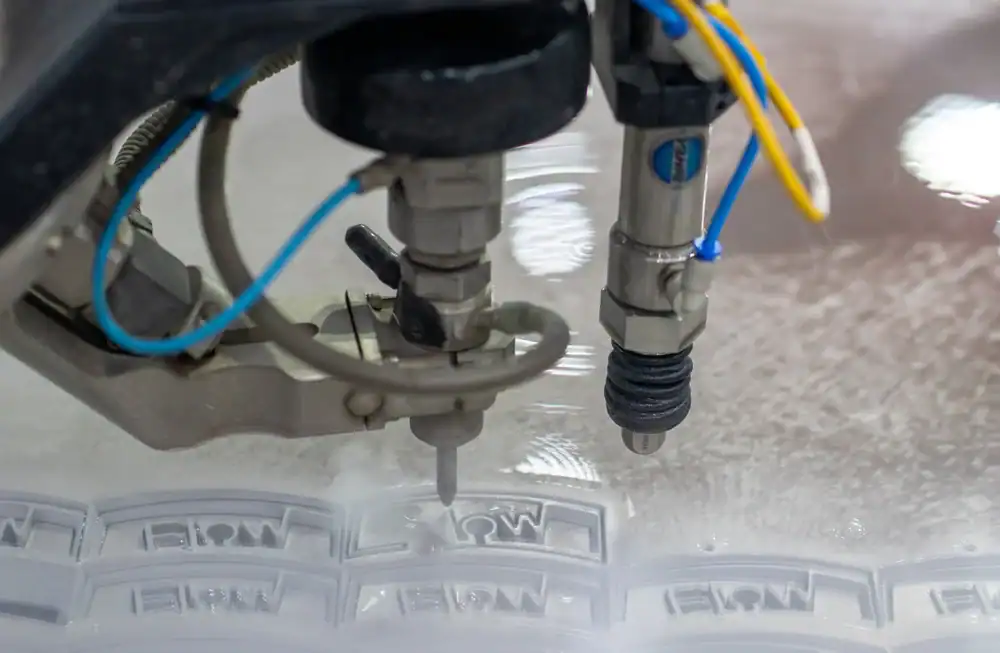
When you send us a file, you’re not hoping it comes back right. You know it will.
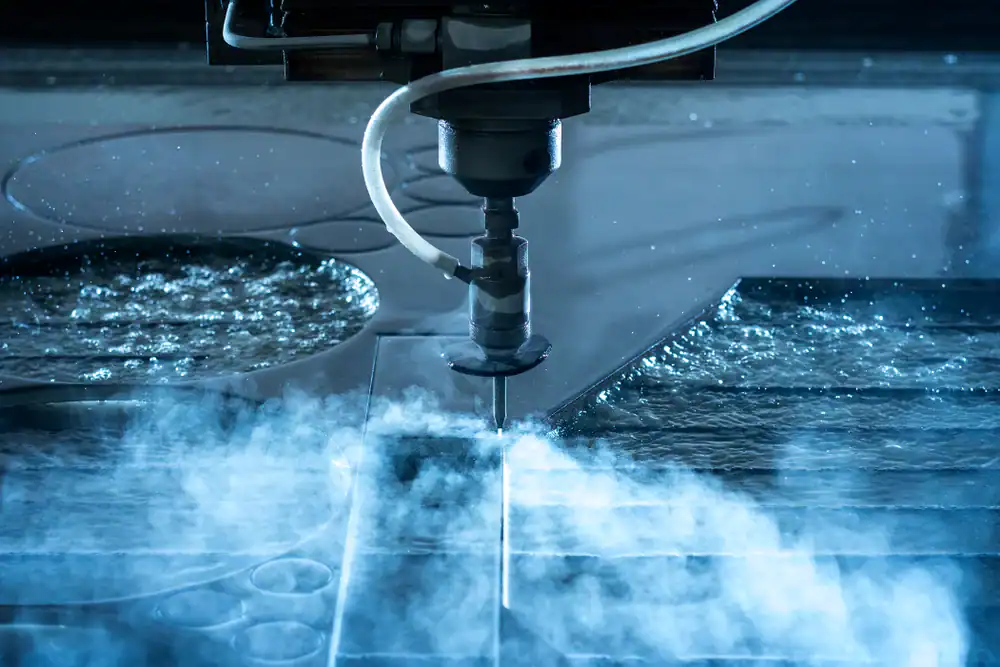
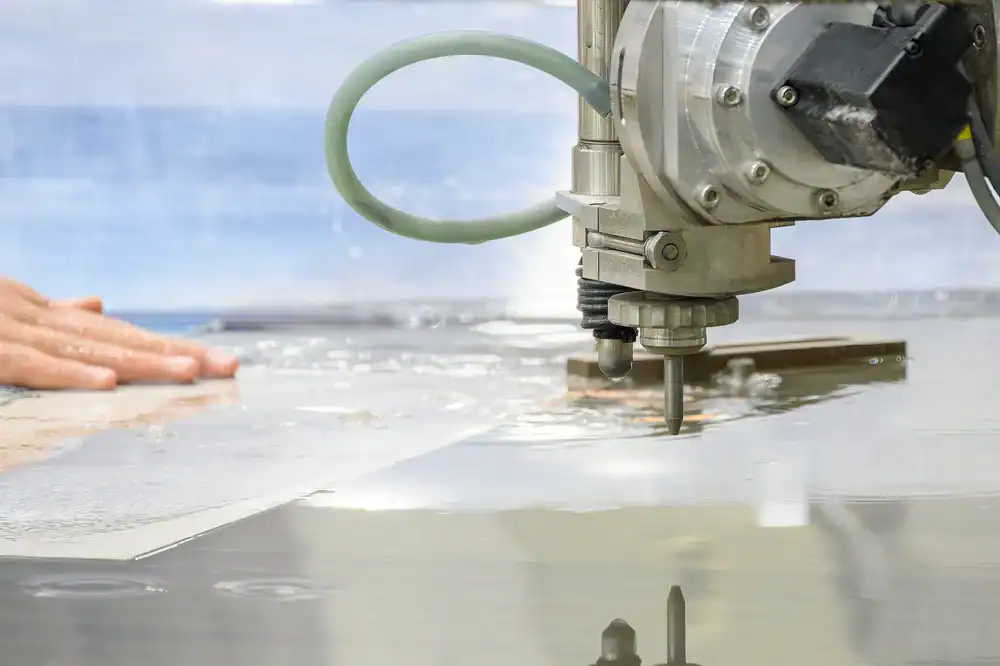
Our waterjet cutting process uses high pressure water cutting to slice through metal, composites, stone, glass, and rubber without introducing heat. That means no warped edges, no metallurgical changes, and no secondary cleanup work eating into your timeline. You get smooth, clean cuts that hold tolerances down to ±0.005 inches, even on thick stainless steel.
For manufacturers in Port Washington, NY working with aerospace components, architectural metalwork, or marine hardware, that level of precision isn’t a luxury. It’s the baseline. We handle materials from half a millimeter to 200mm thick, and we do it without the heat-affected zones that cause welding problems or compromise structural integrity down the line.
If you’ve dealt with plasma cutters that can’t hold tolerance or laser systems that burn through delicate materials, you already know what happens next: rework, delays, and frustrated clients. Our abrasive waterjet cutting eliminates those issues before they start.
We serve manufacturers, fabricators, and builders throughout Port Washington, NY and the surrounding tri-state area. We’re not a national chain shipping parts across the country. We’re right here, which means faster turnaround, face-to-face consultations when you need them, and none of the delays that come with long-distance logistics.
Port Washington has a strong manufacturing presence—companies like Pall Corporation, Precision Work Inc., and WAC Lighting rely on local suppliers who understand tight deadlines and exacting standards. We built our shop to meet that demand. Our in-house design team reviews every CAD file before it hits the cutting bed, catching potential issues early so you’re not dealing with surprises after the fact.
We work with DXF, DWG, STEP, and IGES files, and our team has the fabrication experience to spot problems that purely digital workflows miss. That combination of advanced CNC waterjet cutting technology and hands-on expertise means fewer errors, faster approvals, and parts that arrive ready to use.
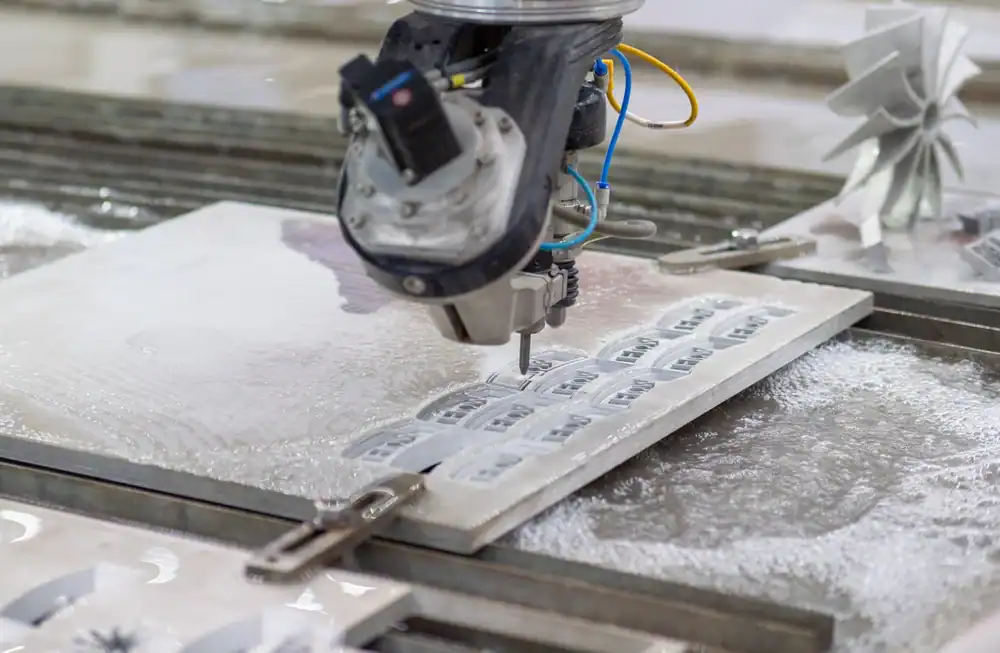
You send us your CAD file—DXF, DWG, STEP, or IGES formats all work. Our design team reviews it for manufacturability, checking dimensions, tolerances, and any potential issues that could affect the final part. If something needs adjustment, we reach out before programming begins.
Once the file is approved, we program the waterjet system and load your material. The cutting process uses a high-pressure stream of water mixed with abrasive garnet to slice through your material with extreme precision. Because there’s no heat involved, your material properties stay intact—no warping, no hardening, no stress fractures.
After cutting, we inspect each part to confirm it meets your specifications. Simple prototypes can ship in one to three days. Higher-volume production runs typically take one to three weeks, depending on complexity and material availability. If you’re local to Port Washington, NY, you can pick up directly from our shop or arrange delivery.
Throughout the process, you’re not left guessing. We keep you updated on progress, and if any questions come up, you’re talking to the people actually running the equipment—not a call center three states away.
Ready to get started?
Our waterjet cutting services in Port Washington, NY handle a wide range of materials and applications. We cut metals including stainless steel, aluminum, titanium, and brass. We also work with composites, ceramics, stone, glass, rubber, and foam—all with the same equipment and the same level of precision.
Thickness capacity ranges from 0.5mm up to 200mm, which covers everything from thin gaskets to heavy structural plates. Our advanced tilt-head technology compensates for the natural taper that occurs during waterjet cutting, ensuring perpendicular edges even on thick materials. That’s critical for parts that need to fit together without gaps or require welding afterward.
Port Washington’s manufacturing sector spans aerospace, marine, architectural, and general fabrication. Each industry has different material requirements and tolerance expectations. Aerospace components often use titanium and composites that can’t tolerate heat exposure. Marine hardware needs corrosion-resistant alloys cut without introducing stress points. Architectural projects require decorative metalwork with clean, finished edges.
We handle all of it. You’re not limited by material type or thickness, and you’re not forced into secondary operations to clean up rough edges or correct heat distortion. The parts leave our shop ready for assembly, installation, or finishing—whatever comes next in your workflow.
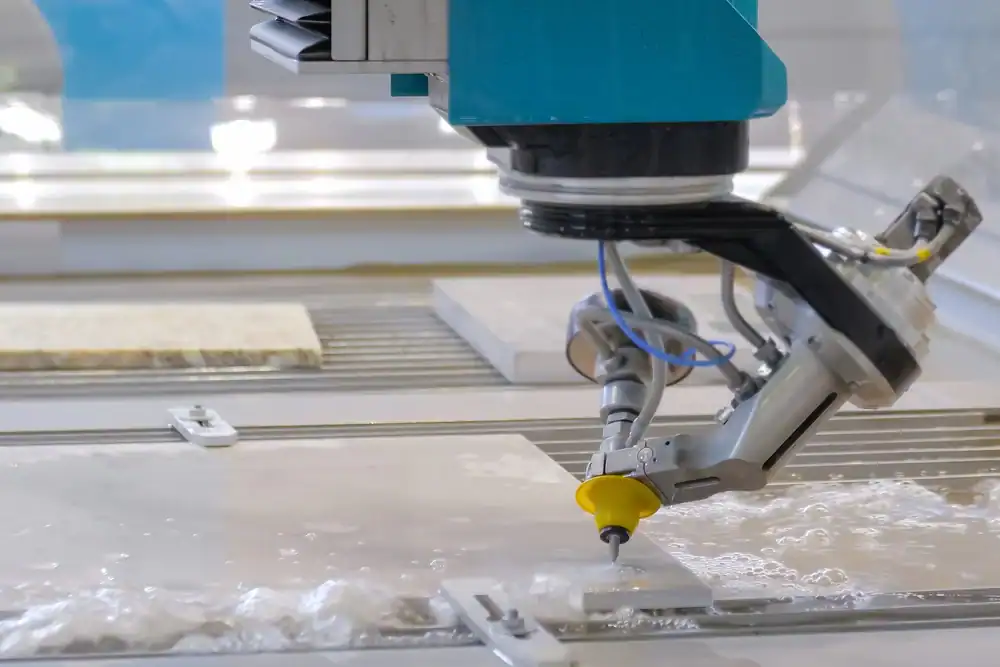
Waterjet cutting works on materials that would burn, melt, or warp under thermal cutting methods. That includes rubber, foam, composites, glass, and ceramics—materials where even a small amount of heat causes problems.
For metal fabrication, the advantage isn’t just about cutting exotic materials. It’s about preserving the material properties you need. When you cut titanium or hardened steel with a plasma cutter or laser, you create a heat-affected zone that changes the metal’s structure. That zone can crack during welding, fail under stress, or require expensive post-processing to remove.
Waterjet cutting eliminates that issue entirely. The process is cold, so there’s no metallurgical change, no recast layer, and no thermal stress. For aerospace parts, medical components, or any application where material integrity matters, that’s not a nice-to-have feature. It’s the reason you choose waterjet in the first place.
Our waterjet systems hold tolerances to ±0.005 inches, even on materials up to four inches thick. Laser cutting can match that on thin materials, but accuracy drops significantly as thickness increases. Plasma cutting typically can’t hold tighter than ±0.030 inches, and the heat-affected zone makes dimensional consistency even harder to maintain.
The other factor is edge quality. Waterjet cutting produces smooth, clean edges that often don’t require secondary finishing. Laser cutting leaves a heat-affected zone and sometimes dross that needs grinding. Plasma cutting creates rough edges with significant taper, especially on thicker materials.
For parts that need to fit together precisely—brackets, flanges, structural components—that edge quality matters as much as dimensional accuracy. If you’re spending time deburring, grinding, or reworking parts after cutting, you’re not actually saving money with a faster cutting method. You’re just moving the labor cost downstream.
Simple prototypes and one-off parts typically ship within one to three days after we receive your approved CAD file. That assumes standard materials we keep in stock and straightforward geometries that don’t require extensive programming.
Production runs take longer—usually one to three weeks depending on volume, material availability, and complexity. If you need a hundred brackets cut from quarter-inch aluminum, that’s faster than fifty custom parts in five different materials with varying thicknesses.
The biggest factor in turnaround time is usually the file review process. If your CAD file has issues—missing dimensions, tolerance conflicts, geometries that can’t be manufactured as drawn—we need to resolve those before cutting begins. Our design team catches most problems during the initial review, but complex parts sometimes require back-and-forth communication. The cleaner your file, the faster we move from quote to finished parts. Being local to Port Washington, NY also helps—you can stop by to discuss complex projects in person rather than trying to resolve technical questions over email.
Yes. We cut materials up to 200mm thick, which covers most structural steel, heavy plate, and industrial applications. The challenge with thick materials isn’t whether waterjet can cut them—it’s whether you can maintain accuracy and edge quality as thickness increases.
Thicker materials take longer to cut because the waterjet stream has to penetrate deeper. As the stream travels through the material, it naturally spreads slightly, creating a small taper from top to bottom. On thin materials, that taper is negligible. On four-inch-thick stainless steel, it becomes significant if you don’t compensate for it.
Our tilt-head technology adjusts the cutting angle dynamically to counteract that taper, producing perpendicular edges even on heavy plate. That’s critical for structural components that need to mate flush or parts that will be welded. If you’ve tried cutting thick material with plasma and ended up with beveled edges that don’t fit together properly, you know why this matters. Waterjet cutting gives you the edge quality and dimensional accuracy that thick material applications actually require.
We work directly from CAD files—DXF, DWG, STEP, and IGES formats are all fine. You don’t need to provide separate drawings unless the part has specifications that aren’t captured in the file itself, like surface finish requirements or tolerance callouts that go beyond standard practice.
Our design team reviews every file before programming. We’re checking for manufacturability issues: inside corners that are too tight for the waterjet stream diameter, dimensions that conflict with your stated tolerances, features that would require multiple setups or special fixturing. If we spot potential problems, we reach out before cutting begins.
That review process catches errors that would otherwise result in scrapped parts or delays. It’s also where our fabrication experience matters. We’re not just checking whether the file opens correctly—we’re thinking through how the part will actually be cut, what could go wrong, and whether the design intent matches what the file will produce. If you’ve worked with shops that just hit “go” without reviewing the file first, you’ve probably dealt with the consequences. We’d rather spend fifteen minutes on the front end than waste your time and material on the back end.
Choose waterjet cutting when material integrity, edge quality, or versatility matter more than raw cutting speed. If you’re working with materials that can’t tolerate heat, need tight tolerances on thick sections, or want to avoid secondary finishing operations, waterjet is the right process.
The cold-cutting process preserves your material’s properties. There’s no heat-affected zone, no thermal distortion, and no change to the metal’s structure. For aerospace components, that’s often a requirement, not a preference. For architectural metalwork, it means clean edges that don’t need grinding or finishing. For marine hardware, it eliminates stress points that could lead to corrosion or failure.
Waterjet also handles material combinations that would require multiple setups with other methods. If your project involves cutting stainless steel, acrylic, and rubber gaskets, we do all three with the same equipment. You’re not coordinating between multiple shops or dealing with different lead times for different materials. For manufacturers in Port Washington, NY juggling complex projects with mixed material requirements, that simplicity translates directly into faster timelines and fewer headaches.
Useful Links
Other Services we provide in Port Washington