Hear from Our Customers
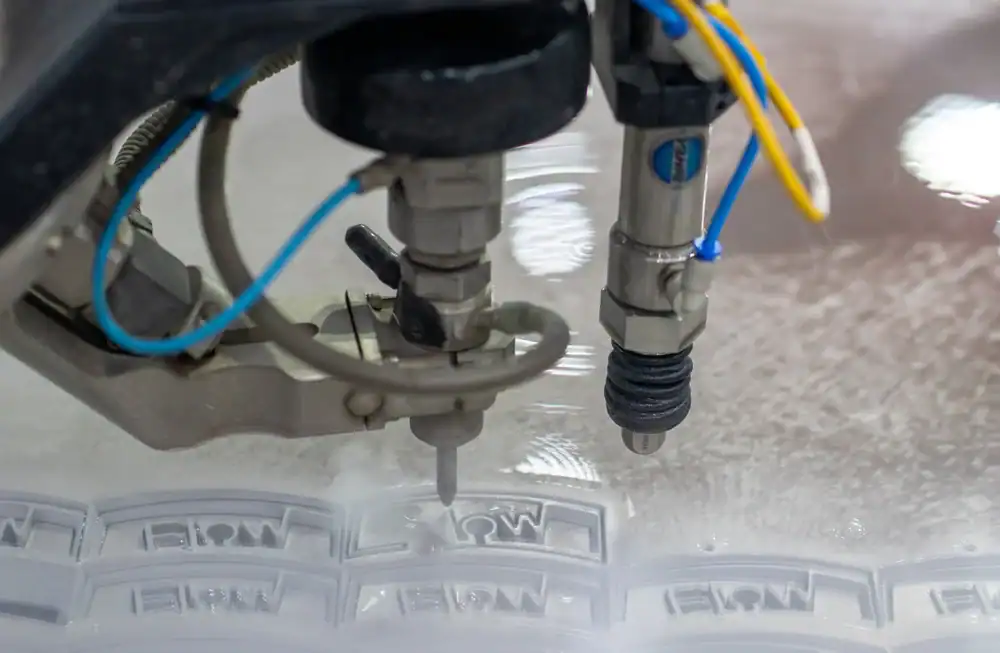
Your parts come back ready to use. No grinding down rough edges. No dealing with heat-affected zones that compromise material integrity. No explaining to your client why dimensions shifted during cutting.
Waterjet cutting services in Rockville Centre, NY handle everything from 1/8-inch aluminum to 18-inch stainless steel with the same level of precision. Tolerances hold at +/- 0.001 inches because there’s no thermal distortion pulling your specs out of range.
The process works for intricate patterns in stone, tight radius cuts in titanium, or production runs in acrylic. You send detailed drawings, and you get back parts that fit the first time. That means faster project timelines, less material waste, and fewer conversations about why something doesn’t line up.
We work with architects, contractors, fabricators, and manufacturers across Long Island and the greater New York area. Our shop combines CAD design capabilities with CNC-controlled abrasive waterjet cutting to turn your concepts into production-ready parts.
Rockville Centre sits in the heart of Nassau County’s manufacturing corridor, where limited industrial space means every square foot counts. You need a cutting partner who understands tight timelines and tighter tolerances—someone who’s handled everything from custom architectural metalwork to marine fabrication components.
We’ve worked through the challenges Long Island businesses face: coordinating with NYC-based designers, meeting specs for coastal installations, and delivering on schedules that don’t have room for do-overs.
You start by sending over your design files or specifications. CAD drawings work best, but sketches with dimensions get the conversation started. Our design team reviews your project to confirm material selection, cutting paths, and any nesting opportunities that reduce waste and cost.
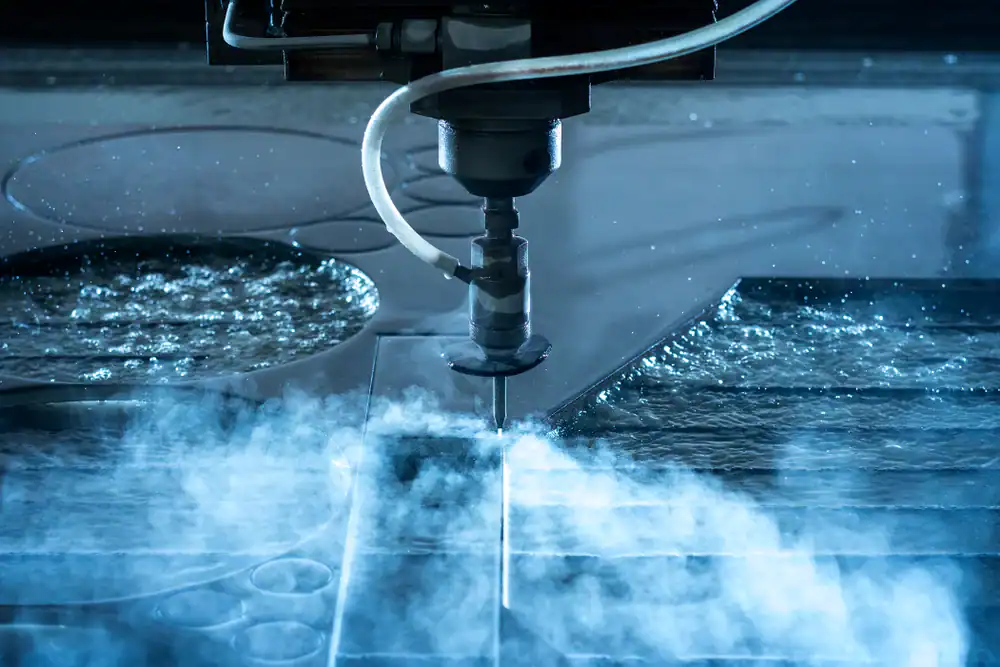
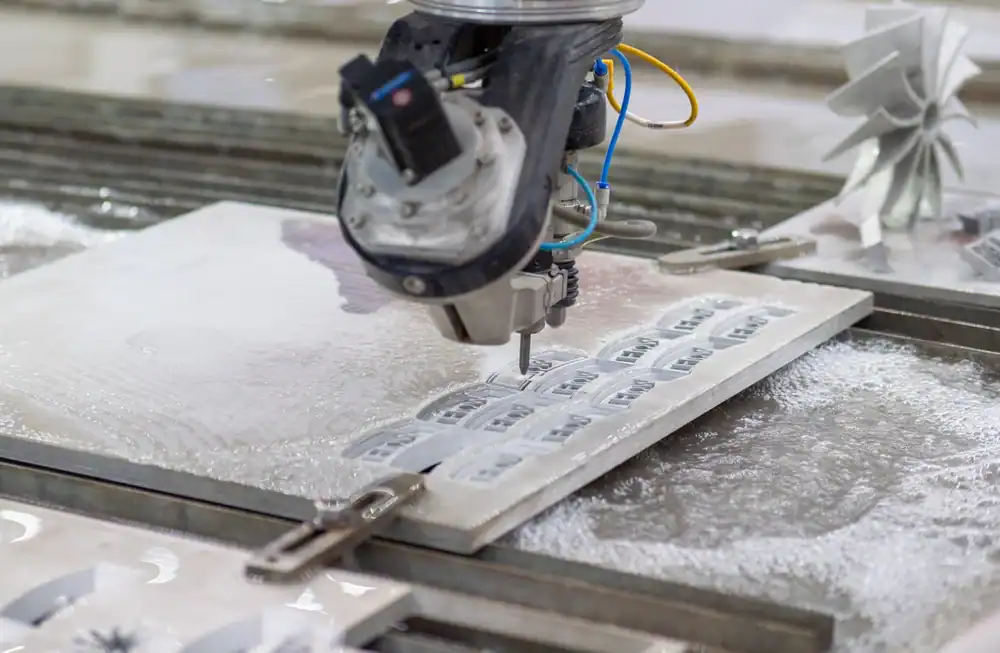
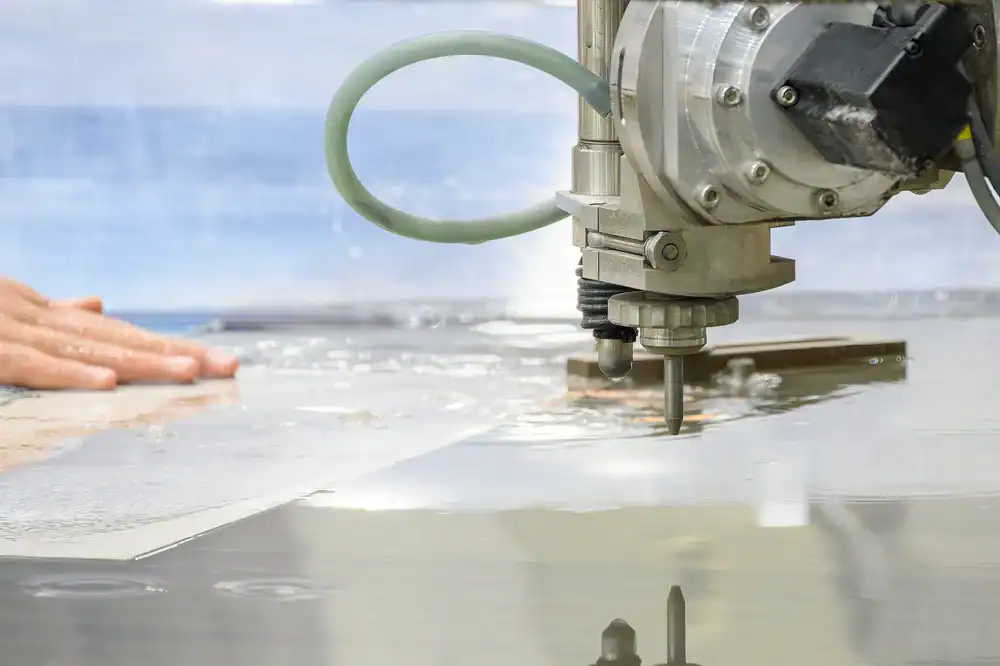
Once the design is locked in, your material gets positioned on the cutting table. Our waterjet system uses a stream of water pressurized up to 60,000 PSI, mixed with fine abrasive particles, to cut through your material. The CNC controls follow your exact specifications while the cutting head moves in precise patterns.
There’s no heat involved, so materials don’t warp or harden. The edge quality comes out smooth enough that most parts go straight into assembly or installation. Complex shapes, tight inside corners, small holes—all of it gets cut in a single operation without tool changes or secondary processes.
You pick up parts that match your drawings, or we deliver them to your Rockville Centre, NY location ready for the next phase of your project.
Ready to get started?
Our service covers material consultation before cutting starts. If you’re unsure whether your specified material will perform as expected, or if there’s a more cost-effective option that meets your requirements, that conversation happens upfront.
Cutting capabilities include metals like stainless steel, aluminum, titanium, and Inconel. Stone, glass, composites, plastics, and rubber all cut cleanly without cracking or melting. Thickness ranges from thin gauge sheet up to several inches, depending on material density.
For Rockville Centre, NY projects, this matters because Long Island’s architectural and marine sectors often require non-standard materials. Coastal installations need corrosion-resistant metals. Custom architectural elements need stone or composite materials cut to exact profiles. Automotive restoration shops need vintage parts replicated in original materials.
Production runs scale from single prototypes to thousands of identical parts. Our waterjet system handles both with the same level of accuracy because it’s CNC-controlled and repeatable. Rush timelines get accommodated when your project can’t wait, and material nesting optimizes larger orders to keep costs down.
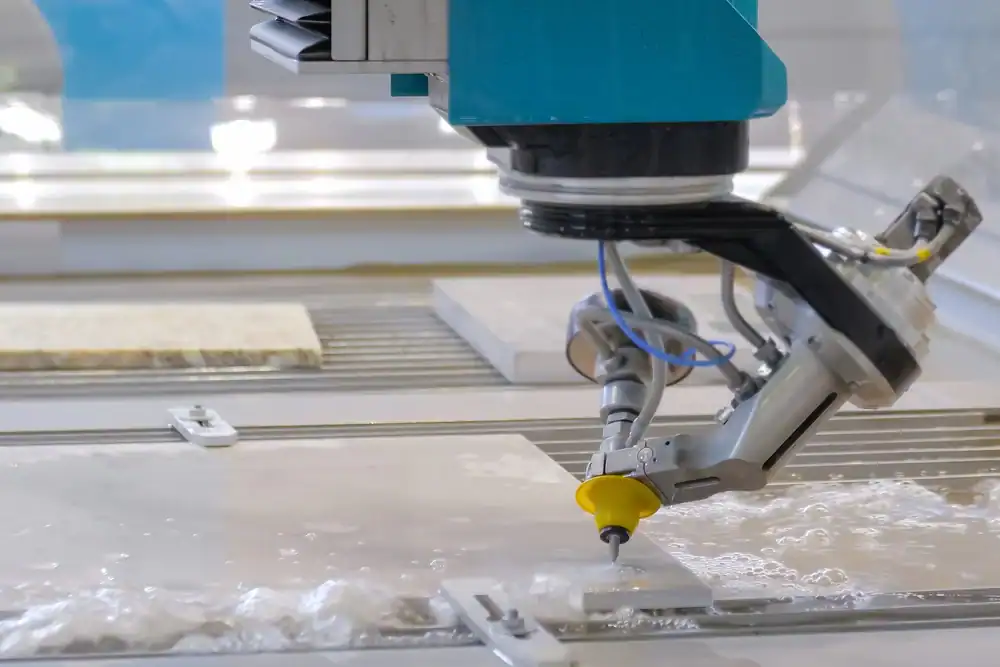
Waterjet cuts materials that would crack under laser heat or shatter with mechanical cutting. Tempered glass, for example, stays intact because there’s no thermal stress. Titanium and Inconel cut cleanly without work hardening that makes subsequent machining difficult.
Composite materials like carbon fiber don’t delaminate because the cutting force is distributed through a thin stream rather than concentrated at a blade edge. Rubber and foam cut precisely without compression or tearing. Stone and tile cut without chipping edges.
The real advantage shows up when you’re working with expensive materials. There’s no heat-affected zone to trim away, no burnt edges to grind down, and no risk of warping that turns a $500 piece of material into scrap. For Rockville Centre, NY fabricators working with specialty metals or architectural stone, that waste reduction directly impacts project budgets.
Laser and plasma both use extreme heat to melt through metal. That heat changes the material properties along the cut edge—hardening the surface, creating oxidation, and often warping thin materials. You end up with secondary operations: grinding, stress relieving, sometimes even re-machining to bring parts back into tolerance.
Waterjet cutting in Rockville Centre, NY uses high pressure water and abrasive particles to erode material without heat. The cut edge comes out smooth, with no hardened zone and no thermal distortion. Parts maintain their original material properties right up to the cut line.
Thickness is another factor. Laser struggles beyond an inch in steel; plasma gets rough and imprecise on thicker materials. Waterjet handles stainless steel up to 18 inches thick with consistent edge quality. For heavy fabrication work or projects requiring thick plate, waterjet is often the only practical option that doesn’t require multiple setups or processes.
Standard waterjet cutting holds tolerances around +/- 0.005 inches for most materials and thicknesses. With optimized parameters and thinner materials, that tightens to +/- 0.001 inches. Those numbers apply to the actual cut path—where the waterjet stream follows your programmed line.
What matters more for your project is understanding where tolerances matter. Inside corners have a radius determined by the cutting stream width, typically around 0.030 inches. If you need sharp corners, the design needs to account for that radius or plan for a secondary operation.
For Rockville Centre, NY manufacturers working on precision assemblies, waterjet offers an advantage: the tolerances stay consistent across different materials. You’re not dealing with different thermal expansion rates or tool wear patterns that shift dimensions mid-production. A part cut from aluminum holds the same tolerances as the same part cut from stainless steel, which simplifies multi-material projects and reduces the variables you need to track.
Programming and setup usually take a few hours for straightforward projects—less if you’re providing clean CAD files with clearly defined cut paths. The actual cutting time depends on material thickness, complexity, and total cut length. A simple bracket in 1/4-inch aluminum might cut in minutes. An intricate architectural panel in 2-inch stone could run several hours.
Production runs move faster per piece because setup time gets distributed across multiple parts. Nesting parts efficiently on the material sheet reduces both cutting time and waste. Rush jobs get prioritized when you’re up against a deadline, though that depends on current shop capacity.
For most Rockville Centre, NY projects, turnaround runs from a few days to a week. Single prototypes or small custom orders often ship within 48 hours if material is in stock. Larger production runs or projects requiring special material procurement take longer. The key is communicating your timeline upfront so the schedule can be planned around your needs rather than discovering conflicts after you’ve committed to a delivery date with your client.
The cutting process generates a slurry of water and spent abrasive (typically garnet) mixed with fine particles of whatever material got cut. That slurry collects in a tank below the cutting table and gets filtered and disposed of according to environmental regulations. There are no toxic fumes, no hazardous chemical byproducts, and no heavy metal dust in the air.
Material waste depends entirely on how efficiently parts get nested on the sheet. Skilled programming arranges parts to maximize material usage, often achieving 80-90% utilization on production runs. The leftover skeleton of material is recyclable if you’re cutting metal, or it goes to standard disposal for other materials.
For businesses in Rockville Centre, NY focused on sustainable manufacturing practices, waterjet cutting offers a cleaner alternative to processes that generate chemical waste or require extensive ventilation systems. Operating costs stay reasonable—typically $12 to $35 per hour depending on material and cutting parameters—and the environmental footprint remains minimal compared to thermal cutting methods that consume more energy and create airborne contaminants.
Yes, but the process requires creating new CAD drawings from your existing part. You provide a sample, and our design team measures critical dimensions, profiles, and hole locations to build an accurate digital model. That model then drives the waterjet cutting program.
Accuracy depends on the condition of your sample part and how precisely it needs to be replicated. Worn or damaged parts might need interpretation—deciding which dimensions represent original specs versus wear patterns. Complex curves or three-dimensional profiles may need additional measurement tools or techniques to capture accurately.
This comes up frequently with Rockville Centre, NY automotive restoration projects and marine repair work where original parts are no longer manufactured. We can reproduce brackets, panels, and structural components in original materials or modern alternatives. The key is having a sample that clearly represents what you need, and being specific about which dimensions are critical versus which have acceptable variation. Once the CAD file exists, reproducing that part becomes repeatable for future orders.
Useful Links
Other Services we provide in Rockville Centre