Hear from Our Customers
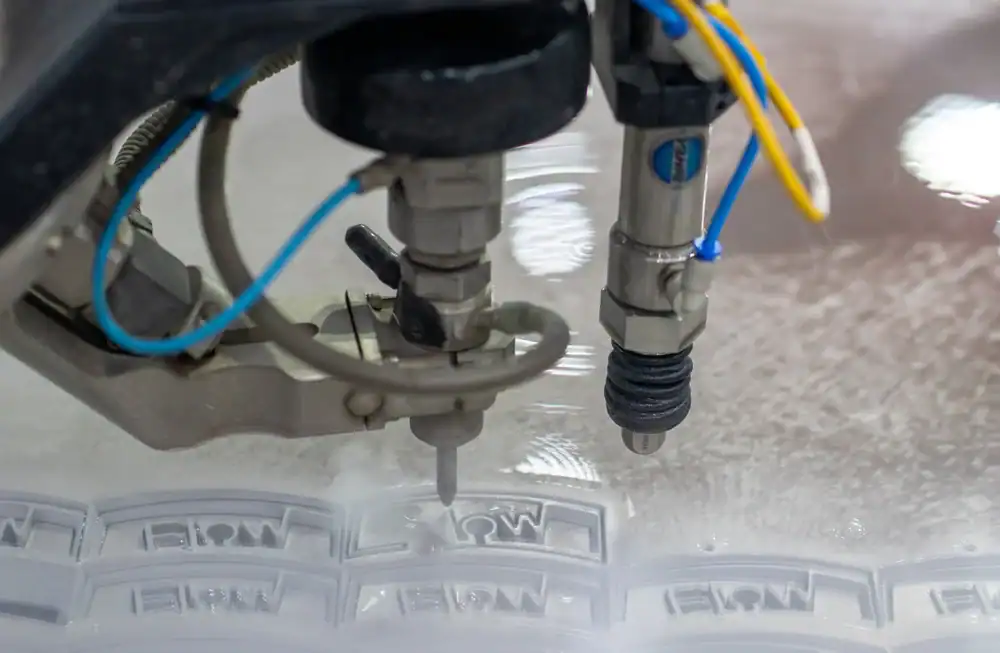
You’re dealing with specs that don’t forgive mistakes. A bracket that’s off by a few thousandths means delays, rework, and explaining to your customer why their timeline just shifted. That’s not a position you want to be in.
Waterjet cutting removes the guesswork. The process uses high pressure water mixed with abrasive garnet to cut through materials without introducing heat, which means no warping, no hardened edges, and no HAZ issues that create problems during welding or assembly. You get parts that match your CAD file down to 0.005 inches.
Whether you’re prototyping a single component or running production batches, the cuts stay consistent. No tool wear changing dimensions halfway through a run. No secondary deburring eating into your schedule. Just parts that fit your application the way you designed them.
We serve the Rocky Point area and the broader Long Island manufacturing community. This region has over 3,000 small and medium manufacturers across Nassau and Suffolk counties, many working in aerospace, medical devices, and advanced manufacturing where precision isn’t optional.
We’ve worked with shops that need aerospace-grade accuracy on aluminum and titanium, fabricators cutting architectural panels, and engineers prototyping medical components. The common thread is that heat-based cutting methods either won’t work for their material or create problems downstream.
Rocky Point sits in a manufacturing corridor that values local suppliers who understand tight deadlines and tighter tolerances. We’re set up to handle both.
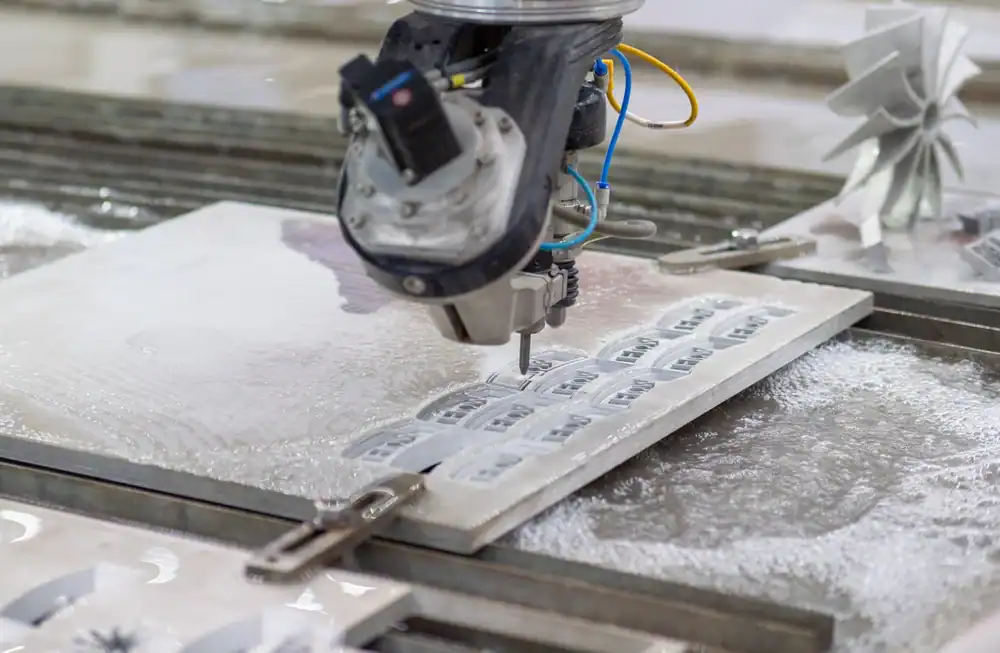
You send us your CAD file or technical drawing with material specs and tolerances. We review it to confirm the design works with waterjet cutting and flag anything that might cause issues before we start cutting. If you’re working with a complex geometry or a material you haven’t cut before, we’ll walk through it with you.
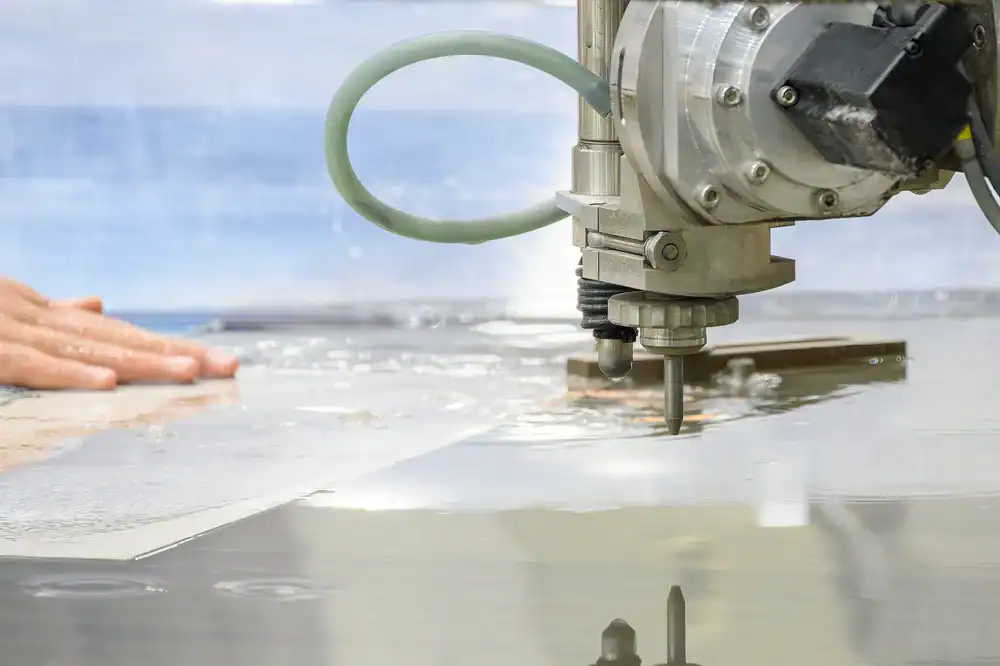
Once the file is dialed in, we program the CNC waterjet system. The cutting head moves along your programmed path while pressurized water mixed with abrasive garnet streams through a nozzle thinner than a hair. That stream cuts through your material—whether it’s half-inch stainless steel, glass, composites, or stone—without generating heat.
Because there’s no thermal distortion, parts come off the table ready to use or move directly into your next operation. You’re not waiting on deburring, grinding, or stress-relieving. For prototypes, you get fast turnaround to test fit and function. For production runs, you get repeatable accuracy across every piece.
Ready to get started?
Abrasive waterjet cutting handles materials that give other processes trouble. Metals like aluminum, stainless steel, titanium, and tool steel cut clean without work hardening the edges. Glass and stone cut without cracking. Composites and plastics cut without melting or delaminating.
Long Island’s manufacturing base leans heavily on aerospace and medical device production, where material integrity matters as much as dimensional accuracy. When you’re cutting components for an aerospace assembly, you can’t introduce microfractures or change the material properties at the cut edge. Waterjet cutting leaves the material structure intact.
Rocky Point manufacturers also use our services for architectural metalwork, custom signage, gaskets, and mounting brackets. The process works for one-off custom pieces and production runs alike. If you’re cutting intricate shapes, tight inside corners, or patterns that would require multiple setups on a traditional machine, waterjet does it in a single operation.
The versatility means you’re not bouncing between multiple vendors for different materials. One process, one setup, consistent results across whatever you’re building.
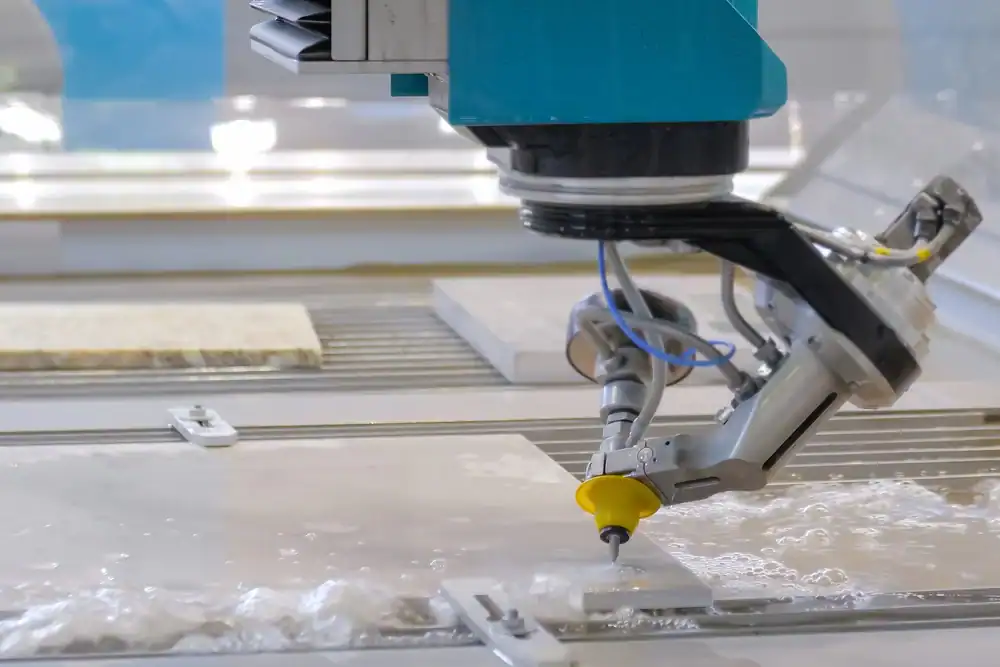
We cut metals including aluminum, stainless steel, titanium, tool steel, copper, and brass across a range of thicknesses. We also handle non-metals like glass, stone, ceramics, composites, carbon fiber, plastics, rubber, and foam.
The process works because it’s mechanical cutting, not thermal. There’s no melting, burning, or heat-affected zone. That makes it ideal for materials that are heat-sensitive, brittle, or prone to warping under traditional cutting methods like plasma or laser.
If you’re unsure whether your material works with waterjet, send us the specs. We’ll confirm compatibility and let you know what kind of edge quality and tolerances to expect for that specific material and thickness.
Waterjet cutting holds tolerances down to ±0.005 inches on most materials and applications. For context, that’s about the thickness of a sheet of paper. When you’re building parts that need to fit into assemblies with tight clearances, that level of accuracy matters.
The CNC system controls the cutting head’s path based on your CAD file, so what you design is what you get. There’s no tool deflection or wear changing dimensions partway through a job. The abrasive stream cuts consistently from the first part to the last.
For aerospace components, medical device parts, or any application where dimensional accuracy affects function or safety, waterjet delivers repeatable results. If your specs call for tighter tolerances on specific features, let us know upfront so we can confirm feasibility and adjust programming as needed.
In most cases, no. Waterjet cutting produces smooth edges with minimal burr, especially compared to plasma, laser, or mechanical cutting methods. Parts often come off the table ready for assembly or the next manufacturing step without additional finishing.
The edge quality depends on your material, thickness, and cutting speed. For thicker materials or faster cuts, you might see a slight taper or texture on the bottom edge. For most applications, it’s well within acceptable limits and doesn’t affect fit or function.
If your application requires a specific edge finish—like a polished edge for architectural work or a deburred edge for a gasket—we can adjust cutting parameters or recommend post-processing. But for the majority of parts, what comes off the waterjet is what you’ll use.
Turnaround depends on material availability, complexity, and our current queue. For straightforward cuts on common materials, we’re often talking days, not weeks. Rush jobs can sometimes run faster if the schedule allows.
Prototypes and small batches typically move quicker because there’s less material prep and setup time. Production runs take longer but benefit from efficiencies once the job is programmed and dialed in. Complex geometries or thick materials add cutting time, but we’ll give you a realistic timeline upfront.
If you’re working against a deadline, let us know when you request a quote. We’ll tell you whether it’s doable and what it takes to hit your date. Rocky Point-area customers often need fast turnaround for prototype testing or to keep production lines moving, and we’re set up to accommodate that when possible.
Waterjet doesn’t introduce heat, which eliminates a long list of problems that come with thermal cutting. No heat-affected zone, no warping, no hardened edges that cause issues during welding, and no material property changes that affect performance.
Laser and plasma work well for certain applications, especially thin metals where speed matters more than edge quality. But if you’re cutting thicker materials, working with heat-sensitive composites, or need to maintain tight tolerances without secondary operations, waterjet is the better choice.
Waterjet also cuts a wider range of materials in one system. You’re not switching between processes for metal versus glass versus composites. That versatility matters when you’re prototyping or running mixed-material projects where consistency across different cuts keeps your workflow efficient.
Yes. Long Island has a strong aerospace and medical device manufacturing presence, and those industries require precision that doesn’t compromise material integrity. Waterjet cutting meets those standards because it’s a cold-cutting process that doesn’t alter the material’s structural properties.
For aerospace components made from aluminum, titanium, or composites, waterjet delivers the accuracy and edge quality needed for parts that go into high-stress environments. There’s no risk of microfractures, heat distortion, or contamination that could lead to failure down the line.
Medical device manufacturers use waterjet for components like orthopedic implants, surgical instruments, and device housings where biocompatibility and precision are non-negotiable. The process produces clean cuts without introducing contaminants or stresses that affect performance. If your application has strict tolerances or material requirements, waterjet handles it.
Useful Links
Other Services we provide in Rocky Point