Hear from Our Customers
You’re not cutting material just to cut it. You need parts that meet spec, edges that don’t need rework, and turnaround times that keep your production moving.
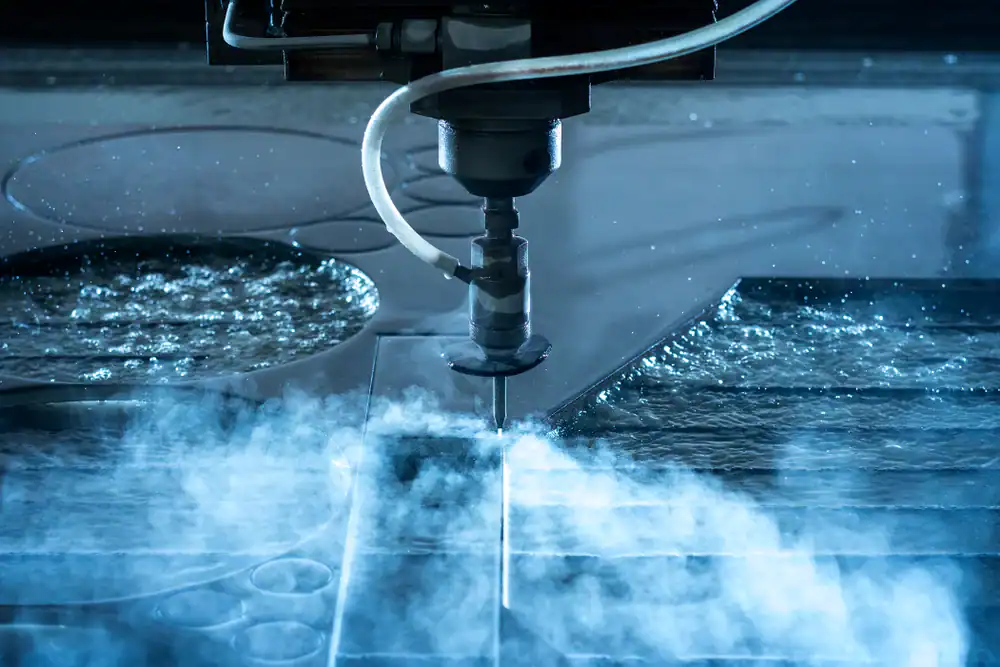
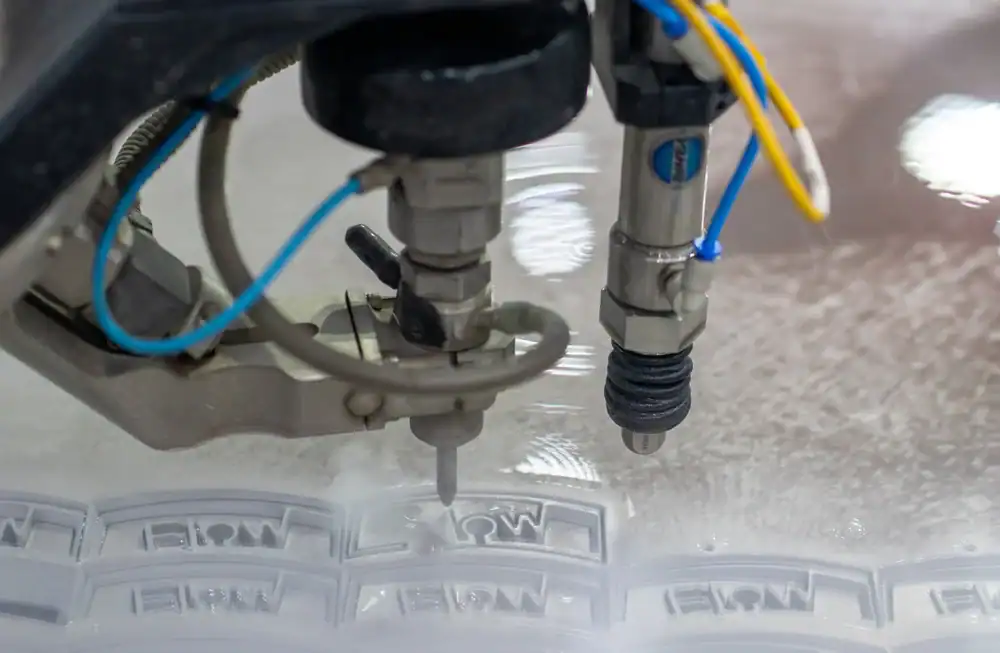
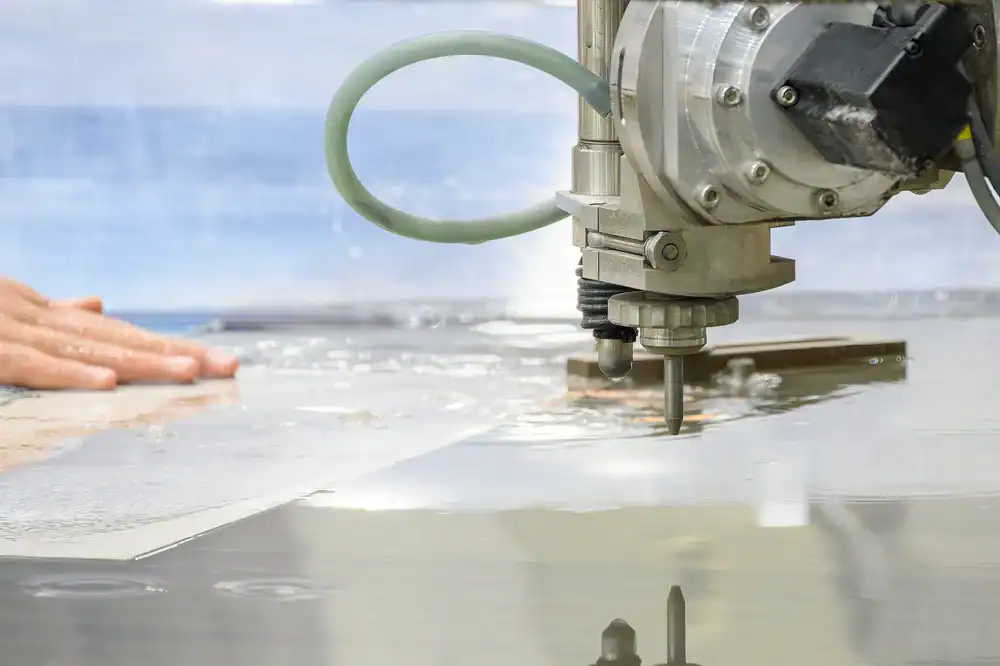
Waterjet cutting in Salisbury, NY gives you that control. The process uses a high-pressure stream of water mixed with abrasive garnet to slice through metal, stone, glass, composites, and plastics without generating heat. That means no warping, no hardened edges, no secondary cleanup on most jobs.
You get cleaner cuts, tighter tolerances, and less scrap. Whether you’re prototyping a single piece or running a production batch, the process adapts to your material and your timeline without compromising accuracy. If you’re working with thick stainless steel, intricate aluminum parts, or layered composites, abrasive waterjet cutting handles it without changing tooling or setup.
We’ve been running custom waterjet cutting services in Salisbury, NY and across the tri-state region for over 20 years. We’ve cut parts for aerospace suppliers, medical device manufacturers, architectural fabricators, and industrial equipment builders who need precision they can verify.
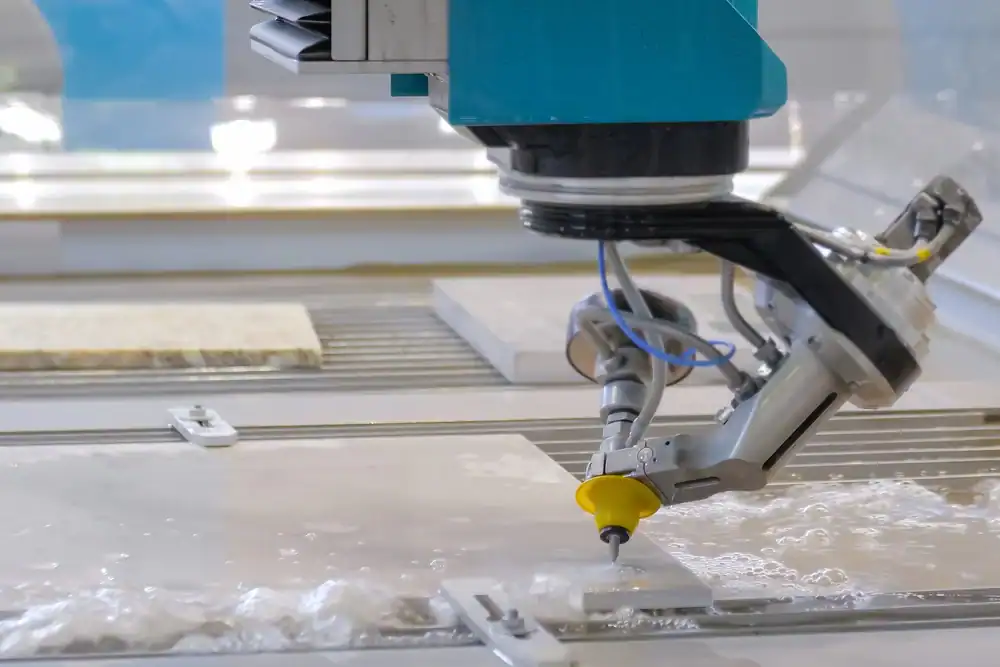
Our shop runs a Flow Mach 500 4020 with a Dynamic XD cutting head, which gives us five-axis capability for complex angles and beveled edges. We inspect the first piece on every job, adjust as needed, then run your order with consistent quality checks throughout. Salisbury’s manufacturing sector demands that level of accountability, and we’ve built our reputation on delivering it.
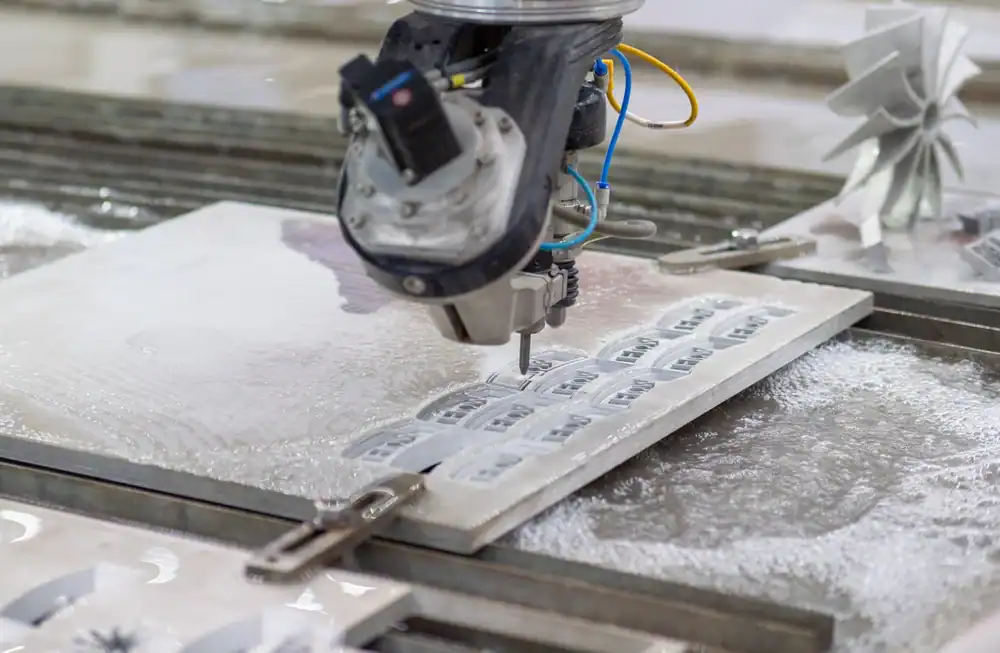
You send us your CAD file or design specs, and we program the cut path into our CNC system. If you don’t have a file ready, we can create one based on your drawings or samples.
Once programming is set, we load your material onto the cutting bed and run a test piece. We measure it against your tolerances, make any micro-adjustments to pressure or speed, then start your production run. The waterjet stream cuts through your material at up to 90,000 PSI, guided by the CNC system to follow your exact geometry.
Throughout the run, we monitor cut quality and dimensions. After cutting, we inspect finished parts to confirm they meet your specifications. If you need additional services like deburring, drilling, or fabrication, we handle that in-house before shipping. Most jobs turn around within days, and we offer emergency service when your timeline is tighter.
Ready to get started?
Every waterjet cutting service in Salisbury, NY we run includes material inspection, programming, test cuts, and final quality verification. You’re not paying for just machine time—you’re getting process control that keeps your parts within tolerance.
We cut ferrous and non-ferrous metals including aluminum, stainless steel, titanium, brass, and Inconel up to 12 inches thick. We also handle stone, granite, marble, glass, acrylic, rubber, foam, and composite materials. If your design includes tight inside corners, intricate curves, or stacked layers, our five-axis head can bevel edges and cut complex angles without repositioning your material.
Salisbury’s proximity to New York’s advanced manufacturing corridor means we see a lot of requests for aerospace-grade tolerances and medical device precision. We’re set up for that level of accuracy. We also work with local fabricators, artists, and equipment builders who need one-off custom pieces or small production runs. The process scales to your volume without sacrificing quality, and we keep setup costs low by maximizing material usage through smart nesting.
Waterjet cutting holds tolerances as tight as +/- 0.001 inches on most materials, which puts it ahead of plasma and competitive with laser for precision work. The difference is that waterjet doesn’t generate heat, so you avoid the warping and hardened edges that thermal cutting methods create.
Laser cutting works well for thinner materials and offers fast speeds, but it struggles with reflective metals like aluminum and copper. Plasma is affordable for thick steel but leaves a rougher edge that usually needs grinding. Waterjet gives you clean cuts across a wider range of materials and thicknesses without changing your process or worrying about heat-affected zones.
If you’re cutting parts that need to fit together with minimal gap, or you’re working with materials that can’t tolerate heat exposure, waterjet is the more reliable choice. It’s also the only method that can cut stone, glass, and composites with the same machine setup you’d use for metal.
We can cut materials up to 12 inches thick, but practical thickness depends on your material type and tolerance requirements. For metals like stainless steel and aluminum, we regularly cut 6 inches thick with excellent accuracy and edge quality.
As material thickness increases beyond 8 inches, the waterjet stream begins to disperse slightly, which can affect precision on extremely tight tolerances. For most applications, though, we maintain accuracy well into the 10-12 inch range. Softer materials like foam, rubber, and plastics cut cleanly at full thickness without any quality loss.
If you’re working with thick Inconel, titanium, or tool steel, waterjet is often your only option besides EDM or traditional machining—both of which are significantly slower and more expensive. We’ve cut 24-inch Inconel plates for specialized applications, though at that thickness, speed drops and we recommend discussing your timeline and tolerance expectations upfront.
Waterjet cutting typically produces smooth edges with minimal to no burrs, especially compared to plasma, laser, or mechanical cutting. On most metals, the exit edge is clean enough to use as-is for welding, assembly, or finishing.
You may see a slight texture difference between the top and bottom edge of thicker materials—this is normal and happens because the jet loses a small amount of energy as it passes through. For parts where both edges need to be perfectly smooth, we can adjust cutting speed or run a finishing pass. In many cases, though, the edge quality straight off the waterjet is better than what you’d get from other methods even after secondary deburring.
If your application requires a polished or deburred edge, we offer those services in-house. But for functional parts, structural components, and most fabrication work, the cut edge is ready to go. That saves you time and cost compared to methods that require grinding, sanding, or additional machining after cutting.
Turnaround time depends on material thickness, part complexity, and your quantity, but most jobs complete within 3-5 business days from file approval. Simple cuts on thinner materials can often be done in 1-2 days, and we offer emergency service for urgent needs.
Cutting speed varies by material. Aluminum and softer metals cut faster than stainless steel or titanium. A quarter-inch aluminum part might take a few minutes, while a 4-inch stainless steel component could take 30-45 minutes depending on the cut path. We optimize speed without sacrificing accuracy, and our CNC system runs efficiently to keep your costs down.
If you’re running a production order, we can give you a more precise timeline once we review your files and material specs. For prototypes or one-off custom pieces, we prioritize quick turnaround because we know you’re often waiting on that part to move forward. When timing is critical, let us know upfront—we’ll work with your schedule.
We accept most standard CAD file formats including DXF, DWG, AI, EPS, and PDF. DXF files work best because they translate directly into our CNC programming software with minimal conversion issues.
If you’re working in AutoCAD, SolidWorks, Illustrator, or similar programs, you can export your design as a DXF or DWG and send it over. We’ll review it for any potential cutting issues—like lines that don’t close properly or dimensions that don’t match your specs—and reach out if we need clarification before programming.
Don’t have a CAD file? We can create one from your drawings, sketches, or physical samples. There’s usually a small setup fee for file creation, but it’s straightforward and ensures your parts cut exactly as you need them. If you’re unsure whether your file will work, send it over and we’ll let you know within a few hours.
Yes, waterjet cutting excels at intricate designs, tight curves, and detailed patterns that would be difficult or impossible with other cutting methods. The jet stream is thinner than a human hair, which allows for sharp corners and complex geometries without tool limitations.
Inside corners will have a small radius equal to the jet diameter—typically around 0.03 inches—because the stream is round. If your design requires perfectly square inside corners, we’d need to use a different method or add a secondary operation. For most applications, though, that minimal radius doesn’t affect fit or function.
Our five-axis cutting head also gives us the ability to bevel edges and cut angled features without repositioning your material. If you’re creating architectural elements, artistic metalwork, or precision parts with complex profiles, waterjet gives you design freedom that other processes can’t match. We’ve cut everything from ornate decorative panels to aerospace components with dozens of small holes and cutouts—all held to tight tolerances.
Useful Links
Other Services we provide in Salisbury