Hear from Our Customers
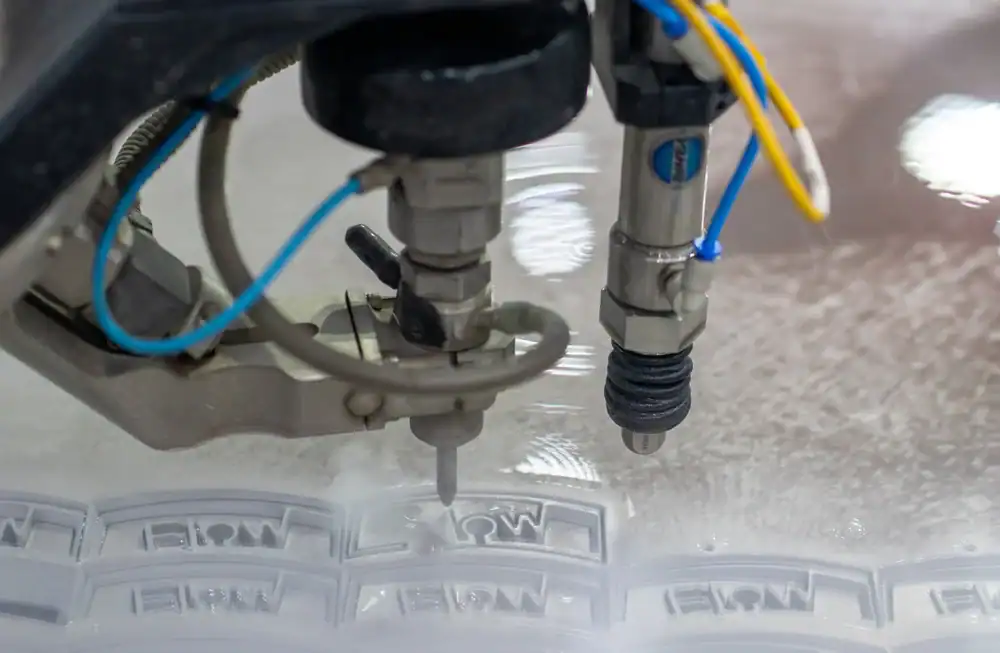
You’re not looking for cutting services that create more problems than they solve. Heat-affected zones, warped edges, and inconsistent tolerances mean rework, delays, and explaining to your client why the job isn’t done right.
High pressure water cutting eliminates those headaches entirely. No thermal distortion means your aluminum doesn’t warp, your composites don’t delaminate, and your tight-tolerance aerospace components actually meet the specs you were handed. The cut is clean, the edge is smooth, and you’re not dealing with secondary finishing operations that eat into your timeline.
Whether you’re prototyping a single custom piece or running a production batch, waterjet cutting services in Sayville, NY handle materials from titanium and stainless steel to acrylic and stone with the same precision. You send the CAD file, we cut it accurately, and you get parts that fit the first time.
We serve the architects, designers, contractors, and manufacturers across Suffolk County who need precision cutting without the runaround. Based in West Islip and serving Sayville, we’re positioned right in the middle of Long Island’s manufacturing corridor—home to over 3,000 manufacturing companies that depend on reliable, local fabrication partners.
You’re working with a team that understands what Long Island’s aerospace contractors, architectural firms, and custom fabricators actually need: quick turnaround, material expertise, and the kind of accuracy that keeps projects moving. We’ve handled everything from one-off architectural inlays to aerospace-grade components that demand zero margin for error.
When you’re coordinating with multiple trades or managing tight project deadlines, having a waterjet cutting shop in Sayville, NY that picks up the phone and delivers on time matters more than you’d think.
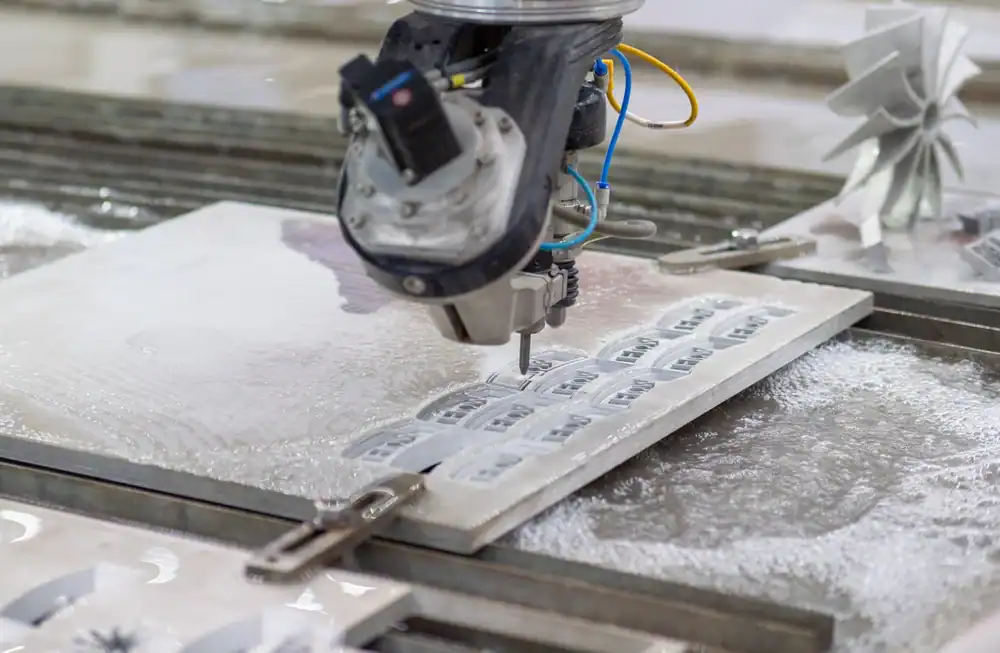
The process starts with your design file or concept. If you’ve got a CAD drawing, we can work directly from that. If you’re still figuring out material selection or design feasibility, we’ll walk through options based on what you’re trying to accomplish and how the part will be used.
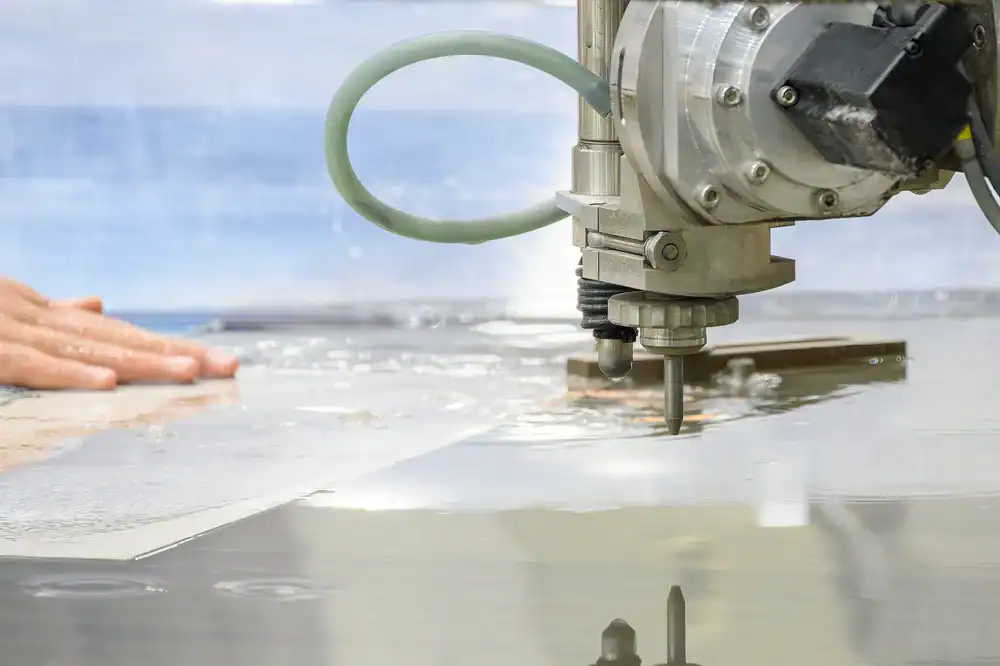
Once the design is locked in, we program the waterjet system to follow your exact specifications. The cutting head uses a high-pressure stream of water mixed with abrasive garnet to cut through your material with precision that holds tolerances most thermal methods can’t touch. There’s no heat, no HAZ, and no material stress that’ll come back to bite you later.
After cutting, your parts come off the table ready to use or ready for whatever secondary operations you’ve planned. No burning, no melting, no oxide layer to clean up. For complex geometries, intricate patterns, or materials that don’t play nice with lasers or plasma, this is how you get it done right.
You’ll see consistent results whether it’s your first prototype or your five-hundredth production piece. That’s what abrasive waterjet cutting in Sayville, NY is built to deliver.
Ready to get started?
Custom waterjet cutting in Sayville, NY means you’re getting material versatility that covers metals like aluminum, stainless steel, titanium, and tool steel, plus non-metals including granite, marble, glass, plastics, rubber, and composites. If you’re in aerospace, that means cutting components without affecting material properties or introducing defects. If you’re in architecture, that means intricate decorative panels, custom inlays, and signage cut cleanly in stone, metal, or acrylic.
The process handles complex geometries and tight nesting to minimize material waste, which matters when you’re working with expensive alloys or specialty materials. You’re not paying for a bunch of scrap you can’t use.
Sayville sits in a manufacturing hub where quick access matters. Suffolk County’s concentration of aerospace, medical device, and advanced manufacturing companies means turnaround time isn’t just a convenience—it’s a competitive requirement. Local waterjet cutting services give you faster communication, shorter lead times, and the ability to adjust on the fly when specs change or quantities shift.
For projects that need both precision and flexibility, waterjet cutting handles the job without the limitations you’d hit with laser, plasma, or mechanical cutting methods.
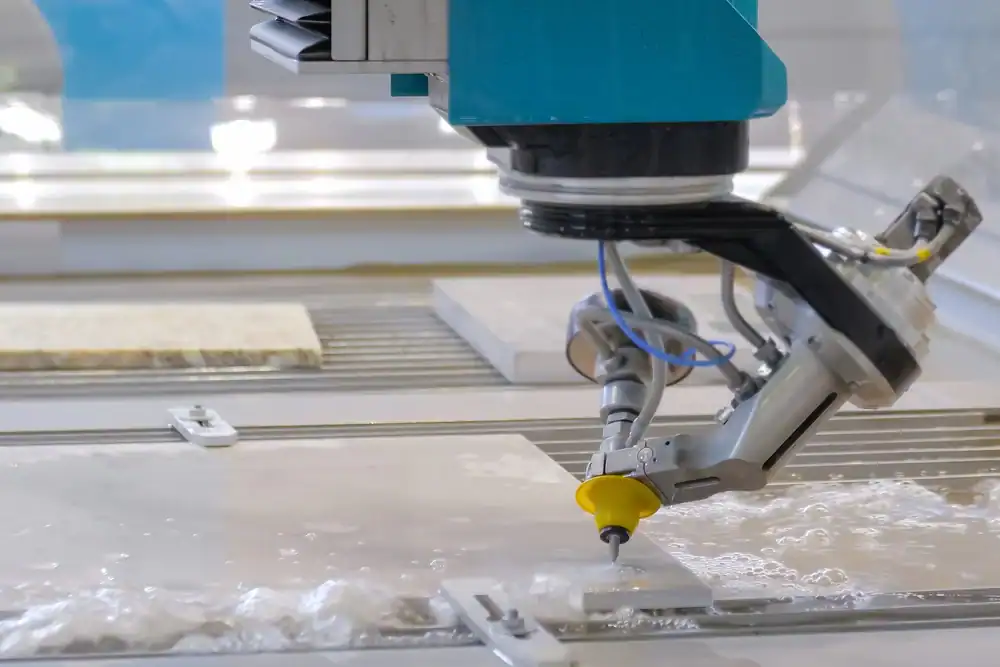
Waterjet cuts materials that are heat-sensitive or too hard for conventional methods. Plastics and composites won’t melt or delaminate because there’s no heat involved. Titanium, Inconel, and hardened tool steels cut cleanly without work hardening the edges or creating a heat-affected zone that compromises strength.
You’ll also see waterjet used for stacked cutting—multiple sheets or layers cut simultaneously—which saves time on production runs. Materials like rubber, foam, and gasket material that would tear or compress under mechanical cutting come out clean with waterjet.
If you’re combining materials in one assembly, waterjet handles dissimilar materials without switching processes. That means faster project completion and fewer handoffs between different fabrication shops.
Laser cutting is fast and works well for thinner materials, but it introduces heat. That heat creates a HAZ where material properties change, edges can oxidize, and thin materials may warp. For aerospace or medical applications where material integrity is non-negotiable, that’s a problem.
Waterjet cutting keeps the material cold throughout the process. There’s no thermal distortion, no hardened edges, and no secondary cleanup to remove slag or oxide. The kerf width is narrower, which means tighter nesting and less material waste on expensive stock.
Laser struggles with reflective materials like aluminum and copper because the beam reflects rather than cuts efficiently. Waterjet doesn’t care what the surface finish is—it cuts through regardless. For thicker materials over half an inch, waterjet maintains accuracy where laser quality starts to drop off.
Turnaround depends on material availability, complexity, and current queue, but most custom projects move faster than you’d expect. Simple cuts on standard materials can often be completed within a few days. More complex jobs with intricate geometries or specialty materials might take a week or two.
Being local to Sayville matters here. You’re not waiting on cross-country shipping or dealing with time zone delays when you need to clarify a design detail. If something changes mid-project or you need to adjust quantities, that conversation happens in real time.
For production runs, once the first piece is dialed in, the rest of the batch runs consistently without quality drift. That repeatability means predictable timelines you can actually build your project schedule around.
Absolutely. Waterjet cutting routinely holds tolerances within ±0.005″ on most materials, and even tighter on smaller parts with proper fixturing. Aerospace manufacturers including Lockheed Martin use waterjet technology specifically because it delivers precision without compromising material properties.
The process doesn’t introduce mechanical stress or thermal changes that could create microfractures or weak points. For aerospace applications where structural integrity isn’t optional, that matters enormously. You’re not just hitting dimensional specs—you’re maintaining the material performance the engineers specified.
Abrasive waterjet cutting in Sayville, NY handles the range of aerospace materials from aluminum alloys to composites to exotic metals, all without dedicated tooling for each material type. That flexibility speeds up prototyping and reduces costs on small-batch production runs where traditional machining setups would eat your budget.
Yes, because there’s no expensive tooling to create before cutting starts. Laser and punch press operations often require dedicated dies or setups that only make financial sense at higher volumes. Waterjet works directly from your CAD file, so the setup cost for one piece is nearly the same as for a hundred.
For custom architectural elements, prototype parts, or specialty components, that setup flexibility makes waterjet the practical choice. You’re paying for cutting time and material, not for tooling that only works for one specific design.
Material waste is lower with waterjet because the narrow kerf allows tighter part nesting. When you’re working with expensive materials like titanium or specialty stone, minimizing scrap directly impacts your project cost. The clean cuts also reduce or eliminate secondary finishing operations, which saves both time and money on labor.
A CAD file in DXF or DWG format gives the most accurate quote because it shows exact dimensions, geometries, and part complexity. If you don’t have a CAD file yet, a detailed sketch with dimensions and material specifications works too.
Specify your material type and thickness—that affects both cutting time and abrasive consumption. Let us know quantities, required tolerances, and timeline expectations. If you’re unsure about material selection or design feasibility, that’s worth discussing upfront because sometimes small design tweaks make cutting more efficient without compromising function.
For architectural or decorative work, reference images help clarify the vision, especially for custom patterns or artistic elements. The more detail you provide about the application and performance requirements, the better we can recommend materials and processes that’ll actually work for what you’re building.
Useful Links
Other Services we provide in Sayville