Hear from Our Customers
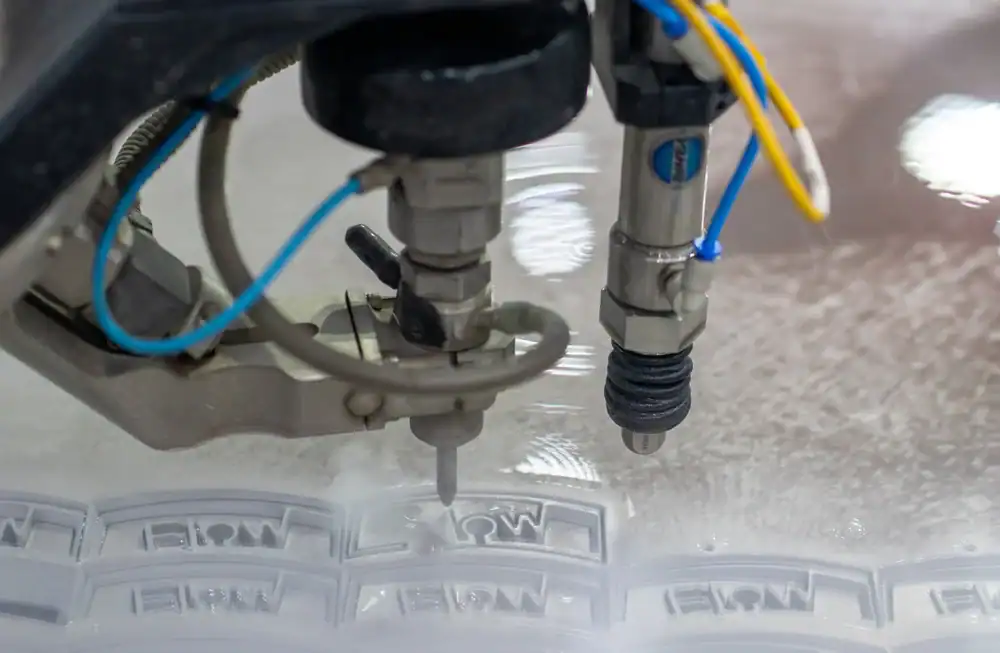
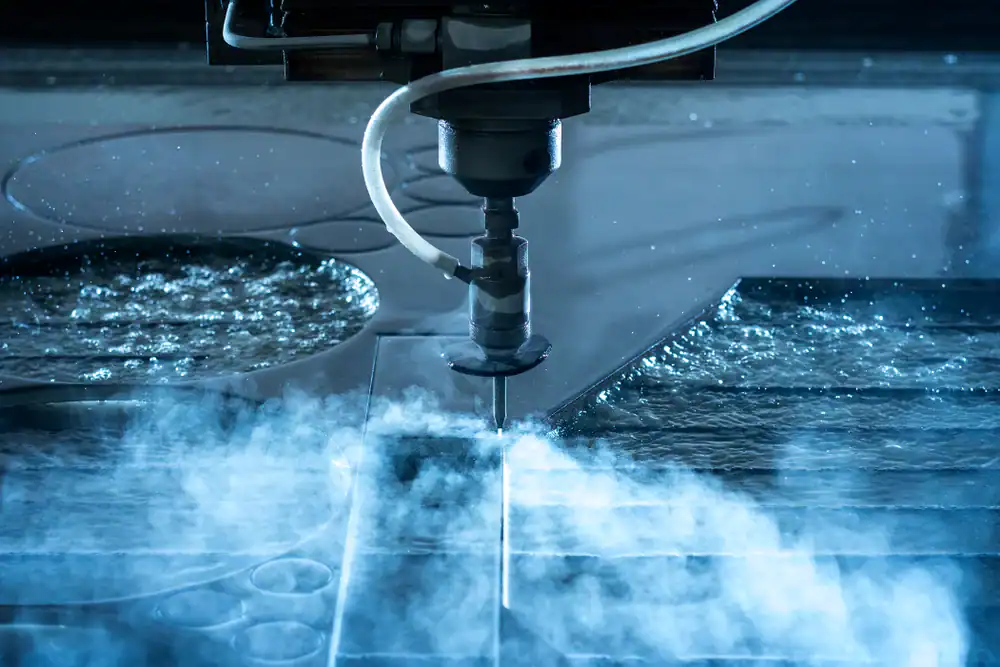
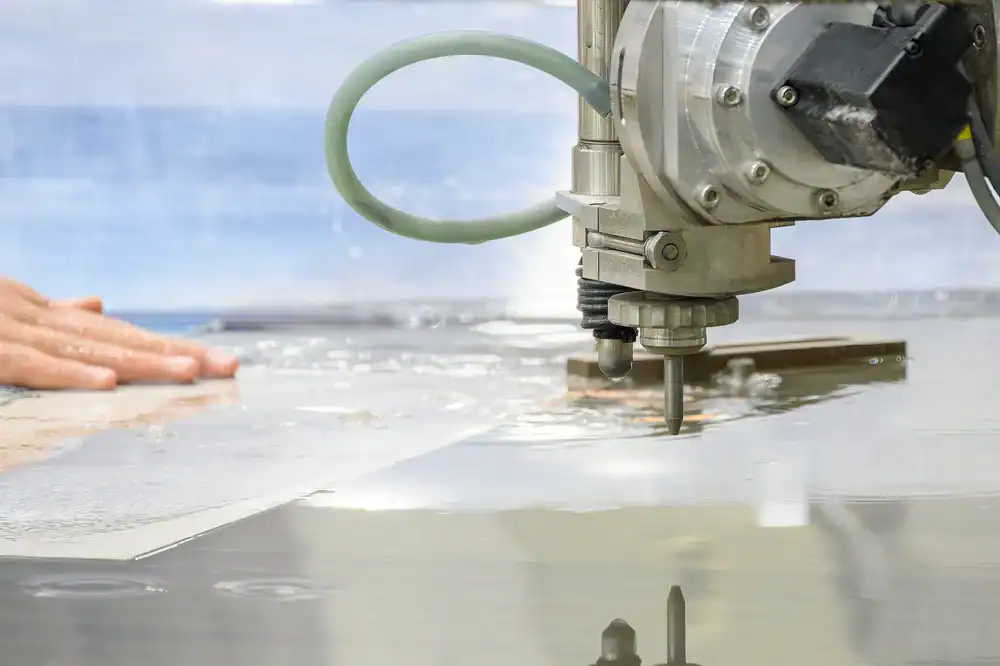
You get cuts that don’t warp, burn, or alter your material. High pressure water cutting doesn’t generate heat, which means no heat-affected zones and no compromised material properties. That matters when you’re working with titanium for aerospace components or stainless steel for architectural elements.
The process handles intricate geometries your laser cutter can’t touch. Complex curves, tight inside corners, detailed inlays—abrasive waterjet cutting in Smithtown, NY produces clean edges without secondary finishing in most cases. You’re looking at 30% less material waste compared to traditional cutting methods, which adds up fast on expensive materials.
Tolerances stay consistent whether you need one prototype part or a thousand production pieces. The same CAD file that cuts your first sample runs your full production order with repeatable accuracy. No retooling. No setup variations. Just consistent cuts that match your specifications.
We’ve been running custom waterjet cutting services in Smithtown, NY and across Long Island since the area’s manufacturing sector started its major expansion. We’ve watched Smithtown grow into a smart manufacturing hub, and we’ve cut parts for the aerospace contractors, electronics manufacturers, and architectural firms that call this area home.
Our shop in West Islip puts us close to the Hauppauge Industrial Park and the network of manufacturers, designers, and contractors throughout Suffolk County. You’re not shipping parts across the country and waiting weeks. You’re working with a waterjet cutting shop that understands the pace of Long Island manufacturing and the standards your industry demands.
We run ISO 9001:2015-certified processes because aerospace and medical device work requires it. But the real reason you’ll get consistent results is that we’ve been doing this long enough to know where cuts fail and how to prevent it.
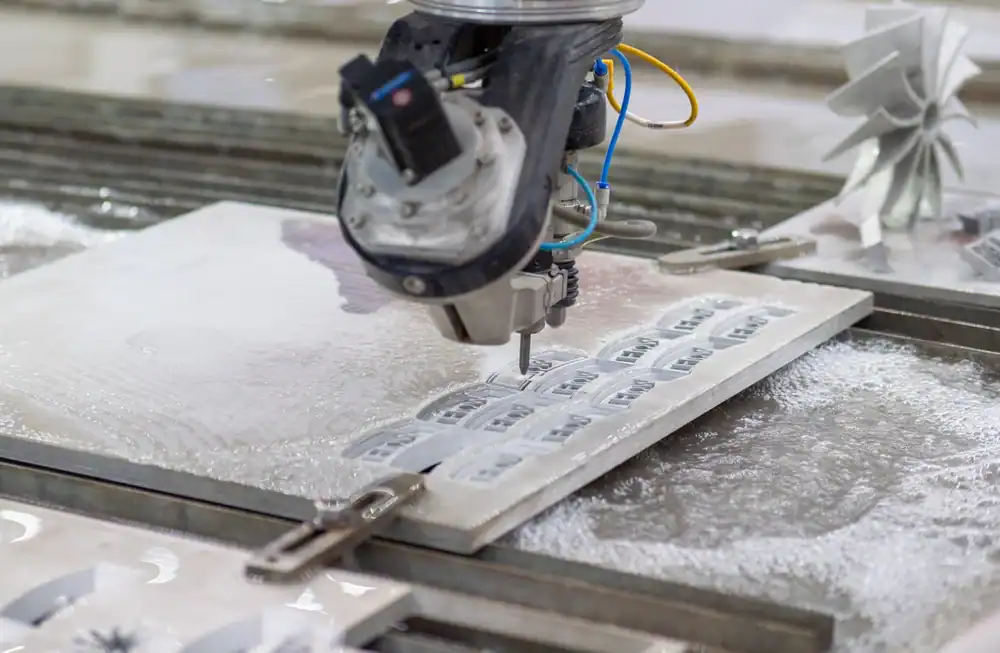
You send us your CAD file or design specs, and we review it for any potential issues with material thickness, edge quality, or tolerance requirements. If something won’t cut the way you need it to, we’ll tell you before we start—not after we’ve already run your material.
We program the cut path, select the appropriate abrasive media for your material, and dial in water pressure based on what you’re cutting and how thick it is. The waterjet stream moves through your material at speeds up to 100mm thick, controlled by CNC precision that holds those 0.01mm tolerances.
Once the cutting is complete, most parts come off the table ready to use. No grinding. No deburring. No heat treatment to correct warping. If you do need secondary operations like drilling or finishing, the clean edges from waterjet cutting make that work faster and more accurate. You’ll have parts in hand faster than you’d get them from most fabrication processes, whether it’s a single prototype or a production run.
Ready to get started?
Custom waterjet cutting in Smithtown, NY covers the full range of materials your project requires. Metals like titanium, stainless steel, aluminum, and tool steel. Stone, granite, and marble for architectural work. Glass, acrylic, and composites for specialty applications. The process doesn’t care about material hardness—it cuts ceramics as easily as rubber gaskets.
Smithtown’s manufacturing growth has brought increased demand for precision parts across aerospace, automotive, and electronics sectors. We’re cutting components for defense contractors who need exact specifications, architectural panels for commercial builds going up across Long Island, and custom parts for the medical device facilities expanding in the area. The same equipment handles decorative inlays for design work and structural components that need to meet strict load requirements.
Turnaround depends on complexity and volume, but most prototype work ships within days. Production runs get scheduled based on your timeline, and we’ve built our capacity to handle the volume Smithtown’s growing manufacturing base requires. You’re not waiting months for custom tooling or minimum order quantities that don’t match your actual needs.
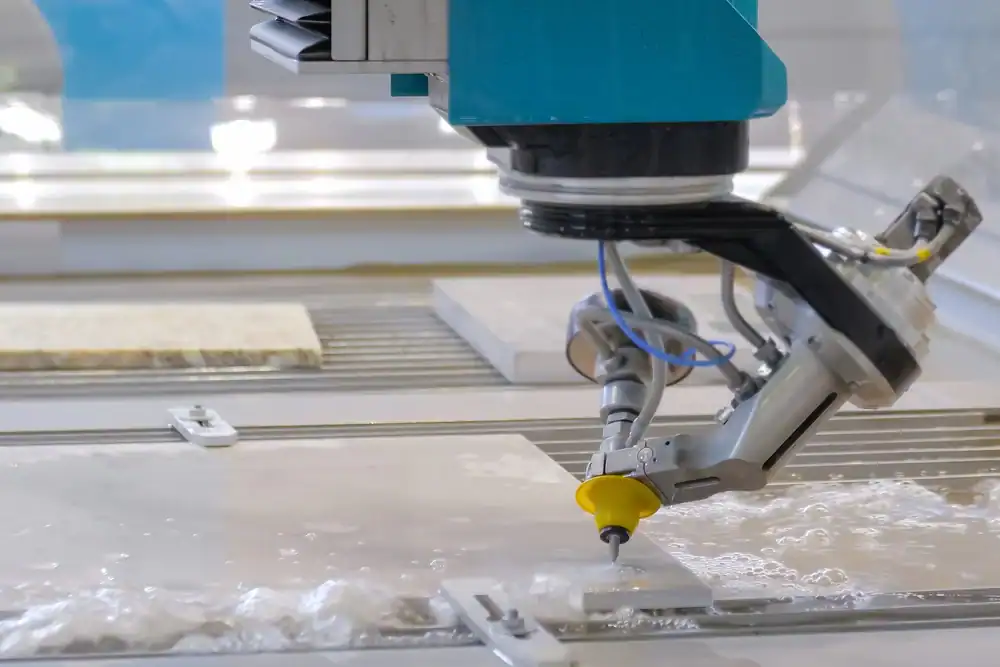
Waterjet cuts materials that would crack, melt, or warp under laser or plasma cutting. Tempered glass stays intact because there’s no thermal stress. Titanium and other reactive metals don’t oxidize or harden at the cut edge. Composite materials with mixed densities—like carbon fiber with metal inserts—cut cleanly without delamination.
The process also handles material combinations in a single setup. Stack cutting lets you run multiple thin sheets at once, or cut dissimilar materials together when you need matching parts from different substrates. You can’t do that with thermal cutting methods without changing your entire setup.
Thickness range runs from foil-thin materials up to 10 inches, though accuracy decreases slightly as thickness increases. For most manufacturing and architectural applications in Smithtown, NY, you’re working with materials under 4 inches where tolerances stay tight and edge quality remains excellent.
Waterjet holds ±0.005″ on most materials under 2 inches thick, which matches or exceeds laser cutting for many applications. The difference is that waterjet maintains that accuracy without creating a heat-affected zone that can measure several millimeters wide on thick metals.
Laser cutting can be faster on thin materials, but it creates edge hardening on steel and leaves a recast layer that sometimes requires secondary grinding. Waterjet produces a clean, square edge that’s ready for welding or assembly. For aerospace and medical device work common in Smithtown’s manufacturing sector, that edge quality matters more than raw cutting speed.
The real accuracy advantage shows up on thicker materials. Laser cutting loses precision past 1 inch on most metals. Waterjet stays accurate through 3-4 inches of stainless or tool steel, making it the better choice for structural components, thick mounting plates, or any application where you can’t accept taper or thermal distortion.
Simple prototype parts usually ship within 2-3 business days from approved drawings. Complex geometries or materials that require special abrasive media might add a day or two. Production runs get scheduled based on volume, but most orders under 500 pieces complete within a week.
Rush service is available when your project timeline demands it. We’ve turned around emergency parts in 24 hours for manufacturers dealing with equipment failures or design changes that can’t wait. That responsiveness matters in Smithtown’s fast-paced manufacturing environment where downtime costs thousands per hour.
Larger production runs or jobs requiring special materials get quoted individually. The advantage of waterjet cutting is that there’s no tooling to build or dies to machine—your CAD file is the tooling. That eliminates weeks of lead time compared to stamping or traditional machining for custom parts, especially on initial orders where you’re still refining designs.
Most waterjet cuts come off the table ready to use. The edge quality is clean enough for direct welding, and the surface finish typically measures 125 RMS or better—smooth enough for many applications without additional work.
Secondary operations depend on your specific requirements. Aerospace components might need edge deburring to remove the slight roughness from abrasive cutting. Architectural pieces sometimes get polished for aesthetic reasons. But you’re not looking at extensive grinding, heat treatment, or machining to correct problems the cutting process created.
Compare that to laser or plasma cutting, where you’re almost always grinding off slag, smoothing heat-affected zones, or machining away recast layers. Waterjet’s cold cutting process eliminates those issues from the start. For high-volume production in Smithtown, NY, that reduction in secondary operations translates directly to lower per-piece costs and faster delivery times.
Waterjet cutting typically reduces waste by 30% compared to traditional cutting methods. The narrow kerf width—usually 0.020″ to 0.040″ depending on material and nozzle size—means you’re removing less material with each cut. That lets you nest parts closer together and get more pieces from each sheet.
For expensive materials like titanium, Inconel, or specialty composites, that waste reduction has real financial impact. A 4×8 sheet of aerospace-grade titanium costs thousands of dollars. Maximizing the number of parts per sheet can save hundreds per order, especially on production runs.
The process also eliminates the scrap you’d generate from thermal distortion or parts that warp during cutting. Every piece that comes off the waterjet table meets dimensional specs—you’re not throwing away parts that bent or stretched from heat. For manufacturers in Smithtown working with tight margins, that consistency means predictable material costs and fewer rejected parts.
The same setup that cuts your first prototype runs your production order. There’s no retooling, no die changes, no programming adjustments beyond the CAD file. That makes waterjet ideal for companies moving from design phase to manufacturing, especially in Smithtown’s growing aerospace and electronics sectors where designs evolve rapidly.
Low-volume production—anywhere from 10 to 500 pieces—is where waterjet really shines. You get production-quality parts without the tooling costs that make traditional manufacturing expensive at low volumes. As quantities increase, the per-piece cost drops because setup time gets distributed across more parts.
High-volume production above 1,000 pieces is still cost-effective for complex geometries or materials that can’t be stamped or punched. We’ve run orders of 5,000+ parts for Long Island manufacturers who need the precision and material flexibility waterjet provides. The key is that you’re never locked into a single production method—start with waterjet for prototypes, continue with it for production, or transition to other methods as volume justifies the tooling investment.
Useful Links
Other Services we provide in Smithtown