Hear from Our Customers
You need parts that fit. Not almost-right pieces that require grinding, re-cutting, or explaining to your client why the project’s delayed.
Custom waterjet cutting in Uniondale, NY gives you finished edges straight off the machine. No heat-affected zones that warp metal during welding. No chipping on brittle materials like engineered stone or ceramics. No secondary finishing eating into your labor budget.
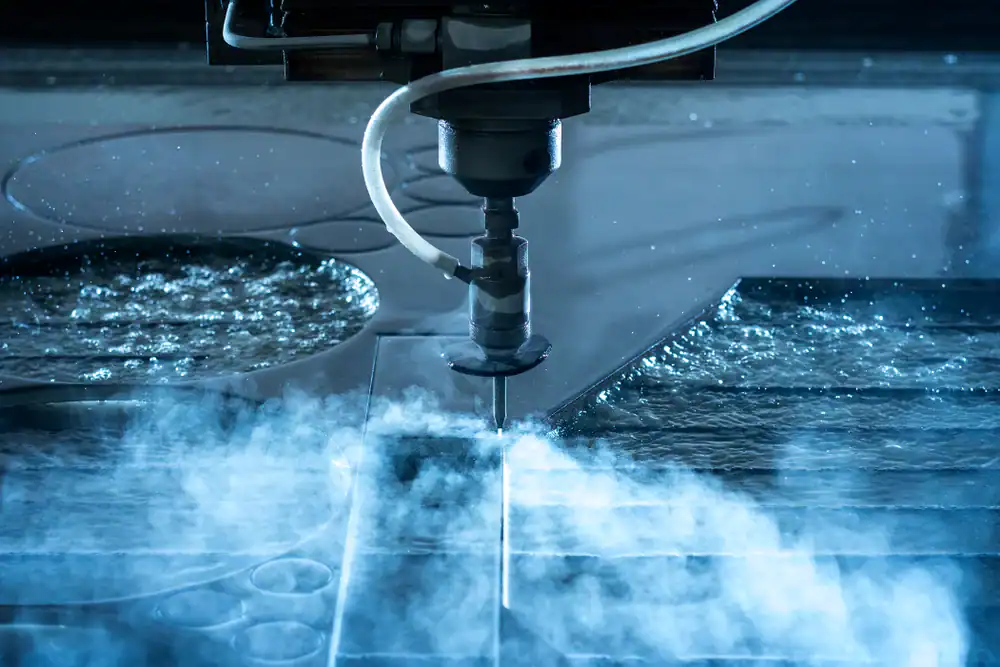
The process uses high pressure water cutting in Uniondale, NY—up to 60,000 PSI mixed with abrasive garnet—to cut through virtually any material without introducing heat. That means your stainless steel flanges line up perfectly for welding. Your architectural stone pieces have clean edges ready for installation. Your aerospace-grade composites maintain their structural integrity.
You get parts that work the first time. Reduced material waste—often by 30% compared to traditional methods. Faster project completion because you’re not waiting on rework or secondary processes.
We serve architects, designers, contractors, and manufacturers throughout Uniondale, NY and the broader Long Island area. We handle the projects that make other shops nervous—intricate patterns in thick steel, delicate cuts in expensive stone, complex geometries that require CNC precision.
Our waterjet cutting services in Uniondale, NY focus on getting your unique designs right. We work with you from concept through completion, providing material consultation so you’re not guessing whether your chosen material will hold up to the cutting process.
Uniondale’s industrial sector—with over 108,000 square feet of manufacturing space in the area—relies on precision fabrication. We’re equipped to serve that demand with technology that delivers aerospace-grade accuracy for everything from one-off prototypes to production runs.
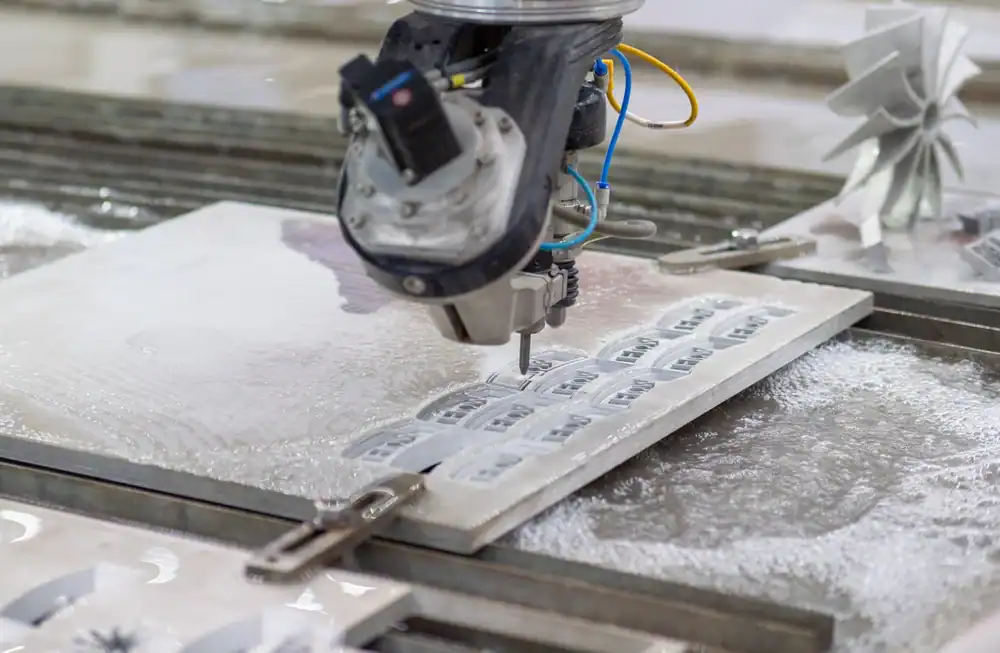
You bring us your design—CAD files, drawings, or even just a concept you want to develop. We review the specifications and discuss material options if you haven’t already selected them. This matters because different materials respond differently to cutting, and we can tell you what will work best for your application.
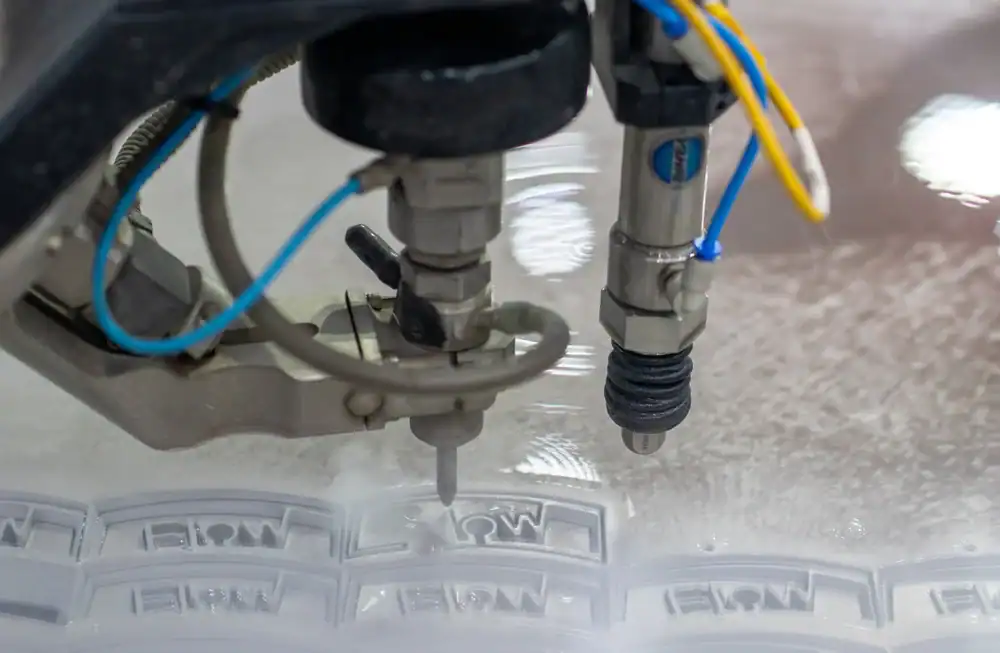
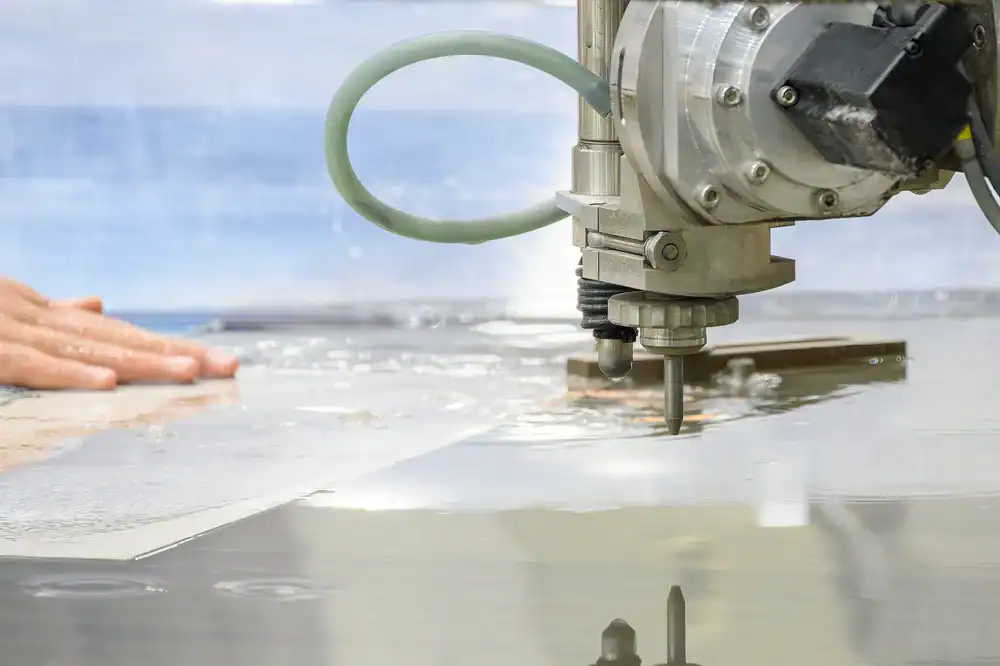
Once we’ve confirmed the details, we program the CNC waterjet system with your exact specifications. The machine uses a high-pressure pump to force water through a tiny orifice—about the diameter of a human hair. For harder materials, we add abrasive garnet to the stream, creating a cutting tool that slices through steel, titanium, stone, or composites without generating heat.
The cutting head follows your programmed path with extreme precision. Because there’s no heat, there’s no warping, no hardening of cut edges, no burned material. The process is cold, which is why it works on materials that would crack, melt, or distort under laser or plasma cutting.
You receive parts with finished edges, accurate to within 0.01mm. No burrs to grind off. No secondary drilling. No alignment issues when you go to assemble or install.
Ready to get started?
Abrasive waterjet cutting in Uniondale, NY handles materials from 1/8 inch to 6 inches thick. Metals—stainless steel, aluminum, titanium, tool steel. Stone and tile—granite, marble, engineered quartz. Glass, ceramics, composites, plastics. If you can specify it, we can likely cut it.
The technology excels at complex shapes. Tight inside corners. Intricate patterns. Stacked cutting where we process multiple sheets simultaneously to increase efficiency. You’re not limited to straight lines or simple curves—the five-axis systems can create three-dimensional parts with angled edges.
For Uniondale contractors and fabricators, this means design flexibility you don’t get with traditional methods. That architectural feature with the complex radius? We can cut it. The custom metal bracket with twelve precisely-placed holes and an irregular perimeter? Done in one setup, no tool changes.
Environmental considerations matter too. The process produces minimal waste—the abrasive is inert garnet that can be filtered and disposed of safely. No toxic fumes. No hazardous dust. The water is recyclable. For facilities in Uniondale’s industrial areas working under environmental regulations, waterjet cutting offers a cleaner alternative to thermal cutting methods.
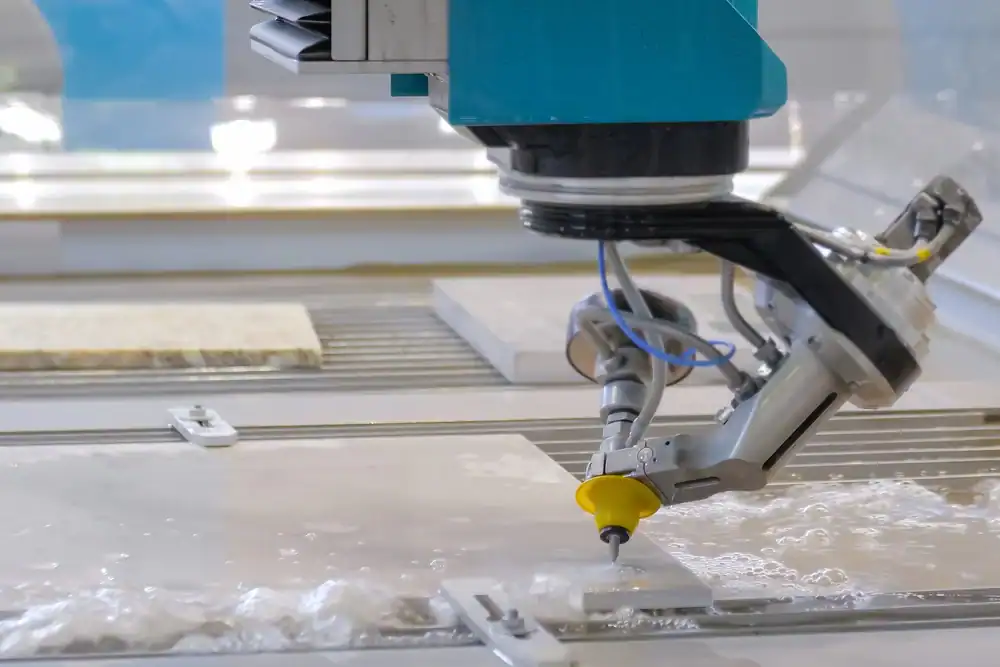
Waterjet cutting in Uniondale, NY works on materials that would crack, melt, or distort under heat-based cutting. Engineered stone is a perfect example—it contains high internal tension from the manufacturing process, and traditional bridge saws often cause it to shatter. The cold cutting process eliminates that risk entirely.
Composites used in aerospace and automotive applications are another category where waterjet excels. These materials often combine carbon fiber, fiberglass, or Kevlar with resin matrices. Apply heat and you’ll delaminate layers, burn the resin, or create weak points in the structure. Waterjet cuts clean without affecting material properties.
Titanium and other exotic metals benefit too. Heat creates hardened edges that dull tools and complicate welding. With waterjet, you get soft, clean edges ready for the next operation. The same goes for thick aluminum plate where thermal cutting would create excessive dross and require extensive cleanup.
Modern waterjet systems achieve tolerances within 0.01mm—that’s aerospace-grade precision. For context, a human hair is roughly 0.07mm in diameter. We’re cutting significantly finer than that.
This level of accuracy matters when you’re fabricating parts that need to fit together with minimal clearance. Flanges that must align perfectly for welding. Brackets with bolt holes that can’t be off by even a millimeter. Architectural panels that need to mate seamlessly across a large installation.
The CNC control eliminates human error in the cutting path. Once programmed, the machine repeats the same cut with identical precision whether you’re making one part or a hundred. You don’t get the variation you’d see with manual cutting or even some other automated methods. For manufacturers in Uniondale serving industries with strict quality requirements, that consistency is critical.
In most applications, no. The edge quality coming off a waterjet is what’s called a “finished edge”—smooth enough to use as-is without grinding, filing, or additional machining.
Compare that to plasma cutting, which leaves a heat-affected zone that often needs grinding before welding. Or laser cutting, which can create hardened edges on steel that require annealing. Or traditional sawing, which leaves burrs and rough surfaces that need cleanup.
Waterjet produces a clean cut with no burrs, no heat-affected zone, and no hardened edges. The surface finish is typically smooth enough for immediate assembly or installation. That saves you labor costs and time. Your parts move directly from cutting to the next stage of your project without stopping for cleanup operations.
There are exceptions—if you need a polished edge for aesthetic reasons, or if tolerances are extremely critical and you’re stacking multiple precision operations, you might do light finishing. But for the vast majority of applications, what comes off the waterjet is ready to use.
Waterjet cutting typically reduces material waste by up to 30% compared to traditional cutting methods. That’s significant when you’re working with expensive materials like titanium, stainless steel, or specialty stone.
The reduction comes from several factors. First, the cutting kerf—the width of material removed by the cut—is extremely narrow, usually around 0.03 inches. Compare that to a plasma cutter at 0.15 inches or a saw blade at 0.125 inches. Over multiple cuts on a single sheet, those fractions add up to substantial material savings.
Second, the CNC programming optimizes part nesting—arranging multiple parts on a sheet to minimize scrap. The software can fit irregular shapes together like a puzzle, using nearly every square inch of material. You’re not left with large unusable remnants.
Third, because cuts are accurate the first time, you’re not scrapping parts due to errors and re-cutting. The precision eliminates the waste that comes from rework. For contractors and fabricators in Uniondale managing project budgets, that material efficiency translates directly to cost savings.
Turnaround depends on project complexity, material thickness, and current shop schedule, but waterjet cutting is generally faster than you’d expect—especially when you factor in that there’s no secondary finishing required.
Simple parts in thinner materials might be completed same-day or next-day. More complex projects with intricate geometries, thicker materials, or larger quantities typically run within a few days to a week. The key advantage is that the time you see quoted is usually the total time—cutting plus any necessary quality checks.
There’s no waiting for parts to cool down like with thermal cutting. No scheduling secondary grinding or drilling operations. No delays because a part warped and needs to be recut. The efficiency of the waterjet process, combined with CNC automation, means projects move through faster than traditional multi-step fabrication.
For time-sensitive projects in Uniondale—whether you’re a contractor facing a deadline or a manufacturer needing prototype parts for testing—the combination of speed and accuracy keeps your project on schedule. We can provide specific timelines once we review your design and requirements.
Yes. The same system that cuts a single prototype part can handle production quantities efficiently. That versatility is one of waterjet’s major advantages over dedicated production tooling.
For prototypes, you get the benefit of no tooling costs. There’s no die to build, no fixture to machine. We program the cut path directly from your CAD file and produce your part. If you need design iterations—adjusting dimensions, trying different materials, refining geometries—we simply update the program. You’re not locked into tooling that becomes obsolete with each design change.
When you’re ready for production, the same CNC program scales up. We can run multiple sheets, stack materials for simultaneous cutting, or optimize the process for volume efficiency. The per-part cost decreases with quantity, but you maintain the same precision and quality you had in the prototype phase.
For Uniondale manufacturers and designers, this means you can test concepts without major investment, then move seamlessly into production using the same cutting method. No transition costs. No quality variations between prototype and production parts. The waterjet handles both ends of the development cycle.
Useful Links
Other Services we provide in Uniondale