Hear from Our Customers
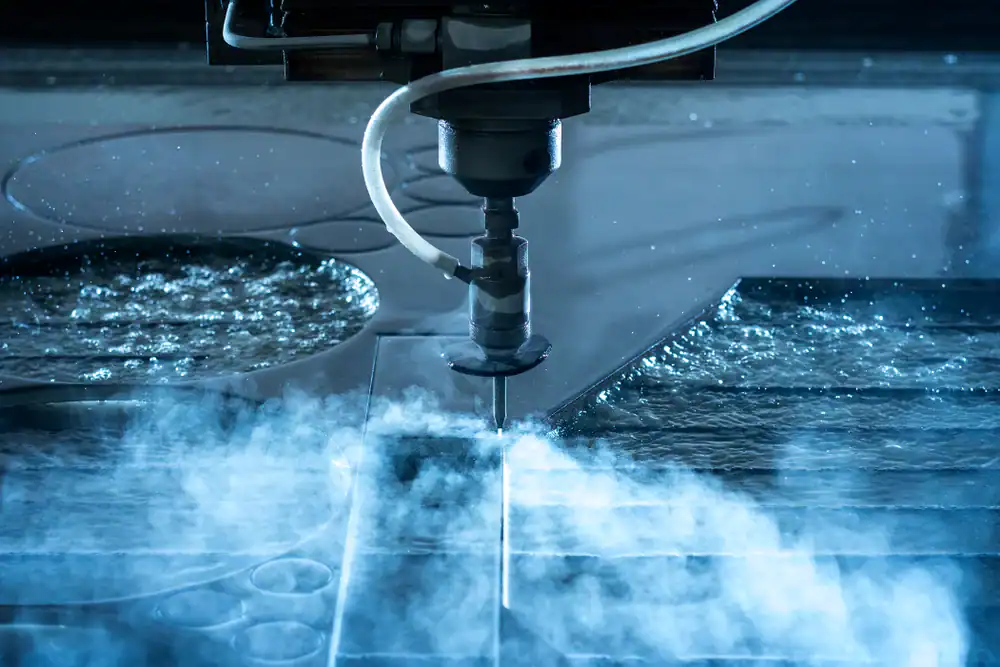
When you’re working with materials that can’t tolerate heat, you can’t afford warped edges or discolored surfaces. Our waterjet cutting in West Babylon, NY gives you clean cuts through metal, stone, glass, and plastics without any heat-affected zone.
That means no secondary finishing work to fix melted edges. No scrapped parts because of thermal distortion. Just accurate cuts that meet your specs the first time.
Whether you’re prototyping a single piece or running a production batch, you get the same tight tolerances. The process handles intricate geometries and thick materials—up to 10 inches in some cases—without changing your material’s properties. You send the CAD file, and you get back parts that fit.
We serve the West Babylon, NY manufacturing community with high-pressure water cutting that handles what other methods can’t. You’re working in an area with over 160 manufacturing companies, and you need a cutting service that understands tight deadlines and tighter tolerances.
Our abrasive waterjet cutting handles the materials Long Island manufacturers work with daily—stainless steel, aluminum, granite, titanium, foam, and composites. We’ve cut parts for aerospace components, architectural elements, automotive prototypes, and custom fabrication projects across the tri-state area.
You get experienced operators using advanced CNC waterjet equipment. That means consistent results whether you’re ordering one prototype or a hundred production parts.
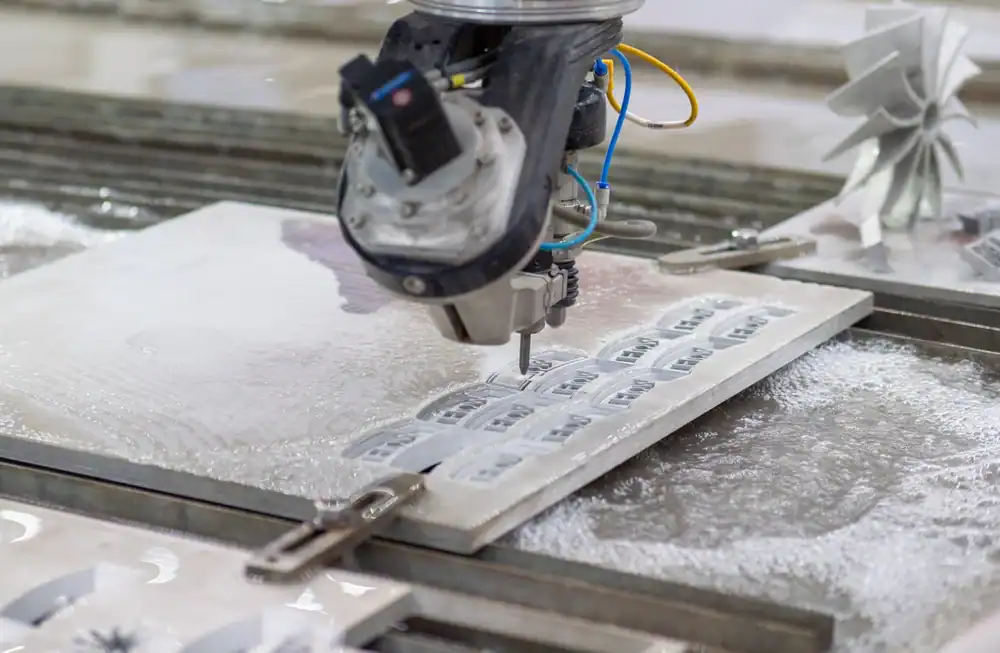
You start by sending your design file or specifications. If you’re working from a concept or sample part, that works too. We program the design into our CNC system, which controls the cutting head’s path with precision.
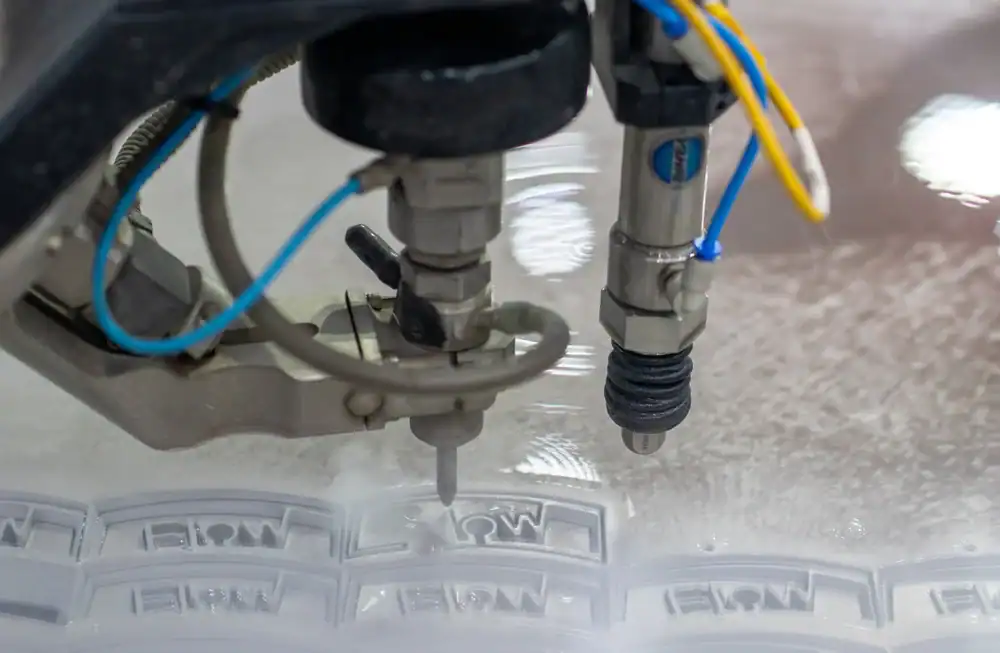
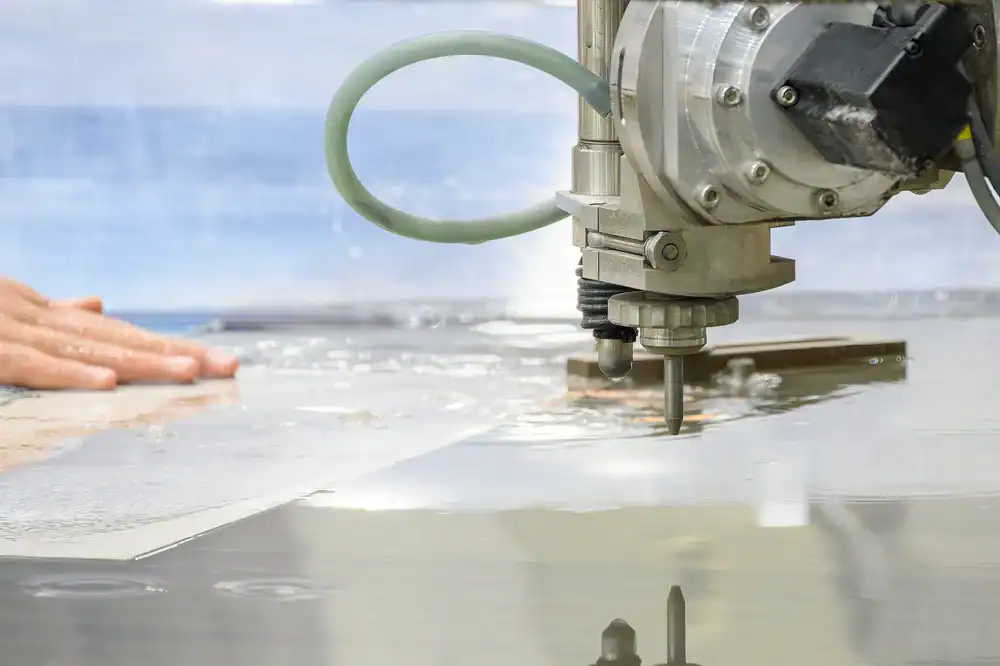
The cutting process uses a high-pressure water stream—up to 60,000 PSI—mixed with fine abrasive particles. This stream cuts through your material without generating heat. No flames, no melting, no thermal stress. The water stays cold, so your material properties stay intact.
For softer materials like foam or rubber, pure water cutting works. For metals, stone, glass, and composites, the abrasive waterjet cutting method delivers the power you need. The CNC system follows your design exactly, handling tight radiuses and complex shapes that would be difficult or impossible with traditional cutting methods.
You get parts that match your specifications, with edges that don’t need additional finishing. Turnaround depends on complexity and volume, but you’re not waiting for tooling or dealing with setup charges for custom shapes.
Ready to get started?
Our custom waterjet cutting in West Babylon, NY handles nearly any material you’re working with. Metals like stainless steel, aluminum, brass, copper, and titanium cut cleanly without hardening the edges. Stone, granite, marble, and glass cut without cracking. Plastics, composites, and foam cut without melting.
Thickness capacity goes up to 10 inches for many materials, though cutting speed varies with material density. You can expect tolerances of +/- 0.005″ with high-quality finishes, tighter than most other cutting methods without secondary operations.
The process works for both prototyping and production. One-off custom parts get the same precision as repeat orders. Complex geometries, artistic patterns, and architectural details all cut cleanly. You’re not limited by tool shapes or worried about heat distortion on thin materials.
West Babylon’s manufacturing sector—from automotive shops to medical device fabricators—relies on precision cutting that doesn’t compromise material integrity. Our waterjet cutting services deliver that without the operational costs of laser consumables or plasma torch replacements. You’re looking at approximately $14 per hour in operating costs, with recyclable water and abrasive materials producing minimal hazardous waste.
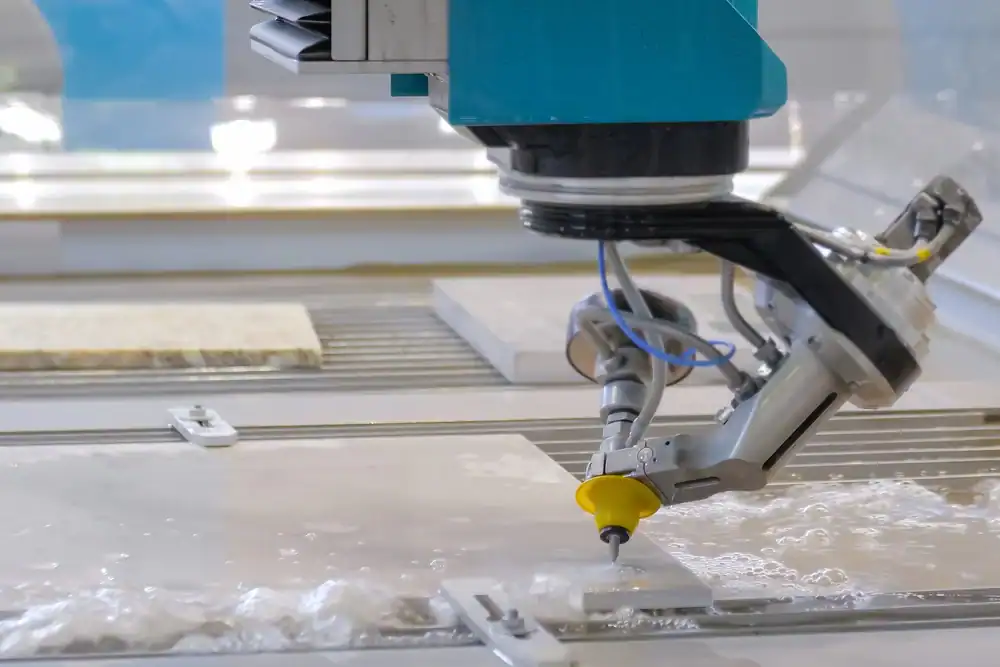
Waterjet cutting works on materials that would melt, warp, or crack under heat-based cutting. If you’re working with heat-sensitive plastics, they won’t melt or deform. Tempered glass won’t shatter from thermal shock. Composite materials with different melting points won’t delaminate.
Thick materials that would take multiple passes with a saw cut in one pass. Materials that would work-harden under mechanical cutting—like certain stainless steel alloys—stay soft because there’s no heat generation. You can even cut foam and rubber with just the water stream, no abrasive needed.
The cold cutting process also means you can cut materials with different hardness levels in the same piece. If you’ve got a part with embedded components or varying densities, the waterjet handles it without tool changes or speed adjustments that would affect precision.
Laser and plasma both use heat, which limits what you can cut and how the edges turn out. Laser cutting works well for thinner metals but creates a heat-affected zone that can harden edges or cause discoloration. Plasma is faster on thick steel but leaves a wider kerf and rougher edges.
Our waterjet cutting in West Babylon, NY eliminates the heat-affected zone entirely. Your edges come out clean without hardening, oxidation, or discoloration. You don’t need secondary grinding or finishing to remove heat damage. That saves time and keeps your tolerances tight.
Material versatility is another difference. Laser struggles with reflective materials like copper or brass. Plasma doesn’t work on non-conductive materials. Waterjet cuts both, plus stone, glass, and composites that heat-based methods can’t touch. The tradeoff is speed—waterjet is slower on thin sheet metal—but when edge quality and material versatility matter more than raw cutting speed, waterjet delivers.
Standard waterjet cutting delivers tolerances around +/- 0.005″ on most materials. With high-quality finishes and proper setup, you can get tighter. The actual tolerance depends on material thickness, hardness, and the complexity of your geometry.
Thicker materials and harder substances like titanium or tool steel require slower cutting speeds to maintain precision. Intricate curves and tight inside corners may have slightly wider tolerances than straight cuts. But you’re still looking at accuracy that meets or exceeds most machining applications without the tool wear issues.
Our CNC system maintains consistent tolerances across production runs. Your first part and your hundredth part come out the same. That repeatability matters when you’re manufacturing components that need to fit together or meet strict specifications. You don’t get the dimensional drift that can happen with tools that wear down or heat up during extended cutting sessions.
Cutting time depends on your material type, thickness, and design complexity. A simple shape in quarter-inch aluminum might take minutes. An intricate pattern in two-inch stainless steel could take significantly longer. Thicker and harder materials require slower cutting speeds to maintain accuracy.
The advantage is that setup time is minimal compared to traditional machining. You don’t need custom tooling, fixtures, or multiple setups for complex shapes. Our CNC system runs directly from your CAD file. That makes waterjet cutting particularly efficient for prototypes and short production runs where tooling costs would otherwise be prohibitive.
For West Babylon manufacturers working on tight deadlines, the real timeline includes design review, programming, cutting, and quality check. Simple parts can often turn around in days. Complex or high-volume orders take longer but still avoid the weeks you might wait for custom tooling with other methods.
Waterjet cutting makes sense for small batches because you’re not paying for custom tooling or dealing with minimum order quantities. Our CNC programming works from your digital file, so setup costs stay low whether you’re cutting one part or one hundred.
Operating costs run around $14 per hour, which includes water, abrasive material, and power. You’re not buying expensive consumables like laser lenses or plasma torches that need regular replacement. The abrasive material is recyclable, and the water recirculates, keeping per-part costs predictable.
For prototyping or custom fabrication work common in the West Babylon area, this cost structure works in your favor. You can test designs, make revisions, and produce small quantities without the financial commitment of traditional manufacturing methods. When you do scale up to larger production runs, the per-part cost drops further while maintaining the same precision and quality.
Waterjet cutting produces a slurry of water and used abrasive material, which is non-toxic and non-hazardous. The abrasive is typically garnet, a natural mineral that doesn’t create environmental concerns. The slurry can be filtered, and the water can be recycled back into the system.
You’re not dealing with toxic fumes, hazardous coolants, or metal shavings contaminated with cutting fluids. There’s no smoke, no combustion byproducts, and no chemical reactions. That simplifies disposal and reduces environmental impact compared to processes that generate hazardous waste streams.
For manufacturers in West Babylon, NY concerned about environmental compliance and waste disposal costs, waterjet cutting offers a cleaner alternative. The process meets environmental standards without requiring expensive ventilation systems, fume extraction, or hazardous waste handling protocols that other cutting methods demand.
Useful Links
Other Services we provide in West Babylon