Hear from Our Customers
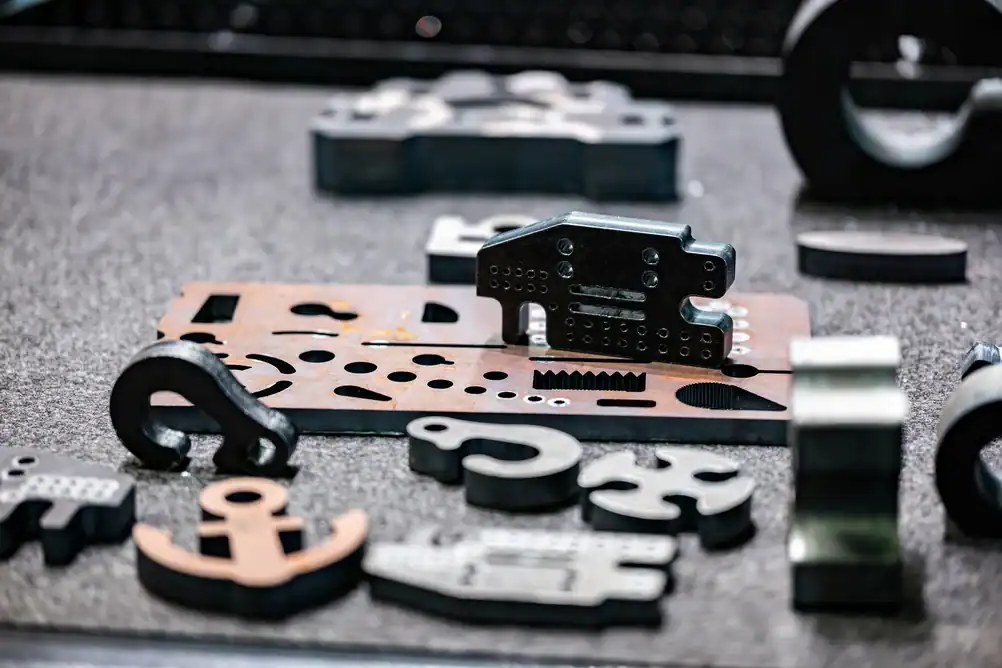
Your parts arrive ready to use. No burned edges that need grinding down. No warped material from heat stress. No secondary operations eating into your timeline.
Precision CNC waterjet cutting handles tolerances down to 0.001 inches without creating heat-affected zones that compromise material integrity. That means the first cut is often the final surface—saving you time on finishing and money on scrap.
You can cut intricate geometries that would require multiple setups on traditional equipment. Tight inside corners, small holes, complex curves—all done in one pass. The abrasive waterjet stream doesn’t care if you’re working with half-inch aluminum or three-inch stainless steel.
When your production schedule is tight and your specs are tighter, you need a cutting method that doesn’t force you to choose between speed and accuracy. High precision waterjet cutting in Commack, NY gives you both.
We operate in the heart of Long Island’s manufacturing corridor, where 3,600 companies depend on precision work to keep production moving. We understand that when you’re dealing with aerospace components or medical device parts, “close enough” isn’t in the vocabulary.
Our precision waterjet cutting shop in Commack, NY runs advanced CNC equipment designed for repeatability. You send us your CAD files, and we program cuts that hit your specifications without the trial-and-error that eats up your budget.
We’ve seen what happens when manufacturers try to make do with outdated equipment or shops that overpromise and underdeliver. That’s why our focus stays on what matters: accurate parts, reasonable turnaround times, and straightforward communication about what’s possible.
You start by sending us your design files—DXF, DWG, or whatever format your CAD software exports. Our team reviews the specifications to confirm feasibility and identify any potential issues before cutting begins.
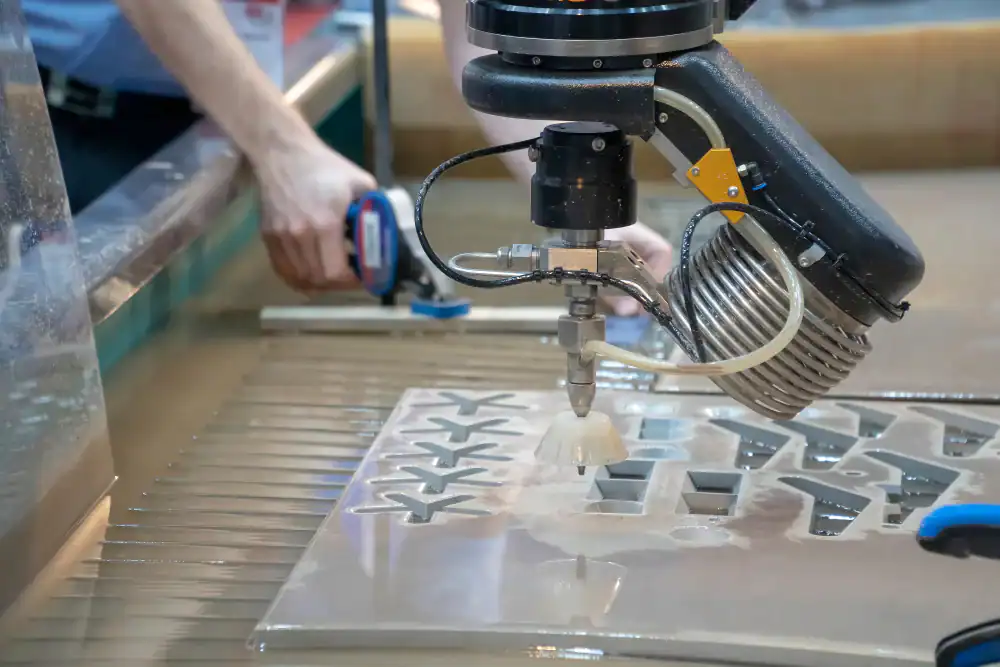
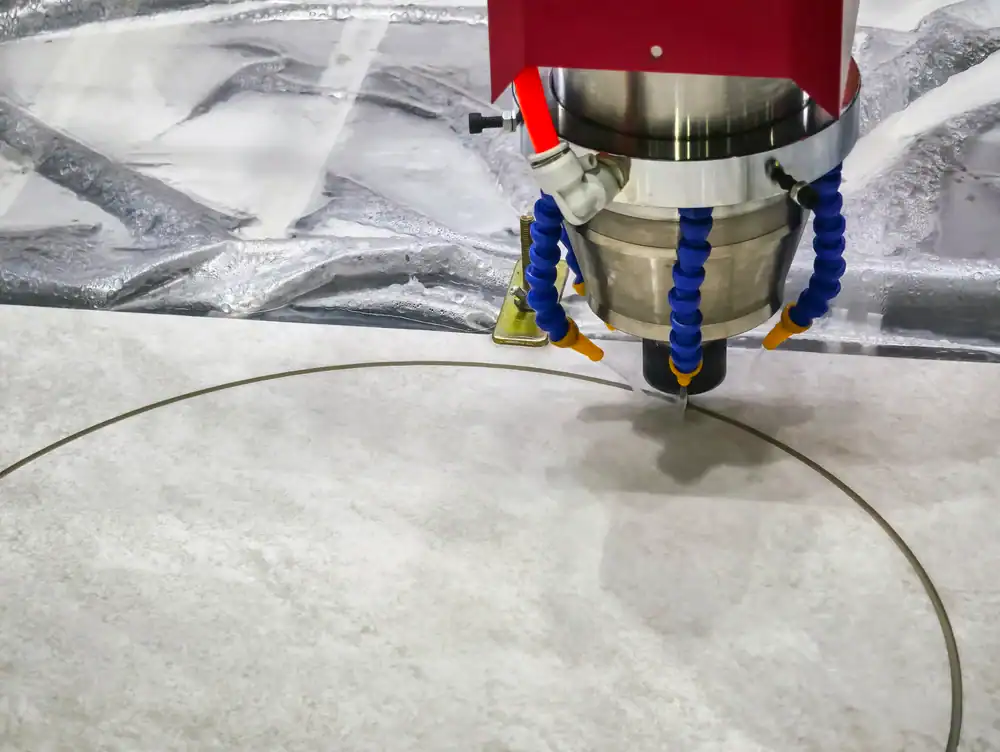
We program the CNC waterjet system based on your exact requirements. The machine uses a high-pressure stream mixed with abrasive garnet to cut through your material. There’s no heat, no mechanical stress, no tool wear affecting dimensional accuracy as the job progresses.
For precision waterjet cutting for tight tolerances in Commack, NY, we monitor the process to ensure consistency across every part. Once cutting is complete, we perform quality checks against your specifications.
You receive parts that are ready for assembly or installation. No deburring. No heat treatment to reverse warping. No wondering if the dimensions drifted halfway through the run.
The entire process—from file review to finished parts—typically takes days, not weeks. For prototypes or rush jobs, next-day turnaround is often possible depending on material availability and machine scheduling.
Ready to get started?
You can cut materials from 0.005 inches thick up to several inches, depending on the material type. Metals, composites, ceramics, specialty alloys—the waterjet doesn’t discriminate.
Complex geometries that would require expensive custom tooling on other machines are standard work here. Omnidirectional cutting means tight inside radii, narrow slots, and intricate patterns happen without multiple setups or fixture changes.
Long Island manufacturers face real challenges: skilled labor shortages, supply chain disruptions, equipment that’s aging out. When your own production capacity is maxed or your machinery can’t handle a specific job, precision water jet cutting services in Commack, NY become your overflow valve.
You’re not locked into minimum quantities. Short runs, one-offs, prototypes, or production volumes—the programming flexibility of CNC waterjet cutting makes small batches economically viable.
Surface finish quality eliminates most secondary operations. You’re not paying for grinding, sanding, or deburring after the fact. The cut edge is clean enough for many applications as-is, and even demanding specs usually require minimal touch-up.
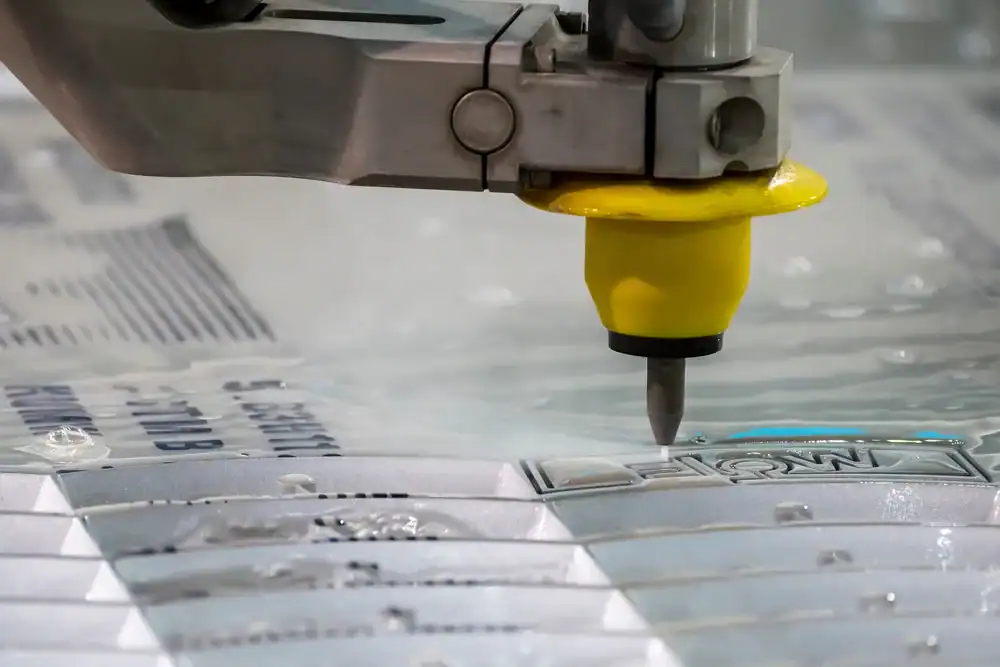
Modern precision CNC waterjet cutting equipment routinely holds tolerances of ±0.002 inches, with advanced systems capable of ±0.001 inches under optimal conditions. These numbers aren’t marketing fluff—they’re what the machines deliver on actual production parts.
Several factors affect tolerance capability. Material thickness plays a role: thinner materials generally allow tighter tolerances than thick plates. Material type matters too—softer materials may show slightly more variation than harder ones.
The key advantage is consistency. Unlike thermal cutting methods where heat distortion can cause dimensional drift, or mechanical methods where tool wear gradually affects accuracy, waterjet cutting maintains the same precision from the first part to the last. You’re not dealing with heat-affected zones that shrink or warp after cooling, and there’s no dulling blade changing your dimensions mid-run.
For most manufacturing applications in aerospace, automotive, medical devices, or industrial equipment, these tolerances eliminate the need for secondary machining operations. Your parts come off the waterjet table ready to fit into assemblies without additional work.
Waterjet cutting doesn’t generate heat, which is the fundamental difference. Laser and plasma both use thermal energy to melt through material, creating heat-affected zones that can alter material properties, cause warping, and leave hardened edges that require grinding.
If you’re working with materials sensitive to heat—like certain aluminum alloys, composites, or metals with specific temper requirements—waterjet is often your only option for maintaining material integrity. There’s no risk of changing the metallurgical structure or introducing thermal stress.
Waterjet also handles a much wider range of materials and thicknesses. Laser works well on thinner metals but struggles with thick plate. Plasma is fast but rough. Waterjet cuts everything from thin foil to several inches of steel with the same equipment, and it handles non-conductive materials that plasma can’t touch.
The trade-off is speed. For thin sheet metal in straight lines, laser cutting is faster. But when you factor in the lack of secondary operations—no deburring, no grinding, no heat treatment to reverse warping—waterjet often wins on total cycle time. You’re also not limited by material reflectivity or thickness the way you are with thermal methods.
Standard turnaround runs three to five business days from approved drawings to finished parts. That timeline assumes normal shop loading and readily available material.
Rush service is available when you’re up against a deadline. Next-day turnaround is possible for smaller jobs, depending on current machine scheduling and whether we have your material in stock. The key is communication—if you tell us upfront that you’re in a bind, we can usually find a way to accommodate.
Complex jobs with intricate geometries or thick materials take longer to cut than simple shapes in thin plate. A part with hundreds of small holes and tight inside corners requires more machine time than a basic profile cut. We’ll give you realistic timing based on your specific design.
Prototypes and short runs often move faster than large production quantities simply because of total machine hours required. If you need one part to test fit before committing to a full run, we can usually turn that around quickly to keep your project moving.
Material availability sometimes becomes the limiting factor. Common alloys and thicknesses we typically stock. Specialty materials or unusual sizes may require ordering, which adds lead time. Sending us your specs early helps avoid delays.
Precision waterjet cutting in Commack, NY handles virtually any material you can name. Steel, stainless steel, aluminum, titanium, copper, brass—all the common metals cut without issue. Exotic alloys like Inconel, Hastelloy, and tool steels that are difficult or expensive to machine conventionally are routine waterjet work.
Non-metals are equally manageable. Composites, carbon fiber, fiberglass, plastics, rubber, foam, and ceramics all cut cleanly. If you’re working with layered materials or assemblies, waterjet won’t delaminate or separate the layers the way thermal cutting methods can.
Thickness range runs from materials as thin as 0.005 inches up to several inches, depending on the specific material. Cutting speed decreases with thickness, but capability remains consistent. A three-inch steel plate takes longer than quarter-inch aluminum, but both come out with the same edge quality and dimensional accuracy.
The only materials that present challenges are tempered glass (which shatters) and certain very soft materials that may erode rather than cut cleanly. For everything else, if you can draw it, we can cut it.
Material hardness doesn’t matter the way it does with mechanical cutting. The abrasive waterjet stream cuts through hardened tool steel as easily as soft aluminum. You’re not dealing with tool wear, broken bits, or the need to anneal hard materials before cutting.
You’re paying for machine time, abrasive media, and the engineering that goes into programming accurate cuts. The equipment itself represents significant capital investment—precision CNC waterjet systems run into six figures, and they require skilled operators who understand both the machinery and manufacturing processes.
Abrasive garnet isn’t cheap, and the amount used scales with material thickness and cutting time. Thicker materials and intricate geometries with lots of cutting path length consume more abrasive. Water pressure, pump maintenance, and consumable parts like mixing tubes and nozzles all factor into operating costs.
What you’re not paying for is wasted material and secondary operations. Waterjet cutting produces minimal kerf width—the actual cut line is narrow, meaning less material waste. You’re also not paying for deburring, grinding, or heat treatment to fix thermal damage, because there isn’t any.
Compare the total cost, not just the cutting cost. If laser cutting seems cheaper per part but requires two hours of deburring and grinding afterward, you’re not actually saving money. If mechanical machining needs multiple setups and tool changes for a complex geometry that waterjet handles in one operation, the apparent savings disappear.
For prototypes and short runs, waterjet often beats other methods because there’s no expensive tooling to amortize. You’re not paying for custom dies, fixtures, or specialized cutting tools. Program the machine, cut the parts, done.
Most designs that can be drawn in CAD can be cut with waterjet. The process handles complexity that would be difficult or impossible with other methods—tight inside corners, small holes, intricate curves, and irregular shapes are all standard work.
Minimum feature size depends on material thickness and type. As a general rule, you can cut holes and slots down to about the thickness of the material. Thinner materials allow smaller features. If you’re working with 0.125-inch plate, holes down to that diameter are feasible.
Inside corner radii have practical limits. The waterjet stream has a finite width, so perfectly sharp inside corners aren’t possible—there will be a small radius. For most applications this doesn’t matter, but if you need truly sharp corners, that’s something to discuss during design review.
Send us your CAD files and we’ll review them for manufacturability. Sometimes small design tweaks can improve cut quality or reduce cost without affecting the part’s function. Moving a hole slightly, adjusting a corner radius, or reorienting the part on the cutting bed can make a difference.
Stack cutting is possible for thinner materials, letting you cut multiple identical parts simultaneously to reduce per-part cost. If you need quantity and the material thickness allows it, this approach saves both time and money.
Useful Links
Other Services we provide in Commack