Hear from Our Customers
You’re dealing with tight tolerances that can’t afford thermal distortion. Traditional cutting methods introduce heat that warps metal, changes material properties, and creates edges that need grinding or finishing before you can use them.
Our precision water jet cutting services in Copiague, NY solve that problem with cold-cutting technology. The process uses high-pressure water mixed with abrasive garnet to cut through virtually any material without generating heat. That means no warping in thin metals, no cracking in brittle materials, and no hardness changes in heat-treated parts.
The edge quality you get is smooth and burr-free, often ready to use right off the table. You’re not paying for secondary operations or dealing with delays while parts get deburred and finished. For architects specifying custom metal panels, designers working with mixed materials, or contractors managing fabrication timelines, that difference matters.
We operate in Copiague, NY, serving the manufacturers, fabricators, architects, and contractors across Long Island who need precision CNC waterjet cutting without the runaround. We’re located in a region with one of the highest concentrations of makers outside Silicon Valley, and we understand what that manufacturing community requires.
You’re working on projects where dimensions matter and materials are expensive. We bring CNC-controlled accuracy that holds tolerances within 0.2mm, handles materials from rubber to titanium, and cuts thicknesses that would challenge other methods. Whether you need one prototype to test fit or a production run of custom parts, our equipment and process stay consistent.
We’ve built our precision waterjet cutting shop in Copiague, NY around the idea that you shouldn’t have to explain your project three times or wait for callbacks. You need someone who understands the technical requirements and delivers what you specified.
You start by sending us your design file or specifications. CAD files work best, but we can work with drawings and measurements if that’s what you have. We’ll review the design for any potential issues with material choice, thickness, or feature size that might affect the cut quality or cost.
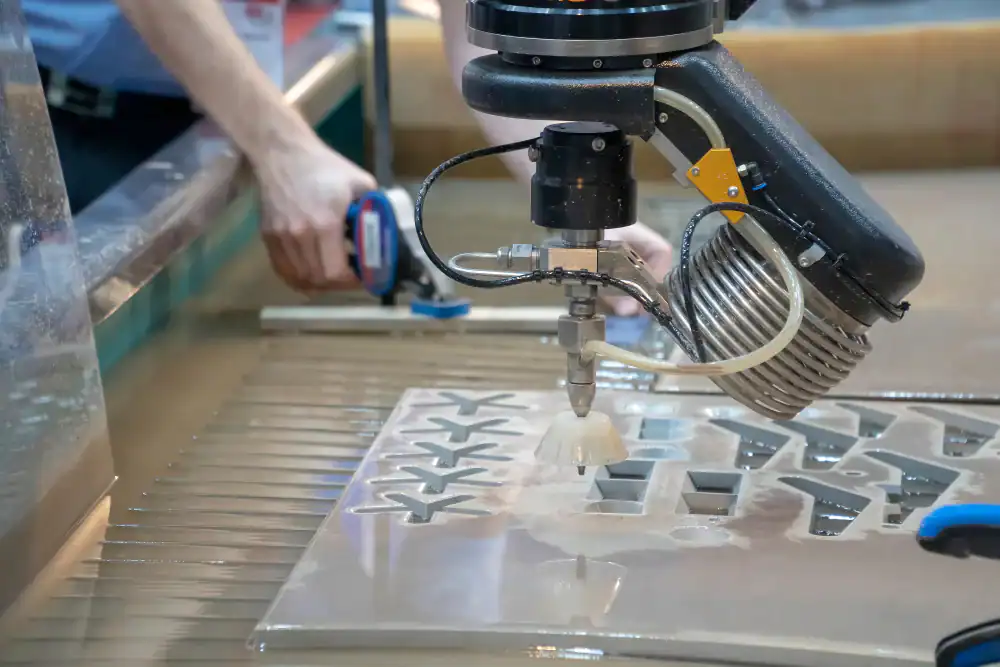
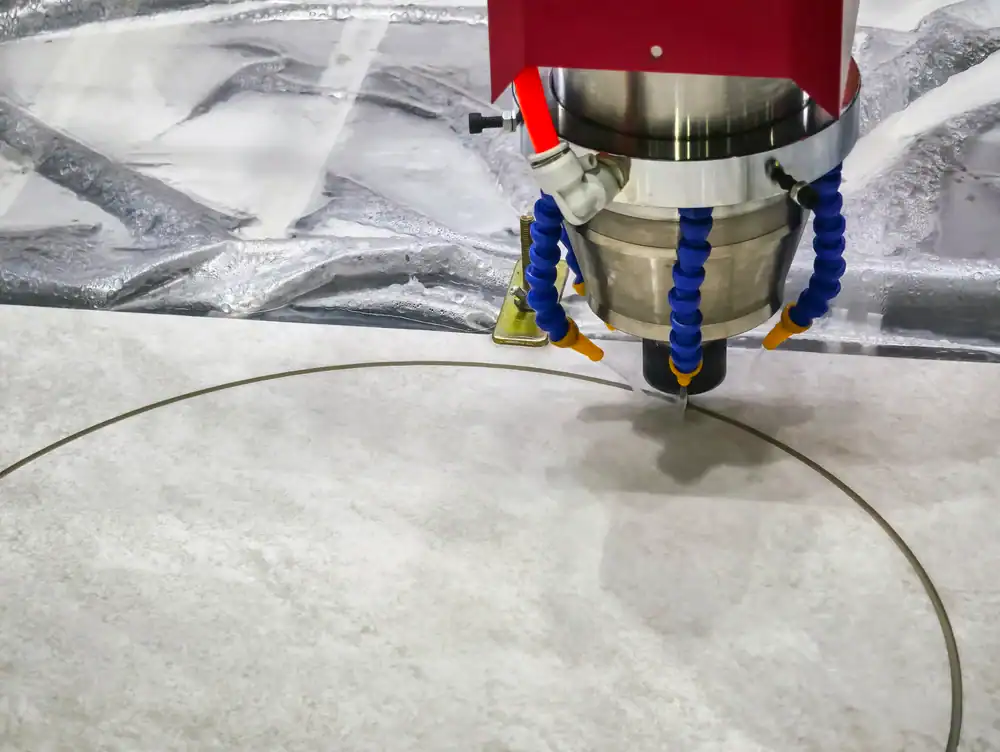
Once the design is confirmed, we program the CNC waterjet system with your exact dimensions and cutting path. The machine uses a high-pressure pump to force water through a tiny nozzle at speeds exceeding twice the speed of sound. For harder materials, we add abrasive garnet to the stream, which does the actual cutting.
The cutting head follows the programmed path with precision that holds tight tolerances even on complex shapes. Because there’s no heat-affected zone, you don’t get the warping or edge hardening that comes with plasma or laser cutting. The narrow kerf width means we can nest parts efficiently, reducing material waste on expensive metals or composites.
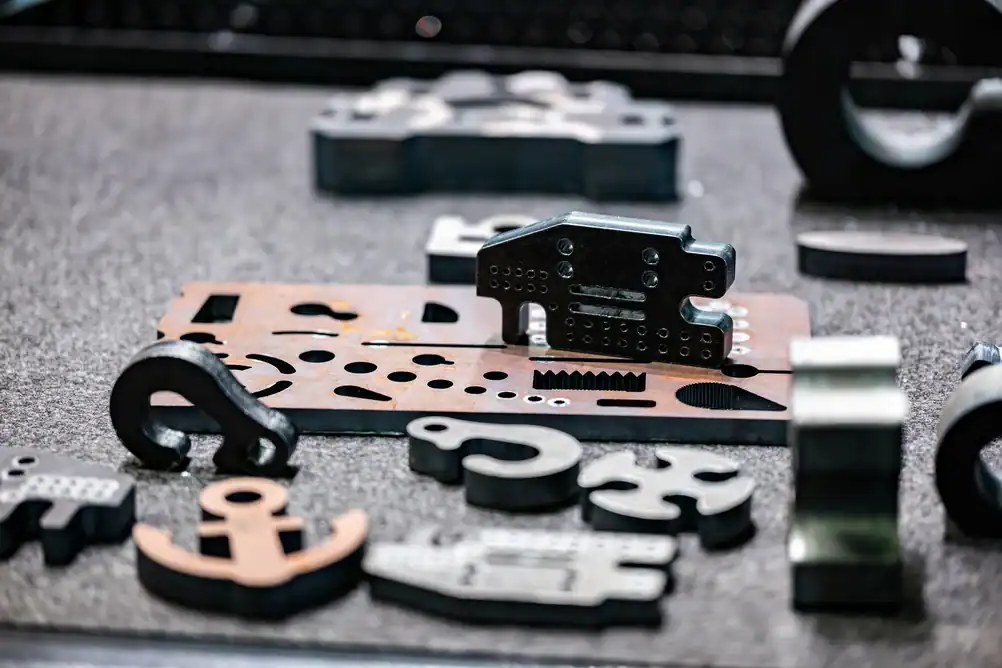
After cutting, most parts come off the table ready to use. If your application requires it, we can discuss secondary operations, but the waterjet process typically delivers edges clean enough for welding, bonding, or direct installation.
Ready to get started?
When you use our precision waterjet cutting for tight tolerances in Copiague, NY, you’re getting access to equipment that handles nearly any material you specify. Steel, aluminum, titanium, glass, stone, ceramics, plastics, rubber, and composites all cut cleanly without tool changes or setup delays. Hardness isn’t a limiting factor, only thickness and the pressure capacity of the system.
You’re also getting the ability to produce complex geometries that would be difficult or impossible with mechanical cutting methods. Intricate shapes, sharp internal corners, and fine details all stay within tolerance because the cutting stream is narrow and the CNC control is precise. That matters when you’re fabricating custom architectural elements or producing parts that need to fit together without adjustment.
Long Island’s manufacturing sector benefits from industrial development agencies in Babylon, Brookhaven, Islip, and Riverhead that provide tax incentives to grow local production. That environment supports businesses like yours that need reliable local suppliers who can turn around precision work quickly. You’re not shipping materials across the country and waiting weeks for parts. You’re working with a precision waterjet cutting shop in Copiague, NY that understands local project timelines and can accommodate rush jobs when necessary.
The process is also environmentally compliant. There are no toxic fumes, no hazardous waste streams, and the water used in cutting is recyclable. For projects with environmental requirements or LEED considerations, that’s one less complication to manage.
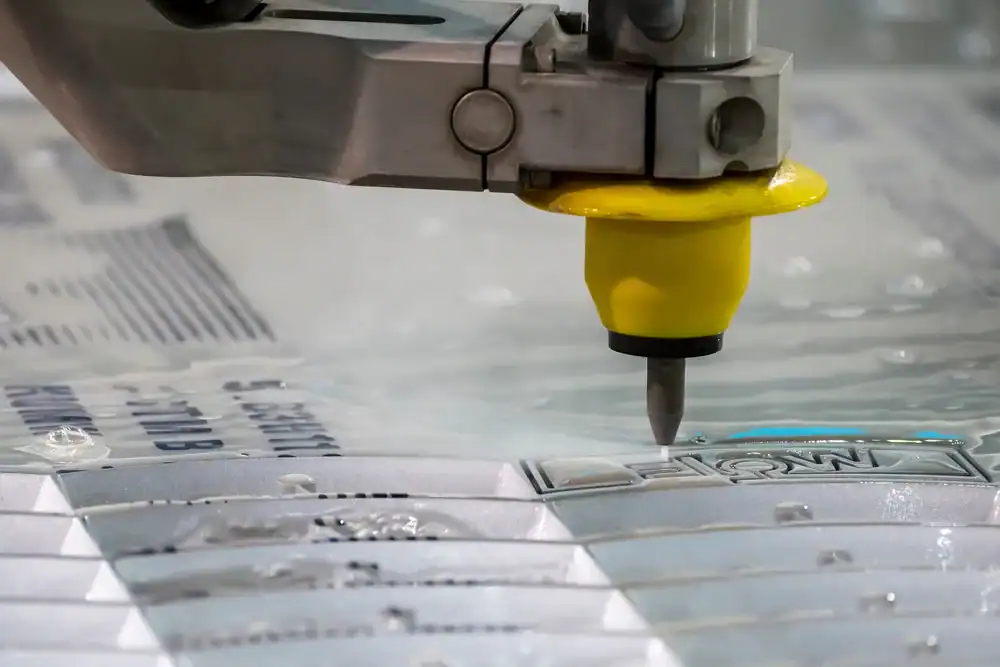
High-quality CNC waterjet cutting systems typically hold tolerances of ±0.2mm (roughly ±0.008 inches) on most materials. That’s tight enough for parts that need to fit together without adjustment or for components where dimensional accuracy affects performance.
The actual tolerance you’ll achieve depends on several factors. Material thickness plays a role because thicker materials can develop a slight taper as the cutting stream loses energy passing through. Modern systems compensate for this with dynamic taper correction and five-axis cutting heads that tilt the nozzle to maintain vertical edges even in thick materials.
Material type also matters. Softer materials like plastics or rubber can shift slightly under the pressure of the cutting stream, while rigid materials like steel or glass hold position better. We account for these characteristics when programming the cut path to ensure you get the dimensions you specified.
If your project requires tighter tolerances than standard waterjet cutting can deliver, we’ll tell you upfront rather than promise something we can’t consistently achieve. For most manufacturing, fabrication, and architectural applications, the precision you get from our CNC waterjet cutting in Copiague, NY exceeds what you’d get from plasma, torch, or even many laser systems, especially on thicker materials.
If you can physically hold it and it fits on the cutting table, waterjet can almost certainly cut it. The process works on metals (steel, stainless, aluminum, titanium, copper, brass), stone (granite, marble, slate), glass, ceramics, composites (carbon fiber, fiberglass), plastics, rubber, foam, and wood. Hardness isn’t a limiting factor because the abrasive garnet in the cutting stream is harder than most materials you’ll encounter.
The main limitations are thickness and whether the material can handle getting wet. Most waterjet systems cut materials up to six inches thick, though cutting speed slows considerably on thicker sections. Extremely thick materials might be better suited to other methods depending on your timeline and budget.
Materials that dissolve, swell, or delaminate when exposed to water can be problematic. Some paper products, certain composites with water-soluble binders, or materials with layers that separate when wet might not be good candidates. If you’re uncertain about a specific material, we can run a test cut on a sample before committing to the full job.
The versatility matters when you’re working on projects that combine different materials. Architectural installations that mix metal panels with stone inlays, for example, can be cut on the same machine without changing tools or setups. That saves time and ensures consistent edge quality across different materials.
The biggest difference is heat. Laser and plasma both use thermal energy to melt or vaporize material, which creates a heat-affected zone around the cut edge. That zone can warp thin materials, change the hardness of metals, create oxidation, and leave edges that need grinding before you can use them.
Waterjet is a cold-cutting process. There’s no heat-affected zone, no warping, no hardness changes, and no oxidation. The edges come off smooth and burr-free, usually ready for welding or installation without secondary finishing. For precision work where dimensional accuracy matters, that’s a significant advantage.
Material versatility is another difference. Laser works well on metals and some plastics but struggles with reflective materials like copper or brass and can’t cut stone, glass, or ceramics. Plasma is limited to conductive metals. Our precision water jet cutting services in Copiague, NY handle all of those materials without changing equipment or methods.
Thickness capacity also favors waterjet. While laser cutting loses effectiveness above about one inch in steel, and plasma quality degrades on thicker materials, waterjet maintains clean cuts through several inches of material. The cut speed is slower than laser on thin metals, but if you’re working with thicker stock or materials that can’t handle heat, waterjet is often the only practical option.
Turnaround depends on the complexity of your parts, the material you’re cutting, and our current queue. Simple parts in common materials might be ready in a few days. Complex assemblies with multiple components or difficult materials take longer.
Cutting speed varies significantly based on material type and thickness. Thin aluminum cuts quickly. Thick stainless steel or stone cuts much slower because the abrasive stream needs more time to work through the material. Intricate shapes with lots of detail also take longer than simple rectangles or circles because the cutting head has to follow a more complex path.
We can accommodate rush jobs when you’re facing a tight deadline, but that requires bumping other work and might involve premium pricing. If you let us know your timeline upfront, we can tell you whether it’s realistic and what it will take to meet it.
For ongoing production work or repeat orders, we can often improve turnaround times because we’re not starting from scratch with programming and setup. Once we’ve cut a part successfully, we have the program saved and understand any quirks in how that particular design cuts. That makes subsequent runs faster and more predictable.
CAD files make the process faster and more accurate because we can import them directly into the CNC programming software. DXF and DWG formats work best, but we can handle most common file types. If you’re working with a designer or engineer who’s already created digital files, send those.
If you don’t have CAD files, we can work from dimensioned drawings, sketches, or even physical samples that we can measure and recreate digitally. That adds some time to the process because we need to create the cutting program from scratch, but it’s not a barrier to getting your parts cut.
For custom architectural work or one-off fabrication projects, sometimes the design evolves as you see how materials and dimensions work together. We can cut test pieces from your initial concept, you can evaluate fit and appearance, and then we adjust the design before cutting the final parts. That iterative approach costs more than running a single production batch, but it ensures you get exactly what you need.
Material consultation is part of the process too. If you’re not sure whether your specified material will achieve the look or performance you want, we can discuss alternatives based on what we’ve cut before. Sometimes a different alloy, thickness, or finish delivers better results for your application.
Cost depends on material, thickness, cutting time, and complexity. Waterjet isn’t always the cheapest option for simple cuts in thin materials. Laser or plasma might be more economical for high-volume production of basic shapes in sheet metal.
Where waterjet delivers value is in the total cost of getting usable parts. You’re not paying for secondary deburring, grinding, or finishing operations because the edges come off clean. You’re not scrapping parts that warped from heat or dealing with rework because dimensions shifted during cutting. You’re not buying specialized tooling for different materials or thicknesses because the waterjet handles everything with the same setup.
Material waste also factors into real cost. The narrow kerf width allows efficient nesting of parts, which means you get more components from each sheet of material. On expensive metals, composites, or stone, that material savings can offset higher cutting costs.
For prototyping and custom work, waterjet often beats other methods because there’s no tooling cost or minimum quantity requirement. You can cut one piece or one thousand with the same per-part cost structure. That flexibility matters when you’re testing designs or producing custom architectural elements where every piece is different.
The best approach is to discuss your specific project. We can provide accurate pricing based on your materials, quantities, and timeline, and we’ll tell you honestly if another cutting method would serve you better for your application.
Useful Links
Other Services we provide in Copiague