Hear from Our Customers
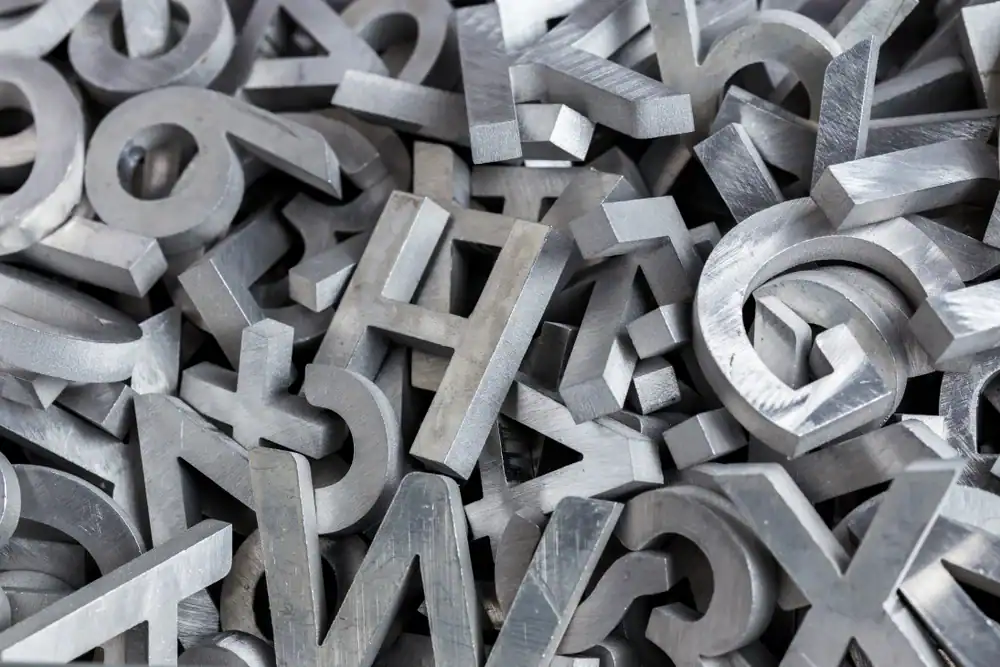
You’re dealing with tight specs. Maybe it’s a prototype that needs to prove out before production, or a custom part where off-the-shelf won’t cut it. Either way, you can’t afford warped edges, burned material, or dimensions that drift when the cutting process adds heat.
Precision water jet cutting services handle that problem at the source. The process uses high-pressure water mixed with abrasive garnet to cut through your material without raising its temperature. No heat-affected zones. No warping. No change to the material properties you’re counting on.
You get linear accuracy down to ±0.003″ to ±0.005″, which means your parts come off the table ready to use. The edges are clean, almost like a fine sandblasted finish. Most jobs don’t need deburring or additional finishing. That’s time you’re not spending on secondary operations, and cost you’re not adding to the project.
This matters when you’re working with aluminum, stainless steel, titanium, composites, or specialty alloys that don’t respond well to thermal cutting methods. It also matters when your timeline doesn’t have room for rework.
We operate out of Deer Park, NY, serving manufacturers across Long Island who need precision CNC waterjet cutting without the drive to New Jersey or Connecticut. Our shop runs Flow Dynamic Waterjet systems with taper compensation and vibration-dampened tables, which means the accuracy doesn’t degrade as the cut progresses through thicker materials.
Deer Park sits in the middle of a strong manufacturing corridor. You’ve got aerospace fabrication shops, custom metal suppliers, and industrial manufacturers all within a few miles. That local density means faster turnaround when you need parts in days, not weeks.
Our equipment handles materials up to 12 inches thick, and the process doesn’t require tool changes between jobs. If you’re running multiple materials or switching between prototypes and production parts, that flexibility keeps your project moving without downtime.
You send over your CAD file or technical drawing with the dimensions and material specs. We program the file into our CNC system, which maps out the tool path and cutting parameters based on your material type and thickness.
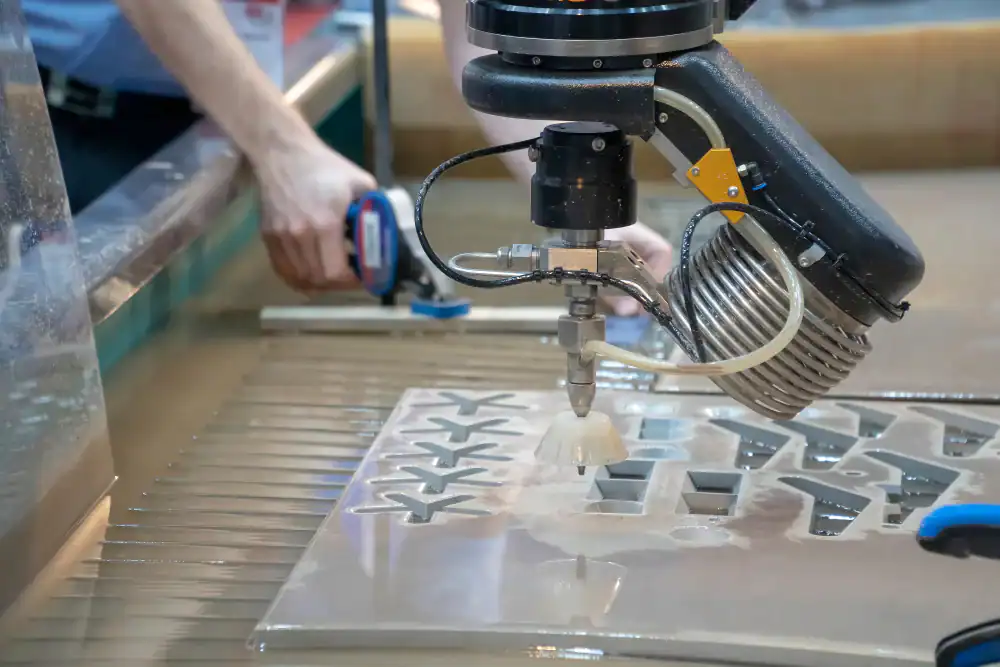
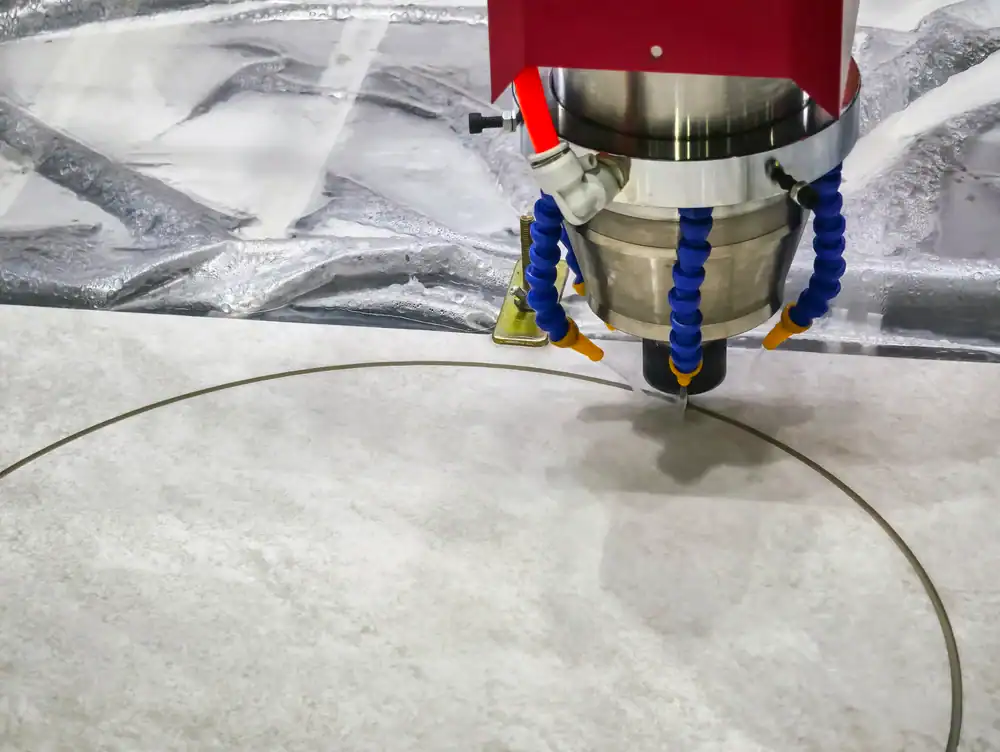
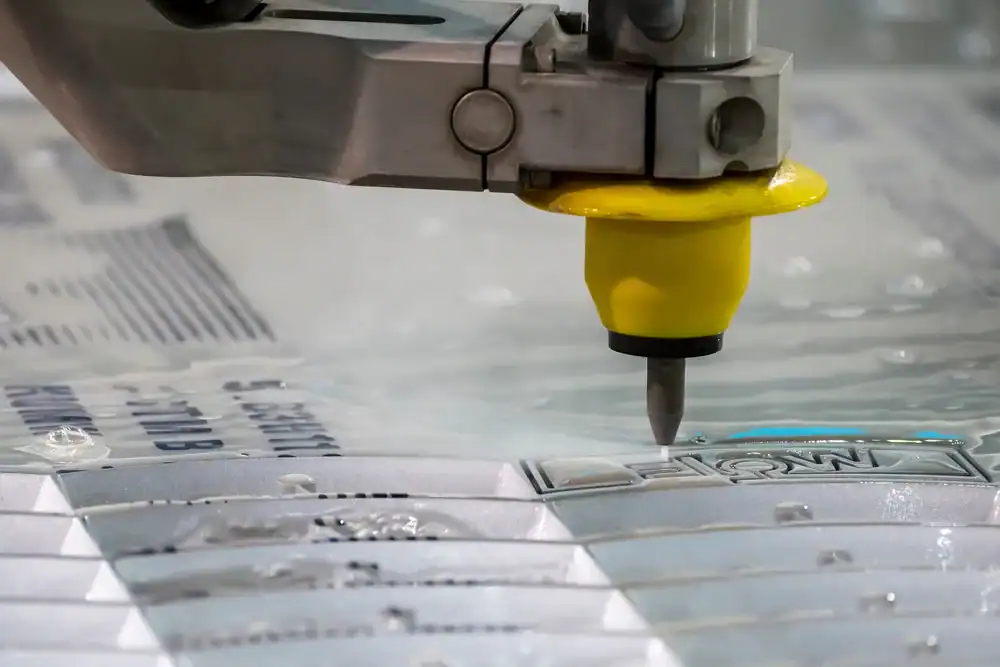
The cutting head moves into position. Water pressurized to around 60,000 PSI mixes with fine abrasive garnet and exits through a nozzle about the diameter of a human hair. That stream cuts through your material in a cold process—no flames, no plasma arc, no laser heat.
As the head traces your design, our Dynamic Waterjet system adjusts in real time to compensate for taper, which is the slight angle that can occur when cutting thicker materials. The result is a straight, clean edge all the way through, even on 6-inch or 8-inch stock.
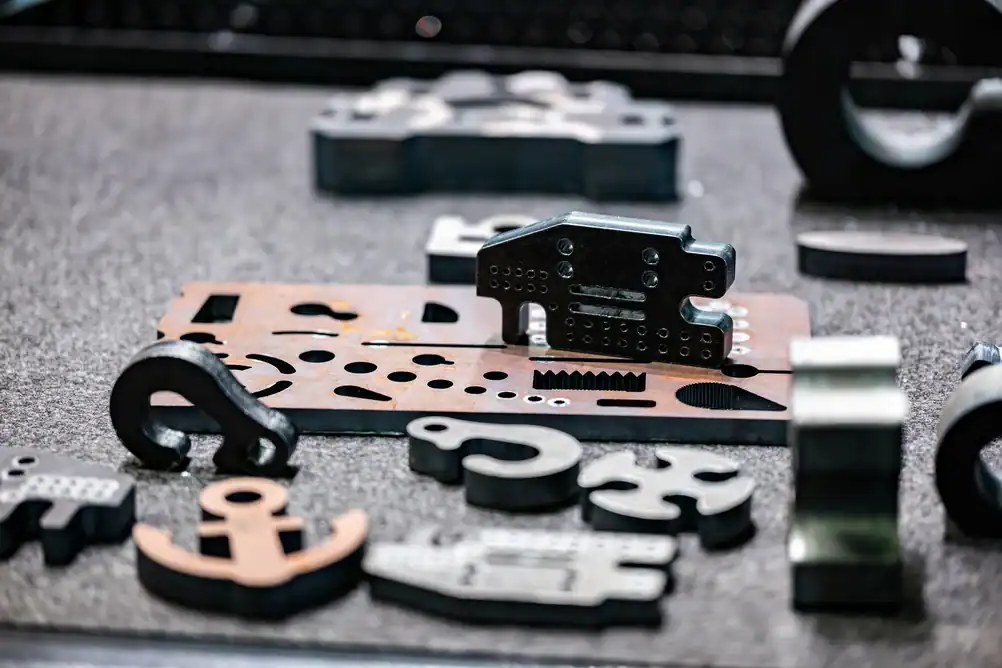
Once the cut finishes, your parts come off the table without burrs or heat discoloration. If you’re working with materials that are sensitive to thermal stress—like certain aerospace alloys or composites—this is where precision waterjet cutting for tight tolerances in Deer Park, NY makes the difference between a part that works and one that doesn’t.
Ready to get started?
Our service covers cutting for prototypes, custom parts, and full production runs. Materials include aluminum, brass, bronze, stainless steel, titanium, ceramics, glass, rubber, plastics, and composites. If it’s a solid material and you need it cut to shape, our waterjet handles it.
You also get complex geometry capability. Tight inside radii, narrow slots, small holes, intricate curves—our CNC system follows your design without the limitations you’d hit with punch presses or traditional machining. The narrow kerf width means less material waste, which matters when you’re working with expensive stock.
For manufacturers in Deer Park, NY and the surrounding Long Island area, this also means access to a precision waterjet cutting shop that understands the local aerospace and industrial standards. Companies like Jamco Aerospace and other regional fabricators have specific requirements around material integrity and dimensional accuracy. The cold-cutting process preserves both, which is why it’s become the go-to method for parts that can’t tolerate heat exposure.
Turnaround depends on complexity and material, but because there’s no tooling to fabricate and no heat treatment to schedule afterward, most projects move faster than they would through traditional machining routes.
Linear cutting accuracy typically lands between ±0.003″ and ±0.005″ depending on material type, thickness, and part geometry. That’s tight enough for most aerospace, automotive, and industrial applications where fit and function matter.
The tolerance consistency comes from the CNC control and the taper compensation built into our Flow Dynamic Waterjet system. As the abrasive stream cuts deeper into thicker materials, the system adjusts to keep the cut edge perpendicular, not angled. Without that adjustment, you’d see taper that throws off your dimensions on the bottom edge of the part.
Thinner materials—anything under half an inch—usually hit the tighter end of that range. Thicker stock, especially above 4 inches, may trend toward the wider tolerance, but you’re still well within what most engineering specs require. If your project has tolerances tighter than ±0.003″, it’s worth discussing up front so we can account for it in the programming and setup.
Yes. Our precision water jet cutting services in Deer Park, NY routinely handle aluminum alloys, stainless steel, titanium, Inconel, and composite materials used in aerospace fabrication. The cold-cutting process is actually preferred for these materials because it doesn’t create heat-affected zones that compromise material properties or cause warping.
Aerospace parts often require specific mechanical properties—tensile strength, hardness, corrosion resistance—that can degrade if the cutting process introduces heat. Laser and plasma cutting both generate enough thermal energy to alter the material structure near the cut edge. Waterjet doesn’t. The material stays at ambient temperature throughout the cut, so what you spec is what you get.
Composites, which are increasingly common in aerospace applications, also cut cleanly without delamination or fraying. Carbon fiber, fiberglass, and layered materials stay intact because there’s no melting or burning to separate the layers. If you’re working with materials that cost $50, $100, or more per pound, that material integrity isn’t just a nice-to-have—it’s a requirement.
Waterjet cuts without heat, which eliminates the warping, hardened edges, and discoloration you get with laser or plasma. If your parts need to stay dimensionally stable or if you’re working with materials that react poorly to heat, waterjet is the better process.
Laser cutting works well for thinner metals and offers fast cycle times, but it struggles with thicker materials and creates a heat-affected zone that can cause problems during welding or assembly. Plasma is faster on thick steel, but the tolerances are looser and the edge quality isn’t as clean. You’ll often need secondary grinding or machining to clean up plasma-cut edges.
Waterjet handles nearly any material at any thickness—up to 12 inches—without changing the process. The same equipment that cuts quarter-inch aluminum also cuts 6-inch titanium or half-inch glass. There’s no tool wear because the abrasive stream doesn’t make contact the way a cutting tool does, and there’s no need to adjust for different melting points or thermal properties. For high precision waterjet cutting in Deer Park, NY, that versatility means fewer limitations on what you can design and build.
Turnaround depends on part complexity, material thickness, and current shop schedule, but most projects move faster than traditional machining because there’s no tooling to build and no secondary finishing required. Simple parts in common materials can often be completed within a few days. More complex jobs with intricate geometry or thicker materials may take a week or more.
The advantage of working with us as your precision waterjet cutting shop in Deer Park, NY is proximity. You’re not shipping parts across state lines and waiting for freight schedules. You can drop off material, review the setup in person, and pick up finished parts without the delays that come with distant suppliers.
CNC programming also speeds things up. Once your CAD file is loaded, the system generates the tool path automatically. There’s no manual setup for each feature, no tool changes between operations, and no need to reposition the part mid-job. The cutting head follows the programmed path, and your part comes off the table ready to use. If you need revisions or additional parts from the same file, the setup time on subsequent runs is minimal.
Most parts come off the table with clean edges that don’t require deburring or additional finishing. The abrasive waterjet process leaves a surface finish similar to fine sandblasting—smooth, consistent, and free of the sharp burrs you’d get from shearing, punching, or even some machining operations.
Thicker materials or very hard alloys may have a slight texture on the bottom edge where the stream exits, but it’s typically minor and doesn’t affect fit or function. If your application requires a polished or completely smooth edge, secondary finishing is possible, but it’s not a standard requirement for most jobs.
That’s a cost and time advantage. When you’re comparing precision CNC waterjet cutting in Deer Park, NY to other methods, factor in the labor and equipment time you’d spend cleaning up edges after laser or plasma cutting. With waterjet, that step usually disappears. Your parts move directly to assembly, welding, or coating without the extra handling. For production runs, that efficiency adds up quickly.
Yes. Our CNC system follows your CAD file exactly, which means intricate curves, tight inside corners, small holes, and irregular shapes are all within capability. There’s no physical cutting tool that limits the geometry, and there’s no need to program multiple operations or reposition the part to access different features.
The cutting stream is narrow—about 0.030″ to 0.040″ wide—so you can create fine details and tight radii that would be difficult or impossible with punch presses or traditional machining. If your design includes features like narrow slots, sharp angles, or complex contours, precision waterjet cutting for tight tolerances handles them without special tooling or added setup time.
This flexibility is especially useful for prototypes or low-volume custom parts where building dedicated tooling doesn’t make economic sense. You can iterate on the design, make changes to the CAD file, and recut without the lead time or cost associated with new dies, punches, or fixtures. For manufacturers in Deer Park, NY working on custom projects or one-off parts, that adaptability keeps the project moving without the delays that typically come with complex geometry.
Useful Links
Other Services we provide in Deer Park