Hear from Our Customers
You’re not looking for close enough. You need parts that fit, function, and meet your specs without secondary operations eating into your timeline or budget.
Precision waterjet cutting in Elmont, NY gives you tolerances down to ±0.005 inches on materials that would warp, melt, or harden under a laser or plasma torch. No heat-affected zones. No material stress. No burned edges that need grinding down.
What you get are clean, burr-free cuts on everything from quarter-inch aluminum to six-inch steel plate. Complex geometries that would require multiple setups on a mill get done in one pass. Prototypes that need to be right the first time actually are.
Your production schedule doesn’t wait for rework. Neither should your cutting process.
Tri-State Waterjet serves manufacturers in Elmont, NY and across the metro area who can’t afford to compromise on precision. We’re not the cheapest option, and that’s intentional.
You’re working with equipment that holds tolerances most shops talk about but can’t consistently deliver. Our precision CNC waterjet cutting systems handle the aerospace components, medical device parts, and custom fabrication work that requires actual precision, not marketing claims.
Elmont’s proximity to major manufacturing hubs means you’re likely supplying aerospace, automotive, or defense contractors. We understand those quality standards because we cut to them daily. When your customer requires documented tolerances and material certifications, you need a shop that already knows the drill.
You send us your CAD file or drawing with your material specs and tolerance requirements. We program the cut path, optimize for material efficiency, and confirm any questions about edge finish or nesting before we start.
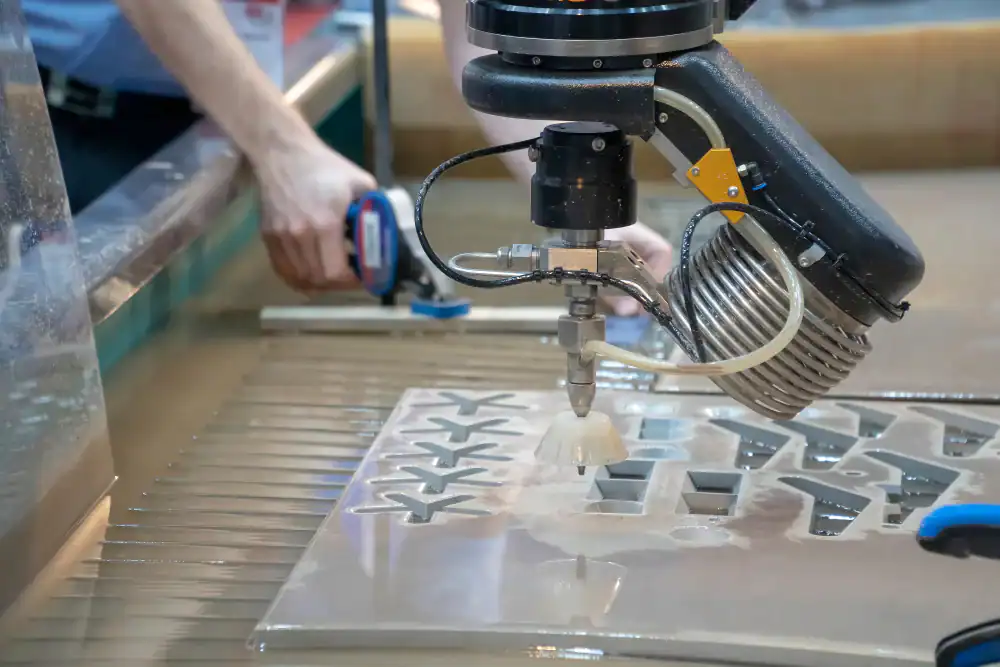
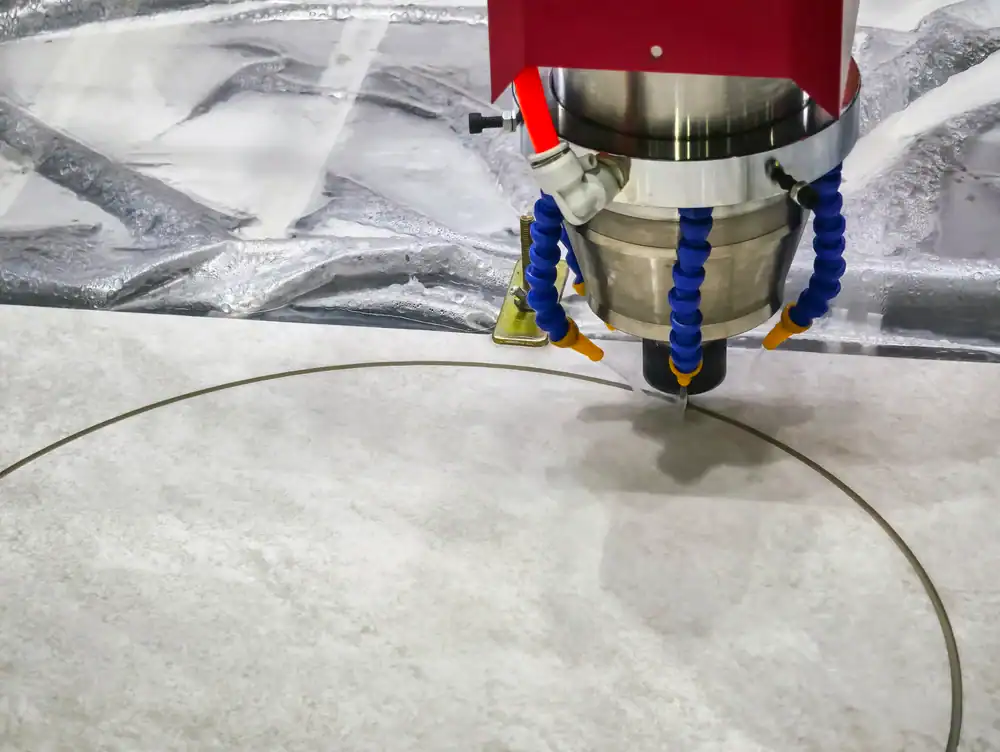
The actual cutting uses a high-pressure water stream mixed with garnet abrasive. Pressure runs over 60,000 PSI, which cuts through your material without generating heat. The stream is thinner than a credit card, which means tight nesting and minimal waste on your material costs.
For precision waterjet cutting for tight tolerances, we’re monitoring cut speed, abrasive flow, and water pressure throughout the job. Complex shapes with inside corners, small holes, or intricate profiles get the same attention as simple rectangles.
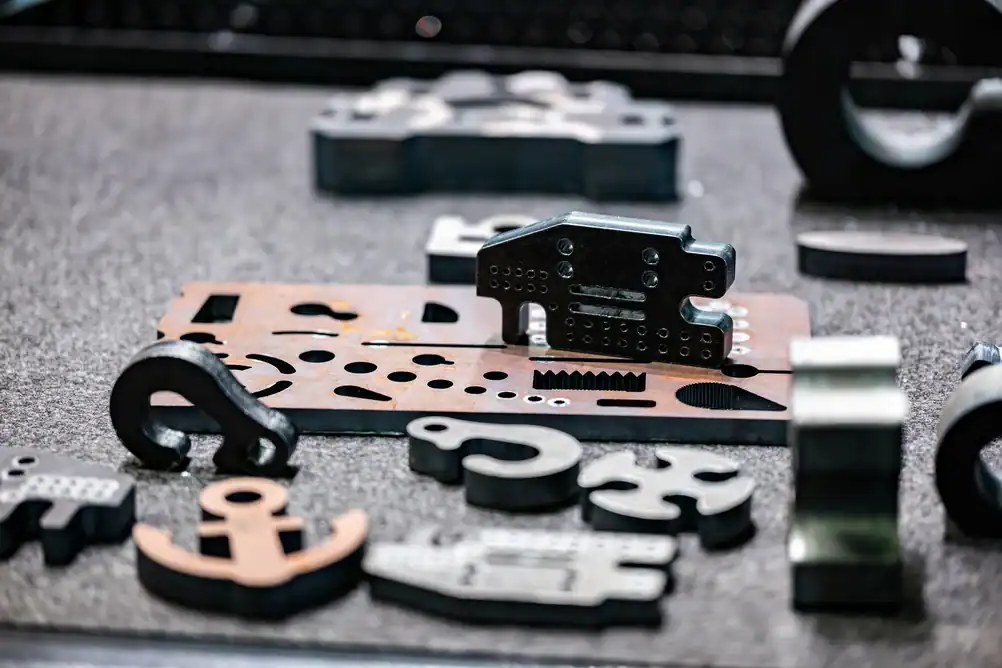
Once cutting is complete, parts come off the table ready to use. Most jobs need zero secondary deburring. If you need specific edge finish requirements, we adjust cutting parameters to hit your Q3 or Q5 finish specs.
Ready to get started?
Precision water jet cutting services here handle materials your other processes can’t touch. Titanium and Inconel for aerospace applications. Thick aluminum plate for defense components. Composites and laminates that delaminate under heat. Glass, stone, and ceramics for architectural projects.
The New York metro manufacturing sector increasingly demands environmentally compliant processes. Waterjet cutting produces no toxic fumes, no hazardous waste, and uses recycled water in closed-loop systems. When your facility needs to document environmental compliance, this process makes that simple.
You’re also getting speed that matters for real deadlines. Prototype parts can turn around same-day or next-day depending on material availability and queue. Production runs benefit from 24/7 operation capability when your timeline demands it. No tool changes between different part geometries means less setup time and faster completion.
Local manufacturers in Elmont working on custom metal fabrication, architectural metalwork, or precision components for medical devices get the material versatility they need without maintaining multiple cutting processes in-house. One process, any material, consistent quality.
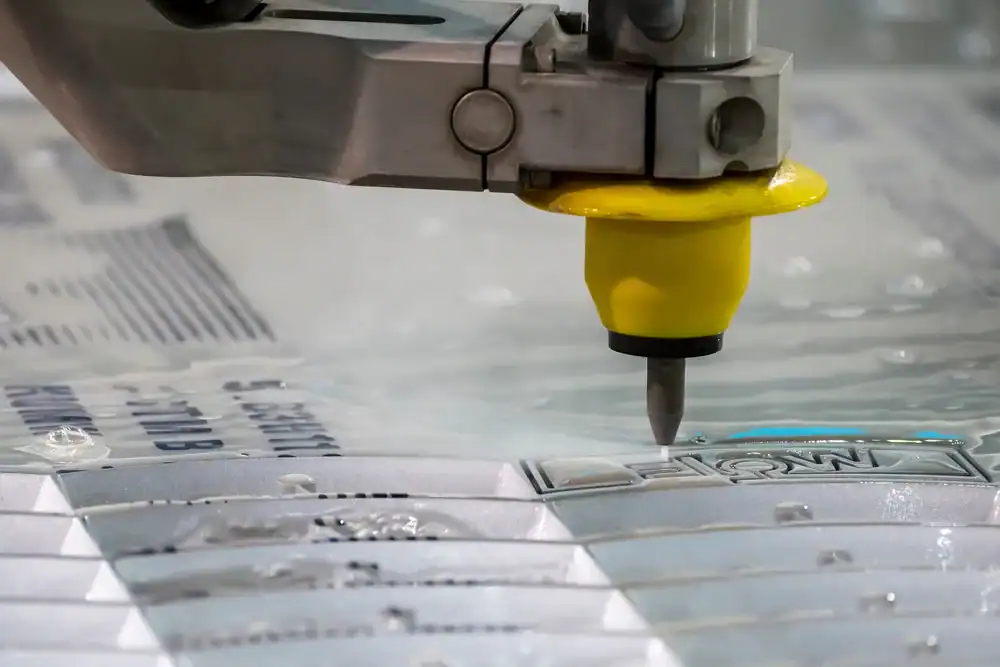
Standard precision waterjet cutting in Elmont, NY holds ±0.005 inches consistently across most metals and thicknesses. That’s tight enough for most aerospace, automotive, and medical device applications without secondary machining.
If you need tighter, advanced systems can hit ±0.001 inches on specific materials and thicknesses under controlled conditions. But here’s what matters more than the number: consistency. Holding ±0.005 inches on part one and part one hundred is what keeps your assembly process running smoothly.
Tolerance capability depends on material thickness, hardness, and part geometry. Thicker materials and harder alloys may see slightly wider tolerances. Complex shapes with tight inside radii can affect precision in those specific areas. That’s why the conversation starts with your print and your actual requirements, not generic capability claims.
High precision waterjet cutting processes materials from thin gauge sheet up to 12 inches thick. Edge quality stays consistent because the cutting mechanism doesn’t change with thickness, just the traverse speed and abrasive flow.
Thicker materials take longer to cut, but you’re not sacrificing edge finish or introducing heat stress. A six-inch steel plate gets the same burr-free edge as half-inch aluminum. The kerf width stays narrow regardless of thickness, which means your dimensional accuracy holds even on thick parts.
What changes with thickness is the edge taper. Thicker materials can show slight taper from top to bottom of the cut, typically a few thousandths over several inches of thickness. For most applications, this is negligible. When it matters, we adjust cutting parameters or orient parts to put the taper where it won’t affect function.
Waterjet cutting produces zero heat-affected zones. Laser and plasma both generate intense heat that changes material properties at the cut edge. That heat creates hardened zones, introduces stress, and can warp thin materials or complex shapes.
If you’re cutting materials that are heat-sensitive, already heat-treated, or prone to warping, waterjet is often your only viable option. Titanium, Inconel, hardened tool steels, and pre-tempered aluminum all cut cleanly without affecting their engineered properties.
Material versatility is the other major factor. Waterjet cuts reflective metals like brass and copper that deflect laser beams. It handles composites and laminates without delamination. Glass, stone, ceramics, and rubber all process the same way. When your projects involve multiple materials, you’re not switching between different cutting processes and dealing with different quality standards for each.
Simple prototype parts with available material can turn same-day if you get us files and specs early enough. Most prototype work ships next-day. Production runs depend on quantity, complexity, and material lead times.
Speed comes from not needing tool changes or complex setups. Your CAD file programs directly into the cutting path. We’re not building dies, making fixtures, or setting up multiple operations. One setup, one process, done.
Rush capability exists because precision CNC waterjet cutting systems can run continuously. If your deadline requires overnight or weekend work, that’s possible. But realistic turnaround starts with clear communication: complete files, confirmed material specs, and specific tolerance requirements up front. The shops that promise everything same-day are usually the ones that can’t deliver on the quality when it matters.
DXF and DWG files work best for programming cut paths directly. We can also work from PDFs with dimensions, though CAD files are faster and eliminate interpretation errors. If you’re still in the design phase, a dimensioned sketch is enough for initial quoting.
Beyond the geometry, we need material type and thickness, quantity, and your tolerance requirements. If you have specific edge finish needs or requirements for burr-free edges on certain features, include that. Any callouts for hole sizes, inside corner radii, or critical dimensions help us optimize the cutting parameters.
For precision waterjet cutting shop work in Elmont, we’re also asking about your timeline and whether this is prototype, short-run, or production volume. That affects how we nest parts, whether we optimize for speed or material yield, and how we schedule the job. The more complete your information up front, the faster we can give you an accurate quote and delivery date.
Waterjet excels at complex shapes because the cutting stream is narrow and doesn’t require pre-drilled pilot holes like some processes. Small holes, tight inside corners, and intricate interior cutouts are all standard work.
Minimum hole size depends on material thickness. In thin materials, you can cut holes as small as the kerf width plus a small margin. Thicker materials need slightly larger holes to maintain quality. Generally, holes down to 0.1 inches are achievable in most applications.
Inside corners can be sharp, but there’s always a small radius where the stream width creates a natural corner radius. If your design requires truly sharp corners, that’s a conversation about whether the application can tolerate a small radius or needs secondary operations. Most designs work fine with the minimal radius waterjet produces, especially compared to routing or milling operations that use larger diameter tools.
Useful Links
Other Services we provide in Elmont