Hear from Our Customers
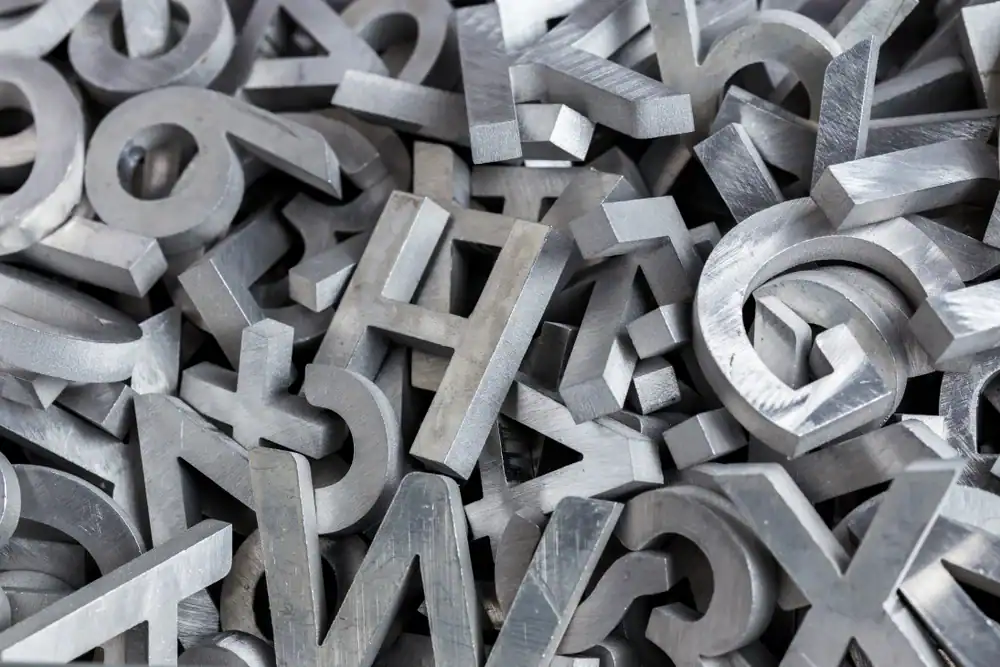
You’re not looking for good enough. You need parts that pass inspection without rework, components that fit assemblies without adjustment, and cuts that don’t require finishing before they ship.
Precision CNC waterjet cutting delivers tolerances between ±0.001″ and ±0.005″ on virtually any material you’re working with. That’s accuracy you can measure, not marketing language. The process uses no heat, which means no warping, no hardening, and no heat-affected zones that compromise material integrity.
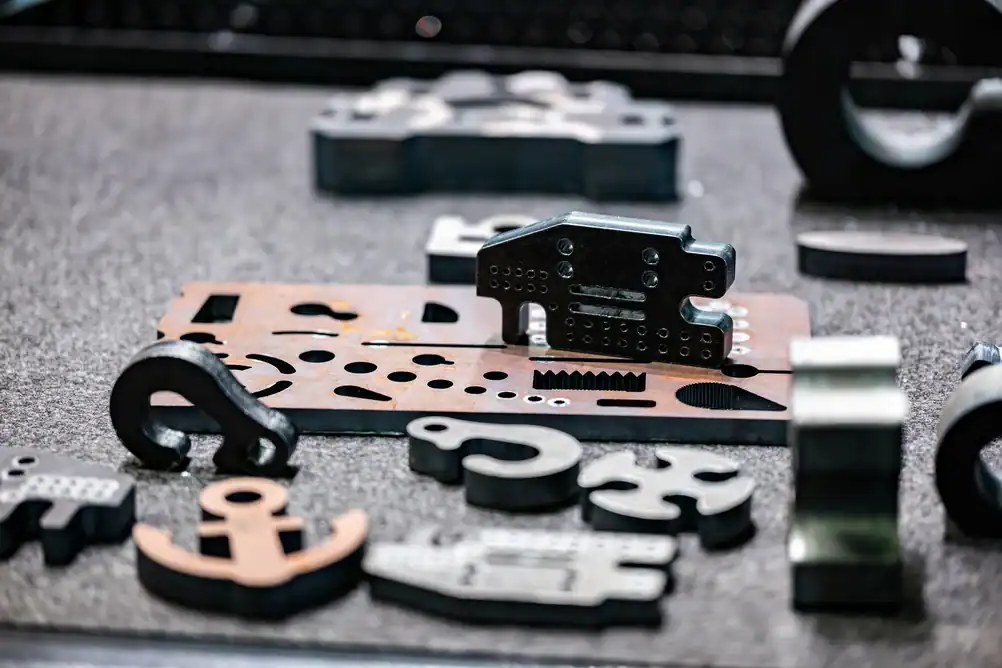
What that actually means for your operation: parts come off the table ready to use. No deburring. No secondary machining. No explaining to your customer why the delivery is delayed because half the batch didn’t meet spec. You get satin-smooth edges and dimensional accuracy that holds up under inspection, whether you’re cutting titanium for aerospace components or stainless steel for architectural installations.
We serve manufacturers, fabricators, and contractors throughout Franklin Square and Nassau County from our facility in West Islip. We’re close enough to turn around urgent jobs quickly, experienced enough to handle the tolerances that matter in aerospace and automotive work.
Franklin Square sits in the middle of one of the country’s most demanding manufacturing corridors. When you’re supplying parts to industries where precision isn’t negotiable, you need a precision waterjet cutting shop that understands what’s at stake. We cut for companies that can’t afford to explain rejected parts to their customers.
You send us your specifications and material requirements. We program the cut using your CAD file or technical drawings, accounting for material type, thickness, and the tolerances you need to hit.
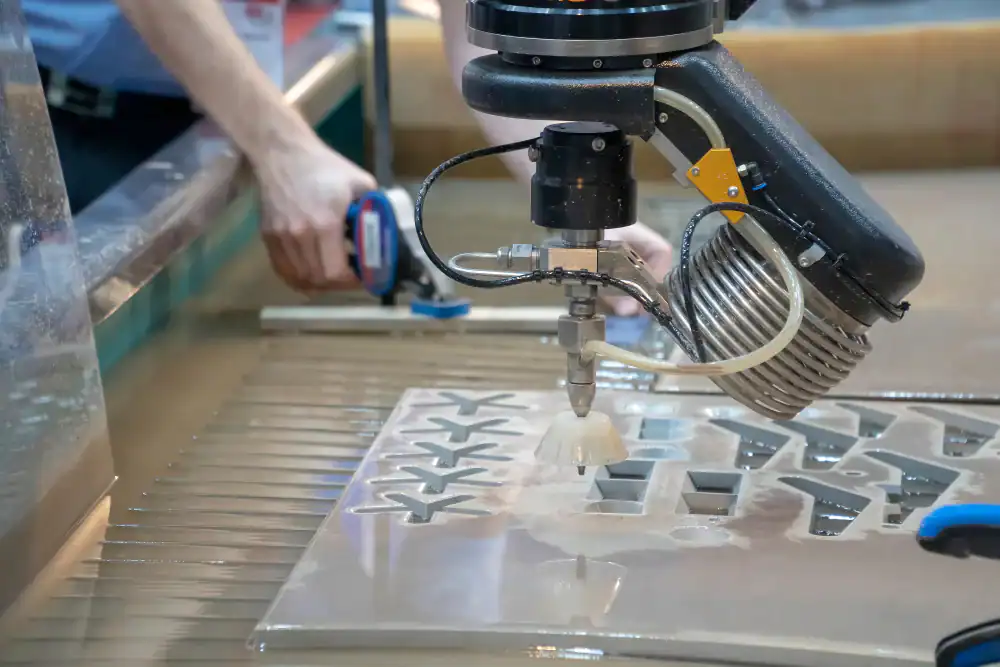
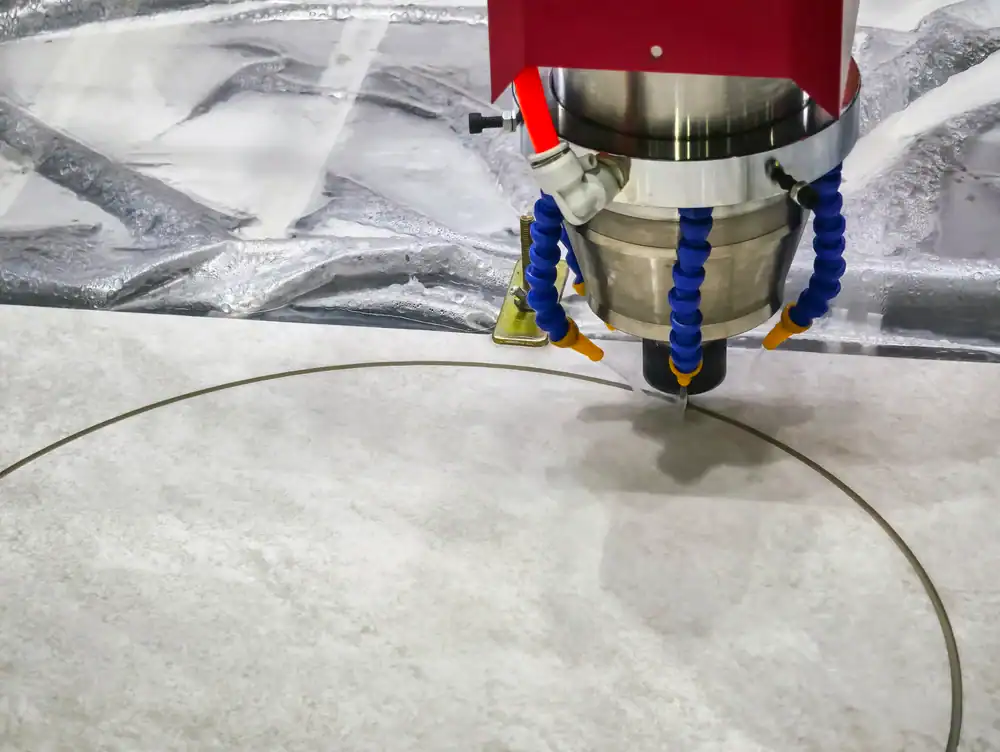
Our waterjet system uses a high-pressure stream mixed with abrasive garnet to cut through your material. There’s no contact between the cutting head and your workpiece, which eliminates tool wear issues and keeps dimensional accuracy consistent from the first part to the last. The cold cutting process means your material properties stay intact—no thermal stress, no microstructure changes, no hardened edges that cause problems downstream.
Once cutting is complete, parts are removed and inspected. Because there’s no heat-affected zone and minimal kerf width, what comes off the table is usually what goes into your assembly. For complex geometries or 3D shapes, our multi-axis capability handles it in a single operation instead of requiring multiple setups that compound tolerance stack-up.
Ready to get started?
You get precision waterjet cutting for tight tolerances on materials from 1/16″ to over 10″ thick. The process handles metals, composites, glass, stone, ceramics—basically anything you need cut with accuracy that matters.
In Franklin Square and the surrounding Nassau County area, manufacturers are increasingly dealing with complex geometries and materials that don’t respond well to thermal cutting methods. Laser cutting creates heat-affected zones that can alter material properties. Plasma leaves rough edges that need finishing. Traditional machining is slow and expensive for intricate shapes. Waterjet cutting addresses all three issues: no heat, clean edges, and the ability to cut virtually any path your design requires.
You also get fast programming and setup times. Changes to your design don’t mean retooling or creating new fixtures. The system adjusts digitally, which matters when you’re iterating prototypes or running mixed production batches. Material waste drops significantly because of the narrow kerf width and the ability to nest parts efficiently, which impacts your cost per piece on expensive materials like titanium or Inconel.
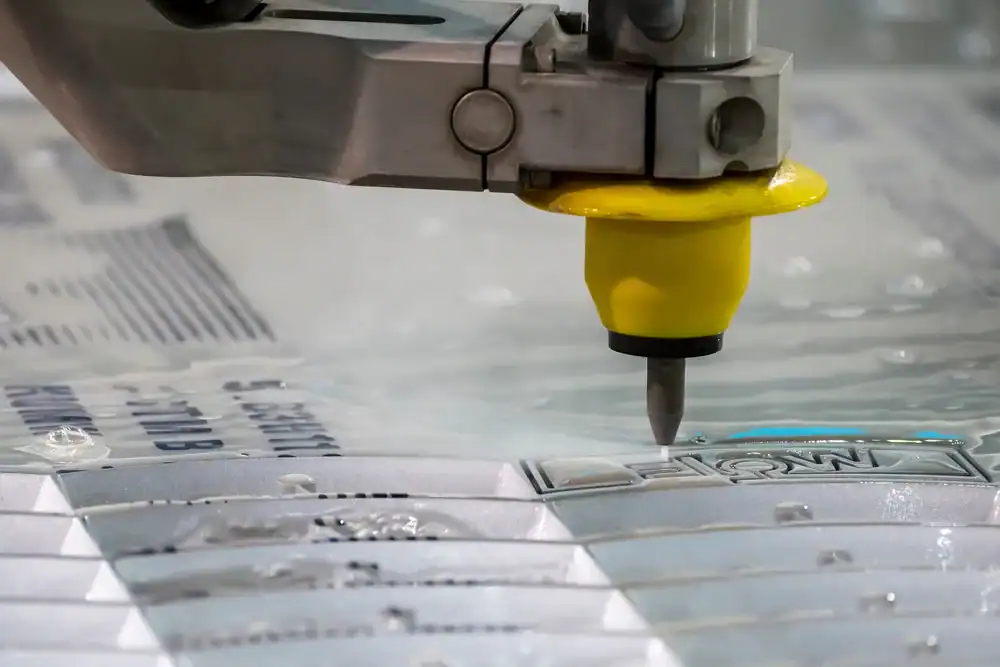
Standard precision waterjet cutting typically holds tolerances between ±0.003″ and ±0.005″, which covers most industrial manufacturing requirements. For applications requiring tighter control, advanced systems can achieve tolerances as close as ±0.001″.
The tolerance you’ll achieve depends on material type, thickness, and part geometry. Thinner materials generally hold tighter tolerances than thick sections. Harder materials like tool steel or ceramics maintain dimensional accuracy better than softer materials that can deflect slightly under the waterjet stream.
For aerospace and automotive work in the Franklin Square area where tolerances of ±0.005″ are often specified to ensure component integrity, waterjet cutting consistently delivers parts that pass inspection. The lack of heat distortion means the dimensions you program are the dimensions you get, without the warping or expansion issues that thermal cutting methods introduce.
Waterjet cutting is a cold process. The abrasive stream removes material through erosion, not melting, so there’s no heat transfer into your workpiece. Temperature at the cut site stays near ambient, which means the material’s microstructure, hardness, and mechanical properties remain unchanged.
This matters significantly if you’re working with hardened steels, heat-treated alloys, or materials where thermal stress causes cracking or distortion. Laser and plasma cutting transfer enormous amounts of heat into the workpiece, creating a heat-affected zone that extends outward from the cut. That zone can become harder or softer than the base material, potentially creating failure points or requiring stress-relief treatments.
For manufacturers in Franklin Square supplying parts to industries with strict material certification requirements, avoiding heat-affected zones isn’t just preferable—it’s often mandatory. Waterjet cutting lets you maintain material certs and traceability without additional heat treatment documentation or testing to verify that thermal cutting hasn’t compromised the material.
Abrasive waterjet cutting handles virtually any material: all metals including stainless steel, aluminum, titanium, Inconel, tool steel, and hardened alloys. It also cuts composites, carbon fiber, fiberglass, glass, stone, granite, marble, ceramics, rubber, plastics, and foam.
The versatility comes from the cutting mechanism. Since you’re using abrasive particles suspended in high-pressure water rather than heat or chemical reaction, material hardness and thermal properties don’t limit what you can cut. The same machine that cuts 2″ thick titanium plate for aerospace components can cut acrylic for architectural elements or carbon fiber for automotive parts.
For fabrication shops and manufacturers in Franklin Square working across multiple industries or materials, this eliminates the need for different cutting processes and equipment. You don’t need a laser for thin metals, a plasma table for thick steel, and a router for composites. Waterjet handles all of it with consistent edge quality and without the material-specific limitations that other methods face.
Most parts come off the waterjet table ready to use. The cutting process produces what’s called a satin-smooth edge finish that’s clean enough for most applications without deburring, grinding, or additional machining.
Edge quality depends on cutting speed and abrasive flow rate. Slower cutting speeds with higher abrasive concentration produce smoother edges. For parts where edge finish is critical, the process can be optimized to deliver surfaces that meet your requirements without secondary operations. This saves time and reduces your cost per part compared to cutting methods that always require finishing.
There are applications where you might still want additional finishing—polished edges for aesthetic reasons, or chamfering for assembly purposes. But for functional parts where dimensional accuracy matters more than surface appearance, waterjet cutting typically delivers acceptable edge quality straight from the machine. That’s a significant advantage when you’re running production quantities and secondary finishing would add substantial labor and time to each part.
Turnaround depends on part complexity, material thickness, and current production schedule. Simple 2D parts in thin material can often be programmed and cut the same day. Complex 3D geometries or thick sections take longer but still move faster than traditional machining would.
One advantage of waterjet cutting is the programming speed. CAD files translate directly to tool paths without creating custom fixtures or tooling. Design changes are implemented digitally, not mechanically, which matters when you’re iterating prototypes or responding to engineering changes. Setup time is minimal compared to processes that require extensive fixturing.
For manufacturers in Franklin Square dealing with tight project timelines or unexpected needs, having local access to precision waterjet cutting services means you’re not waiting on parts to ship from distant suppliers. Rush jobs can be accommodated when production schedules allow, and proximity makes it easier to coordinate on specifications or inspect parts before final delivery.
Waterjet cutting typically costs more per linear inch than plasma or oxy-fuel cutting, but less than laser cutting for thick materials. The real cost comparison needs to account for the total process, not just the cutting operation.
If laser cutting requires secondary deburring and your parts need stress relief to address heat-affected zones, those additional operations add cost and time. If traditional machining requires multiple setups to achieve complex geometries that waterjet handles in one operation, the setup time and programming costs add up. Waterjet often reduces total cost by eliminating secondary processes and minimizing material waste through efficient nesting.
For precision work where parts must meet tight tolerances consistently, the cost of rejected parts and rework needs to factor into your decision. Waterjet cutting’s ability to hold ±0.003″ to ±0.005″ tolerances without heat distortion means fewer rejected parts and less scrap. When you’re working with expensive materials like titanium or Inconel, the material savings from reduced waste and higher first-pass yield can offset the higher per-inch cutting cost.
Useful Links
Other Services we provide in Franklin Square