Hear from Our Customers
You’re dealing with materials that don’t forgive mistakes. Titanium alloys, aerospace composites, thick stainless steel—materials where heat-affected zones mean rejected parts and blown budgets.
Precision water jet cutting services in Greenlawn, NY handle this differently. Cold cutting means zero thermal distortion. Your material properties stay intact from the first cut to final inspection.
The result is parts with burr-free edges and tolerances that hold at +/- 0.001″. No secondary deburring. No stress relieving. No explaining to your customer why the delivery is late because you’re on your third supplier this quarter.
When BAE Systems and Long Island’s aerospace manufacturers need components that pass inspection the first time, they need precision waterjet cutting for tight tolerances that doesn’t create more problems than it solves.
We operate in a region where over 4,000 acres are zoned for advanced manufacturing, serving companies like BAE Systems’ 600-person C4ISR team right here in Greenlawn. We understand the standards you’re held to.
When you’re cutting components for aerospace, defense, or precision manufacturing, consistency isn’t optional. You need a precision waterjet cutting shop that understands what’s at stake when parts don’t meet spec.
We’ve built our operation around the reality that your production schedule doesn’t have room for supplier inconsistency. You need cuts that hold tolerance across prototype runs and full production batches, on materials from aluminum to 24-inch Inconel plates.
You send us your specs and material requirements. We review tolerances, material thickness, and edge quality requirements to determine the right abrasive mix and pressure settings for your specific job.
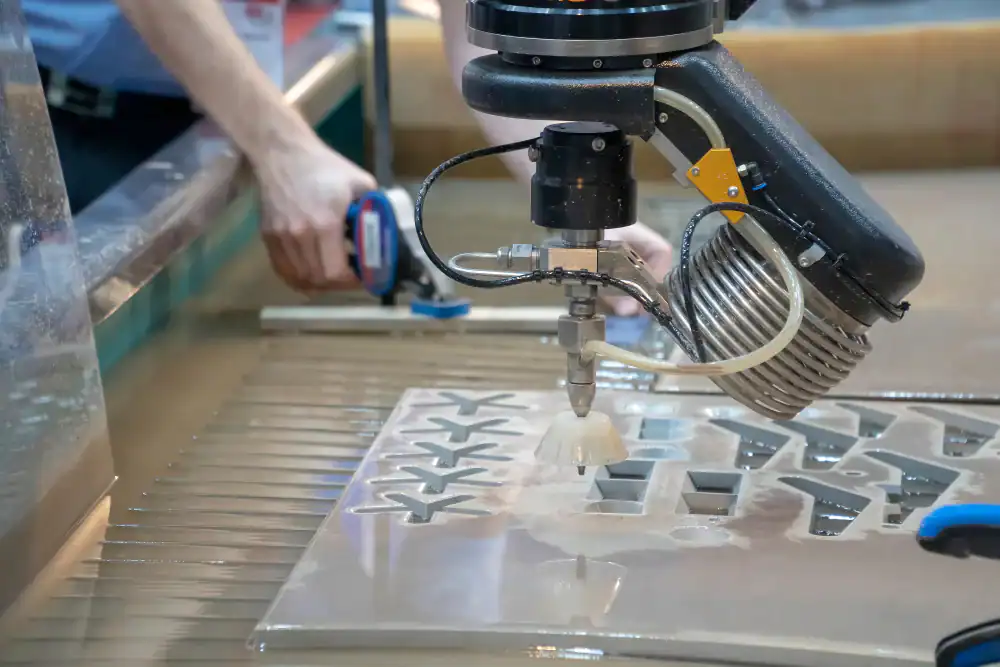
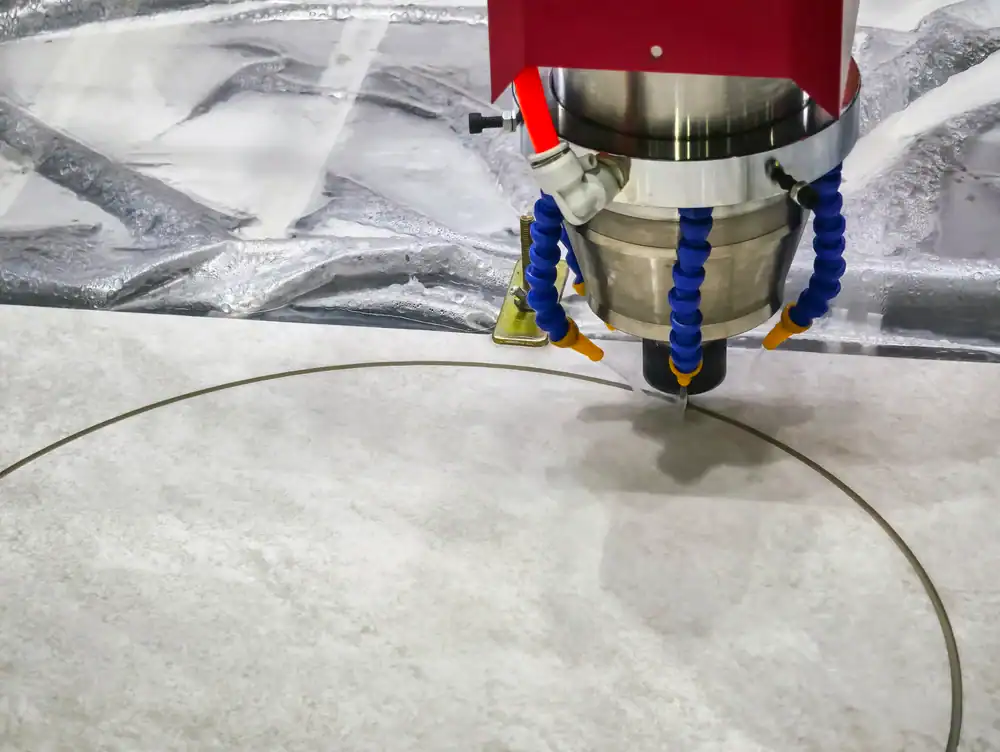
Our precision CNC waterjet cutting system uses computer-controlled positioning to maintain accuracy across every cut. The high-pressure water stream mixed with abrasive garnet cuts through your material without generating heat, which means no warping and no change to your material’s structural properties.
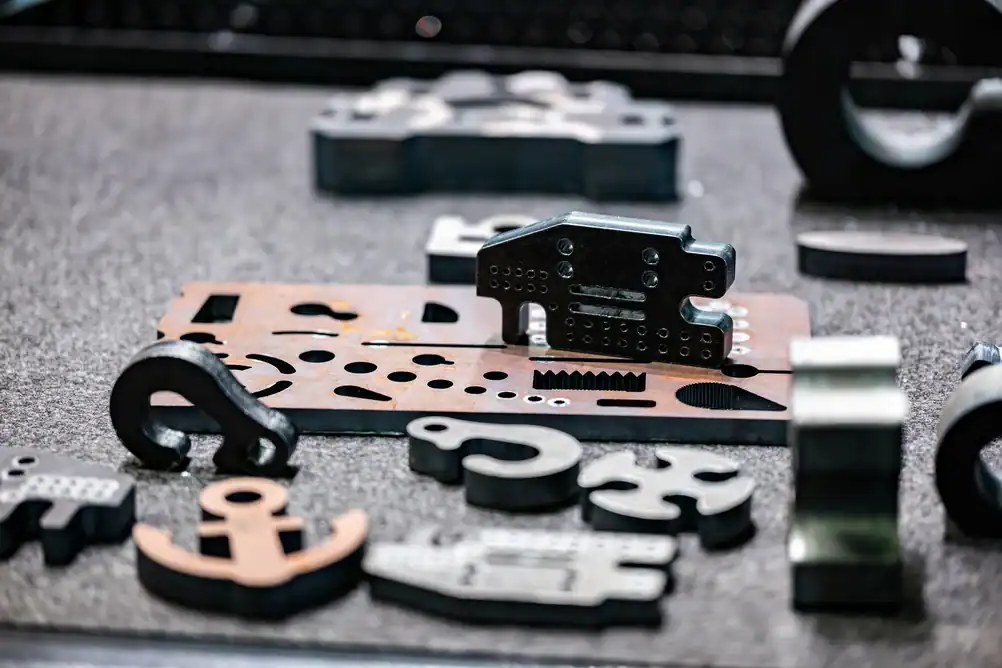
For complex geometries or tight corner radiuses, the system adjusts pressure and speed automatically to maintain edge quality. You get parts with clean edges that typically don’t require additional finishing work.
Once cutting is complete, we inspect dimensions against your specifications. Parts that don’t meet tolerance don’t leave our shop. You receive components ready for assembly or integration into your production line.
Ready to get started?
You get precision waterjet cutting in Greenlawn, NY that handles materials up to 24 inches thick. Aluminum, stainless steel, titanium, Inconel, composites—materials that Long Island’s aerospace and defense manufacturers work with daily.
Tolerances hold at +/- 0.001″ across the cut. That’s not marketing language. That’s repeatable accuracy verified with each job, which matters when you’re producing components for companies where dimensional accuracy determines whether parts get approved or rejected.
The waterjet process doesn’t create tool marks, heat-affected zones, or mechanical stress in your material. For aerospace applications where material certification matters, this means your material properties remain unchanged from mill cert to finished part.
You also get material consultation upfront. If your design will create challenges in cutting or if there’s a more efficient approach to achieve the same result, we’ll tell you before the job starts. That conversation can save you material costs and production time.
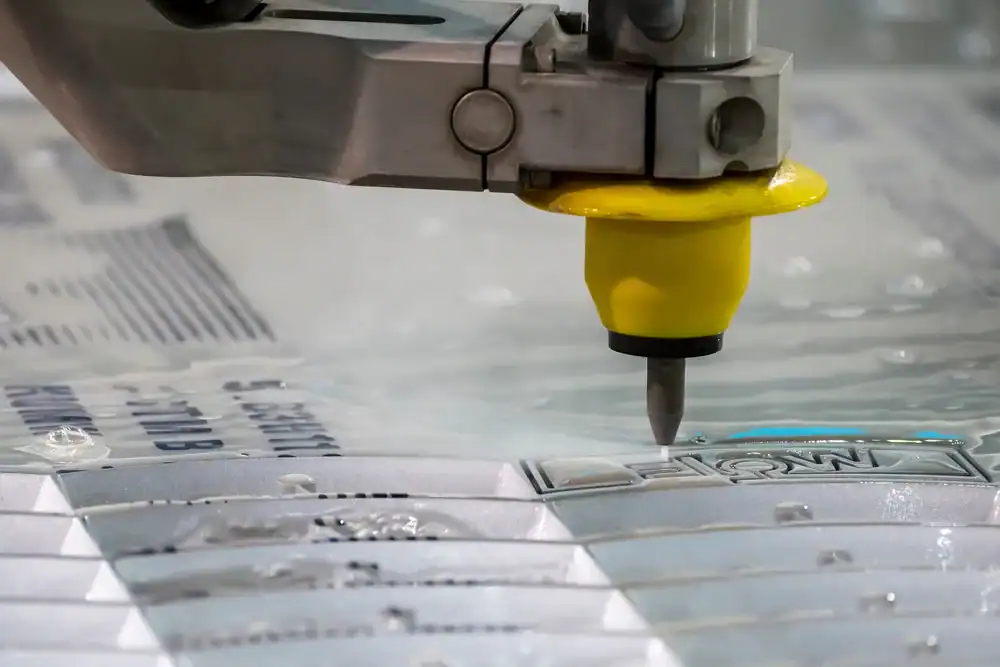
Standard precision waterjet cutting holds +/- 0.001″ on materials up to about one inch thick. That’s the linear positional accuracy of the cutting head itself.
Once you get past one inch in material thickness, tolerance can open up to around +/- 0.010″ depending on the material. This happens because the abrasive stream widens slightly as it cuts deeper. Harder materials like Inconel or titanium hold tighter tolerances at thickness than softer materials.
For aerospace work in Greenlawn requiring precision waterjet cutting for tight tolerances on thick materials, we adjust cutting speed and abrasive flow to minimize stream deflection. On critical dimensions, we can also make multiple passes to tighten up tolerance, though this adds time to the job. The key is knowing upfront what tolerance you actually need versus what the print says, because there’s often room to optimize.
The main difference is heat. Laser cutting melts material, which creates a heat-affected zone that changes material properties along the cut edge. For aerospace components where material certs matter, that’s a problem.
Precision water jet cutting services in Greenlawn, NY use a cold cutting process. No heat means no HAZ, no thermal distortion, and no change to your material’s structural properties. Your mill cert stays valid through the cutting process.
Laser is faster on thin materials under a quarter inch, especially on high-volume production runs. But waterjet handles thicker materials better and cuts a wider range of materials without switching equipment. If you’re cutting titanium, composites, or anything over an inch thick, waterjet is typically the better choice. For thin sheet metal in high volume, laser might make more sense. It depends on what you’re cutting and what your tolerance requirements are.
Yes, but there are limits based on physics. The waterjet stream has a diameter—typically 0.020″ to 0.040″ depending on the orifice and abrasive flow. That stream diameter determines your minimum inside corner radius.
For precision CNC waterjet cutting, you can achieve inside corners with a radius as tight as 0.010″ to 0.015″, but edge quality may suffer at the absolute minimum. Most aerospace work specs inside corners at 0.030″ radius or larger, which waterjet handles cleanly.
Complex geometries with multiple direction changes are actually where waterjet excels compared to other methods. There’s no tool deflection because there’s no physical cutting tool. The system can cut intricate patterns, tight nesting layouts, and detailed profiles without degrading accuracy. If your part has a lot of small holes, tight radiuses, or complex curves, waterjet is often more practical than EDM or milling, especially on hard materials.
It depends on material thickness, complexity, and how many parts you need. A simple profile cut on half-inch aluminum might take 15 minutes of cutting time per part. A complex aerospace bracket in two-inch titanium could take several hours per piece.
For prototype work or small batches under 20 parts, you’re typically looking at a few days from approved drawings to finished parts. That includes programming time, material procurement if we don’t have your specific alloy in stock, and setup time on the machine.
Production runs get more efficient because setup is already done. Once the program is proven and the first article is approved, we can run subsequent parts faster. The actual cutting time doesn’t change, but the per-piece time drops when you’re not stopping for inspection and approval between every part. If you need a firm timeline, the best approach is to send us your drawings and material specs so we can give you an accurate estimate based on your specific job.
Waterjet cuts almost anything that isn’t softer than the abrasive garnet we use in the stream. Metals, composites, ceramics, glass, stone—all cut cleanly. Hardness doesn’t slow us down the way it does with traditional machining.
The materials that don’t work well are very soft or flexible things that absorb the water stream energy instead of fracturing. Rubber, foam, and some soft plastics can be problematic. Tempered glass can shatter due to internal stresses, though annealed glass cuts fine.
For the aerospace and defense work common in Greenlawn, the materials you’re typically using—aluminum alloys, stainless steel, titanium, Inconel, carbon fiber composites—all cut well with waterjet. Material hardness affects cutting speed but not capability. A precision waterjet cutting shop can handle Rockwell C60 tool steel as easily as 6061 aluminum; the hard steel just takes longer to cut through.
Consistency comes from controlling the variables that affect cut quality. Water pressure, abrasive flow rate, cutting speed, and standoff distance all impact the finished part. Our precision CNC waterjet cutting system monitors and maintains these parameters automatically throughout the run.
We verify the first article against your specifications before running the full batch. If dimensions are within tolerance and edge quality meets requirements, we lock in those parameters for the remaining parts. The CNC program ensures each subsequent part follows the exact same tool path at the same speeds and feeds.
The main variable that can drift during long runs is abrasive flow, which we monitor and adjust as needed. We also do periodic dimensional checks during production runs to catch any deviation before it affects a large number of parts. For aerospace work requiring precision waterjet cutting for tight tolerances, this verification process is what keeps rejected parts from reaching your receiving dock.
Useful Links
Other Services we provide in Greenlawn