Hear from Our Customers
Your production schedule doesn’t have room for parts that need rework. You’re dealing with tight tolerances, expensive materials, and deadlines that matter.
Precision waterjet cutting in Hauppauge, NY means your parts come out within +/- 0.001 inch, with clean edges that don’t need secondary finishing. No heat-affected zones means no microscopic cracks, no warping, no material stress that shows up later when you can least afford it.
The process uses high-pressure water mixed with abrasive garnet to cut through virtually any material—hardened tool steel, aluminum, titanium, copper, brass, even materials over ten inches thick. Complex geometries, tight radii, small holes, irregular shapes—all handled in a single pass without tool changes.
You get parts that fit your specs, materials that maintain their integrity, and faster project completion because you’re not waiting on finishing work.
We serve the manufacturing facilities, fabrication shops, and industrial operations throughout Hauppauge and Long Island. We understand what you’re up against in the Hauppauge Industrial Park—tight specs, fast turnarounds, and zero room for error.
Hauppauge’s 1,300 companies represent some of the most demanding industries: aerospace, advanced manufacturing, defense contractors, and precision fabricators. These aren’t forgiving markets. Your parts need to be right.
We work with architects, designers, contractors, and production managers who need precision CNC waterjet cutting in Hauppauge that delivers consistent results. From concept through completion, you get the accuracy your project requires without the heat damage, material waste, or delays that come with traditional cutting methods.
You send us your design files or specifications. We review your material requirements, thickness, and tolerance needs to confirm waterjet cutting is the right fit for your application.
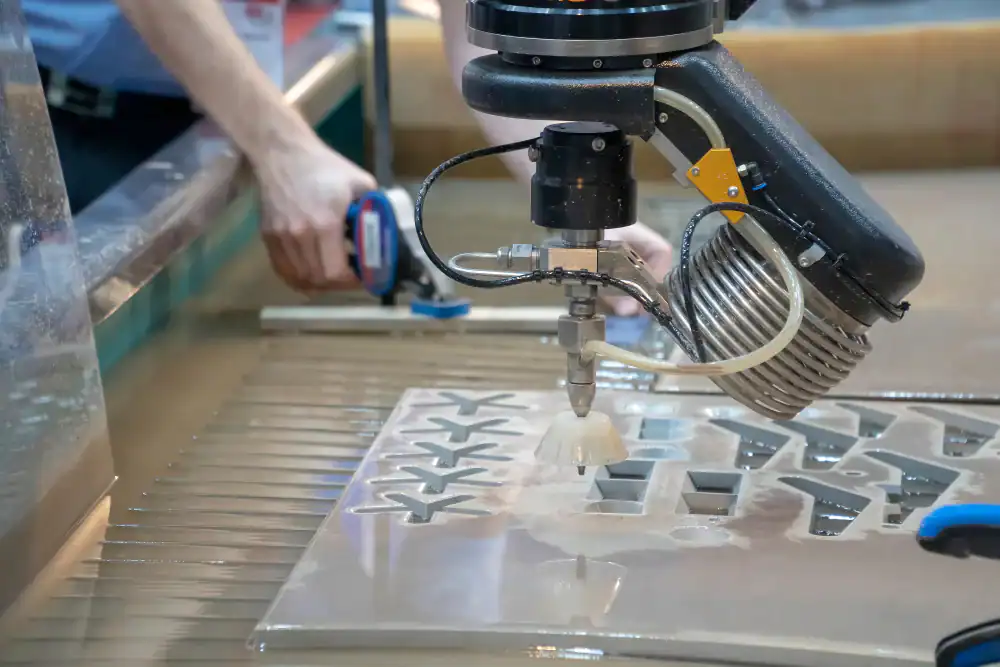
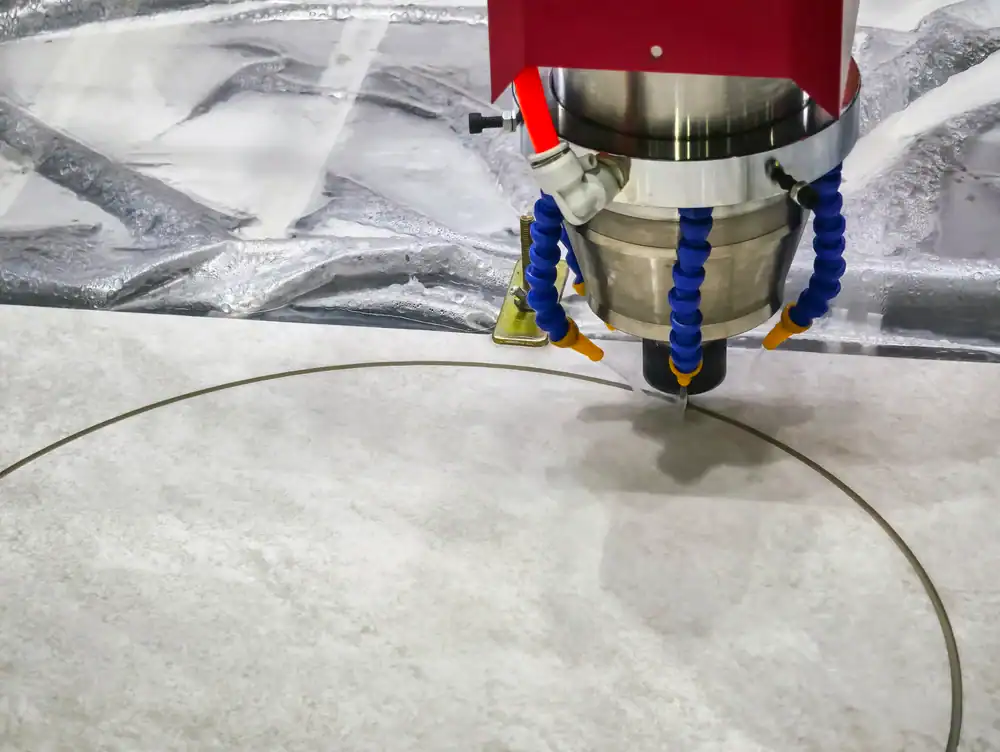
Our CNC-controlled waterjet system uses nearly 60,000 PSI to cut your parts with precision that holds to +/- 0.001 inch. The abrasive waterjet cutting process uses only water and natural garnet—no chemicals, no heat, no fumes. Your material stays cool throughout the entire cut, which means no thermal distortion and no compromised material properties.
For complex shapes or multiple parts, there’s no stopping to change tools or reset equipment. The system moves continuously through your entire job, cutting different geometries and thicknesses without interruption.
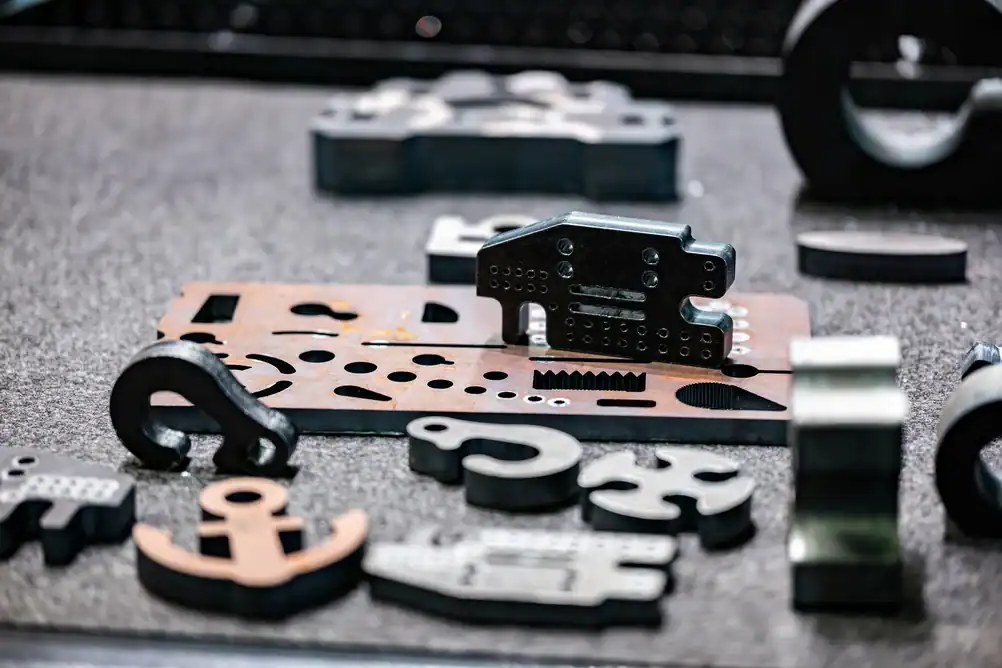
You receive parts with clean edges and minimal burring. Most applications don’t need additional finishing, which means you’re not waiting on secondary operations before your parts move to assembly or installation.
Ready to get started?
Precision waterjet cutting for tight tolerances in Hauppauge handles materials from 1/16 inch up to ten inches thick. Metals like stainless steel, carbon steel, aluminum, titanium, hardened tool steel, copper, and brass all cut cleanly without heat stress.
The process accommodates complex geometries that would require multiple setups with traditional methods—tight inside corners, small diameter holes, intricate patterns, and irregular shapes all happen in one continuous operation. You’re not paying for multiple setups or tool changes.
Material waste stays minimal because of the narrow kerf width and cutting accuracy. Scrap pieces often remain large enough for secondary use, and even the smallest offcuts can be recycled. For Hauppauge’s manufacturing operations where material costs directly impact your bottom line, that efficiency matters.
Edge quality comes out clean enough that most applications move directly to finishing or assembly. You’re not scheduling additional grinding, deburring, or machining operations. The cold cutting process means no hardened edges, no heat-affected zones, and no material properties altered by thermal stress—critical factors for aerospace components, precision machinery parts, and structural elements where material integrity isn’t negotiable.
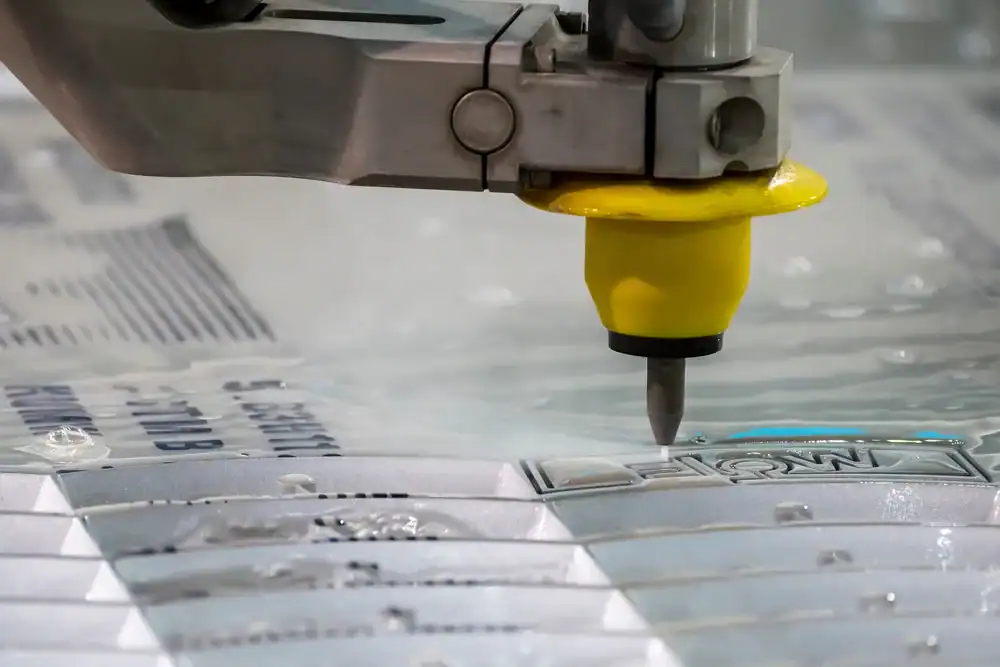
Standard precision waterjet cutting in Hauppauge holds tolerances of +/- 0.005 inch consistently across production runs. With optimized parameters and proper fixturing, we can achieve +/- 0.001 inch on critical dimensions.
The tolerance you’ll hit depends on several factors: material type, thickness, part geometry, and edge quality requirements. Softer materials like aluminum and copper typically hold tighter tolerances than harder materials. Thinner materials (under 1 inch) generally cut more accurately than thicker stock.
For parts requiring tolerances tighter than +/- 0.001 inch, you’re usually looking at secondary operations regardless of cutting method. But for the vast majority of manufacturing applications—brackets, plates, flanges, structural components, custom fabrications—waterjet delivers the accuracy you need without additional processing. That’s the practical advantage: parts that meet spec right off the machine.
Waterjet cuts thicker materials than laser and doesn’t create heat-affected zones. Laser cutting works well for thinner metals—typically under 1 inch for steel—but creates thermal stress that can warp thin materials or alter material properties near the cut edge.
Precision CNC waterjet cutting in Hauppauge handles materials over ten inches thick without heat input. Your parts don’t experience thermal distortion, hardened edges, or microscopic stress fractures. For hardened tool steels, titanium, or materials where you can’t risk changing the temper or grain structure, waterjet is often the only practical option.
Laser cutting is faster on thin sheet metal and creates a slightly narrower kerf. But if you’re cutting anything over an inch thick, working with materials sensitive to heat, or need to avoid secondary operations to remove heat-affected zones, waterjet delivers better results. The process also handles reflective metals like copper and brass that cause problems for laser systems.
Waterjet works efficiently for both prototype quantities and production runs. There’s no tooling to create, no dies to manufacture, and no setup costs that need to be amortized across thousands of parts.
You can run a single prototype part to verify fit and function, then move directly into production quantities using the same program and setup. Changes to part geometry happen in the CAD file—no new tooling required, no lead time waiting for dies or punches.
For Hauppauge’s diverse manufacturing base—where you might need 50 custom brackets for one project and 500 precision plates for another—that flexibility matters. Small fabrication shops and large manufacturers both benefit from the same accuracy and edge quality regardless of quantity. You’re not locked into minimum order quantities or paying premium prices for short runs.
Turnaround depends on material availability, part complexity, and current production schedule. Simple parts in common materials often cut within 24-48 hours. More complex geometries or specialty materials might need 3-5 business days.
Rush services are available when your production schedule gets compressed. Because there’s no tooling to create and no tool changes during cutting, waterjet projects move faster than methods requiring extensive setup.
The actual cutting time varies with material thickness and part complexity. A quarter-inch aluminum plate with simple geometry cuts much faster than two-inch stainless with intricate details. But even complex parts typically cut faster than traditional machining methods because the waterjet doesn’t slow down for tool changes or worry about tool wear. If you need a firm timeline for your specific project, material type and thickness give us what we need to quote accurate lead times.
Abrasive waterjet cutting handles virtually any material—metals, composites, plastics, rubber, foam, glass, stone, and ceramics. The process doesn’t rely on material hardness or thermal properties, which means you’re not limited to specific material families.
Composite materials cut cleanly without delamination. Plastics cut without melting or creating rough edges. Glass and ceramics cut without cracking. Rubber and foam compress under the waterjet stream but cut accurately once you account for material deflection.
For manufacturing operations in Hauppauge working with multiple material types—maybe you’re cutting aluminum housings and rubber gaskets for the same assembly—waterjet handles both without changing equipment or processes. You get consistent edge quality across different materials, which matters when parts need to fit together precisely. The cold cutting process means temperature-sensitive materials don’t melt, warp, or degrade during cutting.
Standard CAD formats work directly with waterjet programming software: DXF, DWG, IGES, and STEP files all import cleanly. If you’re working in SolidWorks, AutoCAD, Inventor, or similar CAD programs, your native files convert without issues.
You don’t need to simplify geometry or break complex shapes into multiple operations. The waterjet system reads your part geometry and generates efficient tool paths automatically. Internal cutouts, tight radii, and complex profiles all program directly from your design files.
If you don’t have CAD files, we can work from PDFs, sketches, or even sample parts to create the cutting program. For repeat orders, your program stays on file—you just specify quantity and material, and we’re ready to cut. The programming flexibility means you’re not constrained by equipment limitations or spending time translating designs into machine-specific formats.
Useful Links
Other Services we provide in Hauppauge