Hear from Our Customers
You don’t have time for rework. When a cut is off by even a few thousandths, it throws off your entire assembly, delays your timeline, and costs you money you didn’t budget for.
Precision CNC waterjet cutting in Huntington, NY gives you tolerances within +/- 0.005 inches. That’s tight enough for aerospace components, automotive parts, and custom fabrication where fit matters. The cold-cutting process means no heat-affected zones, no warping, and no material property changes that compromise your part’s integrity.
Your edges come back clean and burr-free. No secondary finishing. No grinding down rough spots. You get parts that fit the first time, so you can move forward instead of backtracking. Whether you’re prototyping a new design or running a full production batch, you get the same consistent accuracy across every piece.
Since 1981, we’ve handled precision water jet cutting services for manufacturers, fabricators, and contractors throughout Huntington and the surrounding area. You’re working with a shop that’s seen thousands of projects—from one-off prototypes to high-volume production runs.
Huntington’s manufacturing sector includes aerospace suppliers, marine fabricators, and custom metal shops that can’t afford mistakes. That’s the standard we’ve built our reputation on. Industry leaders like Metfab Metals, American Aluminum Company, and Les Metalliers trust us with their critical cuts because we deliver what we promise: accuracy, speed, and zero excuses.
You’re not getting a sales pitch here. You’re getting a shop that understands what’s on the line when you hand over a project.
You send us your specifications—CAD files, drawings, or even a sketch if that’s what you’re working from. We review your material requirements, thickness, and tolerance needs to confirm waterjet is the right process for your application.
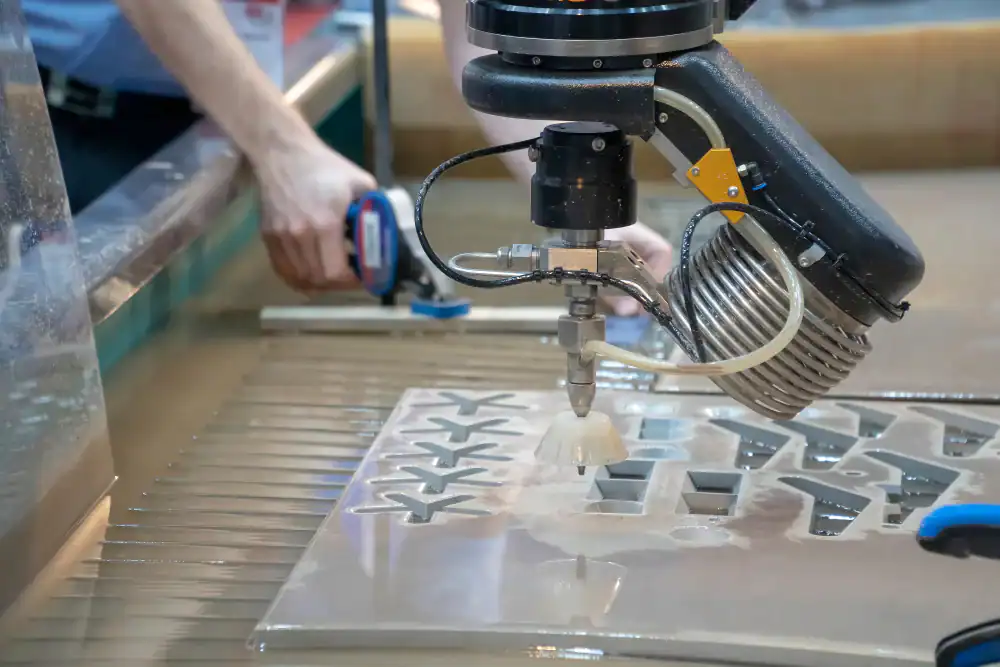
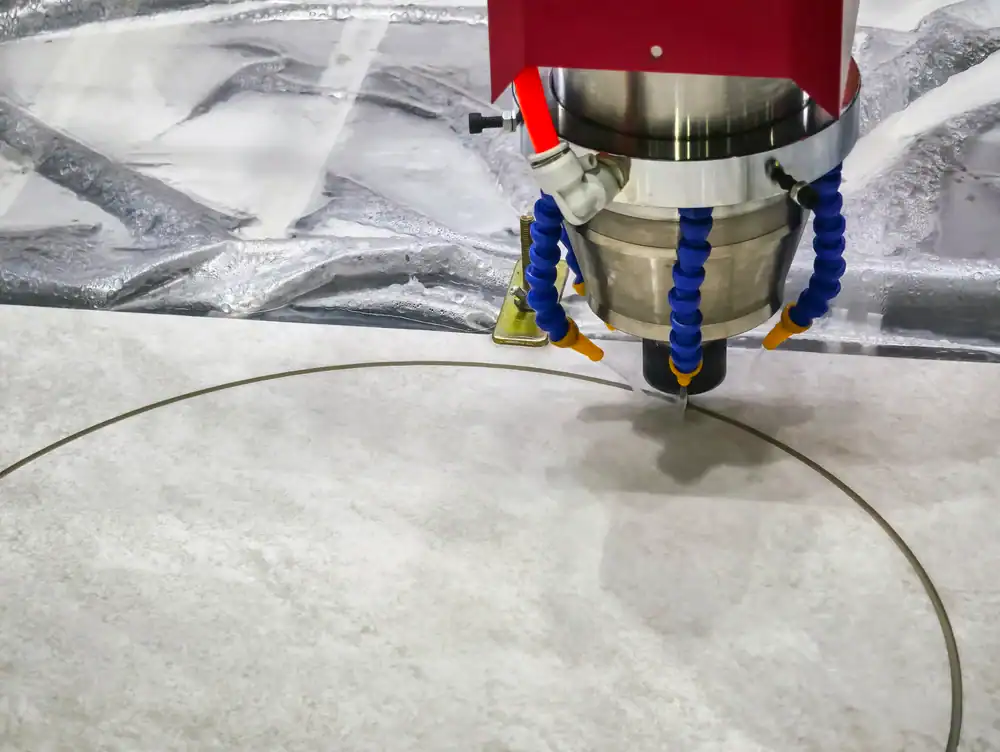
Once we’re aligned, we program the CNC waterjet system with your exact dimensions. The machine uses a high-pressure stream of water mixed with abrasive garnet to cut through your material. There’s no heat, no blade wear, and no tool changes—just a focused stream that follows your design with repeatable precision.
Your parts are cut, inspected, and ready for pickup or delivery. If you need a rush turnaround, we can prioritize your job. If you’re running a larger production order, we maintain the same tight tolerances across every single piece. You get what you ordered, when you need it.
Ready to get started?
Precision waterjet cutting in Huntington, NY handles materials you can’t easily process with other methods. Steel, stainless, aluminum, titanium, glass, stone, composites, rubber—the waterjet cuts them all without changing tooling or setup. Thickness up to 100mm isn’t a problem.
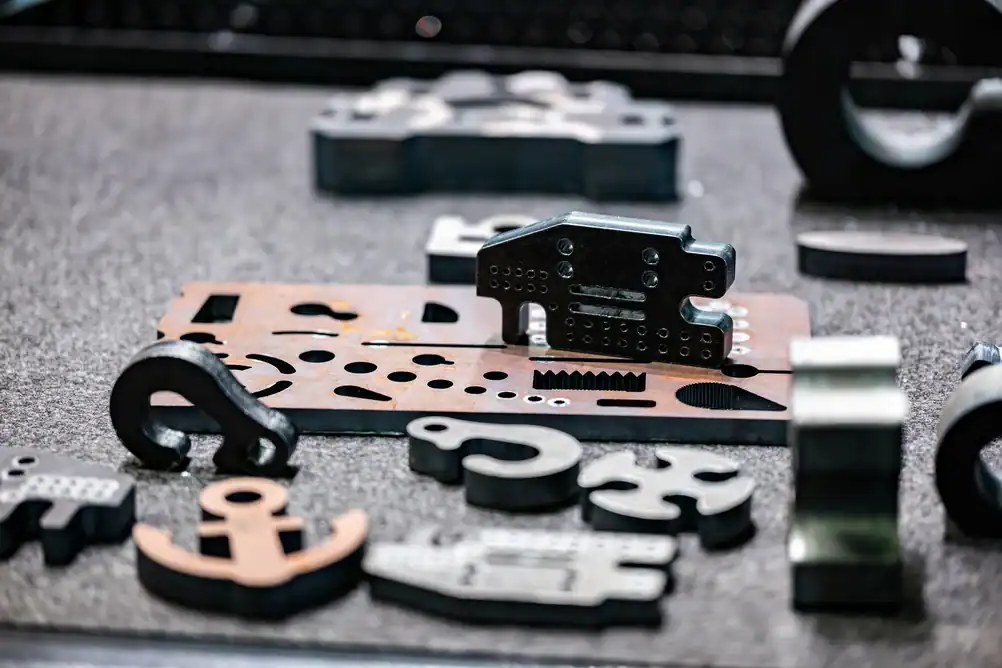
You’re not limited to straight cuts. Complex geometries, tight inside corners, and intricate patterns are all within range. The process doesn’t create burrs or rough edges that need cleanup. What comes off the machine is ready to use.
Huntington’s proximity to major aerospace and defense contractors means local manufacturers often need materials that can’t tolerate heat exposure. Waterjet cutting preserves material properties because there’s no thermal input. That matters when you’re working with hardened metals, heat-sensitive alloys, or laminated composites where delamination would ruin the part.
If you’re prototyping, you get fast turnaround without expensive tooling. If you’re scaling to production, you get the same accuracy at volume. The process adapts to where you are in your project timeline.
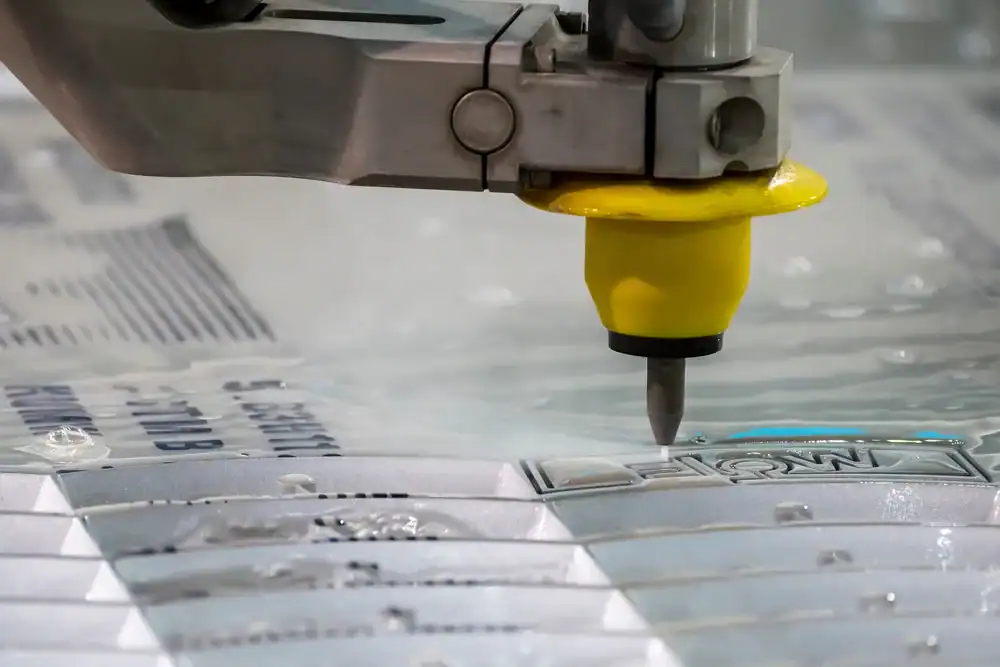
Precision waterjet cutting in Huntington, NY consistently holds tolerances of +/- 0.005 inches across most materials and thicknesses. For context, that’s tight enough for aerospace brackets, automotive jigs, and machinery components where dimensional accuracy directly impacts function.
The tolerance you achieve depends on material type, thickness, and edge quality requirements. Thinner materials (under 1 inch) typically hold tighter tolerances than thicker stock. Harder materials like tool steel or titanium maintain better edge definition than softer metals that can deflect slightly under the water stream.
If your application requires tolerances tighter than 0.005 inches, that’s worth discussing upfront. Some geometries and materials can achieve 0.003-inch tolerances with optimized cutting parameters. But if you need tenths-level precision, waterjet may not be your best process—and we’ll tell you that before you waste time and money.
Waterjet cuts without heat, which means zero thermal distortion, no hardened edges, and no discoloration. Laser cutting uses focused heat that can warp thin materials, create heat-affected zones, and change material properties near the cut edge. If you’re working with metals that will be welded, formed, or heat-treated later, waterjet won’t interfere with those processes.
Waterjet handles thicker materials better. While laser cutting typically maxes out around 1 inch for steel, waterjet cuts up to 4 inches or more without losing accuracy. It also cuts reflective materials like aluminum, copper, and brass that cause problems for laser systems.
Laser is faster on thin materials and delivers slightly tighter tolerances on sheet metal under 1/4 inch. But if your project includes mixed materials, thick sections, or heat-sensitive alloys, high precision waterjet cutting gives you more versatility. The right choice depends on what you’re cutting and what happens to that part afterward.
Yes. Precision water jet cutting services in Huntington, NY work for single prototype parts and multi-hundred piece production runs. The setup process is the same whether you’re cutting one piece or one hundred—program the CNC system once, and it repeats that exact cut with consistent accuracy.
For prototyping, you avoid the tooling costs and lead times associated with stamping or machining. You can test a design, make revisions, and recut without financial penalty. That’s valuable when you’re still dialing in dimensions or testing fit.
For production, waterjet maintains the same tolerances across every part in the batch. There’s no tool wear that degrades quality as the run progresses. If you need to scale from 10 pieces to 500, the per-part cost decreases with volume, but the quality stays identical. You’re not locked into a process that only makes sense at high volume or only works for one-offs.
Precision CNC waterjet cutting in Huntington, NY processes metals (steel, stainless, aluminum, titanium, copper, brass), composites (carbon fiber, fiberglass, G10), stone (granite, marble), glass, ceramics, plastics, and rubber. If it’s a solid material, waterjet can likely cut it.
The advantage is versatility. You don’t need different machines or setups for different materials. A shop running both metal and composite parts can cut everything on the same system. That matters in Huntington’s manufacturing environment, where marine fabricators might need stainless steel brackets and fiberglass panels for the same project.
Some materials do cut better than others. Abrasive-resistant materials like hardened tool steel or ceramic take longer but still cut cleanly. Softer materials like aluminum or plastics cut quickly with excellent edge quality. Laminated or layered materials stay bonded because there’s no heat to cause delamination. If you’re unsure whether waterjet suits your material, a quick conversation clarifies that before you commit.
Standard turnaround for precision waterjet cutting in Huntington, NY runs 3-5 business days for most projects. That includes programming, cutting, inspection, and prep for pickup or delivery. Straightforward geometries in common materials often finish faster.
If you’re facing a deadline, rush service is available. We’ve completed emergency cuts in 24 hours when a manufacturer needed a replacement part to avoid shutting down a production line. That’s not standard, but it’s possible when the situation demands it.
Turnaround depends on material availability, current shop load, and complexity. A simple bracket cut from stock aluminum takes less time than a complex assembly with multiple materials and tight tolerances. Thicker materials cut slower than thin stock—a 3-inch steel plate takes longer than 1/4-inch sheet. Upfront communication about your timeline lets us schedule appropriately and tell you if we can hit your date or not.
Most parts come off the waterjet ready to use. The abrasive stream produces clean edges without burrs, slag, or rough spots that require grinding or deburring. That’s different from plasma or torch cutting, which leave heat scale and rough edges that need cleanup before welding or assembly.
Edge quality depends on cutting speed and abrasive flow rate. A slower cut with higher abrasive concentration produces a smoother edge. For parts that need cosmetic or ultra-smooth edges, we adjust parameters accordingly. For structural components where edge finish isn’t critical, we optimize for speed.
If your application requires secondary operations like tapping, countersinking, or welding, waterjet-cut edges don’t interfere with those processes. There’s no hardened layer to drill through, no oxidation to clean off before welding. The part is dimensionally accurate and ready for whatever comes next in your workflow. You save time and labor by eliminating finishing steps that other cutting methods require.
Useful Links
Other Services we provide in Huntington