Hear from Our Customers
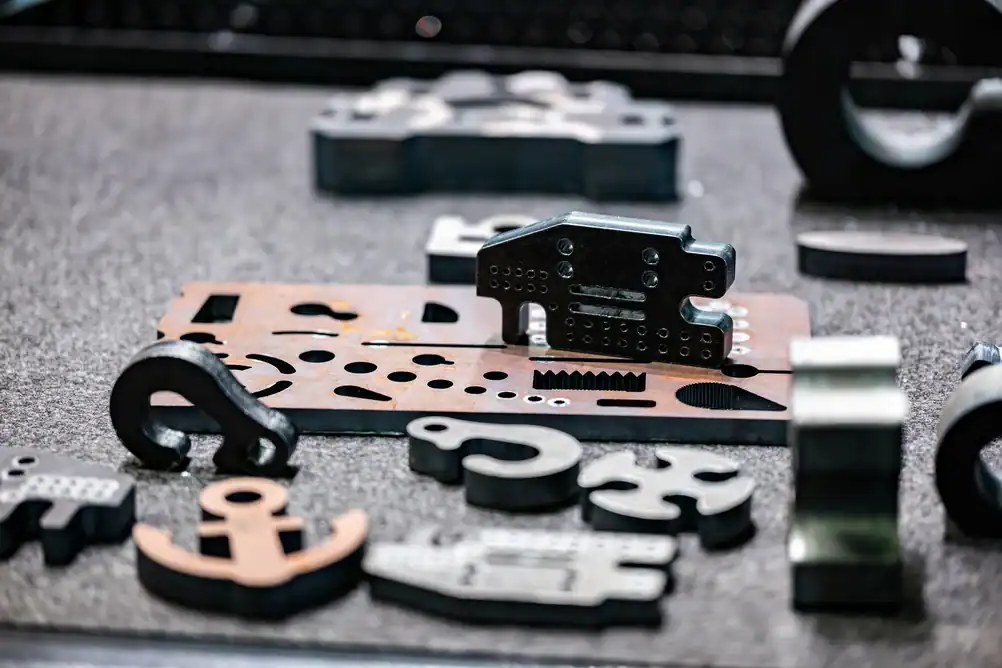
Your parts come off the table ready to use. That’s what happens when the cutting process doesn’t involve heat, doesn’t distort material properties, and holds tolerances as tight as ±0.001 inches.
You’re not dealing with secondary finishing costs or waiting for parts to cool down. The edge quality is there from the start—smooth enough to skip deburring on most jobs. Whether you’re cutting half-inch aluminum or four-inch steel plate, the process stays cold and the dimensions stay true.
This matters when you’re supplying aerospace components that can’t have a heat-affected zone. It matters when you’re fabricating architectural panels that need to fit perfectly on-site. And it matters when your production schedule doesn’t have room for rejected parts or do-overs because someone used a cutting method that couldn’t handle the material without compromising it.
We serve manufacturers, fabricators, and contractors across Huntington Station, NY and the surrounding Long Island area. We’re ISO9001 and AS9100d certified, which means the quality systems behind your parts meet aerospace and defense standards—even if your project doesn’t require them.
Long Island’s industrial sector runs on precision. From marine fabrication shops in nearby ports to aerospace suppliers and architectural metalwork studios, the tolerance expectations here aren’t negotiable. That’s why precision CNC waterjet cutting has become the go-to for projects where laser cutting creates too much heat and plasma leaves edges that need cleanup.
We work with the same contractors and engineers who are building and maintaining infrastructure across Nassau and Suffolk counties. When they need custom parts that fit right the first time, they’re not looking for the cheapest option—they’re looking for the one that doesn’t create problems downstream.
You send us your design file—DXF, DWG, or even a sketch if that’s what you’re working from. We’ll review it for manufacturability and flag anything that might cause issues before we start cutting. If your design needs adjustment for better nesting or to avoid material waste, we’ll walk through those options with you.
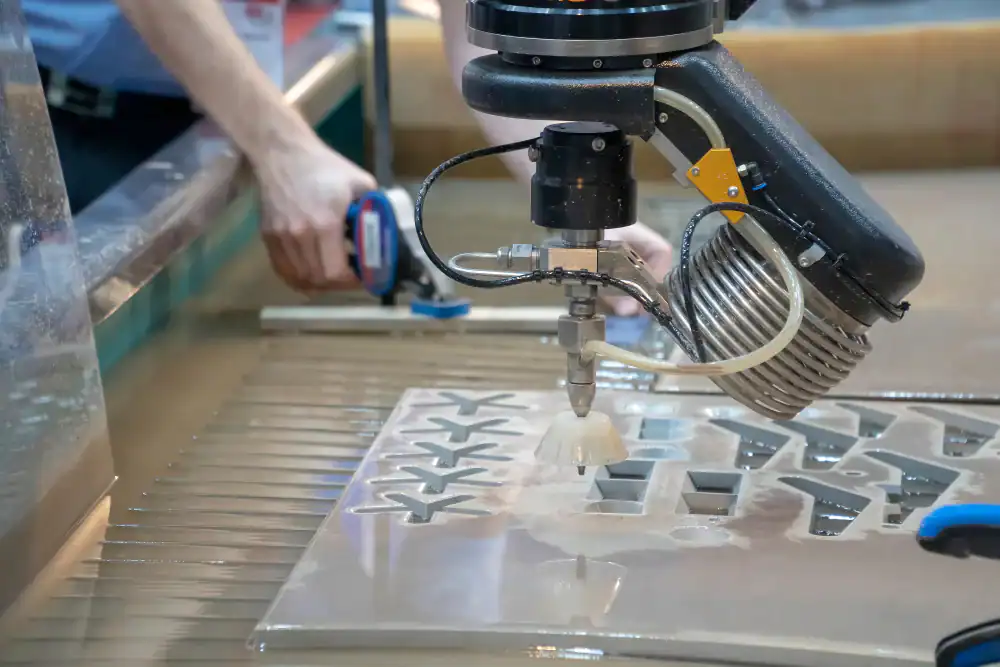
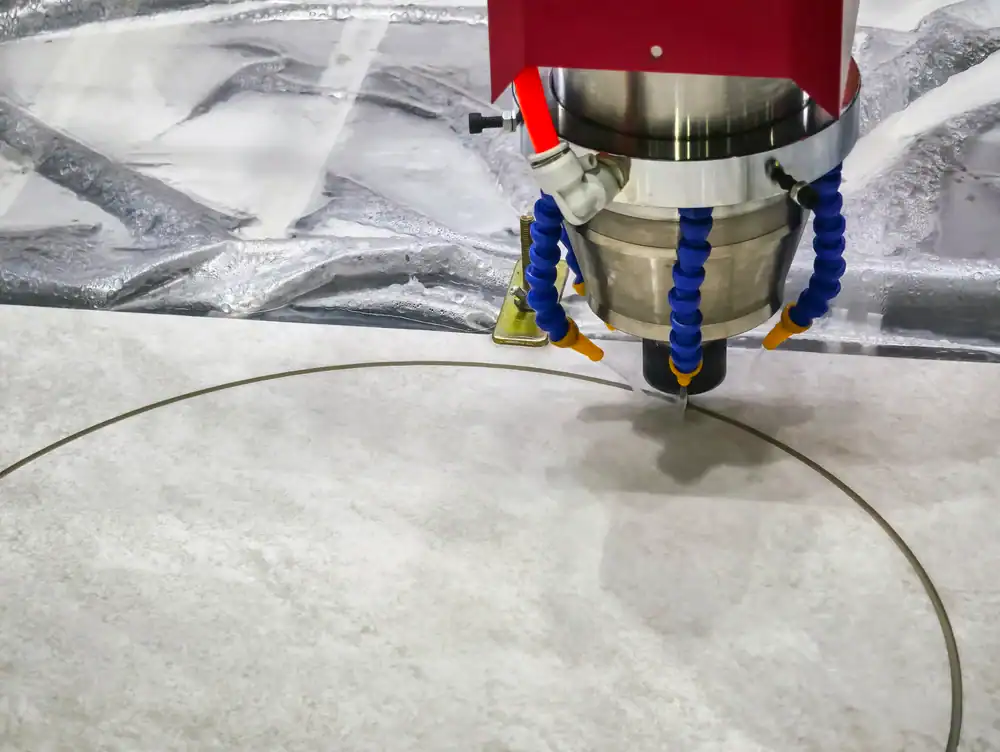
Once the file is programmed into our CNC system, we select the appropriate abrasive media and pressure settings based on your material and thickness. The cutting head moves along the programmed path while a high-pressure stream of water mixed with garnet abrasive does the cutting. No blades touch your material. No heat builds up. The process is controlled entirely by water pressure, abrasive flow, and CNC precision.
After cutting, most parts are ready to go. If you need additional services like drilling, countersinking, or custom edge prep, we handle that too. For high-volume runs, we optimize nesting patterns to maximize material usage and reduce your per-part cost. Turnaround depends on complexity and queue, but most jobs move faster than you’d expect—especially compared to methods that require secondary operations or cooldown time.
Ready to get started?
Precision waterjet cutting for tight tolerances means you’re working with a process that holds ±0.002 inches on most materials, and tighter when the job calls for it. You can cut stainless steel, aluminum, titanium, tool steel, carbon fiber, Kevlar, plastics, rubber, glass, stone, and composites—all without changing the setup or worrying about heat distortion.
Huntington Station’s proximity to aerospace suppliers and marine fabricators means there’s consistent demand for parts that meet strict specifications. Whether you’re producing components for defense contractors or custom architectural elements for commercial builds across Long Island, the edge quality and dimensional accuracy have to be there. Waterjet handles that across material types that would require multiple machines and setups with other methods.
Thickness capacity runs from 1/16 inch up to over 10 inches, depending on material. Complex geometries, tight inside corners, and intricate patterns are all manageable because the cutting stream is narrow and the CNC control is precise. You’re not limited by tooling concerns or worrying about burning through expensive materials during setup. The first part comes out the same as the last part, which matters when you’re running production quantities or need consistent results across multiple orders.
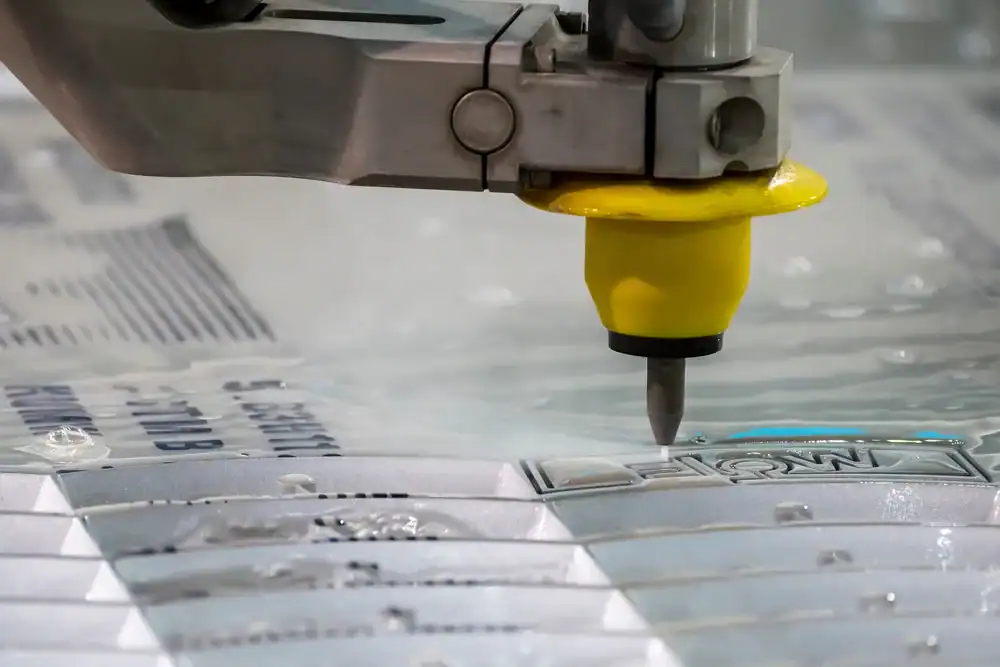
Standard precision waterjet cutting holds tolerances between ±0.003 and ±0.005 inches on most materials. With advanced systems and proper setup, you can hit ±0.001 inches when the job requires it. That’s tight enough for aerospace components, medical device parts, and precision tooling applications.
The tolerance you’ll achieve depends on material type, thickness, and edge quality requirements. Softer materials like aluminum and plastics tend to hold tighter tolerances than harder materials like tool steel or ceramics. Thinner materials (under one inch) are easier to control than thick plate, though waterjet still outperforms thermal cutting methods on thick stock because there’s no heat distortion.
If your project has tolerance requirements that fall outside standard capabilities, it’s worth discussing during the quoting phase. Sometimes a small design adjustment or a secondary operation makes more sense than trying to push the process beyond what’s practical. The key is knowing what’s achievable before you commit to a production run.
The main difference is heat. Laser cutting melts material as it cuts, which creates a heat-affected zone that can change material properties near the edge. Waterjet cutting is a cold process—no heat, no HAZ, no thermal distortion. That matters when you’re working with hardened metals, heat-sensitive alloys, or materials where edge hardness affects performance.
Laser is faster on thin materials and works well for high-volume production of simple shapes in mild steel or aluminum under half an inch thick. But when you move into thicker materials, exotic alloys, or parts that require tight tolerances without secondary finishing, waterjet becomes the better option. You’re not dealing with dross removal, edge oxidation, or warping from heat input.
For Long Island manufacturers supplying aerospace, marine, or architectural markets, the lack of heat-affected zones is often a requirement, not a preference. If your customer specs call out “no HAZ” or you’re working with materials like titanium, Inconel, or carbon fiber composites, waterjet is typically the only practical cutting method that won’t compromise material integrity.
Yes. Abrasive waterjet systems cut materials from 1/16 inch up to over 10 inches thick, depending on material hardness and density. Steel plate up to six inches is common. Aluminum, stainless, and softer metals can go thicker. The process doesn’t slow down dramatically with thickness the way laser or plasma does, and there’s no heat buildup that limits how deep you can cut.
Thick material cutting is where waterjet really separates itself from other methods. You’re not dealing with multiple passes, edge taper issues, or the need to flip parts and cut from both sides. The stream goes all the way through in one pass, and the kerf width stays consistent from top to bottom. That’s critical when you’re cutting parts that need to fit together or when dimensional accuracy through the entire thickness matters.
For contractors and fabricators in Huntington Station working on heavy structural components, marine hardware, or custom machinery parts, this capability means fewer limitations on design and faster turnaround compared to traditional machining or sawing methods. You can cut complex shapes in thick plate without the lead time and cost of EDM or the edge quality issues of flame cutting.
Waterjet cuts metals (steel, stainless, aluminum, titanium, copper, brass, tool steel), composites (carbon fiber, fiberglass, Kevlar), plastics (acrylic, polycarbonate, HDPE, nylon), stone, glass, ceramics, rubber, foam, and wood. If it’s a solid material, waterjet can likely cut it without heat damage or material distortion.
The versatility matters when you’re working on projects that involve multiple material types. Architectural jobs often combine metal panels with stone or glass elements. Aerospace and defense applications use layered composites that can’t handle heat. Marine fabricators need to cut everything from aluminum plate to rubber gaskets to fiberglass panels. With waterjet, you’re using the same process and the same machine across all those materials.
This is especially useful in Huntington Station’s manufacturing environment, where shops often handle diverse projects for different industries. You’re not limited by what your cutting method can handle, and you’re not outsourcing parts to multiple vendors because your primary process can’t cut certain materials. That saves time, reduces coordination headaches, and keeps your project on schedule.
Turnaround depends on part complexity, material type, and current queue, but most jobs move faster than traditional machining or multi-step cutting processes. Simple parts in common materials can often be completed within a few days. Complex geometries or high-volume production runs take longer, but programming and setup are faster than you’d expect because CNC waterjet systems don’t require custom tooling or lengthy setup procedures.
The speed advantage comes from eliminating secondary operations. Parts come off the table with finished edges in most cases, so you’re not waiting for deburring, grinding, or additional machining steps. There’s no cooldown period like you’d have with thermal cutting, and no need to wait for custom dies or punches like you would with stamping or punching operations.
For Long Island manufacturers working on tight deadlines—whether that’s a construction project with a fixed installation date or a production run that needs to ship to meet a contract commitment—the combination of fast programming, minimal setup, and no secondary finishing often makes waterjet the fastest path from design file to finished parts. If you’re comparing quotes, make sure you’re accounting for total lead time, not just cutting time.
DXF or DWG files work best because they program directly into CNC systems, but you don’t need a perfect file to get started. If you’re working from a sketch, a PDF with dimensions, or even a sample part that needs to be replicated, we can work with that. The key is having clear dimensional information and knowing what tolerances matter for your application.
During the quoting process, we’ll review your file for manufacturability. Sometimes small adjustments to inside corner radii, hole sizes, or edge details make the part easier to cut and reduce cost without affecting function. If your design has features that will cause problems—like corners that are too tight for the cutting stream width or dimensions that conflict with material availability—we’ll flag those before programming starts.
For repeat customers and ongoing production work, we keep your files on record so reorders are simple. If you’re prototyping and expect design changes, waterjet programming adjusts quickly compared to processes that require hard tooling. That flexibility is valuable when you’re refining a design or when field conditions require last-minute modifications to parts that are already in production.
Useful Links
Other Services we provide in Huntington Station