Hear from Our Customers
You’re not looking for “good enough.” You need parts that fit right, edges that don’t need rework, and a process that doesn’t warp your material or blow your timeline.
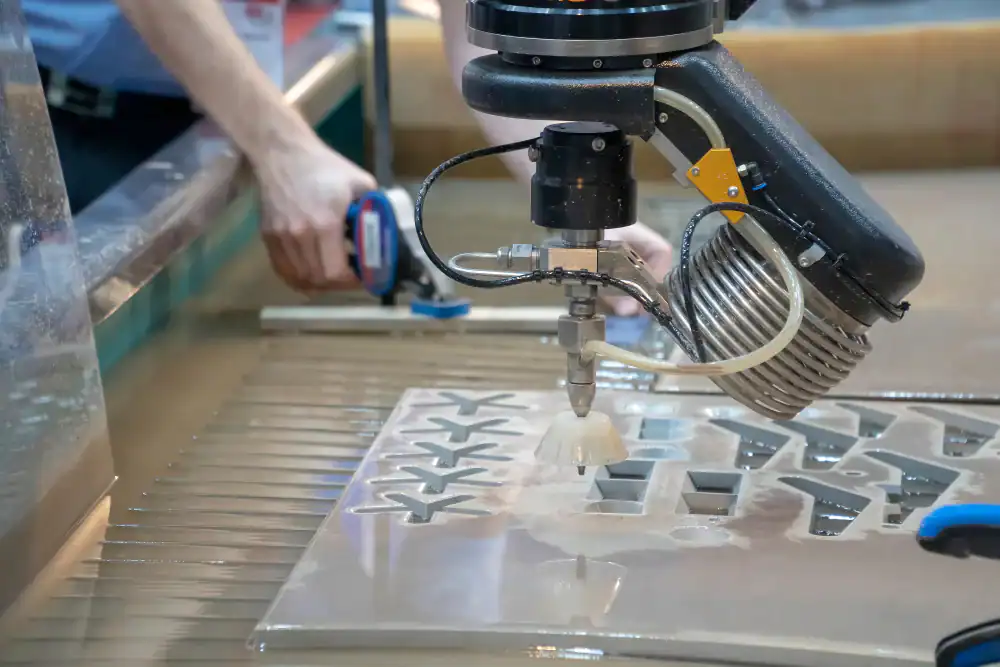
Precision CNC waterjet cutting gives you tolerances within 0.001 inch. No heat-affected zones. No melting, burning, or hardening. Just cold water and abrasive doing exactly what you need—cutting complex geometries in materials that other methods struggle with.
That means fewer rejected parts. Less secondary finishing. Faster turnaround from design to delivery. Whether you’re prototyping for aerospace or running production for medical devices, you get parts that meet spec without the usual headaches.
We serve manufacturers across Merrick and the surrounding Long Island area. We understand the pace here—tight deadlines, exacting standards, and the reality that downtime costs you money.
Long Island’s manufacturing ecosystem includes aerospace, medical device production, and precision fabrication. These industries don’t have room for suppliers who can’t deliver on time or on spec. We’ve built our operation around that reality.
You’re working with a team that knows what precision waterjet cutting for tight tolerances actually means in practice, not just on paper.
You send us your design files—CAD, DXF, whatever format works for you. We review the specs, confirm materials and tolerances, and program the CNC waterjet system to match your exact requirements.
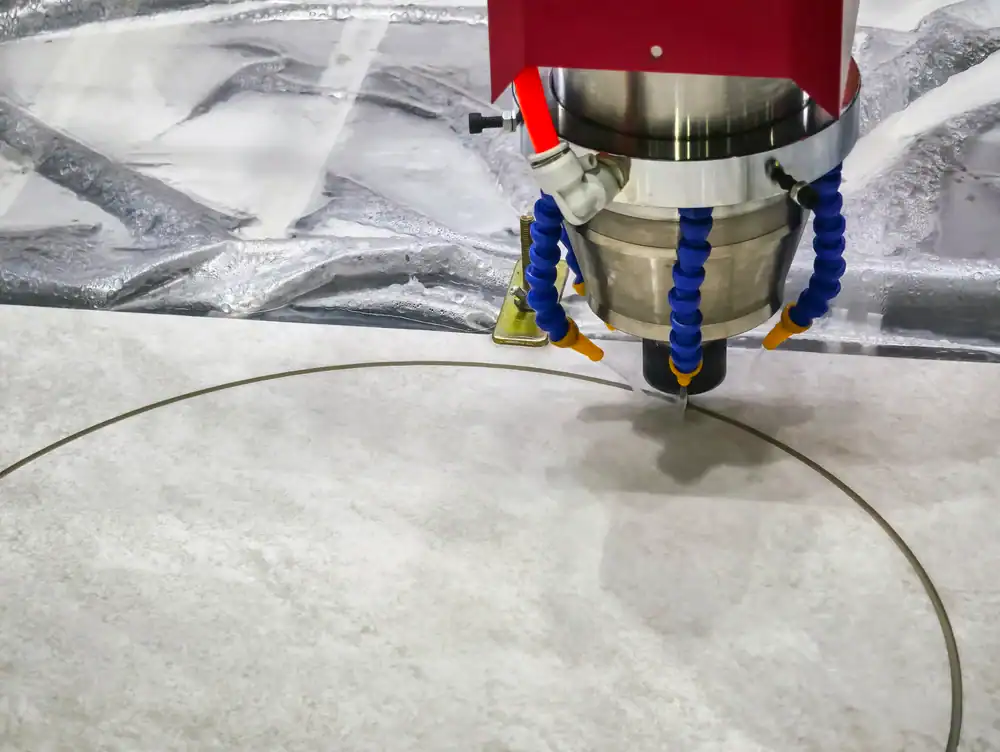
The cutting process uses a high-pressure stream of water mixed with abrasive garnet. This jet moves along programmed paths, cutting through your material with precision that traditional methods can’t match. Because there’s no heat, your material stays dimensionally stable. No warping. No stress fractures. No burnt edges.
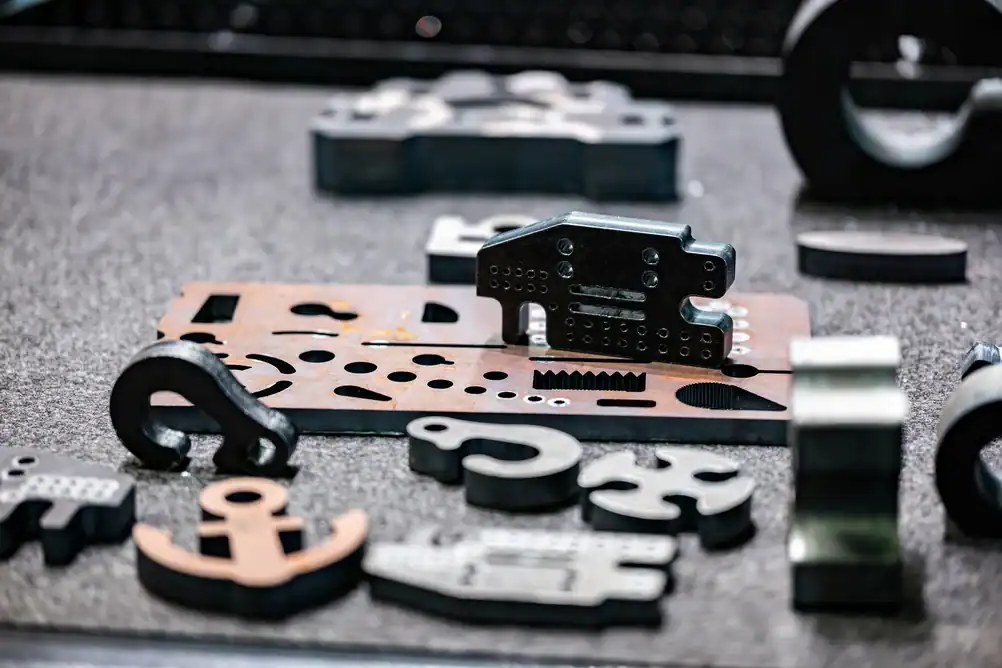
Once cutting is complete, parts come off the table with clean, burr-free edges. Most jobs don’t need additional finishing. You get parts ready to use, not parts that need more work before they’re actually usable.
Turnaround depends on complexity and volume, but the process itself is fast. No tool changes between cuts. No waiting for materials to cool. Just efficient, accurate production that keeps your project moving.
Ready to get started?
We can cut virtually any material—metals, composites, plastics, glass, stone. Thickness ranges from thin foils to several inches. The process handles materials that are heat-sensitive, brittle, or too hard for conventional cutting methods.
Complex shapes aren’t a problem. Tight radii, narrow corners, intricate patterns, small holes—the CNC system follows your design exactly. You can nest parts tightly to minimize waste, or common-line cut to maximize material usage.
For Merrick’s aerospace and medical device manufacturers, this means cutting titanium, stainless steel, aluminum, and specialized alloys without compromising material properties. No heat-affected zones means no changes to hardness, strength, or structural integrity.
The kerf width runs about 0.030 to 0.040 inches, so fine details stay sharp. You’re not losing dimensional accuracy to wide cutting paths. And because the waterjet can start cuts without pre-drilled holes, setup is faster and your designs have more flexibility.
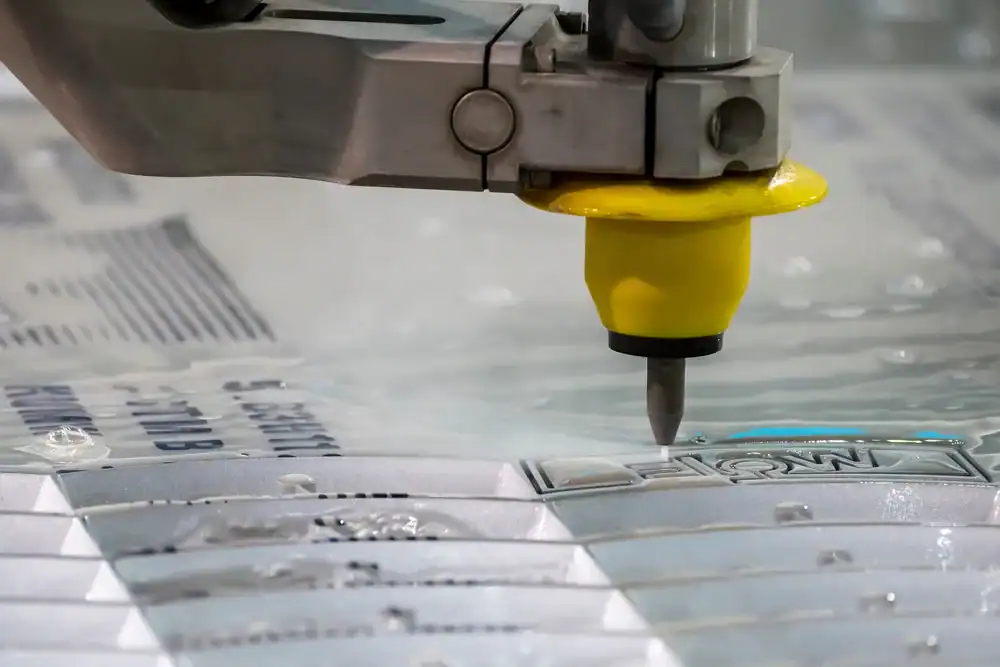
Standard precision waterjet cutting holds tolerances around ±0.005 inches. With proper setup and calibration, we can push that to ±0.001 inches on critical dimensions.
The actual tolerance you’ll get depends on material type, thickness, and part geometry. Thicker materials can shift slightly during cutting. Very thin materials might flex. Complex shapes with tight internal corners require slower cutting speeds to maintain accuracy.
If your project has specific tolerance requirements, bring them up before cutting starts. We can adjust the programming—cutting speed, abrasive flow, water pressure—to prioritize dimensional accuracy where it matters most. You’re not stuck with one-size-fits-all precision.
Waterjet doesn’t create heat-affected zones. Laser cutting melts material, which changes the properties along the cut edge—hardness, brittleness, sometimes dimensional accuracy. If you’re working with metals where material properties matter, waterjet keeps everything consistent.
Waterjet also handles thicker materials better. Lasers struggle past certain thicknesses depending on the metal. Waterjet cuts through several inches without losing cut quality.
The tradeoff is speed on thin materials. Laser can be faster on sheet metal under a quarter inch. But if you need cleaner edges, no thermal distortion, or you’re cutting materials that don’t respond well to heat, waterjet is the better call. It’s not about one being universally better—it’s about what your specific project needs.
Metals are the most common—aluminum, stainless steel, titanium, tool steel, brass, copper. Waterjet handles hardened metals and exotic alloys without the tool wear you’d get from mechanical cutting.
Composites and layered materials cut cleanly without delamination. Carbon fiber, fiberglass, Kevlar—materials that splinter or fray with other methods stay intact with waterjet. Plastics, rubber, foam, and gasket materials all work well.
Stone, glass, and ceramics are also options, though these are less common in industrial manufacturing. The key advantage is versatility. We can cut dissimilar materials in the same setup without changing tools or processes. If your project uses multiple materials, waterjet eliminates the need to move between different cutting methods.
Cutting time depends on material thickness, part complexity, and how tight your tolerances are. Simple shapes in thin material might take minutes. Intricate parts in thick plate can take hours.
Programming and setup add time upfront, but once the file is loaded, the CNC system runs the job without constant intervention. There’s no tool changing between different cuts, which speeds things up compared to traditional machining.
Turnaround from when you submit files to when you get parts varies based on our workload and job size. Small prototype runs often turn around in a few days. Larger production runs take longer but still move faster than methods requiring extensive secondary finishing. If you have a hard deadline, mention it upfront—we can often accommodate rush jobs.
Most waterjet cuts come off the table with clean, smooth edges that don’t need deburring. The cold cutting process doesn’t create the rough edges or slag you get from plasma or torch cutting.
There’s sometimes a slight texture difference between the top and bottom of thicker cuts. The entry side where the jet hits first is usually smoother than the exit side. For most applications, this doesn’t matter. If you need both sides perfectly smooth, light finishing can address it—but you’re talking minimal work, not extensive grinding or sanding.
The lack of heat-affected zones also means no hardened edges that are difficult to finish later. If your parts do need additional machining, drilling, or tapping, the cut edges behave like the base material. You’re not fighting altered properties or trying to work around warped sections.
Local means faster communication and shorter lead times. You’re not waiting days for quotes or dealing with shipping delays from out-of-state suppliers. When you need to discuss tolerances, material options, or design adjustments, you can actually talk to someone who knows your project.
Merrick sits in the middle of Long Island’s manufacturing corridor. Aerospace companies, medical device manufacturers, and precision fabrication shops all operate here. We understand the standards these industries require because we’re cutting parts for them regularly.
You also avoid the reliability issues that come with constantly searching for new suppliers. When you find a shop that delivers quality work on time, that consistency matters. Your production schedule doesn’t get derailed by a supplier who overpromised and underdelivered. You know what you’re getting because you’ve seen the results before.
Useful Links
Other Services we provide in Merrick