Hear from Our Customers
You’re not looking for close enough. You need parts that hit tolerances as tight as ±0.001″ without warping, without heat distortion, and without the extra finishing work that eats into your timeline and budget.
That’s what precision waterjet cutting in Selden, NY delivers. Cold cutting means your material stays structurally sound. No heat-affected zones means no compromised integrity. And when we say our Flow Mach 500 is CNC controlled directly off your CAD design, that means what you draw is exactly what you get.
The edge quality comes out satin smooth. Clean. Burr-free. Ready to use. You’re not paying for secondary machining or dealing with slag cleanup. You’re getting production-ready parts that fit right the first time, whether you’re running a prototype or a full production batch.
We operate in the heart of Long Island’s manufacturing corridor, where over 3,000 manufacturing companies demand precision that actually holds up. We’re not new to this. Our Flow Mach 500 system handles everything from 1/16 inch stock to materials over 10 inches thick.
Selden sits in Suffolk County, home to aerospace suppliers, medical device manufacturers, and defense contractors who can’t afford parts that fail inspection. When tolerances need to hit ±0.005″ or tighter, rejection isn’t an option. We understand that.
Our precision water jet cutting services in Selden, NY serve the companies that can’t compromise on accuracy. From concept to completion, we bring your CAD files to life without the thermal distortion that makes laser cutting a gamble on critical parts.
You send us your CAD file. We load it directly into our CNC system. No manual programming. No interpretation errors. The Flow Mach 500 reads your design and executes it with repeatability you can count on.
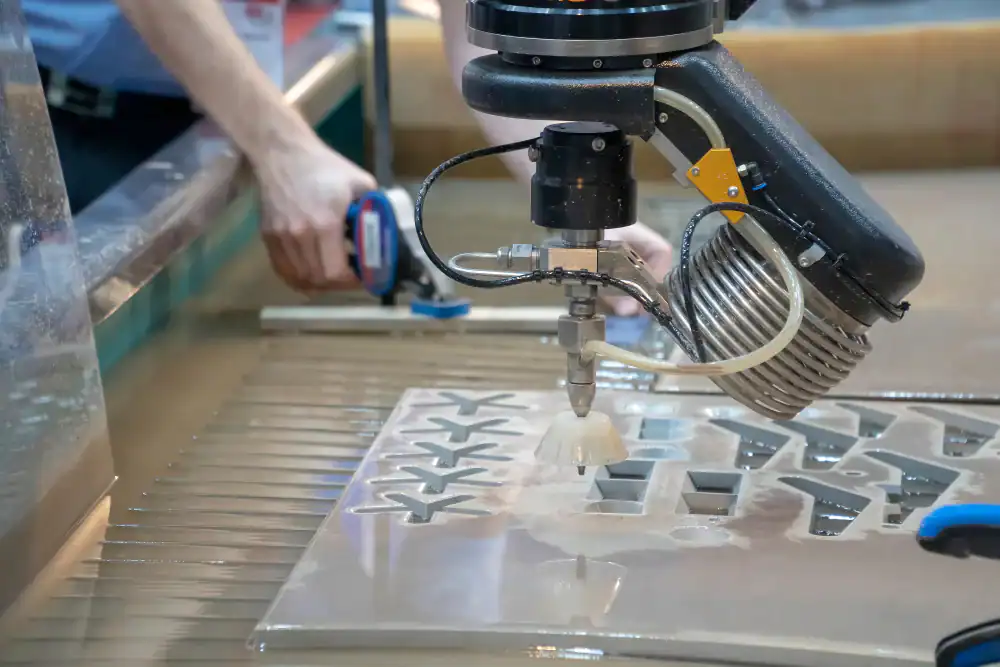
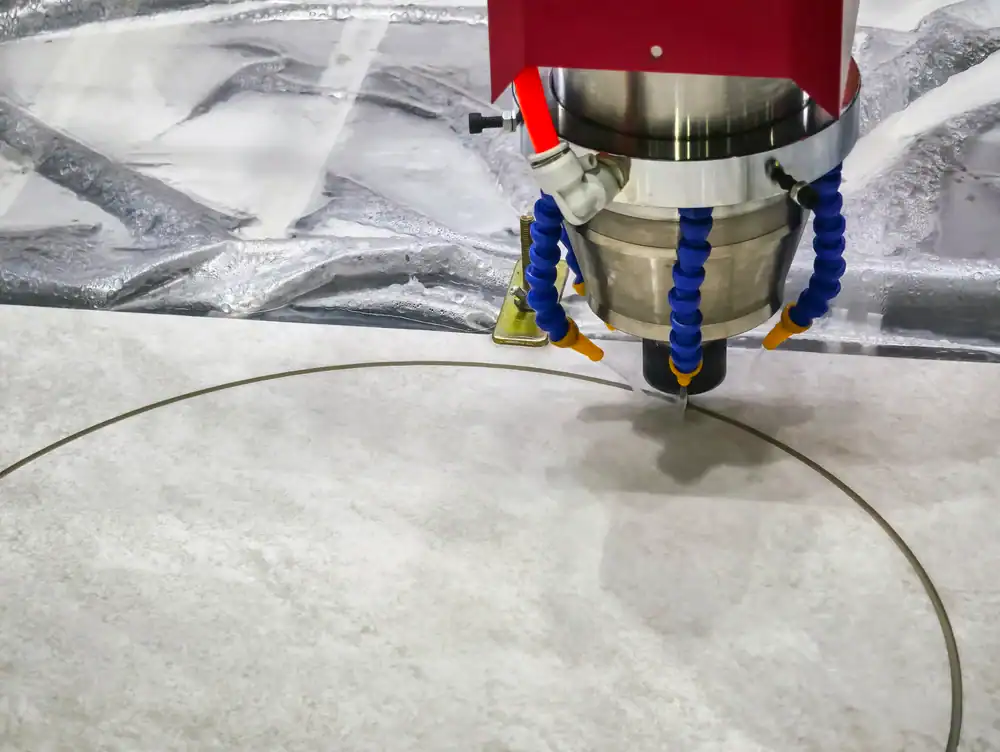
The cutting head uses ultra-high-pressure water mixed with abrasive garnet. It moves through your material without ever making contact, which means zero mechanical stress and zero heat transfer. The stream is thinner than most saw blades, so material waste stays minimal and your nesting efficiency stays high.
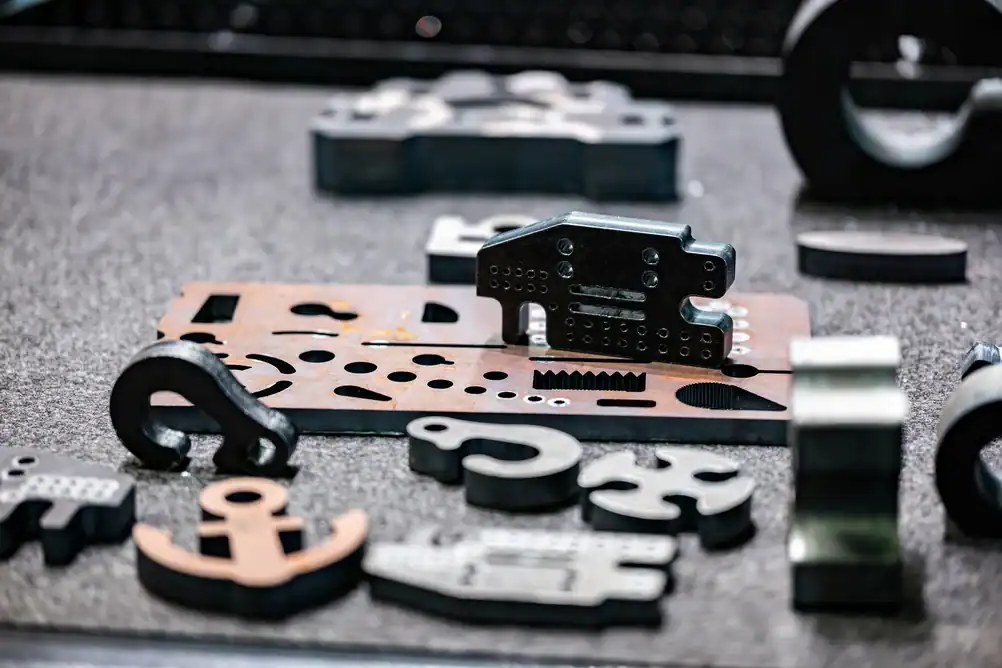
As the cut happens, you’re getting edges that come out clean enough to use immediately. No grinding. No deburring. No secondary operations unless your application specifically calls for it. Complex geometries, tight inside corners, intricate patterns—none of it requires special tooling or setup charges.
Once your parts are cut, they’re inspected and ready to ship. If you’re running a prototype, we can turn it fast. If you’re scaling to production, the CNC system delivers identical results across every single piece.
Ready to get started?
You get tolerances that hold to ±0.001″ when your application demands it. You get a cold cutting process that won’t warp thin materials or change the hardness of your alloys. And you get edge quality that eliminates the need for expensive finishing work.
Long Island’s manufacturing sector doesn’t have room for guesswork. Aerospace components need to meet AS9100D standards. Medical devices require ISO 13485 compliance. Architectural metalwork has to fit on-site without modification. Our precision waterjet cutting shop in Selden, NY is built to support those requirements.
We handle materials that other processes struggle with. Hardened tool steels. Titanium. Composites. Thick aluminum plate. Stone and glass for architectural applications. The abrasive waterjet process doesn’t care how hard your material is, and it won’t leave you with a heat-affected zone that compromises your part’s performance.
You also get design flexibility. If your CAD file has curves, angles, or complex interior cutouts, the waterjet handles it without custom tooling. That means faster turnarounds and lower costs when you’re still refining your design or running short production batches.
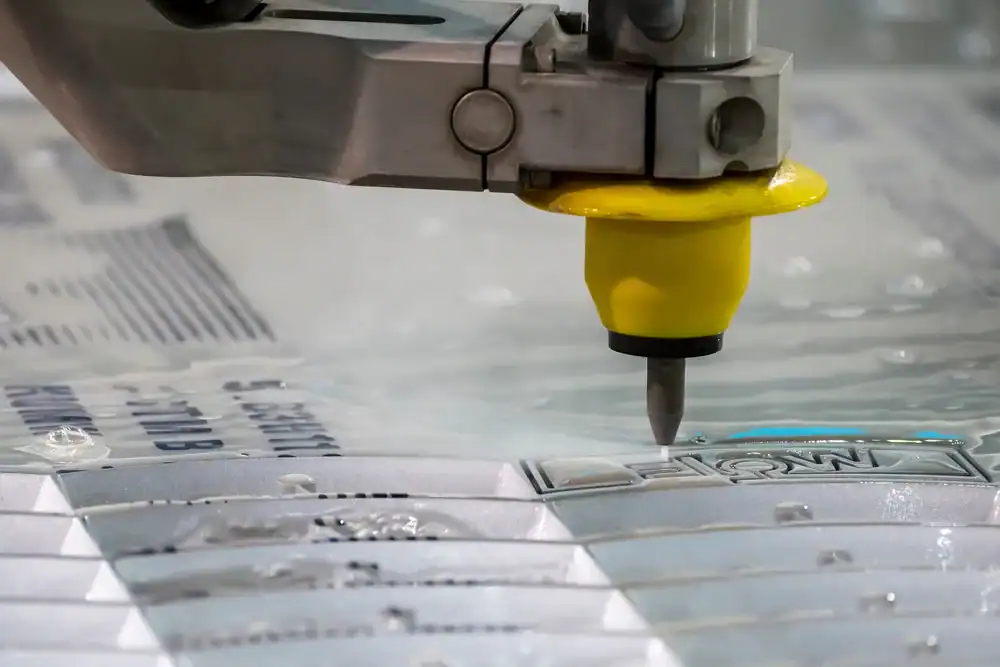
Waterjet cutting consistently holds tolerances to ±0.005″ on most applications. When your project requires it, we can achieve tolerances as tight as ±0.001″ depending on material type, thickness, and part geometry.
That level of precision matters when you’re supplying aerospace manufacturers or producing medical device components. A part that’s off by even a few thousandths can fail inspection and cost you time, material, and credibility. Our CNC-controlled Flow Mach 500 reads directly from your CAD file, so there’s no room for manual error or interpretation issues.
The cold cutting process also helps. Because there’s no heat transfer, your material doesn’t expand during the cut and contract afterward. That means the dimensions we cut are the dimensions you get, without the warping or distortion that thermal cutting methods introduce.
Laser cutting transfers enormous amounts of heat into your material. That creates a heat-affected zone that can change the physical properties of your part, especially on thinner stock or heat-sensitive alloys. You’re also dealing with dross, slag, and edges that often need secondary finishing.
Waterjet cutting doesn’t involve heat. The abrasive stream cuts through material without raising its temperature, so there’s no risk of warping, hardness changes, or thermal distortion. The edges come out clean and burr-free, which means you’re not paying for additional machining or grinding.
Laser is faster on thin materials, but when you need thick cuts, tight tolerances, or materials that don’t respond well to heat, waterjet is the better process. It’s also more versatile—waterjet handles stone, glass, composites, and hardened metals that would destroy a laser lens or require multiple passes.
Yes. The waterjet stream is extremely thin, which allows for intricate geometries, sharp inside corners, and complex curves that would require special tooling on a traditional machine. If you can draw it in CAD, we can cut it.
This is especially useful for prototyping or custom fabrication where your design might include artistic elements, tight radii, or unusual shapes. There’s no need for custom dies, punches, or multiple setups. The CNC system follows your design path exactly, and the kerf width stays minimal so your finished dimensions match your file.
That flexibility also reduces lead times. You’re not waiting for tooling to be made or dealing with setup charges every time your design changes. Load the file, run the cut, inspect the part. It’s that straightforward.
We cut virtually anything. Metals like stainless steel, aluminum, titanium, tool steel, and hardened alloys. Composites including carbon fiber and fiberglass. Stone, glass, ceramics, and rubber. If it’s a solid material, waterjet can handle it.
Thickness range runs from 1/16 inch up to over 10 inches depending on the material. Harder materials just take a bit longer, but the process itself doesn’t change. There’s no need to switch equipment or adjust for material hardness the way you would with mechanical cutting.
This makes waterjet ideal for shops that work across multiple industries. You might need stainless steel parts for food processing equipment, titanium components for aerospace, and granite inlays for architectural projects. One machine handles all of it without compromising on precision or edge quality.
Turnaround depends on material type, thickness, part complexity, and current queue. Simple parts in common materials can often be completed within a few days. More complex jobs or thicker stock may take longer, but we’ll give you a realistic timeline upfront.
Because our system is CNC controlled and runs directly from CAD files, there’s no lengthy setup process. You’re not waiting for tooling to be fabricated or dealing with manual programming. That speeds things up, especially on prototypes or short runs where traditional methods would require more prep time.
If you’re on a tight deadline, let us know. We understand that production schedules don’t always leave room for delays, and we’ll work with you to meet your timeline without sacrificing the precision your parts require.
In most cases, no. The abrasive waterjet process produces edges that come out smooth and burr-free. You’re getting a satin finish that’s clean enough to use immediately in many applications, which eliminates the cost and time associated with grinding, deburring, or additional machining.
That’s a significant advantage when you’re managing budgets and timelines. Secondary finishing adds labor, extends lead times, and introduces another opportunity for dimensional changes or damage. With waterjet, what comes off the table is typically ready for assembly or installation.
There are exceptions. If your application requires a specific surface finish, tight flatness tolerances, or threaded holes, you might still need additional operations. But for the majority of precision cutting work, the waterjet edge quality is production-ready right out of the gate.
Useful Links
Other Services we provide in Selden