
Hear from Our Customers
You’re not cutting material just to cut it. You need parts that fit the first time, edges that don’t need rework, and tolerances that hold up under inspection.
High precision waterjet cutting in Valley Stream, NY gives you accuracy within ±0.005 inches on complex geometries. No heat-affected zones that warp your metal or stress your composites. No secondary finishing eating into your timeline or budget.
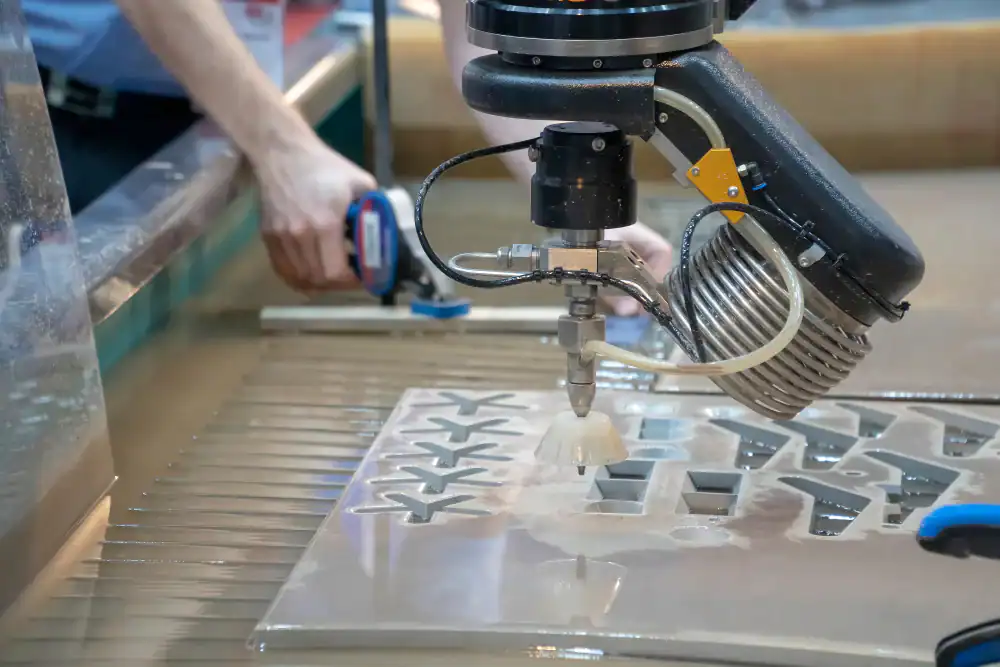
The process uses high-pressure water mixed with abrasive garnet to cut through materials from 1/32″ rubber gaskets to 6″ steel plate. Because there’s no thermal cutting involved, your material properties stay intact. No hardening along the cut edge. No micro-cracking. No distortion that throws off your assembly down the line.
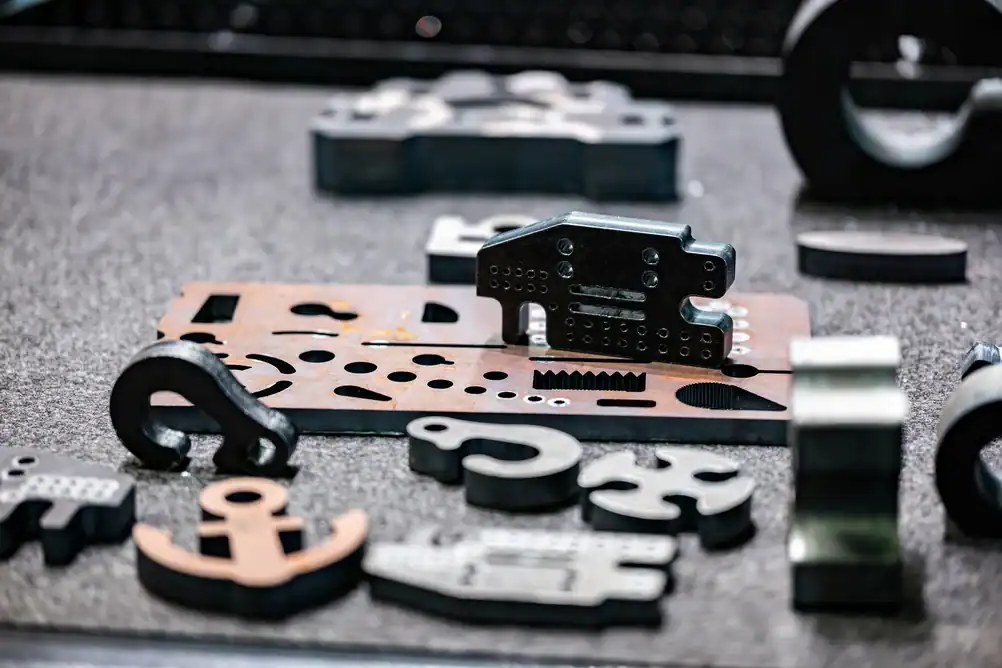
You get parts that match your CAD file. You get edges clean enough that most projects skip deburring entirely. And you get the flexibility to cut intricate shapes, tight inside corners, and small holes without pre-drilling or tool changes between features.
We serve architects, designers, contractors, and manufacturers across Valley Stream and the surrounding New York manufacturing corridor. We handle everything from one-off prototypes to production runs that need repeatable accuracy.
Valley Stream sits in a region where metal fabrication, custom manufacturing, and precision machining drive local industry. Your project timelines are tight, and your tolerances tighter. We built our precision waterjet cutting shop in Valley Stream to meet that standard without the runaround.
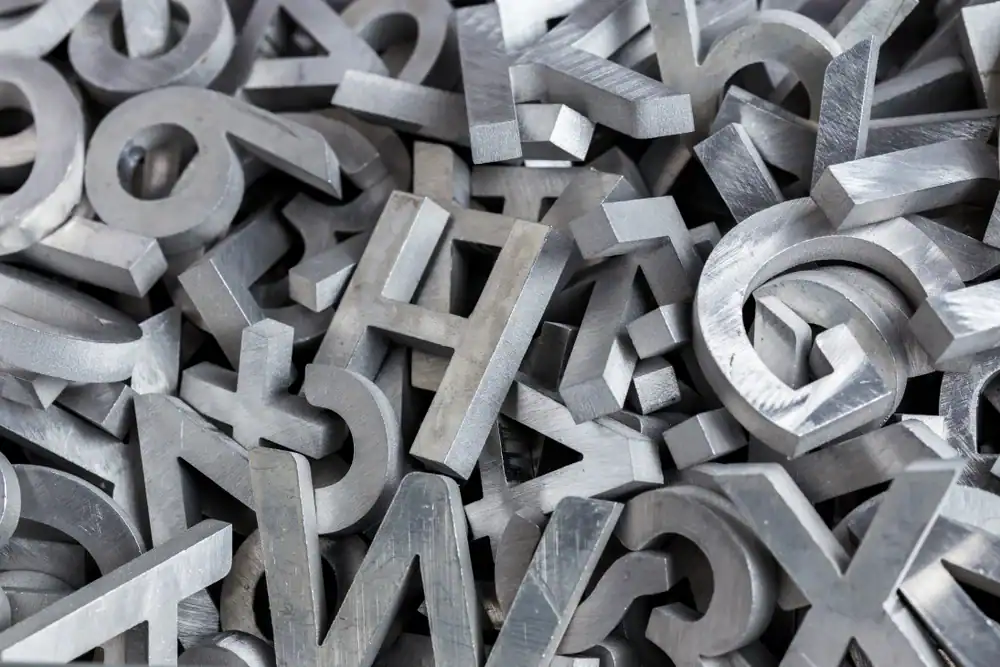
Our equipment handles the materials you’re actually working with—stainless steel, aluminum, titanium, tool steel, plastics, composites, glass, stone, and rubber. We work from your DXF files, your sketches, or we help you design the cut path that makes sense for your application.
You send us your design file or material specs, and we review it for feasibility. If there’s a tolerance issue or a cut path that’ll save you material, we’ll tell you before we start.
Once the file is programmed into our CNC system, we load your material onto the cutting table and secure it. The waterjet nozzle moves along the programmed path, cutting with a stream of water pressurized up to 60,000 PSI and mixed with fine abrasive particles. The CNC controls pressure, abrasive flow, and traverse speed to hold consistent tolerances across the entire cut.
Because the process is computer-controlled, we can repeat the same cut with the same accuracy whether you need one piece or a hundred. There’s no tool wear between parts. No heat buildup. No need to stop and swap tooling when the geometry changes.
After cutting, most parts come off the table ready to use. If your application requires it, we can discuss secondary operations, but the edge quality from precision CNC waterjet cutting in Valley Stream typically eliminates that step.
Ready to get started?
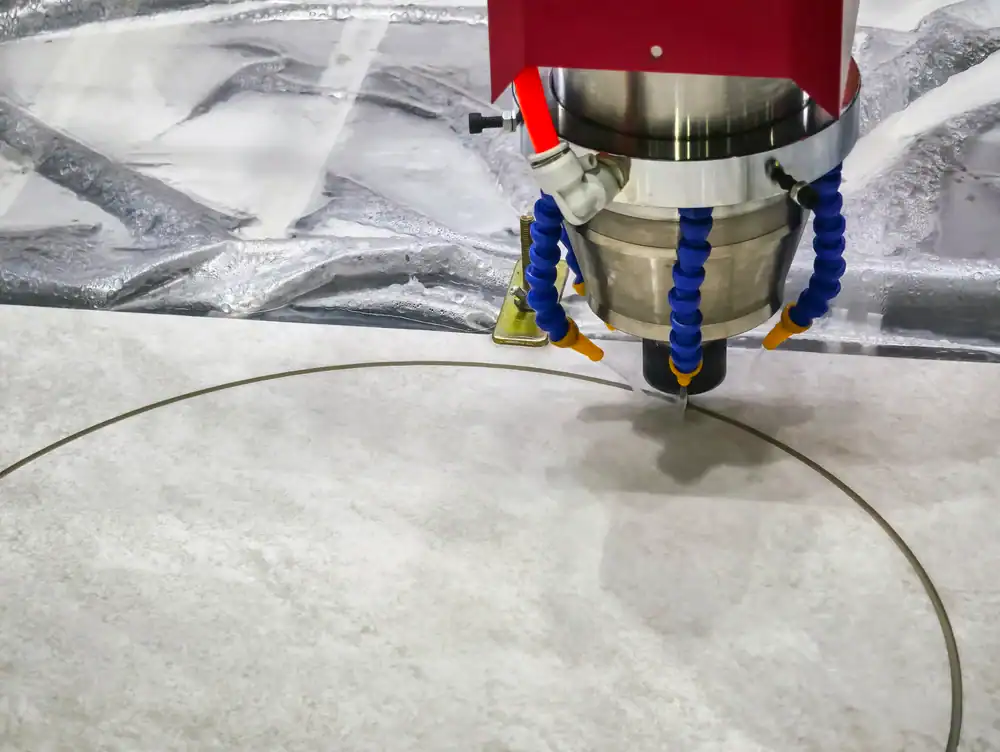
You get precision waterjet cutting for tight tolerances in Valley Stream that handles materials other methods can’t touch without damaging them. We cut reflective metals that deflect lasers. We cut thick plate that plasma struggles with. We cut composites that chip and delaminate under mechanical cutting.
The New York manufacturing sector increasingly demands traceability and process validation, especially for aerospace, medical, and automotive components. Our CNC system locks in the parameters for each cut, so you get repeatable results that meet your quality documentation requirements.
We also provide material consultation. If you’re not sure whether your part should be cut from aluminum or stainless, or whether a thicker gauge will hold up better in your assembly, we walk through the options based on what the part actually needs to do. That’s part of working with a precision waterjet cutting shop in Valley Stream that understands the local market—we’ve seen the applications, and we know what works.
You also get realistic lead times. We don’t overpromise and underdeliver. If your project has a hard deadline, we’ll tell you up front whether we can hit it, and we’ll keep you updated if anything changes.
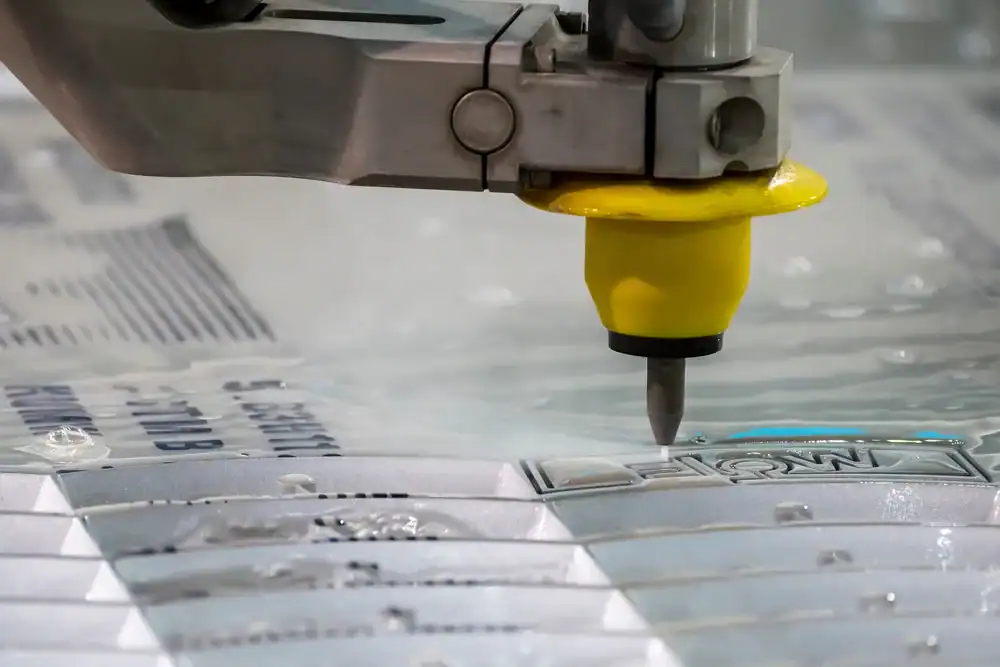
Precision waterjet cutting works on materials that are too thick, too hard, too heat-sensitive, or too reflective for laser or plasma cutting. That includes titanium, Inconel, tool steel over 2″ thick, tempered glass, carbon fiber composites, and laminated materials that would delaminate under heat or mechanical force.
Lasers struggle with reflective metals like polished aluminum or copper because the beam bounces back. Plasma creates a heat-affected zone that can warp thin sheet metal or change the hardness along the cut edge. Waterjet avoids both problems because it’s a cold cutting process—no heat, no warping, no change to your material properties.
If you’re working with glass-reinforced plastics, carbon fiber, or Kevlar, waterjet is often the only method that won’t cause fiber pullout, resin melt, or edge fraying. The abrasive stream cuts cleanly through the matrix without tearing the fibers, so you get a smooth edge that doesn’t need sanding or sealing.
Standard precision waterjet cutting holds tolerances around ±0.005 inches on most materials. With proper setup, material clamping, and nozzle calibration, you can push that tighter to ±0.003 inches on smaller parts with stable materials like aluminum or stainless steel plate.
The tolerance you’ll achieve depends on material thickness, nozzle size, cutting speed, and how well the material is supported during the cut. Thicker materials require slower traverse speeds to maintain edge quality, which generally improves tolerance consistency. Thinner materials can flex slightly under the waterjet stream if they’re not properly supported, which can introduce minor variation.
For parts that need tolerances tighter than ±0.003 inches, waterjet can rough-cut close to final dimensions, then you finish with grinding or milling. That approach still saves time compared to machining the entire part from solid stock, and you avoid the heat and tool wear that come with cutting hard materials conventionally.
If your project requires validation for aerospace or medical applications, we can run test cuts and provide first-article inspection data so you know exactly what tolerance range to expect before committing to a full production run.
Most parts come off the waterjet table with minimal to no burrs, especially compared to plasma, laser, or mechanical cutting. The abrasive waterjet stream erodes material rather than shearing or melting it, so you don’t get the rolled edge or slag buildup that other thermal processes leave behind.
On the top surface where the jet enters, the edge is typically smooth and square. On the bottom surface where the jet exits, you might see a slight taper or a small amount of abrasive residue, depending on material thickness and cutting speed. For most applications, that exit edge is still clean enough to use as-is. If your part needs a perfectly square edge on both sides, a quick pass with a file or scotch-brite pad takes care of it.
Thicker materials cut at slower speeds generally produce better edge quality on both entry and exit. If edge finish is critical for your application—say, you’re cutting gasket material that needs to seal perfectly, or you’re fabricating parts for a high-visibility architectural installation—let us know up front. We can adjust traverse speed and abrasive flow to prioritize edge quality over cutting speed.
The bottom line: waterjet cutting reduces or eliminates the secondary finishing that eats up time and cost with other methods. You’re not grinding, deburring, or sanding unless your application has unusually strict cosmetic or dimensional requirements.
Waterjet cutting costs more per hour to operate than plasma and sometimes more than laser, but you often spend less overall because you’re not paying for secondary finishing, and you’re not scrapping parts due to heat distortion or poor edge quality.
Plasma is fast and cheap for thick mild steel, but the heat-affected zone can warp thin material, and the edge quality usually requires grinding. Laser is extremely fast on thin sheet metal, but it struggles with anything over 1″ thick, and it can’t cut reflective metals or materials like stone, glass, or composites. If your part falls outside those sweet spots, waterjet becomes the more cost-effective option because it’s the only process that’ll do the job without compromising the material.
Waterjet also eliminates tooling costs. There’s no expensive cutting head to replace after a few hours of runtime, and there’s no need to stock different tools for different materials or thicknesses. The same nozzle that cuts rubber cuts titanium. That flexibility saves money when you’re running mixed materials or small batches where setup time would otherwise kill your budget.
For Valley Stream manufacturers running prototypes, custom orders, or short production runs, waterjet often delivers better cost-per-part than methods that seem cheaper on paper but require more handling, more finishing, and more risk of scrapped material.
Yes. Waterjet cuts virtually any 2D shape you can draw, including sharp inside corners, small-radius curves, and intricate patterns that would require multiple setups or specialized tooling with conventional machining.
The cutting stream is narrow—typically 0.020″ to 0.040″ depending on nozzle size—so you can cut fine details, narrow slots, and small holes without pre-drilling. The CNC system follows your programmed path exactly, so complex geometries come out just as accurate as simple straight cuts.
Inside corners are one area where waterjet outperforms laser and plasma. Those processes leave a radius in sharp corners because the kerf width and heat spread prevent a true 90-degree intersection. Waterjet can produce much tighter corner radii because the stream is narrower and there’s no heat spreading into the surrounding material. You won’t get a perfectly sharp corner due to the kerf width and stream dynamics, but you’ll get close enough for most mechanical assemblies and architectural applications.
If your design has a lot of small holes, tight nests, or intricate cutouts, waterjet handles it in one pass without stopping to change tools or reposition the part. That saves time and reduces the chance of alignment errors that come with multi-setup jobs.
Turnaround depends on material availability, part complexity, and how many other jobs are in the queue, but most projects get cut within a few days of file approval. Simple parts in common materials like aluminum or stainless steel plate can often be turned around in 24 to 48 hours if the material is in stock.
Complex parts with tight tolerances, thick materials, or large quantities take longer because cutting speed has to be slower to maintain edge quality and accuracy. A part that’s 3″ thick stainless steel with intricate geometry will take significantly more machine time than a simple bracket cut from 1/4″ aluminum plate.
If you’re working on a time-sensitive project, let us know your deadline up front. We’ll tell you whether it’s realistic and what it’ll take to meet it. Sometimes that means prioritizing your job in the schedule. Sometimes it means adjusting the design slightly to reduce cutting time without compromising function.
For repeat orders, turnaround gets faster because the programming is already done and we know exactly what setup and parameters worked the first time. That’s one advantage of working with a local precision waterjet cutting shop in Valley Stream, NY—you’re not dealing with a distant contract manufacturer who treats every order like a new customer. We keep your files, we remember what worked, and we get you back in production faster when you need another run.
Useful Links
Other Services we provide in Valley Stream