Hear from Our Customers
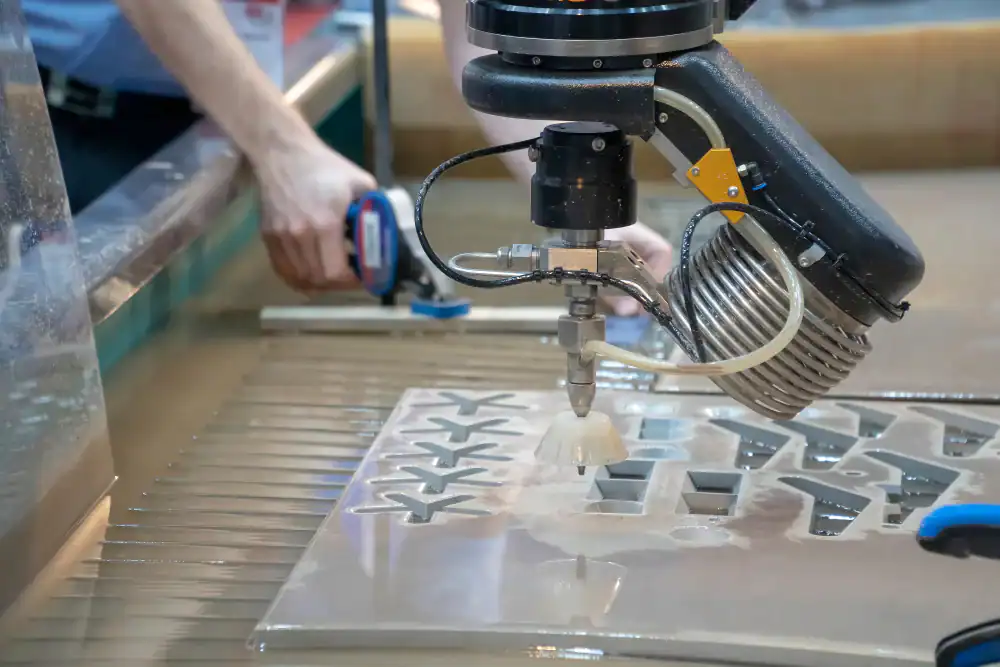
When you’re working with exotic metals, thick materials, or intricate designs, traditional cutting methods create problems you shouldn’t have to fix. Heat distortion throws off your dimensions. Rough edges mean extra finishing work. Material limitations force you to compromise.
Precision water jet cutting services in Woodmere, NY eliminate those issues entirely. The process uses a high-pressure stream of water mixed with abrasive garnet to cut through virtually any material without generating heat. Your parts maintain their structural integrity. Your edges come out clean and burr-free. Your tolerances stay tight.
You get parts that meet spec without secondary operations eating into your timeline or budget. Whether you’re cutting 6-inch thick steel plate or delicate composites that can’t handle thermal stress, the process adapts to your requirements instead of forcing you to adapt to its limitations.
We serve the aerospace, automotive, and manufacturing sectors across Long Island with precision waterjet cutting for tight tolerances. We understand the demands of this region—Nassau County’s aerospace industry has required exacting standards since the days when Roosevelt Field launched historic flights.
Your projects need accuracy and speed. Our precision waterjet cutting shop in Woodmere, NY handles both prototype development and production runs with the same attention to detail. We’ve built our reputation on delivering parts that meet your specifications without the delays or quality issues that come from shops trying to force every job through the same process.
You start by sending us your design files or working with our team to develop custom specifications. We review your material requirements, thickness, and tolerance needs to ensure the process matches your application.
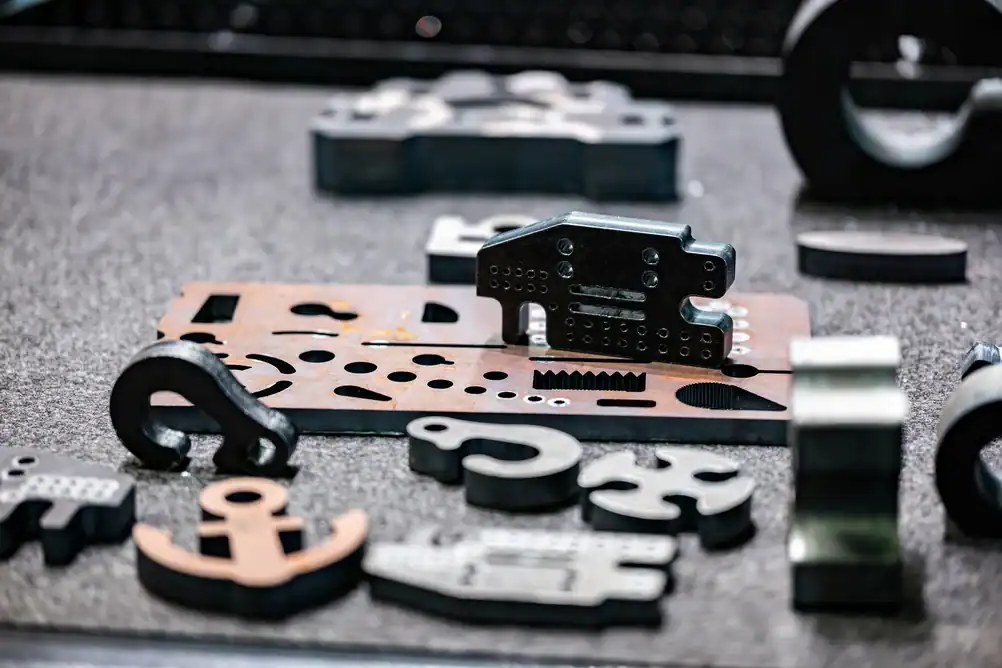
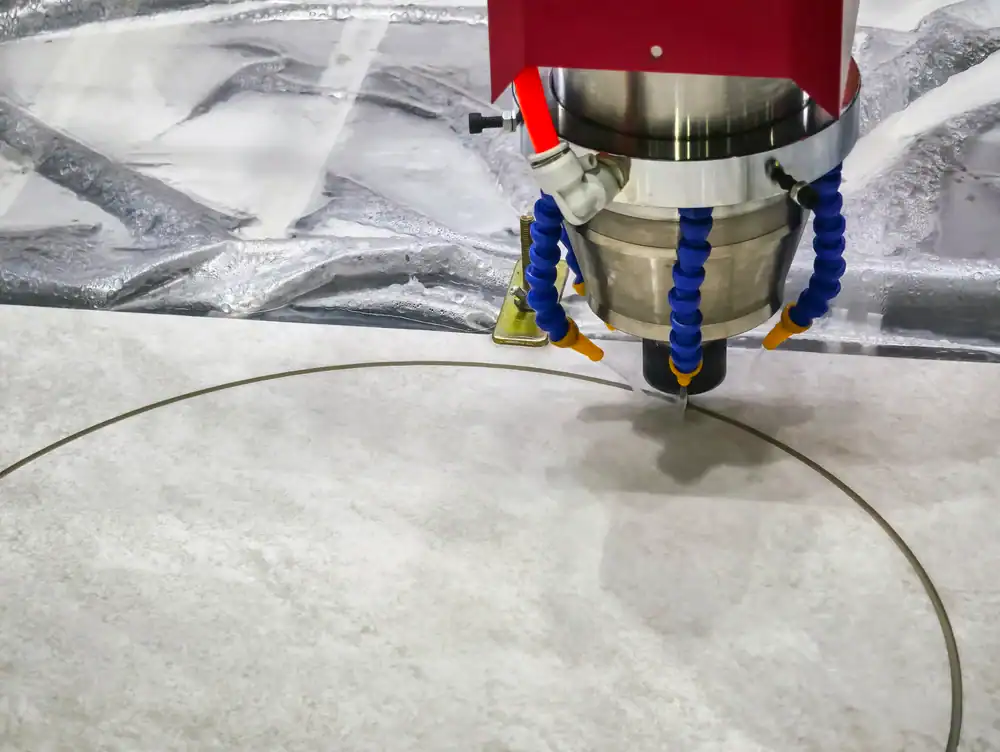
Once we program the CNC waterjet system with your specifications, the cutting head moves along your exact design path. A stream of water pressurized up to 60,000 PSI, mixed with fine abrasive particles, cuts through your material. The computer-controlled movement maintains consistent precision across every part, whether you’re ordering one prototype or a full production run.
Because there’s no heat involved, your material properties stay intact throughout the cut. No hardening. No warping. No heat-affected zones that compromise your part’s performance. The cold cutting process also means no harmful fumes or excessive dust—just clean, accurate cuts that typically require no additional finishing work.
Ready to get started?
You get access to advanced CNC waterjet cutting systems that handle materials from soft rubber to hardened steel, with thicknesses up to 6 inches. The process cuts intricate shapes with tight radii, narrow corners, and small holes that other methods can’t achieve without multiple setups or tool changes.
Your parts come out with clean, burr-free edges that meet tolerances as tight as ±0.001 inches. No secondary deburring. No additional finishing operations unless your application specifically requires them. This matters in Woodmere, NY and throughout Nassau County, where manufacturers supporting the aerospace and defense sectors can’t afford dimensional variations or surface quality issues.
You also get flexibility that traditional cutting methods can’t match. Need a prototype by tomorrow? The waterjet doesn’t require expensive die creation or lengthy setup times. Switching from one part design to another takes minutes, not hours. That responsiveness keeps your projects moving forward instead of waiting in someone’s production queue.
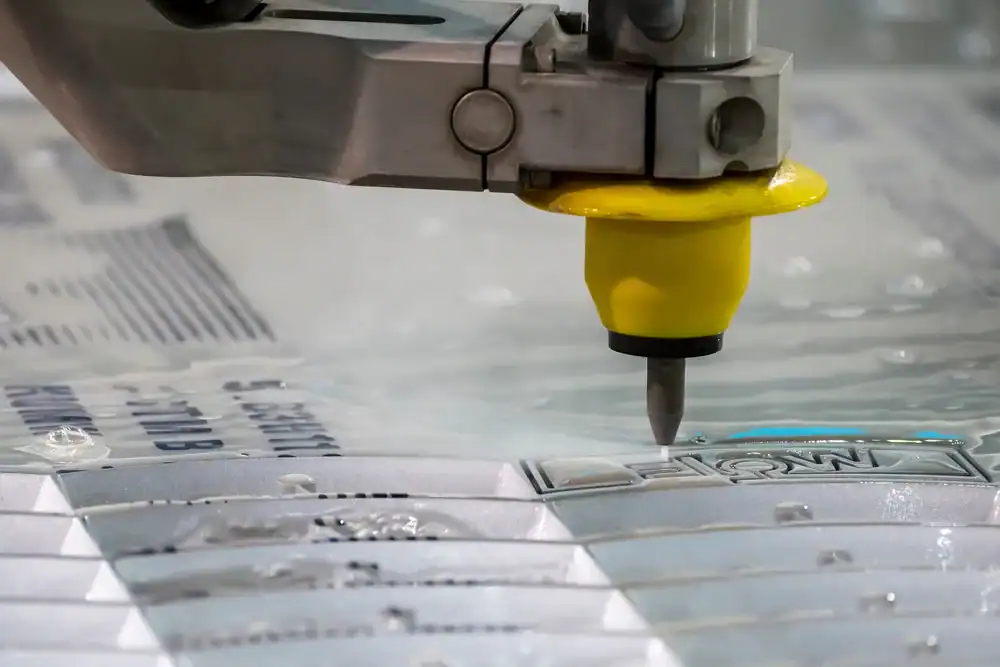
Precision waterjet cutting works on virtually any material because it doesn’t rely on heat or hardness differentials. You can cut metals like titanium, Inconel, and tool steel that would destroy conventional cutting tools. Composites, laminates, and bonded materials that would delaminate under heat stay intact through the cold cutting process.
Stone, glass, and ceramics that crack under thermal stress cut cleanly with waterjet technology. Even materials with vastly different hardness levels in the same part—like metal embedded in plastic—cut without issue because the process doesn’t care about material properties the way thermal cutting does.
The real advantage shows up when you’re working with exotic alloys or specialized composites common in aerospace applications. These materials often cost hundreds of dollars per pound. Traditional cutting methods that create heat-affected zones can ruin expensive material. Waterjet cutting eliminates that risk entirely while maintaining the tight tolerances your application requires.
The waterjet stream stays cold throughout the cutting process—typically below 100°F at the cutting surface. Without heat, your material doesn’t expand, contract, or warp. The dimensional accuracy you programmed into the CNC system is the dimensional accuracy you get in the finished part.
Computer-controlled movement keeps the cutting head positioned exactly where your design specifies, compensating for material thickness variations and maintaining consistent standoff distance. Advanced systems achieve tolerances of ±0.001 inches by monitoring and adjusting the cutting parameters in real-time.
This level of precision matters when you’re manufacturing components for aerospace, medical devices, or any application where dimensional accuracy directly impacts safety or performance. You’re not fighting against thermal expansion or trying to predict how much a part will warp after it cools. The part comes off the waterjet table ready to use, with dimensions that match your specifications.
Turnaround time depends on your part complexity, material thickness, and current production schedule, but waterjet cutting eliminates many delays built into other processes. There’s no die to create, no specialized tooling to order, and no lengthy setup between different part designs.
Simple parts in common materials can often be completed within 24 hours. More complex designs or thicker materials take longer to cut, but you’re still looking at days rather than weeks. The process doesn’t require the multiple operations that traditional machining demands—no rough cut, then finish cut, then deburring, then edge treatment.
For Woodmere, NY area customers, proximity matters. You’re not shipping parts across the country and waiting for carriers. Local service means faster communication when you have questions, quicker turnaround when you need rush work, and the ability to pick up parts directly when your project timeline is tight.
Waterjet cutting produces minimal waste compared to traditional methods because the kerf width—the amount of material removed by the cutting stream—typically measures only 0.030 to 0.040 inches. You’re removing just enough material to separate your parts, not grinding away excess with wide cutting tools.
The process also nests parts efficiently in your material sheet. Computer optimization arranges your parts to maximize material usage, reducing scrap. This efficiency matters when you’re cutting expensive alloys or specialized materials where every square inch represents significant cost.
Secondary finishing is rarely necessary. The waterjet produces clean, square edges without burrs, slag, or heat-affected zones that need grinding or additional treatment. Most parts come off the waterjet table ready for assembly or installation. When your application does require specific edge treatments or surface finishes, you’re starting from a clean, accurate cut rather than trying to correct problems created by the cutting process itself.
Waterjet cutting adapts to any volume because it doesn’t require the expensive tooling that makes low-volume work uneconomical with other processes. Need one prototype to test your design? The setup cost is minimal. Need 500 production parts? The same program runs repeatedly with identical results.
This flexibility is valuable when you’re developing new products or serving markets with unpredictable demand. You can order exactly the quantity you need without hitting minimum order requirements or paying for die creation that only makes sense at high volumes. As your needs change, the process scales with you.
For manufacturers in Nassau County’s aerospace and defense sectors, this means you can respond quickly to contract requirements without maintaining large inventories. Order parts as needed, knowing each batch will match the specifications of previous runs. The CNC programming ensures consistency whether you’re cutting your first part or your thousandth.
Laser and plasma cutting both use extreme heat to melt or vaporize material. That heat creates a zone around your cut where the material’s properties change—hardening in some metals, softening in others, warping in thin materials. When your tolerances are tight or your material is heat-sensitive, those changes cause problems.
Waterjet cutting keeps your material cold. The mechanical cutting action removes material without altering what remains. Your part maintains its original hardness, temper, and structural properties right up to the cut edge. There’s no hardened zone that dulls your tools during secondary operations, no warped sections that throw off your dimensions.
The other advantage is material versatility. Laser cutting struggles with reflective metals like aluminum and copper. Plasma cutting can’t handle non-conductive materials. Waterjet cuts anything—metals, plastics, composites, stone, glass—with the same equipment and the same level of precision. When you’re working with multiple materials or exotic alloys, you need a cutting method that doesn’t limit your options.
Useful Links
Other Services we provide in Woodmere