Hear from Our Customers
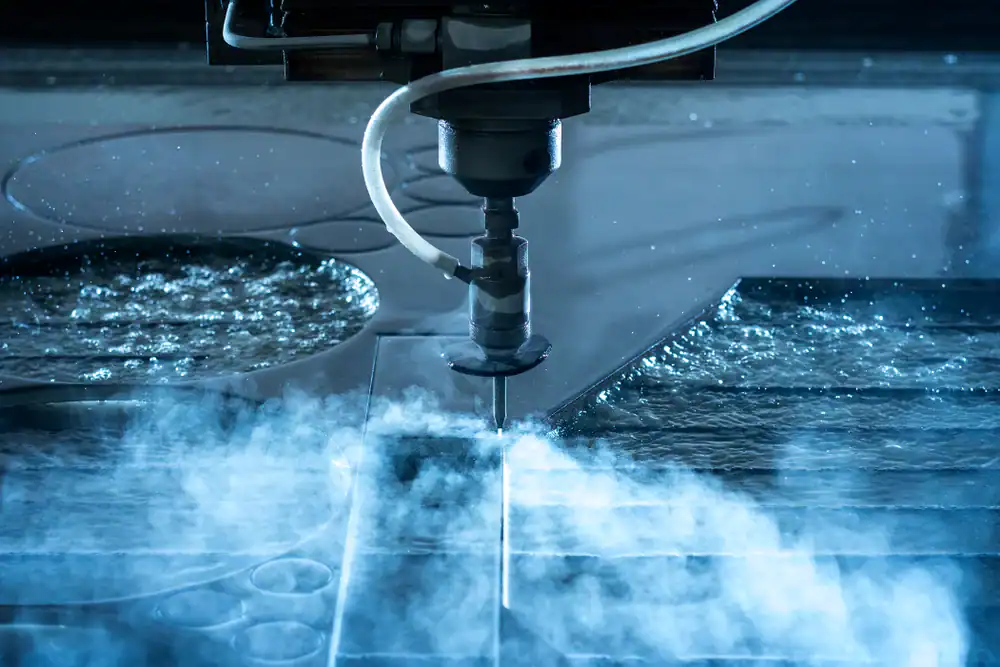
You need glass cut to exact specifications. Not close—exact. Whether it’s architectural glass for a commercial build, custom residential glass cutting services for a home renovation, or intricate art pieces that demand precision, waterjet cutting gives you accuracy down to 0.1mm without the cracking, chipping, or edge damage that comes with traditional methods.
There’s no heat involved. That means no thermal stress, no warping, and no compromised structural integrity. The cutting stream is cold, controlled, and capable of handling laminated glass, tempered glass, and materials up to 6 inches thick.
What you get is a finished piece with smooth edges that require little to no secondary finishing. The cut is clean. The tolerances are tight. And if your design includes curves, angles, or detailed patterns, waterjet handles it without hesitation.
We operate out of Babylon, NY, serving Nassau County, Suffolk County, and the broader Long Island area. We’re not a middleman shop. Every file gets reviewed by our in-house team before programming to catch issues early—before your material gets loaded onto the table.
We’ve built our process around preventing the kinds of mistakes that cost you time and money. That means verifying dimensions, checking tolerances, and making sure your parts fit right the first time. Our equipment is built for precision, and our team knows how to use it.
If you’re in Babylon or nearby and need custom glass waterjet cutting in Babylon, NY, you’re working with a local shop that understands deadlines, material costs, and what it takes to get architectural glass fabrication done correctly.
First, you send us your design file—CAD, DXF, or another vector format works. If you don’t have a file ready, our team can help prepare one based on your specs. We review every file before it goes to the machine to confirm dimensions, catch potential issues, and verify that the cut path makes sense for your material.
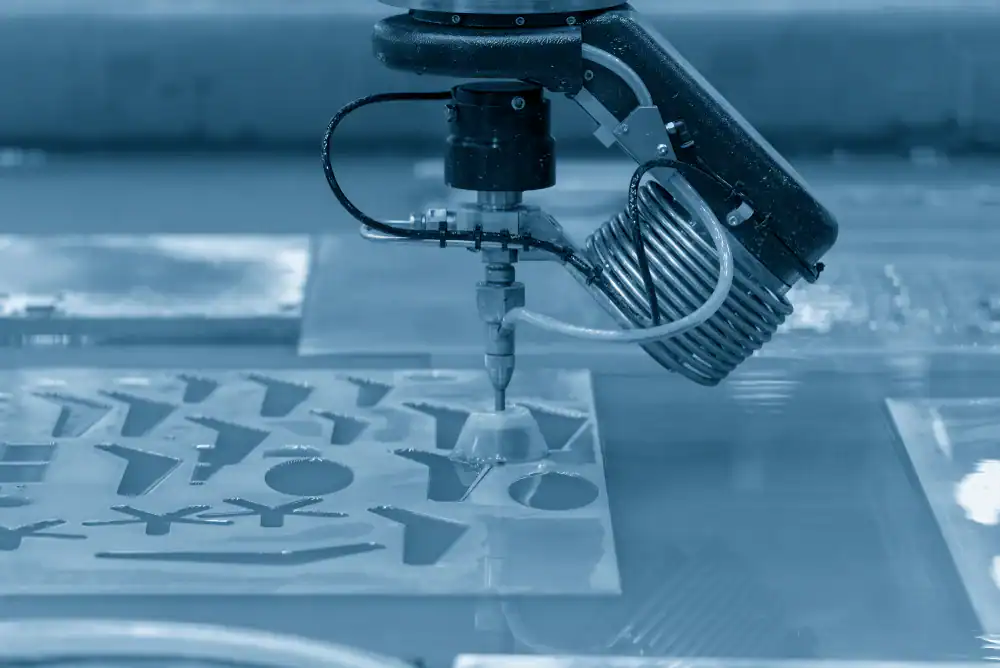
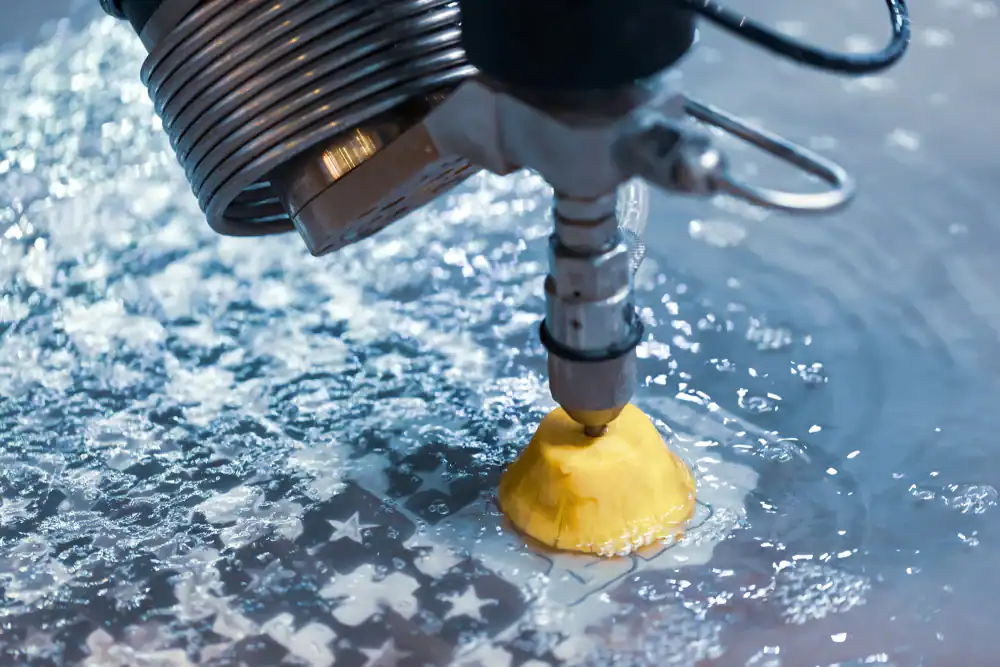
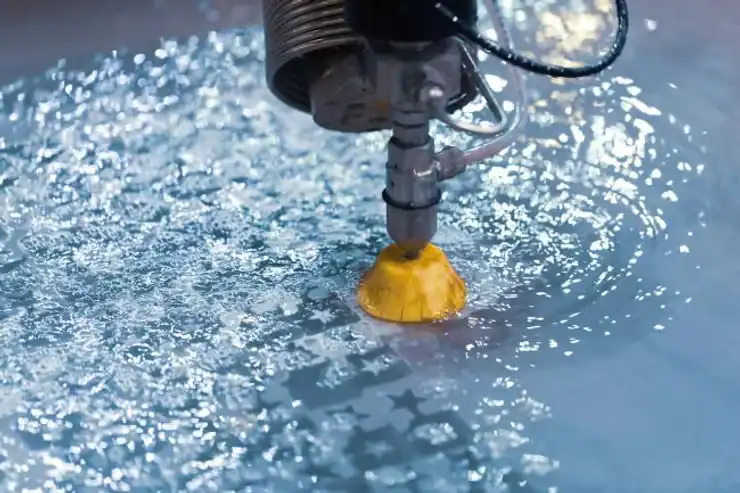
Next, we program the waterjet. This is where precision gets locked in. The machine follows your design with a high-pressure stream of water mixed with abrasive garnet. No blades. No heat. Just controlled erosion that cuts through glass without introducing stress or surface damage.
During the cut, the waterjet maintains consistent pressure and speed, which is critical for edge quality. Piercing is handled carefully to avoid star chips or fractures. Once the cut is complete, your glass comes off the table with smooth edges and tight tolerances.
You pick up a finished piece that’s ready to install or integrate into your project. If secondary work is needed—polishing, drilling, whatever—we can discuss that upfront so there are no surprises.
Ready to get started?
Waterjet cutting works across a range of glass types and applications. Architectural glass waterjet cutting in Babylon, NY is common for storefronts, decorative panels, custom railings, and interior partitions. If you’re a contractor or designer working on a commercial build in Nassau County, this process handles the intricate cuts that traditional tools can’t.
For residential glass cutting services in Babylon, NY, we cut custom shower enclosures, backsplashes, tabletops, and artistic installations. Homeowners and designers use waterjet when the design calls for curves, cutouts, or non-standard shapes that need to fit precisely.
Industrial applications include laminated safety glass, thick structural panels, and specialty glass used in manufacturing or laboratory environments. The process is versatile enough to handle both high-volume production runs and one-off custom pieces. Long Island’s construction and renovation market has steady demand for precision glass work, and waterjet fills the gap where manual cutting falls short.
Tempered glass is tricky. Once it’s been heat-treated, cutting it causes it to shatter—that’s true for waterjet and any other method. If you need a specific shape, the glass has to be cut before tempering. We can cut the raw glass to your specs, and then you send it out for tempering afterward.
Laminated glass is a different story. Waterjet handles it well because there’s no heat and no mechanical stress that would separate the layers. The cutting stream goes through both the glass and the interlayer cleanly. You end up with a precise cut and intact lamination.
If you’re not sure whether your material can be cut after treatment, bring us the specs. We’ll tell you what’s possible and what order the processes need to happen in.
Waterjet cutting delivers precision within 0.1mm, which is tight enough for most architectural and custom applications. If your design has complex curves or detailed patterns, the machine follows the programmed path without deviation. That level of accuracy holds across different glass thicknesses.
Edge quality is typically smooth enough that no additional finishing is required. The waterjet produces a clean cut without the micro-fractures or rough spots you’d see from scoring and snapping. For applications where you need a polished or beveled edge—like a tabletop or decorative panel—we can discuss secondary finishing options.
The key difference between waterjet and traditional methods is that you’re not dealing with chipping or edge damage that needs to be ground out. The cut is clean from the start, which saves time and keeps your material costs down.
Our waterjet equipment handles glass up to 6 inches thick. Most architectural and residential projects fall well below that—typically between ¼ inch and 1 inch—but the capability is there if your project calls for thicker structural glass or specialty applications.
Thicker glass takes longer to cut because the stream needs more time to penetrate the material, but the process stays consistent. There’s no loss of precision, and the edges remain smooth. If you’re working with laminated or layered glass that adds up to significant thickness, waterjet manages it without issue.
For context, standard shower enclosures use ⅜-inch to ½-inch glass. Custom tabletops might be ¾ inch. Structural panels or safety glass in commercial settings can go thicker. Whatever your specs are, we’ll confirm feasibility before starting the job.
Turnaround depends on the complexity of the design, the thickness of the material, and how many pieces you need. A simple cut on standard glass might be done in a day or two. Intricate patterns, thicker materials, or larger quantities take longer.
Once we review your file and confirm the specs, we’ll give you a realistic timeline. We don’t rush jobs to meet arbitrary deadlines if it compromises quality. That said, we understand that construction schedules and project deadlines matter, so we prioritize clear communication about when your glass will be ready.
If you’re on a tight timeline, let us know upfront. We’ll tell you whether it’s doable or if adjustments need to be made. Most delays happen because of file issues or unclear specs, which is why we review everything before programming.
Waterjet cutting is efficient with material. The cutting stream is narrow, so you’re not losing significant width to the kerf like you would with a saw blade. That means more usable glass from each sheet and less scrap.
The process uses water and garnet abrasive, which gets collected in the machine’s tank. There’s no dust, no fumes, and no airborne particles. If you’ve ever been around traditional glass cutting, you know how much debris and sharp fragments it creates. Waterjet eliminates that.
From an environmental and workspace standpoint, it’s cleaner and safer. The water absorbs the cutting force, and the abrasive gets filtered out. You’re not dealing with hazardous waste or complicated disposal requirements.
We work with CAD files, DXF, DWG, and most standard vector formats. If your design is in another format or you only have a sketch or PDF, our team can convert it into a cuttable file. We’ll review it with you to make sure dimensions, tolerances, and cut paths match your intent.
File preparation is part of the process we handle in-house. That includes checking for issues like overlapping lines, incorrect scaling, or paths that won’t translate well to the machine. Catching those problems before programming saves time and prevents costly errors.
If you’re working with an architect or designer who’s already created the file, we can take it from there. If you’re starting from scratch or need help translating an idea into a workable design, we’ll walk you through what we need.
Useful Links
Other Services we provide in Babylon