Hear from Our Customers
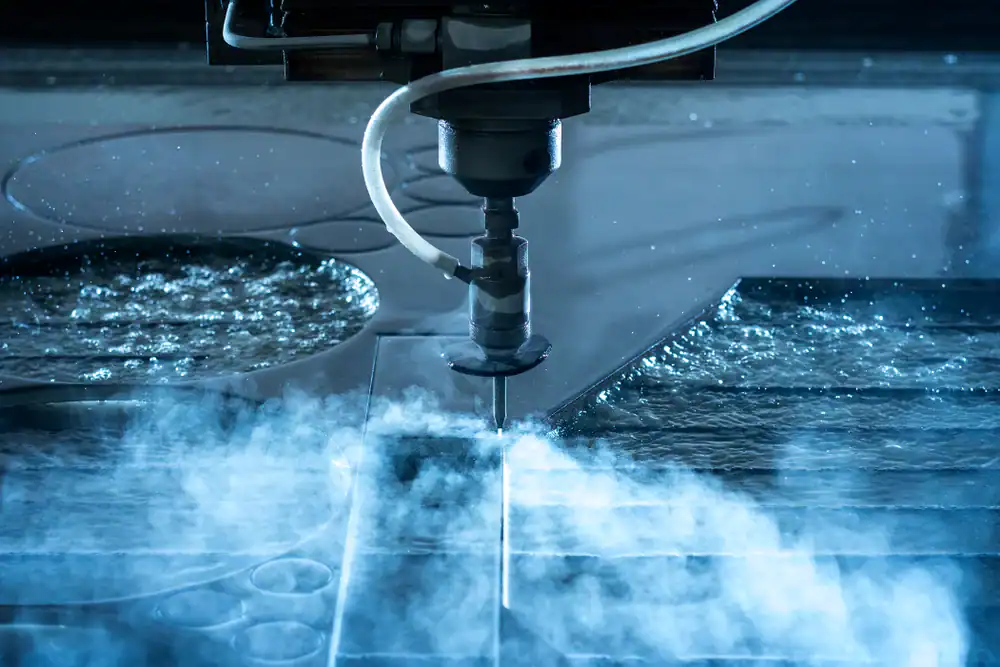
You need glass cut to exact specifications without chipping, cracking, or needing hours of edge finishing afterward. Custom glass waterjet cutting in Bay Shore handles intricate patterns and complex shapes that traditional methods can’t touch.
The waterjet stream is thin enough to cut nearly any pattern, no matter how detailed. You get smooth, clean edges on glass from 4mm to 19mm thick, including laminated and ballistic glass. No thermal stress means no micro-fractures forming days or weeks after the cut.
This matters when you’re working on architectural facades, custom interior partitions, or precision industrial components where fit and finish aren’t negotiable. You submit your CAD file, and the piece comes back ready to install—not ready for another round of grinding and polishing.
We serve Bay Shore architects, contractors, manufacturers, and designers who need industrial glass waterjet cutting done right the first time. Our in-house design team reviews every file before it hits the machine, catching potential issues early so your project doesn’t get delayed by avoidable mistakes.
We’ve built our reputation in the Bay Shore area by combining engineering precision with real-world fabrication experience. You’re not working with a shop that just runs files through a machine. You’re working with people who understand how glass behaves under pressure, how tolerances affect installation, and what “good enough” actually costs you down the line.
Bay Shore’s mix of residential renovations and commercial builds means we see everything from one-off custom pieces for high-end homes to production runs for contractors working on multi-unit developments. We handle both.
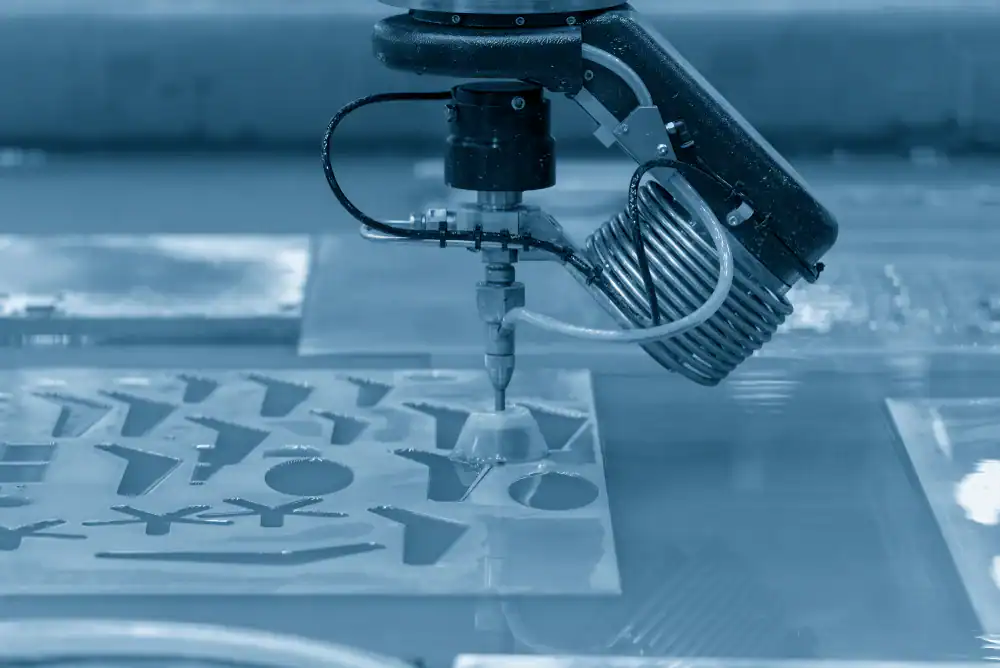
You start by sending us your design file—DXF, DWG, or AI formats work. If you don’t have a CAD file yet, we can work from sketches or measurements to create one. Our design team reviews it for any issues that could affect the cut: tolerances that are too tight, features that won’t hold up structurally, or details that might not translate well to the material you’ve chosen.
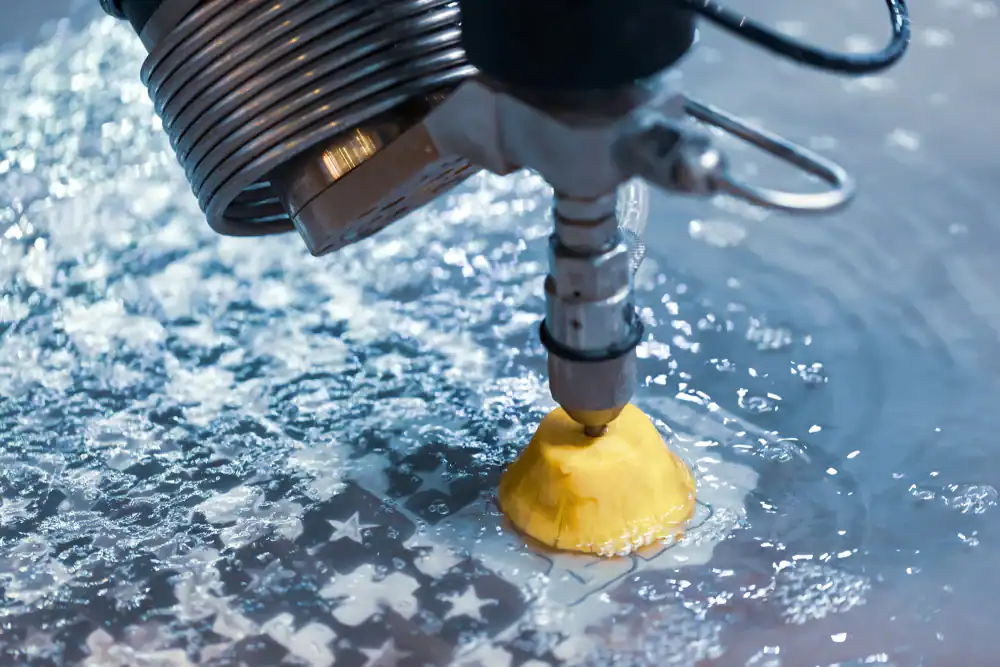
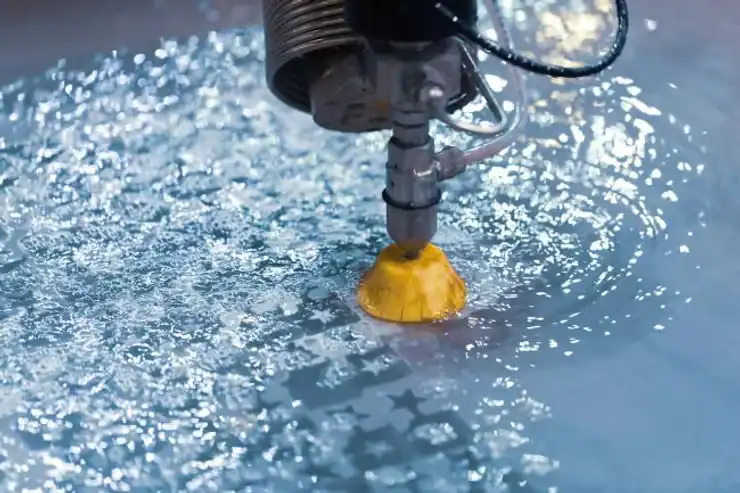
Once the file is approved, we program the CNC waterjet system. The machine uses a high-pressure stream of water mixed with fine abrasive particles to cut through the glass. There’s no heat generated, so there’s no risk of thermal shock or stress fractures. The kerf—the width of the cut—is extremely narrow, which means less material waste and the ability to create intricate interior cutouts or tight radius curves.
After cutting, the edges come off the machine smooth and clean. Depending on your application, they may need no additional finishing at all. For architectural glass waterjet cutting in Bay Shore projects where aesthetics matter, we can polish edges to your spec. You get the piece delivered ready for installation, not ready for more fabrication work.
Ready to get started?
Residential glass cutting services in Bay Shore cover everything from custom shower enclosures and kitchen backsplashes to decorative interior panels and tabletops. You get precision cuts that fit the first time, which matters when you’re working within existing openings or matching historical details in older Bay Shore homes.
The process handles laminated glass without delaminating the layers. It cuts tempered glass before tempering, so you avoid the limitations that come with trying to modify glass after heat treatment. For projects requiring ballistic or security glass, the waterjet cuts through multiple laminated layers without compromising the bond between them.
Bay Shore’s coastal location means humidity and salt air are constant factors. Glass installations need to fit precisely to maintain proper sealing and weatherproofing. Waterjet cutting delivers the tolerances you need for exterior applications where gaps and misalignment lead to leaks, drafts, and premature seal failure. You’re not shimming and adjusting on-site to make poorly cut pieces work.
Yes. Our waterjet systems cut glass from 4mm up to 19mm thick, which covers most architectural applications including storefront glazing, interior partitions, and structural glass panels.
Thicker glass requires slower cutting speeds and sometimes multiple passes, but the process doesn’t change fundamentally. The lack of heat means even thick pieces don’t develop internal stresses that could cause delayed fracturing. For commercial projects in Bay Shore where you’re installing large glass panels in facades or lobbies, this matters—you need confidence the glass won’t fail weeks after installation due to stress fractures introduced during fabrication.
Laminated architectural glass gets cut as a complete assembly. The waterjet goes through all layers without delaminating them, which maintains the structural integrity and safety properties you specified when you selected that glass type.
Traditional scoring works fine for straight cuts and simple shapes. It stops working when you need curves, interior cutouts, or intricate patterns. Waterjet cutting handles all of those without changing tools or methods.
Scoring and breaking also introduces micro-fractures along the score line. You don’t always see them immediately, but they’re stress concentrators that can lead to failure later, especially in applications with temperature fluctuations or structural loads. Waterjet cutting doesn’t score the glass—it removes material completely, leaving a clean edge with no hidden fracture lines.
The edge quality from waterjet cutting is significantly better. Traditional methods leave rough edges that need grinding and polishing. Waterjet edges come off smooth enough that many applications don’t require any additional finishing. That’s time saved and one less process where something can go wrong.
DXF and DWG files from AutoCAD work best because they’re vector-based and contain precise dimensional information. Adobe Illustrator AI files also work if they’re set up with accurate dimensions and scale.
If you don’t have CAD files, we can work from PDFs with dimensions, or even from hand sketches and field measurements. Our design team will create the CAD file and send it back for your approval before cutting. This adds a day or two to the timeline, but it ensures we’re cutting exactly what you need.
The important part is clarity about dimensions, tolerances, and any specific requirements for edge finishing or hole locations. The more detailed your specifications, the less back-and-forth we need before cutting. For complex projects, a quick conversation up front saves time compared to multiple rounds of file revisions.
Absolutely. The narrow kerf width and CNC precision make waterjet cutting ideal for decorative work. You can create intricate patterns, organic shapes, and detailed artistic designs that would be impossible with traditional glass cutting methods.
The machine follows your digital design exactly, so what you see on screen is what you get in the finished piece. There’s no practical limit to pattern complexity—the waterjet can execute tight curves, sharp angles, and interior cutouts all in the same piece. For artists and designers working on custom installations in Bay Shore homes or commercial spaces, this opens up design possibilities that weren’t feasible before.
Edge quality matters for decorative work because the cuts are often visible and part of the aesthetic. Waterjet edges are smooth and consistent, without the chipping or roughness that comes from mechanical cutting methods. Depending on the look you want, edges can be left as-cut for a subtle matte finish, or polished to match the face of the glass.
Simple cuts on standard glass thickness usually take 3-5 business days from approved file to pickup. That includes design review, programming, cutting, and any basic edge finishing.
Complex patterns, thicker glass, or projects requiring polished edges take longer—typically 7-10 business days. Rush service is available for projects with tight deadlines, though that depends on current shop capacity. The key variable is usually the design review process. If your file is clean and doesn’t need revisions, we move to cutting quickly. If we catch issues that need discussion and file updates, that adds time.
For Bay Shore contractors working on renovation timelines or architects coordinating multiple trades, knowing the lead time up front helps with scheduling. We give you a realistic timeline when you submit the file, not an optimistic estimate that we can’t actually hit. If something changes and we’re running behind, you hear about it before it affects your schedule.
Waterjet cutting costs more per linear foot than simple straight cuts done with traditional scoring methods. But that’s not the whole picture.
Traditional methods require secondary operations—grinding, polishing, sometimes multiple handling steps to achieve what waterjet delivers in one pass. When you factor in the labor for those additional processes, waterjet becomes cost-competitive, especially for anything beyond basic straight cuts. For complex shapes or patterns, waterjet is often cheaper overall because traditional methods would require custom tooling or extensive hand work.
Material waste matters too. The narrow kerf means you get more usable pieces from each sheet of glass, which reduces material costs. For expensive glass types—laminated, ballistic, or specialty architectural glass—that waste reduction adds up quickly. You’re also avoiding the risk of breakage during cutting, which with traditional methods can mean scrapping an entire piece and starting over.
Useful Links
Other Services we provide in Bay Shore