Hear from Our Customers
You’re not working with standard shapes or simple straight cuts. Your architectural plans call for curves, intricate patterns, or precise holes for hardware. Maybe you’re dealing with thick glass that makes traditional cutting methods a gamble.
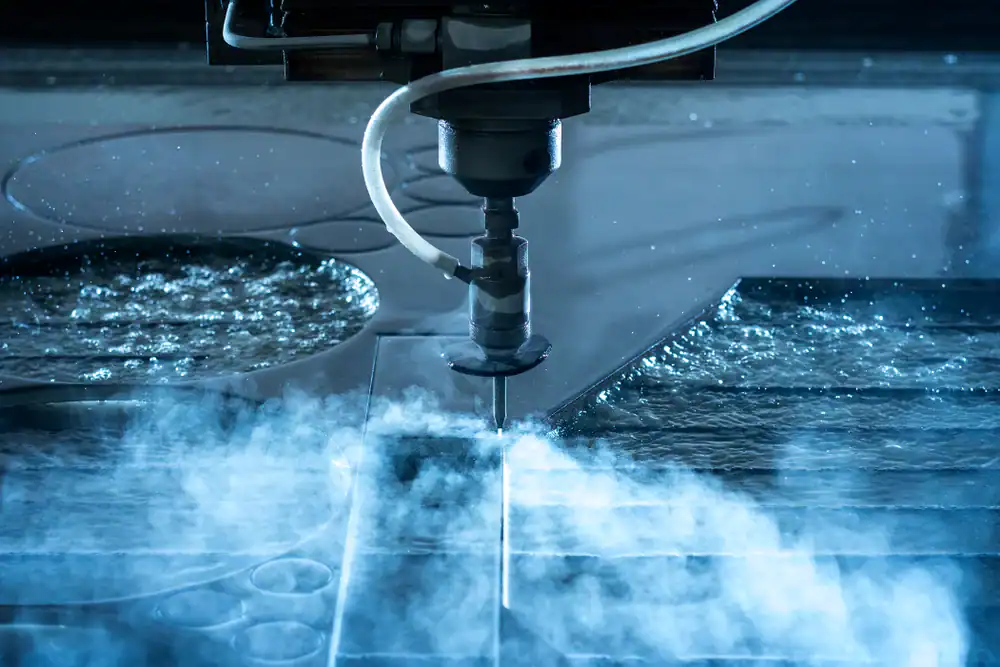
Waterjet cutting removes those constraints. The process uses high-pressure water mixed with fine abrasive to cut through glass without generating heat, which means no thermal stress and no micro-fractures that lead to breakage later. You get clean edges that need minimal finishing work, if any.
This matters when you’re specifying glass for commercial facades, custom interior installations, or industrial components where precision isn’t negotiable. The technology handles everything from quarter-inch architectural glass to materials several inches thick. Your design stays intact from concept to installation because the cutting process doesn’t force compromises.
We operate out of West Islip, serving contractors, architects, and manufacturers across Suffolk County. We’ve built our reputation on CNC glass waterjet cutting in Brentwood, NY that meets the exacting standards commercial and industrial projects demand.
Long Island’s construction market has specific needs. The region’s mix of historic renovations, new commercial development, and specialized manufacturing means you need a fabrication partner who understands both architectural glass applications and industrial tolerances. We work with design professionals who can’t afford rework and contractors operating on tight schedules.
Our facility handles the technical side so you can focus on your project. When you’re coordinating multiple trades or managing client expectations, the last thing you need is a fabrication delay or a batch of cracked glass.
The process starts with your design specifications. You provide CAD files, technical drawings, or even detailed sketches. We review the design for any potential issues with the material or cutting requirements before programming begins.
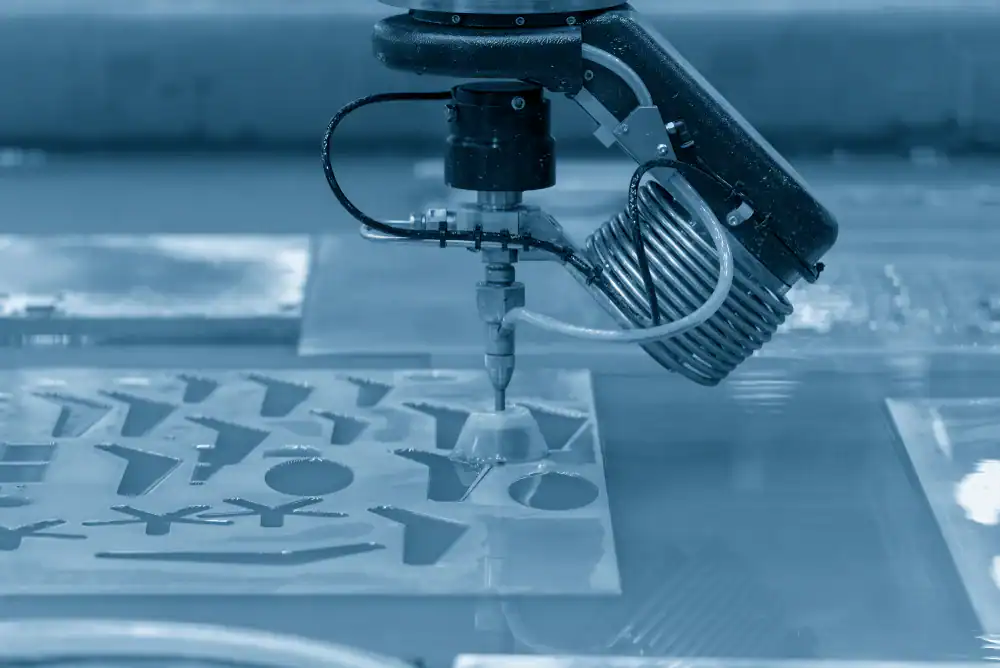
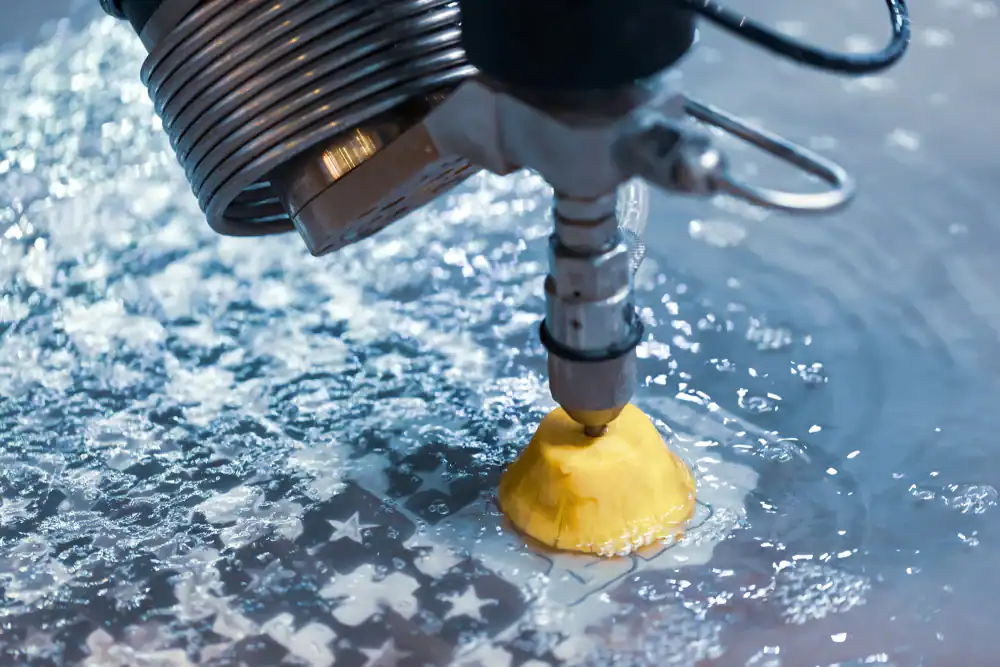
Once the file is ready, the CNC system controls a cutting head that moves across the glass surface. The waterjet stream is thinner than most saw blades, which means less material waste and the ability to create tight radiuses and sharp internal corners. There’s no blade contact, no vibration, and no heat buildup that could stress the material.
The cutting happens in a contained system with the glass fully supported. For complex pieces, we can make multiple passes or adjust pressure and speed to optimize edge quality. Thicker glass takes longer but follows the same cold-cutting principle that prevents thermal damage.
After cutting, most pieces are ready for installation or assembly with minimal edge treatment. If your specifications call for polished edges or specific finishes, that happens as a secondary process. You receive glass components that match your design file within tight tolerances.
Ready to get started?
This isn’t about cutting rectangles. You’re getting capability for curves, notches, cutouts, and geometric patterns that traditional methods can’t handle reliably. The CNC system executes your design exactly as programmed, which matters when you’re producing multiple identical pieces or working with expensive specialty glass.
Brentwood’s position in central Suffolk County puts you near a diverse industrial and commercial base. Local projects range from retail storefronts requiring custom glass panels to manufacturing facilities needing precision components. The waterjet process adapts to both scenarios because it’s not limited by material hardness or thickness the way scoring and breaking methods are.
You also get material efficiency. The narrow kerf width means less waste, which matters when you’re working with premium glass types or trying to maximize yield from large sheets. For architectural projects with sustainability goals, that waste reduction contributes to LEED points and green building certifications that are increasingly important in Long Island’s commercial construction market.
The process works with tempered glass, laminated glass, low-iron glass, and specialty materials. If your project specs call for something beyond standard float glass, waterjet cutting handles it without requiring different tooling or setup.
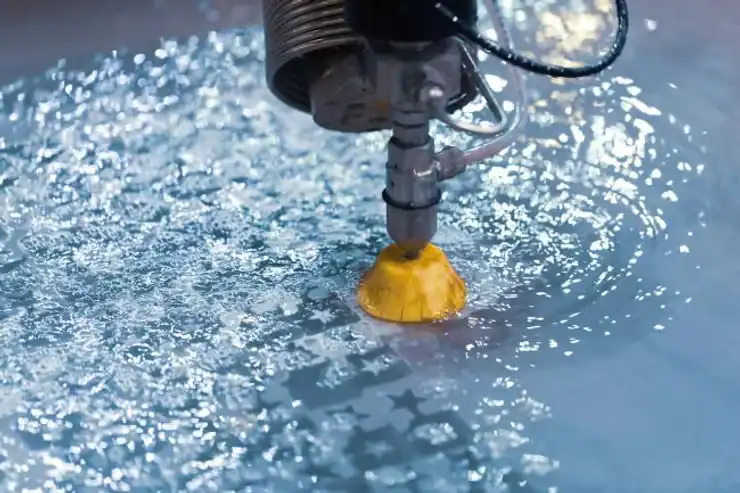
Yes, and that’s one of the main reasons architects and contractors choose this method for custom glass waterjet cutting in Brentwood, NY. The process reliably cuts glass up to six inches thick, with some high-pressure systems handling even thicker materials.
Traditional scoring and breaking methods become increasingly unreliable as glass thickness increases. The risk of uneven breaks or edge chips goes up significantly once you’re past half an inch. Waterjet cutting doesn’t have that limitation because it’s not relying on controlled fracture.
Thicker glass takes longer to cut since the waterjet stream needs more time to penetrate the full depth. But the result is a clean cut edge without the internal stress that causes delayed cracking. For structural glass applications, curtain walls, or heavy-duty industrial components, that reliability is worth the additional cutting time.
Edge chipping happens when cutting methods create stress concentrations or micro-fractures along the cut line. Waterjet cutting eliminates those issues because there’s no mechanical contact and no heat generation.
When you score and snap glass, you’re deliberately creating a controlled crack. That crack doesn’t always propagate perfectly, especially near edges or when the glass has internal stresses from tempering. Diamond saws generate friction heat and vibration, both of which can cause edge damage.
The waterjet stream erodes material rather than fracturing it. The process is progressive and controlled, which means the edge quality stays consistent from the first pass to the final cut. You get what’s called a “satin edge” finish that’s smooth enough for many applications without additional grinding or polishing. For projects where edge quality directly affects installation success or final appearance, that consistency matters more than cutting speed.
Turnaround depends on design complexity, material thickness, and current production schedule. Simple cuts on standard thickness glass typically complete within a few days. Complex patterns or thick materials take longer because cutting speed adjusts to maintain edge quality.
The programming phase is usually quick if you provide clean CAD files. We can work from DXF, DWG, or other standard formats. If you’re starting with sketches or PDFs, there’s additional time needed to create the cutting file and verify dimensions.
For commercial projects in Brentwood, NY with firm installation dates, the key is getting your specifications to us early. We can schedule production to meet your timeline and coordinate delivery with other trades. Rush jobs are possible depending on current workload, but planning ahead gives you more flexibility on pricing and scheduling. Most contractors we work with provide at least a week’s notice for standard projects, more for large-volume orders or specialty materials.
Waterjet cutting works with laminated glass but not tempered glass. That’s an important distinction because it affects when cutting happens in your project timeline.
Laminated glass consists of two or more glass layers bonded with an interlayer. The waterjet cuts through all layers cleanly without delamination. This makes it ideal for architectural applications requiring both custom shapes and the safety properties of laminated glass.
Tempered glass is different. The tempering process puts the glass under internal stress that gives it strength. Any cutting or drilling after tempering will cause the entire piece to shatter. If your project requires tempered glass with custom shapes, the waterjet cutting must happen before the tempering process. We cut the glass to your specifications, then it goes to a tempering facility for heat treatment.
This sequencing matters for project planning. If you need custom-cut tempered glass, you’re coordinating between cutting and tempering vendors, which adds time to the schedule. For industrial glass waterjet cutting in Brentwood, NY, we work with local tempering facilities and can help coordinate that process.
CNC waterjet systems hold tolerances within a few thousandths of an inch on most glass cutting projects. That’s tight enough for architectural installations requiring precise fit-up and industrial applications with specific dimensional requirements.
The precision comes from computer control and the narrow kerf width of the waterjet stream. Once your design is programmed, the cutting head follows that path exactly. There’s no operator variance like you’d get with manual cutting methods.
Material factors affect final precision. Glass with internal stresses or variations in thickness can shift slightly during cutting. High-quality architectural glass typically cuts more precisely than lower-grade materials. We account for these variables during setup and can adjust cutting parameters to optimize results for your specific material.
For projects requiring multiple identical pieces, repeatability is usually more important than absolute precision. The CNC system produces consistent results across production runs, which matters when you’re fabricating components that need to be interchangeable or match existing installations.
Waterjet cutting has fewer design limitations than most other glass cutting methods, but there are still practical constraints. The cutting stream has a finite width, typically around 0.03 to 0.04 inches. That determines the tightest inside radius you can cut and affects how close parallel cuts can be to each other.
Very sharp internal corners aren’t possible because the waterjet stream is round. The system can create corners with a small radius, usually acceptable for most architectural and industrial applications. If your design absolutely requires sharp 90-degree internal corners, that needs a different approach or a design modification.
Extremely delicate features or very thin sections between cuts can be fragile. Glass is strong in compression but weaker in tension. If your design creates thin bridges or narrow projections, those areas are vulnerable to breakage during handling or installation. We review designs for these issues and can suggest modifications that maintain your design intent while improving durability.
For architectural glass waterjet cutting in Brentwood, NY, the best approach is sharing your design early in the process. We can identify potential issues before you finalize specifications or order materials, which saves time and prevents expensive rework.
Useful Links
Other Services we provide in Brentwood