Hear from Our Customers
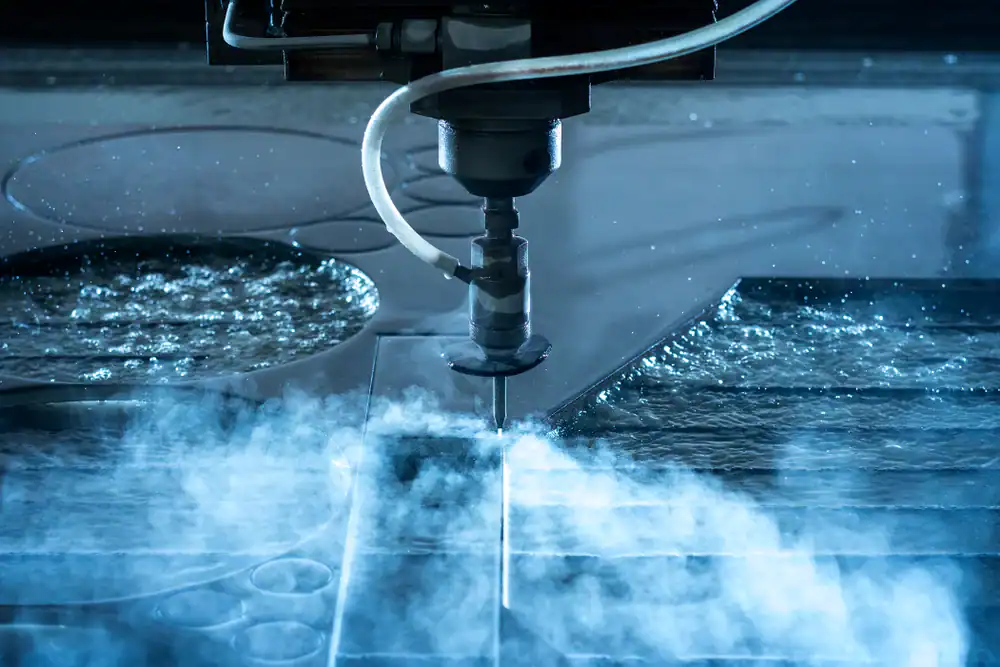
You need glass cut exactly right the first time. Not close enough. Not “we’ll make it work.” Exact.
That’s what waterjet technology does. It cuts glass from 4mm to 9mm thick with tolerances down to 0.01mm, handling curves, interior cutouts, notches, and complex shapes that traditional methods can’t touch. No heat means no thermal stress, no warping, and no cracked edges that force you to reorder and wait another week.
If you’re an architect specifying custom glass panels, a contractor working against a deadline, or a designer who needs something that doesn’t exist in a catalog, this process gets you there. Fast cuts. Clean edges. Repeatable results. You send the CAD file, and what comes back matches what you designed.
We operate right here in Centereach, NY, serving architects, contractors, and fabricators across Long Island. We’re not a national chain shipping your job across three states. We’re local, which means faster turnaround and direct communication when your project timeline shifts.
Our CNC waterjet system handles residential glass cutting services and industrial glass waterjet cutting in Centereach, NY with the same level of precision. Whether you’re working on a single custom piece or a production run, the equipment and process stay consistent.
We’ve built our reputation on accuracy and reliability in a market where both matter. Long Island projects move fast, and you don’t have time for rework or delays.
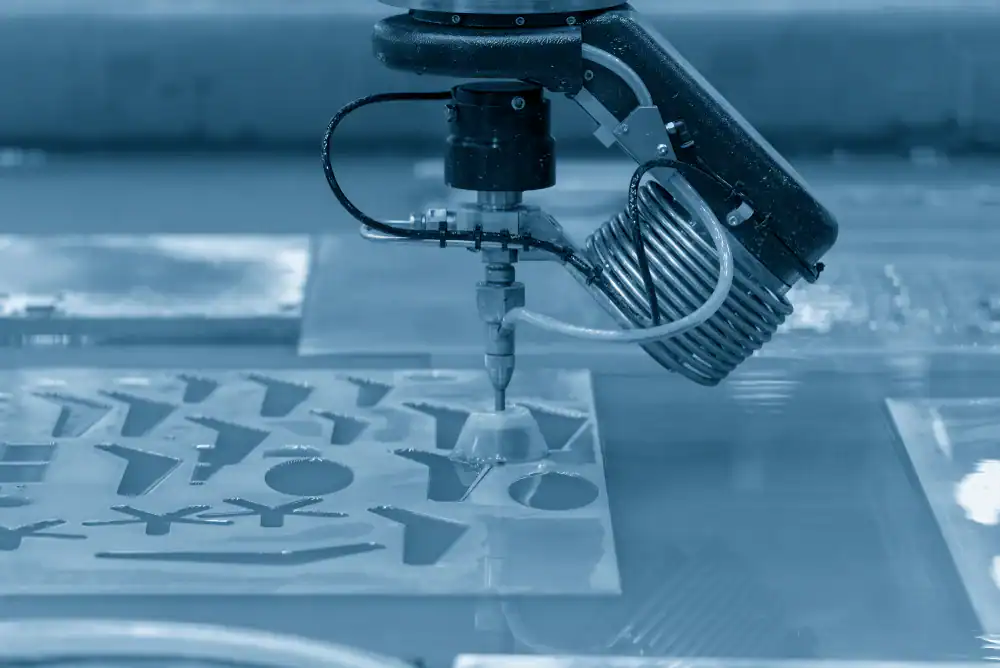
You start by sending us your design file or working with our team to create one. CAD files translate directly into cutting paths, which means what you design is what gets cut. No interpretation errors. No manual measuring.
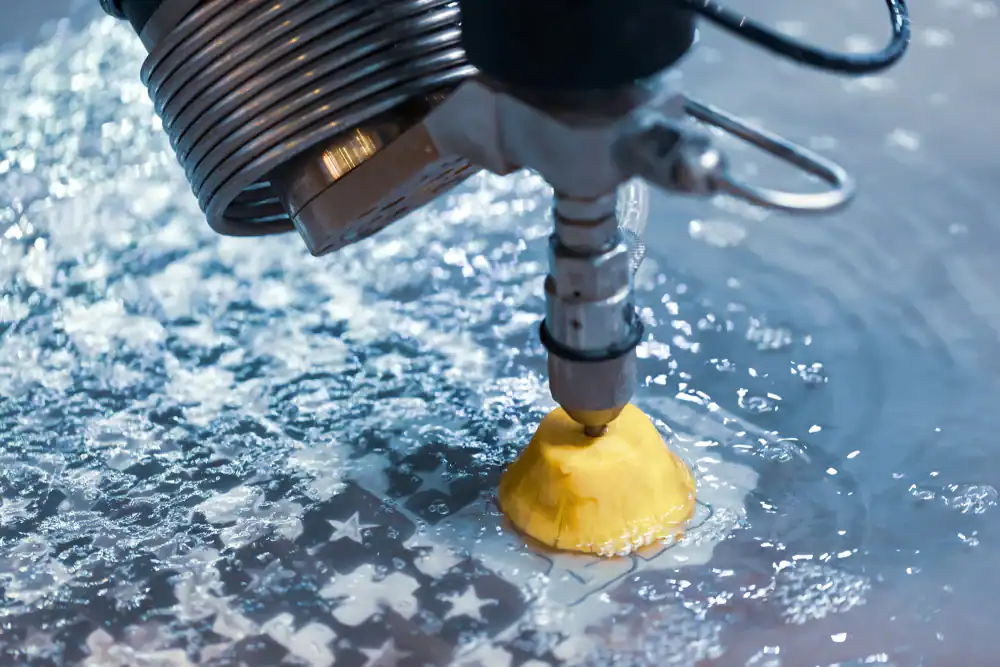
The waterjet system uses an omnidirectional jet stream mixed with fine abrasive to cut through glass without generating heat. This matters because heat causes micro-fractures and edge stress that lead to breakage during installation or over time. Cold cutting eliminates that risk entirely.
Once cutting is complete, you get components with smooth edges that require minimal finishing. Most pieces are ready to install as-is. If your project requires additional edge treatment, the waterjet process gives you a clean starting point that’s easier and faster to finish than traditionally cut glass.
Turnaround depends on complexity and volume, but because the process is CNC-controlled, we can move from prototype to production without retooling. One piece or a hundred—the accuracy stays the same.
Ready to get started?
You get precision cutting that handles intricate shapes traditional methods can’t achieve. Interior cutouts, tight radius curves, and complex geometries are standard work for waterjet systems. If you can draw it in CAD, we can cut it in glass.
You also get material efficiency. Waterjet cutting minimizes waste by optimizing cut paths and eliminating the need for multiple setups. That matters when you’re working with specialty glass or trying to control project costs on commercial builds across Long Island.
Edge quality is another advantage. The cutting process produces clean edges with minimal chipping, which reduces or eliminates secondary finishing operations. For architectural glass waterjet cutting in Centereach, NY, this means faster installation and better aesthetics right out of the gate.
Long Island’s building market demands quick turnarounds without sacrificing quality. Residential projects in surrounding communities often need custom glass elements that fit specific design requirements. Commercial contractors working on retail, office, or hospitality projects need components that meet exact specifications and arrive on schedule. Waterjet cutting delivers both.
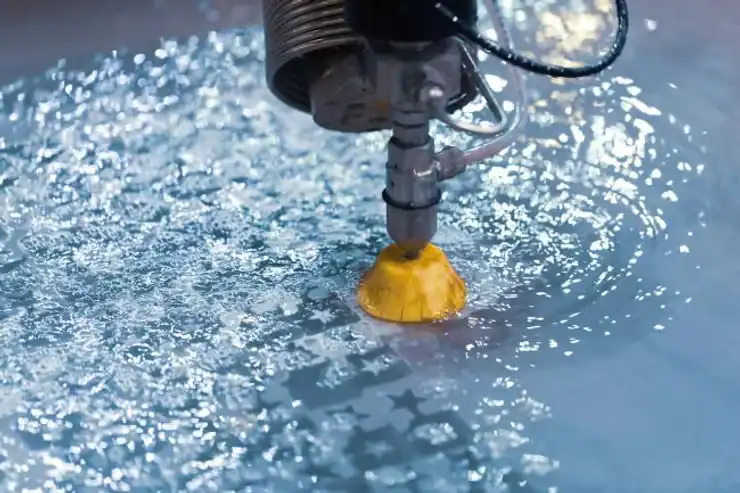
Waterjet systems cut tempered glass, laminated glass, standard float glass, and specialty architectural glass between 4mm and 9mm thick. This covers most residential and light commercial applications you’ll encounter on Long Island projects.
Tempered glass is trickier than standard glass because it’s under internal stress. Waterjet cutting handles it without shattering because there’s no heat and no mechanical stress from blades or scoring tools. Laminated glass, which has a plastic interlayer, cuts cleanly without delamination.
If you’re specifying decorative glass, frosted glass, or tinted glass for interior design work, waterjet cutting maintains the surface finish and doesn’t create edge chips that show through. The process works across different glass types without requiring different tooling or setup changes.
Traditional glass cutting uses scoring and breaking, which limits you to straight lines and gentle curves. Waterjet cutting uses a high-pressure stream that follows any path programmed into the CNC system, which means you can cut shapes that would be impossible or extremely time-consuming with manual methods.
Traditional methods also generate stress along the score line, which can lead to uneven breaks or edge chips. Waterjet cutting applies consistent pressure across the entire cut, resulting in uniform edge quality. You’re not dealing with rough edges that need extensive grinding and polishing.
Speed is another factor. For complex shapes with multiple interior cutouts, waterjet cutting is significantly faster than manual layout, scoring, and breaking. Setup time is minimal because the CNC system handles positioning and path control. You’re looking at hours saved on intricate jobs, which matters when you’re managing multiple projects or working against tight deadlines in the Centereach area.
Yes. Waterjet systems maintain tolerances within ±0.1mm, which is tight enough for precision architectural elements, custom fixtures, and decorative installations. The CNC control system follows programmed paths exactly, so repeatability is built into the process.
Intricate designs with fine detail—like decorative panels, custom signage, or artistic installations—are where waterjet cutting really separates itself from traditional methods. Interior cutouts, sharp corners, and complex curves that would require multiple setups and tools with conventional cutting happen in a single pass with waterjet.
This precision matters for projects where components need to fit together perfectly or align with other materials. If you’re installing glass panels alongside metal frames or stone elements, dimensional accuracy prevents gaps, misalignment, and field adjustments that eat up installation time. For contractors and fabricators working in the Long Island market, this level of precision reduces callbacks and rework.
Turnaround depends on project complexity, glass thickness, and current production schedule. Simple cuts on standard glass can often be completed within a few days. More complex designs with multiple pieces or specialty glass may take longer, but CNC automation keeps the process moving faster than manual fabrication.
Rush jobs are possible when your project timeline demands it. Because we’re located in Centereach, NY, we can coordinate directly with local contractors and designers to accommodate tight deadlines. You’re not waiting on cross-country shipping or dealing with multiple handoffs through a national supply chain.
Production runs benefit from CNC consistency. Once the first piece is cut and approved, subsequent pieces are identical. This matters for commercial projects requiring multiple matching components or residential jobs where you need several pieces of custom glass cut to the same specifications. Setup time is minimal after the initial programming, so volume orders move through production efficiently.
Waterjet cutting produces smooth edges with minimal chipping compared to traditional scoring and breaking methods. Most applications use the cut edges as-is, especially for components that will be framed or where the edge won’t be visible in the final installation.
The cutting process doesn’t create the micro-fractures and stress points that manual scoring introduces. You’re getting a cleaner edge right off the machine, which means less time spent grinding, polishing, or seaming. For architectural applications where edge quality affects aesthetics, this is a significant advantage.
If your project requires polished or beveled edges for exposed glass installations, waterjet cutting gives you a better starting point than traditional methods. The edge is already smooth and uniform, so finishing operations are faster and produce better results. This reduces labor costs and speeds up your overall project timeline, which matters when you’re coordinating multiple trades on a job site.
Waterjet cutting works for both. CNC programming handles one-off custom pieces as efficiently as production runs because there’s no expensive tooling or setup required. You’re not paying for dies, molds, or specialized cutting tools that only make sense at high volume.
For custom residential projects—like a unique glass tabletop, a decorative panel, or a specialty window insert—waterjet cutting delivers precision without the premium pricing you’d expect for one-piece fabrication. The technology doesn’t penalize you for low volume.
Production runs benefit from consistency and speed. Once programmed, the system cuts identical pieces without variation, which eliminates the quality inconsistencies that come with manual fabrication. Material waste is minimized through optimized cutting paths, which reduces your per-piece cost on larger orders. Whether you need one piece or a hundred, you’re getting the same level of precision and quality from a local Centereach, NY fabricator who understands Long Island project demands.
Useful Links
Other Services we provide in Centereach