Hear from Our Customers
You’re working with glass that costs real money. Every crack, chip, or failed cut eats into your budget and pushes your timeline back. Traditional cutting methods generate heat that creates stress fractures you might not see until it’s too late.
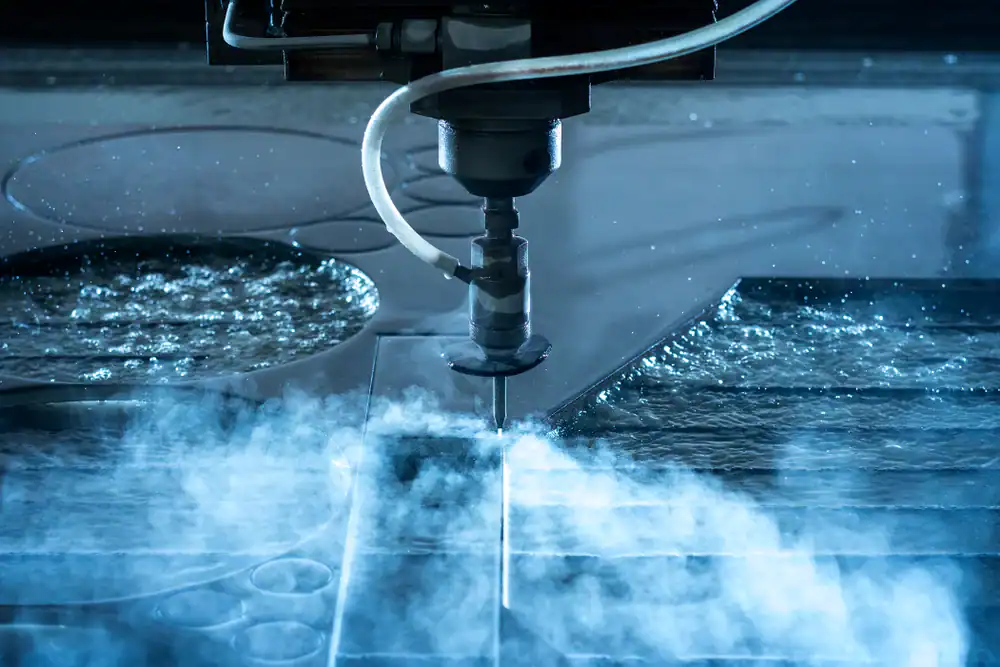
Waterjet cutting uses high-pressure water and fine abrasive particles to cut through glass without generating heat. That means no thermal stress, no micro-cracks forming along your cut lines, and no wondering if your piece will fail during installation or finishing.
You get clean edges that require minimal post-processing, cuts that follow your exact specifications down to ±0.1mm, and the ability to create complex shapes that would be impossible or prohibitively expensive with conventional methods. Your material waste drops because you’re not losing pieces to chipping or cracking during the cutting process.
We serve manufacturers, fabricators, and contractors throughout Central Islip, NY and the broader Suffolk County area. We’re positioned in a manufacturing hub where companies like CVD Equipment, Universal Photonics, and Sartorius demand precision work that can’t afford mistakes.
You’re dealing with architectural glass for commercial builds, custom components for medical equipment, or specialty pieces for aerospace applications. The local manufacturing economy here employs over 1,800 people in production roles, and those operations need cutting services that understand tight tolerances and project deadlines.
We’ve built our reputation on delivering accurate cuts for glass projects that other shops turn away because they’re too complex or the material is too expensive to risk with traditional methods.
You send us your design specifications or CAD files. We review your project to confirm the glass type, thickness, and cutting requirements. If there are potential issues with your design that could affect the final product, we’ll tell you before we start cutting.
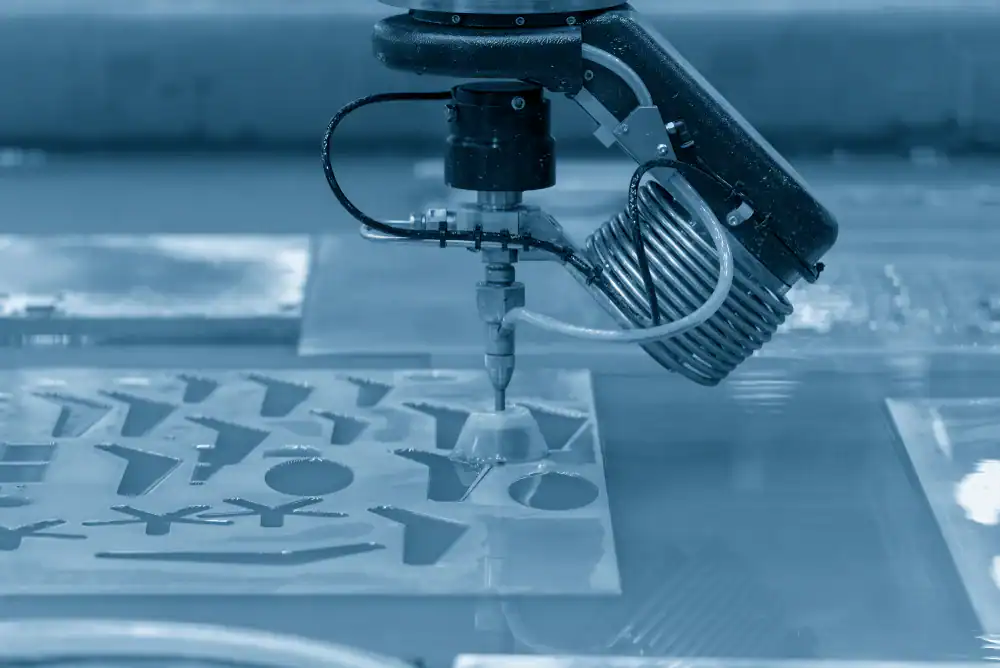
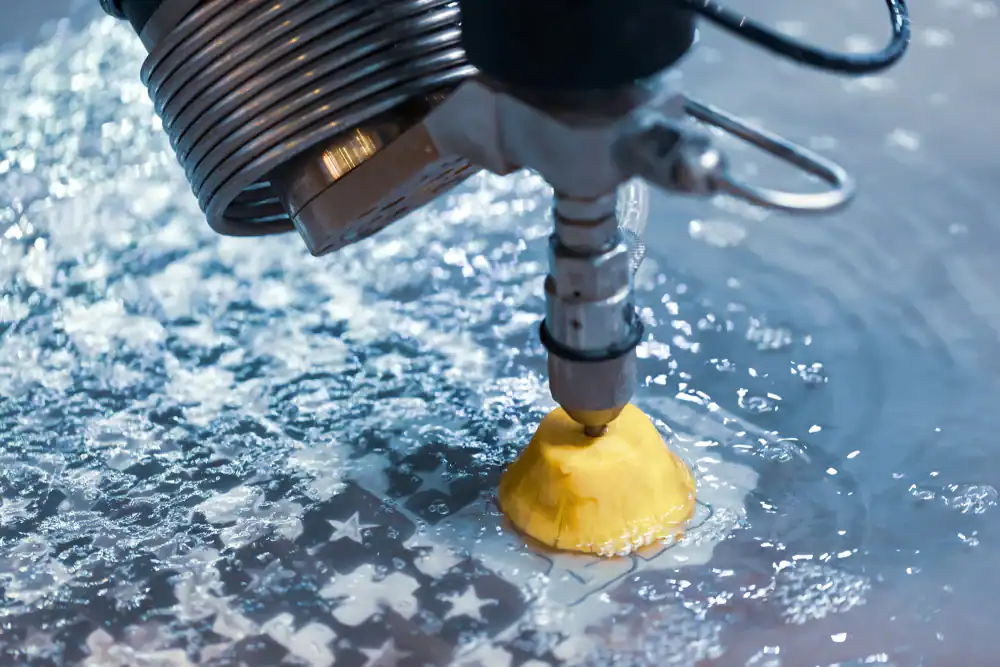
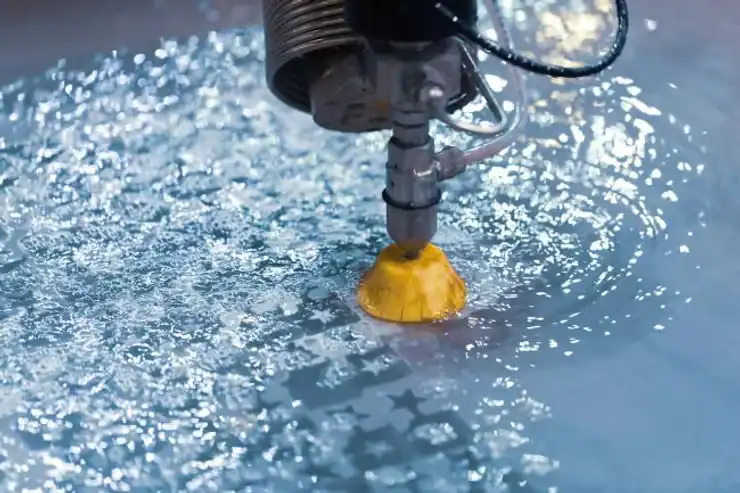
Our CNC waterjet system uses water pressurized between 40,000 and 60,000 PSI mixed with fine garnet abrasive particles. The stream is thinner than a strand of hair but powerful enough to cut through glass up to 150mm thick. Because there’s no heat involved, your glass doesn’t experience thermal expansion or stress that leads to cracking.
The cutting head follows your programmed path with computer-controlled precision. Complex curves, tight inside corners, small holes—the waterjet handles details that would require multiple setups and tools with traditional methods. You receive finished pieces with smooth edges, accurate dimensions, and no heat-affected zones that compromise structural integrity.
Ready to get started?
You’re getting cuts that maintain ±0.1mm accuracy across your entire piece, regardless of thickness or complexity. That level of precision matters when you’re fabricating components that need to fit into existing assemblies or meet architectural specifications.
The process works with tempered glass, laminated glass, borosilicate, and specialty glass materials used in Central Islip’s pharmaceutical and medical device manufacturing sectors. Companies like Ascent Pharmaceuticals and AlphaMed need glass components that meet strict quality standards—waterjet cutting delivers that consistency.
You’re also getting significantly reduced edge damage compared to scoring and breaking methods. The cold cutting process doesn’t create the micro-fractures that propagate into larger cracks during handling or installation. Your pieces arrive ready for assembly or with minimal finishing required, which speeds up your production timeline and reduces labor costs.
For architectural projects serving Central Islip’s growing commercial sector, waterjet cutting enables decorative patterns and custom shapes that elevate building designs without the cost penalties typically associated with intricate glasswork.
Waterjet cutting handles virtually every glass type you’re likely to work with. Standard float glass, tempered glass, laminated safety glass, borosilicate laboratory glass, and specialty optical glass all cut cleanly with this method.
The process works across thickness ranges from thin 3mm architectural glass up to 150mm thick industrial glass components. Tempered glass is particularly well-suited for waterjet cutting because there’s no heat to disrupt the internal stress patterns that give tempered glass its strength.
If you’re working with coated glass or glass with embedded materials, waterjet cutting won’t damage those features the way thermal cutting methods can. The cold cutting process preserves the integrity of specialized coatings used in energy-efficient architectural applications or anti-reflective treatments on optical components.
Glass cracks when it experiences thermal stress or mechanical shock that exceeds its structural limits. Traditional cutting methods like scoring and breaking, or thermal methods like laser cutting, both create conditions that promote cracking.
Waterjet cutting eliminates thermal stress entirely because the process uses room-temperature water. There’s no heat-affected zone, no thermal expansion, and no residual stress patterns forming in the material. The cutting force is distributed across the narrow stream contact point rather than concentrated along a score line that becomes a weak point.
The CNC-controlled cutting head also maintains consistent pressure and speed throughout the cut. You don’t get the pressure variations that cause problems with manual scoring methods. When the waterjet pierces through the glass to start a cut, it does so gradually in a way that doesn’t shock the material. This controlled approach is why waterjet cutting successfully handles intricate patterns and tight curves that would be nearly impossible to achieve without breaking the glass using conventional methods.
Turnaround depends on your project complexity, glass thickness, and our current production schedule. Simple cuts on standard thickness glass typically complete within a few days. More complex projects with intricate patterns or multiple pieces may take a week or longer.
The actual cutting process is faster than you might expect. Waterjet systems cut significantly quicker than traditional glass cutting methods, especially for complex shapes that would require multiple tool changes and setups with conventional equipment. A decorative pattern that might take hours to cut manually could be completed in a fraction of that time on a CNC waterjet.
What affects your timeline more is usually the setup and programming phase. We need to review your specifications, program the cutting path, and verify everything before we start cutting expensive glass material. Rush projects can often be accommodated depending on our schedule—contact us with your deadline and we’ll tell you honestly whether we can meet it. We’d rather be upfront about timing than promise something we can’t deliver and leave you scrambling for alternatives.
Waterjet cutting produces significantly smoother edges than traditional scoring and breaking methods. The edge quality is clean enough for many applications without any additional finishing work required.
Whether you need finishing depends on your specific application and quality standards. Architectural glass that will be framed or sealed typically uses waterjet-cut edges as-is. Glass components for mechanical assemblies or products where people will handle the edges directly might benefit from light polishing, but you’re starting from a much better baseline than traditionally cut glass.
The abrasive waterjet process creates a slightly frosted appearance on the cut edge rather than the clear polished look you’d get from flame polishing or dedicated edge polishing equipment. If your project requires crystal-clear polished edges for aesthetic reasons, plan for a finishing step. But for structural integrity and dimensional accuracy, the waterjet edge is ready to use. You’re not dealing with chips, micro-cracks, or rough spots that compromise the glass strength or create safety hazards during handling and installation.
Waterjet cutting typically costs more per linear foot than simple straight cuts made with traditional scoring methods. But that’s not the full picture of your actual project cost.
You need to factor in material waste, failed pieces, and labor time for complex cuts. Waterjet cutting reduces waste significantly because you’re not losing pieces to cracking or chipping. The precision means parts fit correctly the first time without requiring rework. For intricate designs, waterjet cutting often costs less overall than traditional methods that would require multiple setups, specialized tooling, and higher skilled labor time.
The cost calculation shifts even more in waterjet’s favor when you’re working with expensive specialty glass. A single failed cut on a piece of custom architectural glass or precision optical material can cost more than the entire waterjet cutting service would have been. The reduced risk alone justifies the cost for many projects.
We price projects based on cutting time, material thickness, and design complexity. Send us your specifications and we’ll provide a clear quote that lets you compare the total project cost, not just the per-foot cutting rate. You’ll often find that waterjet cutting delivers better value when you account for the complete project scope rather than just the cutting operation in isolation.
Yes, and this is one area where waterjet cutting significantly outperforms traditional glass cutting methods. The narrow cutting stream—typically around 0.76mm to 1.02mm in diameter—can create small holes and navigate tight curves that would be extremely difficult or impossible with conventional techniques.
The minimum hole diameter depends on your glass thickness, but waterjet cutting routinely produces holes smaller than what you could achieve by drilling without risking cracks radiating from the hole. Inside corner radius is limited by the cutting stream diameter, so you can achieve much tighter corners than with routing or grinding methods.
This capability matters for architectural glass with decorative patterns, industrial glass components with mounting holes, or specialty applications requiring precise apertures. The CNC control means these features are positioned exactly where your design specifies, with repeatability across multiple pieces. If you’re producing a series of identical glass components, each piece will have the same accurate hole positions and corner radii rather than the variations you’d see with manual cutting methods.
Useful Links
Other Services we provide in Central Islip