Hear from Our Customers
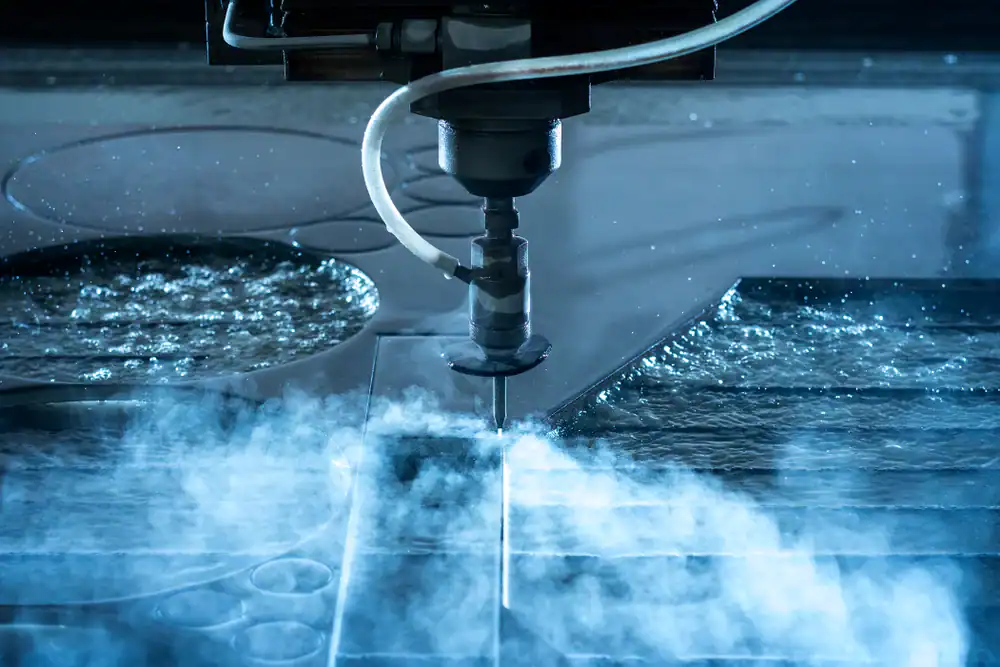
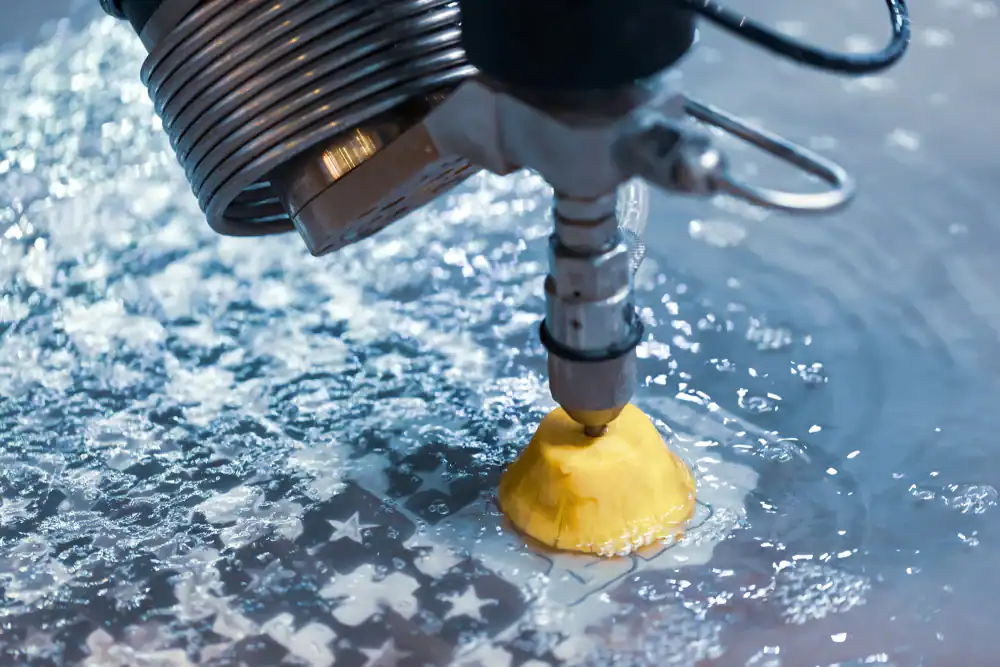
The cut matters more than you think. Traditional glass cutting methods generate heat that creates stress points in the material. Those stress points turn into cracks later, sometimes weeks after installation. Waterjet cutting uses high-pressure water mixed with abrasive to cut through glass without generating any heat at all.
That means no thermal stress. No microfractures forming along the cut line. No warping in thicker pieces where temperature gradients would normally cause problems.
You also get edge quality that’s actually usable. The kerf is thin, the edge is smooth, and in most cases you can skip secondary finishing entirely. When you’re working with architectural glass panels or custom inlays that need to fit precisely, that level of accuracy matters. We’re talking cuts down to 0.01mm thickness with repeatability across your entire order, whether that’s one piece or a hundred.
Complex shapes aren’t a problem either. Curves, angles, interior cutouts—the omnidirectional jet stream handles intricate patterns that would be difficult or impossible with traditional scoring and breaking methods. Your design doesn’t get simplified because the cutting method can’t keep up.
We operate out of Commack, serving Long Island and the broader New York, New Jersey, Pennsylvania, and Connecticut region. We run 2- and 3-axis CNC machinery that handles everything from single custom pieces to full production runs.
The Long Island market has specific demands. Architects and builders here are working on projects where glass isn’t just functional—it’s a design element. Curtain walls, decorative panels, custom signage, interior features. You need a cutting service that understands tight tolerances and can deliver on schedule.
We’ve built our operation around that reality. Our design team uses computer-aided design tools to turn your concepts into production-ready plans, and our machinery executes those plans with the kind of precision that keeps your project moving forward. No guesswork, no delays from rework, no surprises when the material shows up on site.
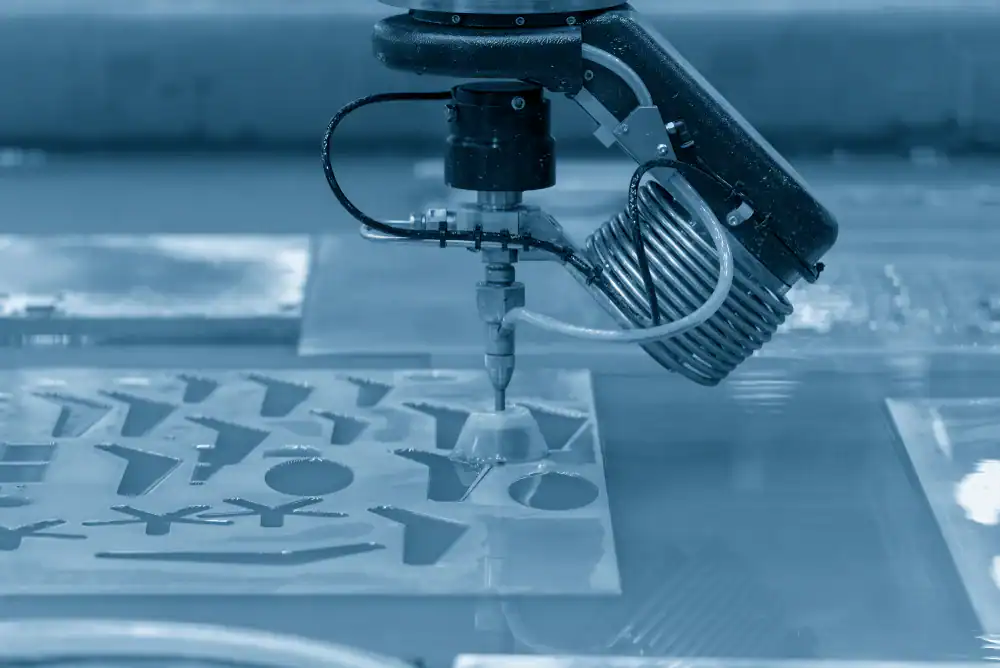
You send us your design specs or work with our design team to create them. We need to know dimensions, material thickness, and any specific edge requirements. If you’re working with CAD files, we can use those directly. If you’re starting from a concept or sketch, our designers translate that into a detailed, production-ready plan.
Once the design is locked in, we program the CNC waterjet system. The machine maps out the cutting path, accounting for material thickness and the specific characteristics of glass. We load your glass onto the cutting bed, secure it properly, and start the cut. High-pressure water mixed with fine abrasive garnet cuts through the material along the programmed path.
The process is fast compared to traditional methods, but speed doesn’t mean we’re rushing. The waterjet moves at the right pace to maintain edge quality and accuracy. Thicker glass takes longer, intricate patterns require more time, but you’re getting a finished piece that meets your specifications without needing additional grinding or polishing in most cases.
After cutting, we inspect the pieces, clean off any residual abrasive, and prepare them for delivery or pickup. If you need multiple identical pieces, the CNC system repeats the exact same cut with the same level of precision across your entire order.
Ready to get started?
You get design support from the start. Our team reviews your specifications, identifies any potential issues with the design before cutting begins, and makes recommendations that improve both the cut quality and the final installation. That consultation is part of the service, not an add-on.
The cutting itself handles glass up to 6 inches thick. Most architectural and industrial applications fall well within that range, but if you’re working with specialty installations that require thicker material, we can accommodate that. The waterjet system cuts curves, straight lines, interior cutouts, and complex geometric patterns without limitation.
In Commack and across Long Island, we’re seeing increased demand for custom architectural glass—floor-to-ceiling installations, structurally glazed facades, decorative interior panels. These projects require micron-level edge quality and the ability to handle larger glass sheets with precision. Our machinery is set up specifically for that kind of work. The construction glass market is growing steadily, and the projects getting approved require cutting capabilities that go beyond basic fabrication.
You also get material efficiency. Waterjet cutting minimizes waste because the kerf is so thin and the cuts are so accurate. When you’re working with expensive glass materials, that efficiency translates directly to cost savings on your end.
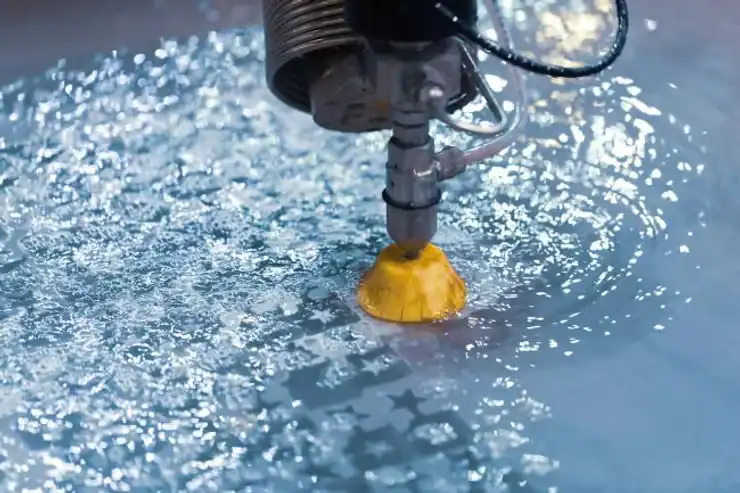
Waterjet cutting works best on annealed glass before it goes through tempering. Tempered glass has internal stresses that make it shatter if you try to cut it after the tempering process. If your project requires tempered glass, the cutting happens first, then the glass goes to tempering.
Laminated glass is a different situation. The laminate layers can sometimes separate or delaminate during waterjet cutting depending on the adhesive used and the thickness of the layers. It’s possible to cut laminated glass with waterjet, but you need to account for potential edge delamination and plan for edge sealing afterward.
If you’re not sure about your glass type or how it will respond to waterjet cutting, bring that question up during the design consultation. We can walk through the options and recommend the best approach based on what you’re trying to achieve with the finished piece.
Laser cutting generates significant heat, which is a problem for glass. The heat creates thermal stress that can cause cracking, especially in thicker pieces or when you’re cutting intricate patterns. You’ll often see edge chipping or microfractures along the cut line with laser-cut glass.
Waterjet cutting doesn’t generate heat. The cutting happens through mechanical erosion from high-pressure water and abrasive, so there’s no thermal stress introduced into the material. That’s why you get cleaner edges and no heat-affected zones that could compromise the structural integrity of the glass.
Laser cutting can be faster for very thin materials and simple cuts, but when you’re working with architectural or industrial glass where precision and edge quality matter, waterjet is the better choice. You’re not trading speed for quality—you’re getting both.
Our waterjet system handles glass up to 6 inches thick. Most projects don’t require anything close to that—standard architectural glass panels typically range from ¼ inch to 1 inch, and even heavy-duty industrial applications usually stay under 2 inches.
Thicker glass takes longer to cut because the waterjet needs to maintain consistent pressure and abrasive flow through the entire depth of the material. But the cut quality stays consistent whether we’re cutting ¼ inch or 4 inches. You get the same edge finish and the same level of precision.
If your project involves unusually thick glass or specialty materials, bring that up during the consultation. We’ll confirm that our equipment can handle it and give you an accurate timeline for the cutting process.
We’re working with CNC-controlled waterjet systems that hold tolerances down to 0.01mm. For most architectural and industrial glass applications, that level of precision is more than sufficient. You’re getting cuts that fit together exactly as designed without gaps or misalignment.
The precision stays consistent across repeat cuts. If you need fifty identical pieces, the fiftieth piece will match the first one within those same tight tolerances. That repeatability matters when you’re doing production runs or when multiple pieces need to fit together as part of a larger installation.
Edge quality is part of that precision. The waterjet creates a smooth, clean edge that typically doesn’t require secondary grinding or polishing. If your project has specific edge finish requirements beyond what the waterjet produces, we can discuss additional finishing, but in most cases the edge comes off the machine ready to use.
Yes. The waterjet stream is omnidirectional, which means it can follow any path programmed into the CNC system. Curves, tight angles, interior holes, notches—none of that presents a problem. The limitation isn’t the cutting method, it’s the design itself.
Complex shapes actually showcase what waterjet cutting does well. Traditional glass cutting methods rely on scoring and breaking, which limits you to relatively simple shapes and straight lines. Waterjet cutting removes those limitations entirely. If you can design it in CAD, we can cut it.
Interior cutouts require a pierce point where the waterjet penetrates the glass to start the interior cut. That pierce point leaves a small mark, so we position it in a location that won’t affect the finished appearance or structural integrity of the piece. During the design phase, we map out where those pierce points will go and make sure they work with your overall design.
Turnaround depends on the complexity of the cuts, the thickness of the glass, and how many pieces you need. A simple single piece with straightforward cuts might be ready in a few days. A large production run with intricate patterns will take longer.
We give you a specific timeline during the consultation after we’ve reviewed your design specs. That timeline accounts for design finalization, machine setup, cutting time, inspection, and preparation for delivery. We don’t pad the schedule with unnecessary buffer time, but we also don’t overpromise and create delays later.
If you’re working against a tight project deadline, let us know that upfront. We can often prioritize urgent jobs or adjust our production schedule to accommodate time-sensitive work. But the earlier you get us involved in the project, the more flexibility we have to meet your timeline without compromising the quality of the finished pieces.
Useful Links
Other Services we provide in Commack