Hear from Our Customers
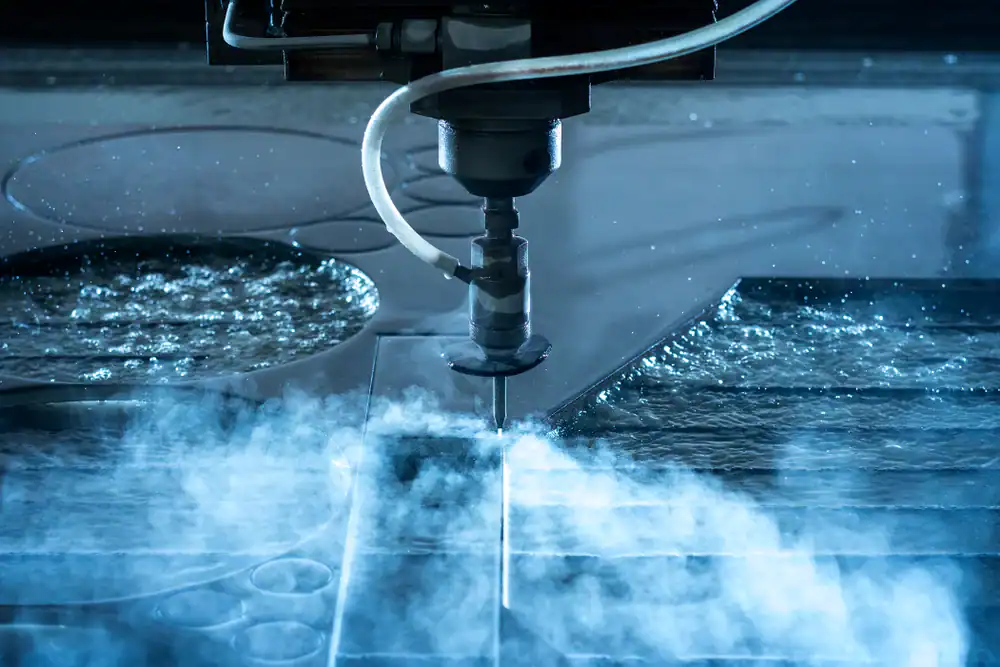
You’re looking at a project that requires more than straight lines and basic shapes. Maybe it’s curved architectural glass for a commercial facade, intricate interior cutouts for a residential renovation, or complex industrial components that need to fit perfectly the first time.
Traditional glass cutting methods leave you dealing with chipped edges that need additional finishing, heat-induced stress that weakens the material, or limitations on what shapes you can even attempt. That means extra time, extra cost, and compromised results.
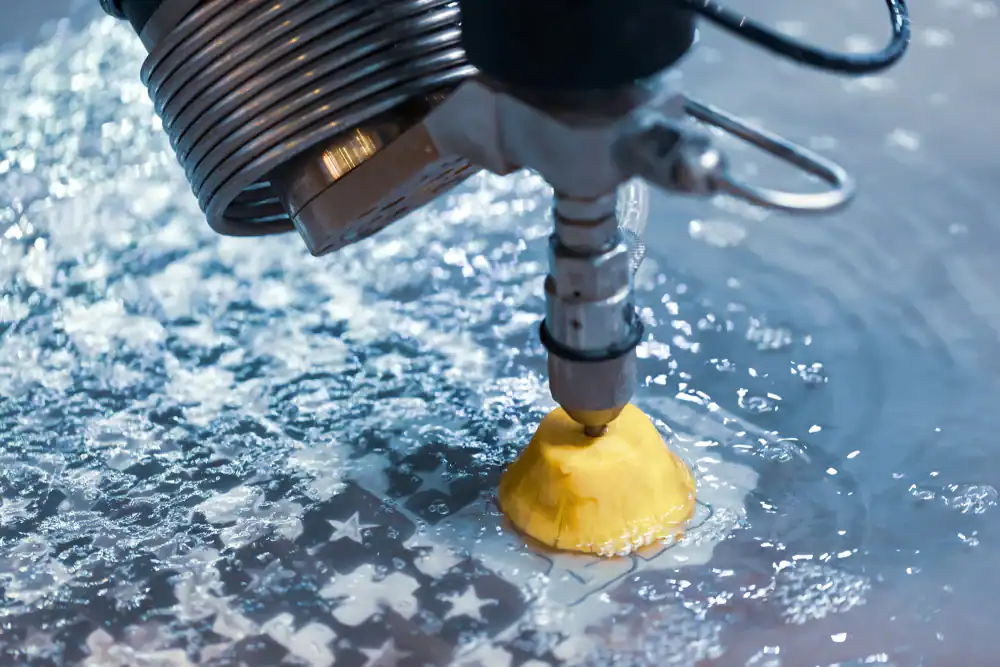
Waterjet cutting changes that equation completely. The process uses high-pressure water mixed with fine abrasive particles to cut through glass up to 6 inches thick with precision down to 0.1mm. No heat means no thermal stress, no warping, and no weakened zones. No mechanical pressure means no chipping, cracking, or edge damage. You get clean cuts that often require zero additional finishing, complex shapes that would be impossible with traditional methods, and consistent quality across every piece in your production run.
We’ve been handling precision cutting projects across Deer Park, NY and the surrounding tri-state area for over twenty years. We’ve worked with contractors managing residential renovations in North Babylon, architects designing commercial buildings in Brentwood, and manufacturers producing industrial glass components throughout Suffolk County.
Our facility uses advanced CNC waterjet systems that handle everything from 4mm residential glass to 150mm industrial applications. We’ve completed projects for commercial construction firms working on Long Island’s growing commercial corridor, custom builders creating high-end residential properties, and industrial manufacturers who need repeatable precision across production runs.
The Deer Park location gives you quick access whether you’re based in Wyandanch, Dix Hills, or anywhere across central Long Island. We understand the timeline pressures you face on construction and manufacturing projects in this market.
You start by sending us your design specifications. That could be CAD files, technical drawings, or even detailed sketches depending on your project. We review the design to confirm feasibility, identify any potential issues, and provide feedback on optimizing the cuts for your specific glass type and thickness.
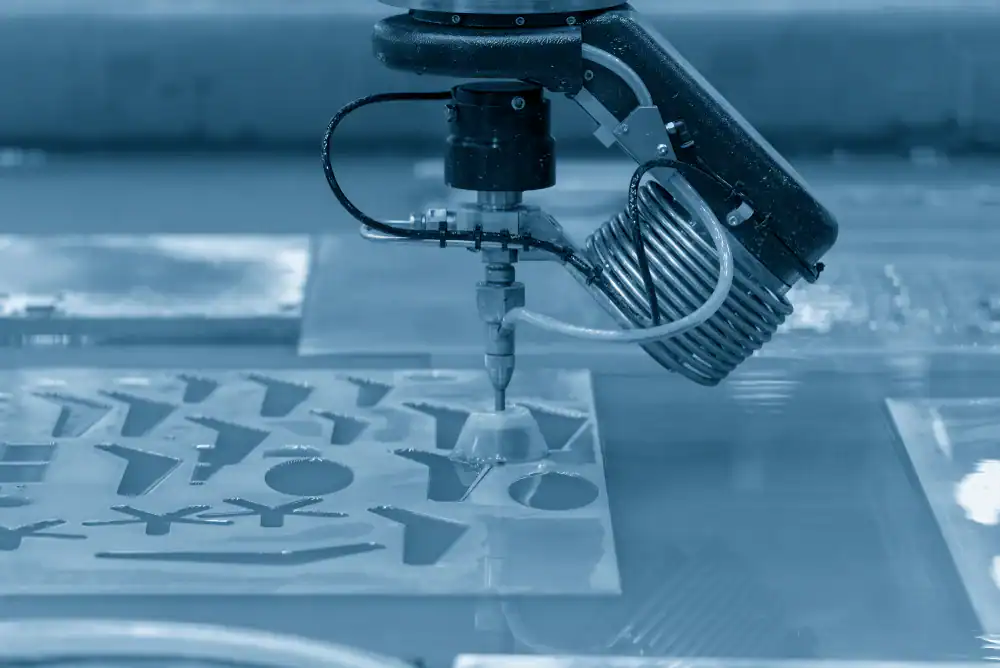
Once the design is confirmed, we program our CNC waterjet system with your exact specifications. The system uses a high-pressure water stream mixed with garnet abrasive particles to cut through the glass. The cutting head follows your programmed path with precision down to a tenth of a millimeter, creating clean edges and intricate shapes without applying heat or mechanical stress to the material.
The process handles interior cutouts, curved edges, complex geometric patterns, and detailed shapes that traditional cutting methods simply can’t achieve. Because there’s no heat involved, you avoid the thermal stress and micro-fractures that weaken glass and lead to future failures. Because there’s no mechanical scoring or breaking, you eliminate chipping and edge damage.
After cutting, most pieces are ready to use immediately. The edge quality is clean enough that additional finishing is often unnecessary, though we can coordinate any required post-processing if your application demands it. You receive glass components that fit correctly, perform reliably, and meet your project specifications.
Ready to get started?
The service covers the full range of glass types and applications common to Deer Park, NY area projects. That includes architectural glass for commercial facades and interior partitions, tempered and laminated glass for safety applications, decorative glass for residential design elements, and specialty glass like borosilicate or quartz for industrial and scientific applications.
Thickness capacity runs from thin 3mm glass used in residential applications up to heavy 150mm industrial glass, though most commercial and residential projects fall in the 4mm to 50mm range. We handle standard float glass, tempered glass, laminated glass, and specialty materials without changing the fundamental process.
Suffolk County’s construction market has seen significant growth in mixed-use developments and commercial renovations over the past few years. That’s created increased demand for custom architectural glass that goes beyond standard rectangular panels. Waterjet cutting addresses that need by enabling curved curtain wall sections, complex interior partition designs, and decorative elements that differentiate high-end commercial and residential projects.
For industrial manufacturers in the Deer Park area, the service provides repeatable precision across production runs. You can nest multiple parts efficiently to minimize material waste, cut complex shapes in a single pass rather than multiple operations, and maintain consistent quality whether you’re producing ten pieces or ten thousand.
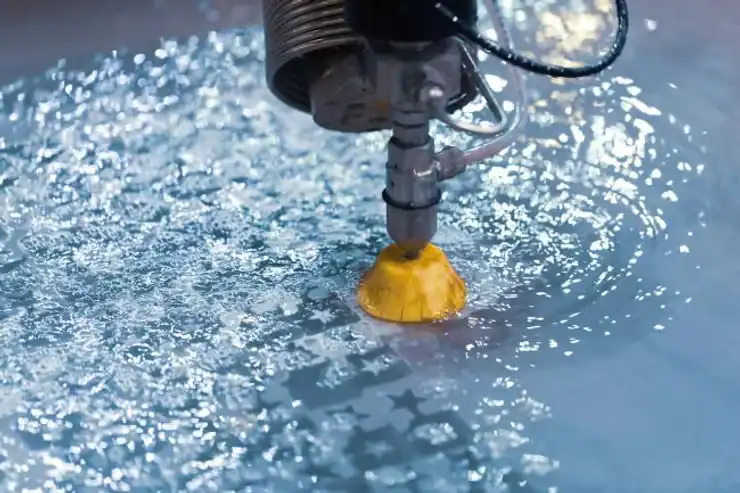
Waterjet cutting handles virtually every glass type used in commercial, residential, and industrial applications. That includes standard float glass, tempered glass, laminated glass, low-E glass, and specialty materials like borosilicate, quartz, and optical glass.
The process works across the full thickness range from thin 3mm residential glass up to 150mm industrial applications. Most architectural and commercial projects use glass between 6mm and 25mm thick, which we cut quickly and precisely.
Tempered glass requires special consideration because the tempering process must happen after cutting. You can’t cut tempered glass and maintain its safety properties. Laminated glass cuts cleanly without the delamination issues common with traditional cutting methods. The waterjet stream cuts through both glass layers and the interlayer material without separating them or creating edge defects.
Traditional wheel cutting scores the glass surface and then breaks it along the score line. That approach works fine for straight cuts and simple shapes, but it’s limited in what it can achieve. You can’t create interior cutouts, tight curves, or complex geometric patterns. The breaking process also creates chipped edges that need grinding and polishing.
Waterjet cutting achieves precision down to 0.1mm without those limitations. The CNC-controlled cutting head follows your programmed path exactly, creating clean edges that often need no additional finishing. You can cut interior holes, create curves with tight radii, and produce intricate shapes that would be impossible with mechanical cutting.
The other significant difference is material stress. Wheel cutting creates micro-fractures along the cut edge that can propagate over time and lead to failure. Waterjet cutting doesn’t apply mechanical stress to the material, so you avoid those weaknesses. For applications where long-term reliability matters, that’s a meaningful advantage.
Turnaround time depends on project complexity, glass thickness, and current production schedule. Simple cuts on standard glass thickness typically take a few days from design approval to finished parts. More complex projects with intricate shapes, thick glass, or large quantities may take one to two weeks.
The actual cutting process is faster than you might expect. Waterjet systems cut significantly faster than traditional methods, especially for complex shapes. What takes time is the setup, programming, and quality verification to ensure every piece meets specifications.
Rush service is available for projects with tight deadlines. If you’re dealing with a construction schedule that’s been compressed or a manufacturing run that needs to start immediately, we can often accommodate accelerated timelines. The key is communicating your deadline upfront so we can plan accordingly and set realistic expectations about what’s achievable.
No. That’s one of the primary advantages of waterjet cutting over methods like laser cutting or traditional grinding. The process uses ambient temperature water, so there’s no heat introduced into the material at all.
Heat causes multiple problems in glass cutting. It creates thermal stress that can warp the material or create internal tensions that lead to spontaneous breakage later. It can alter the properties of specialty glass materials. It requires additional cooling time before you can handle or process the parts further.
Waterjet cutting eliminates all of those issues. The glass stays at room temperature throughout the cutting process. You can handle the parts immediately after cutting. There’s no thermal stress that might cause problems weeks or months down the line. For applications where material integrity and long-term reliability matter, that’s a significant benefit.
Waterjet cutting typically costs more per linear foot than simple straight cuts made with traditional wheel cutting. But that’s not the right comparison for most projects that actually need waterjet cutting.
The real cost comparison needs to account for what you’re getting. Traditional methods can’t create the complex shapes, interior cutouts, and intricate designs that waterjet cutting handles routinely. If you tried to achieve similar results with traditional methods, you’d need multiple operations, specialized tooling, extensive finishing work, and higher scrap rates due to breakage and errors.
Waterjet cutting often reduces total project cost by minimizing material waste through efficient nesting, eliminating secondary finishing operations because edge quality is already clean, reducing labor time because cuts are completed in a single pass, and lowering scrap rates because precision and consistency are higher. For commercial and industrial projects where design complexity, precision, and reliability matter more than raw cutting cost, waterjet cutting typically delivers better value.
Yes. The CNC programming that controls the cutting process makes it equally effective for one-off custom pieces and high-volume production runs. For custom architectural projects or unique residential applications, we can program the system for your specific design and produce exactly the pieces you need.
For production runs, the same programming ensures every piece matches the specifications exactly. You get consistent quality across the entire run, whether that’s fifty pieces or five thousand. The system can nest multiple parts efficiently to minimize material waste, which becomes increasingly important as production volume increases.
The setup time is the same whether you’re cutting one piece or one hundred, so there are some economies of scale for larger runs. But the flexibility to handle both custom and production work means you’re not locked into minimum quantities or forced to order more than you actually need for smaller projects.
Useful Links
Other Services we provide in Deer Park