Hear from Our Customers
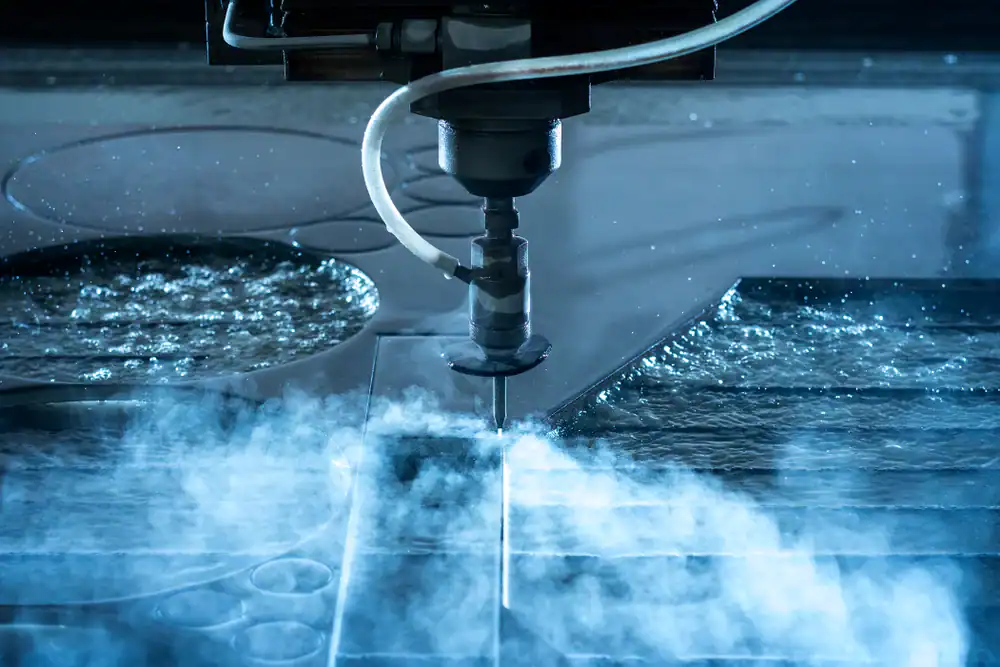
You’re looking at clean edges on every cut. No heat means no micro-fractures weakening the material, no discoloration around cuts, and no need to worry about thermal expansion cracking your glass during installation.
The process handles complexity that traditional methods can’t touch. Sharp inside corners, curves that follow your exact CAD file, cutouts for hardware or lighting—all without the trial-and-error that wastes expensive materials. Your laminated safety glass stays intact through the entire cut because there’s no vibration or impact stress.
If you’re working with historic restoration glass for one of East Hampton’s older homes, or specifying floor-to-ceiling panels for a new oceanfront build, you need cuts that match your specs down to fractions of a millimeter. Waterjet delivers that consistency whether you’re ordering one custom piece or a hundred identical panels.
We serve architects, builders, and homeowners throughout East Hampton, NY with CNC waterjet cutting that turns your digital designs into physical components. Our equipment handles everything from residential glass cutting services for custom shower enclosures to industrial glass waterjet cutting for commercial facades.
East Hampton’s architectural landscape demands precision—whether you’re restoring a historic property on Main Street or building a contemporary residence near Georgica Beach. We work with the same attention to detail that local glass fabricators and window installers expect when they’re serving high-end clients.
Our in-house design team reviews every file before cutting starts, catching potential issues that could delay your project or waste material.
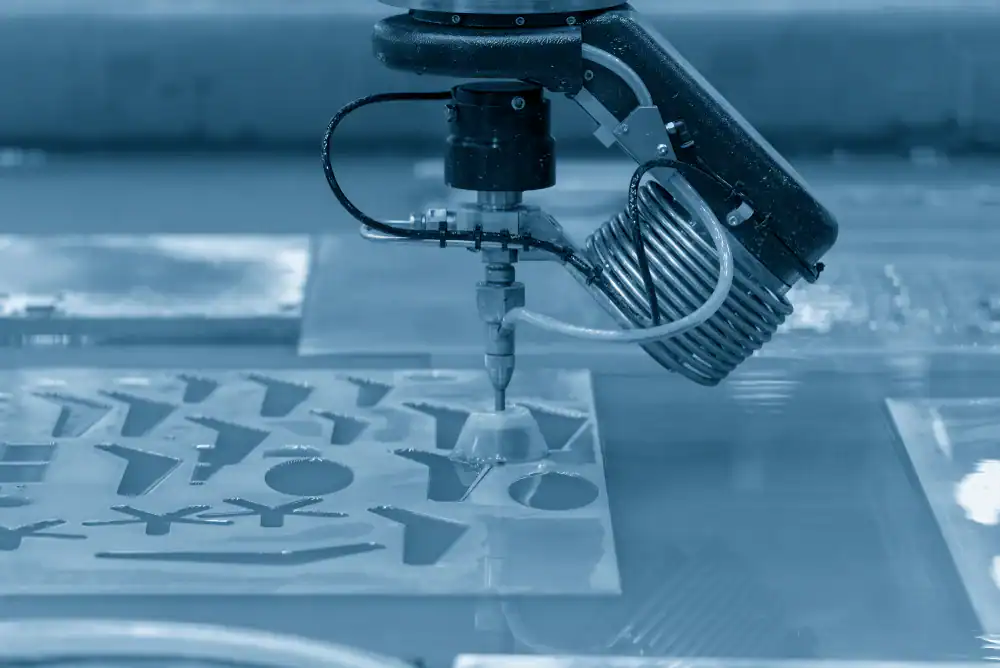
You send us your design file—DXF, DWG, or STEP formats work best. If you’re working from a 3D model, we extract the 2D profile you need cut. Our team reviews the file for any specs that might cause problems during fabrication, then confirms details with you before we start.
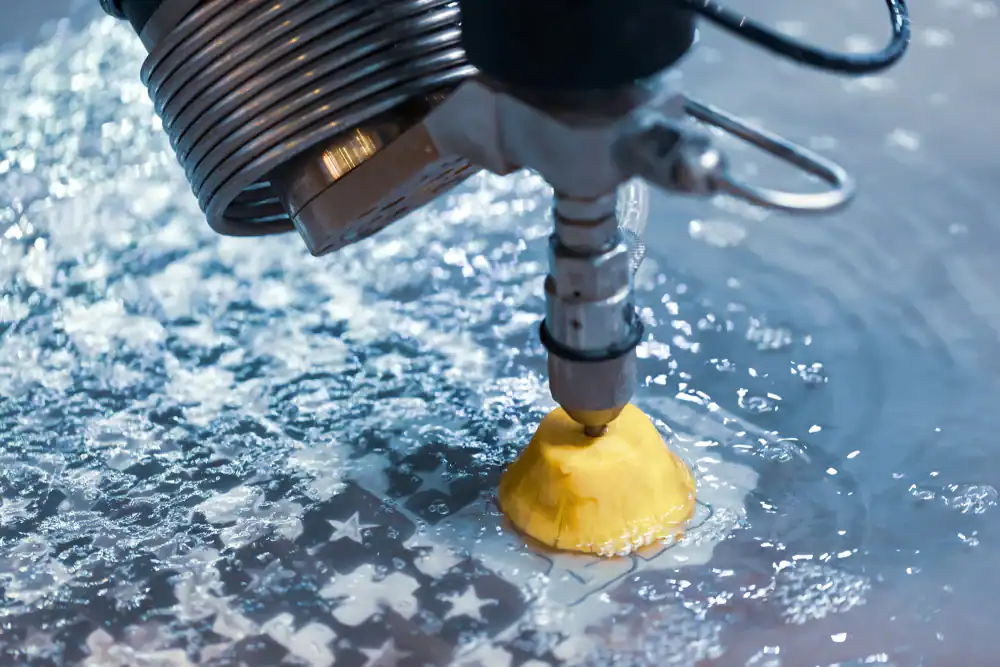
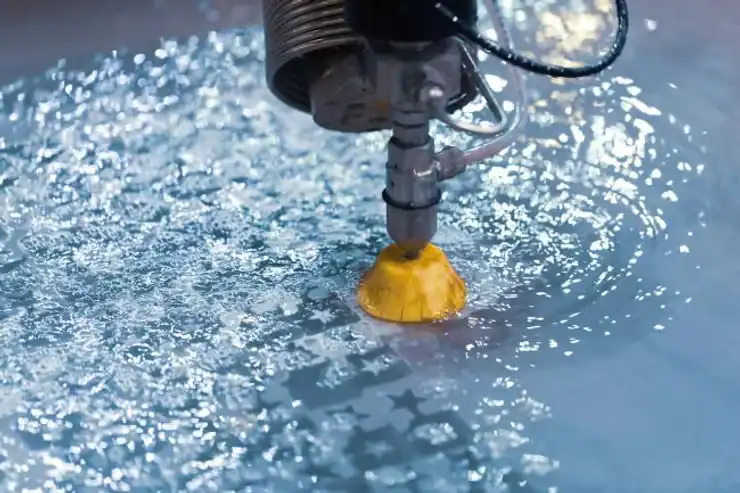
The waterjet system uses a high-pressure stream mixed with fine abrasive particles to cut through your glass. The stream is thinner than traditional saw blades, which means less material waste and tighter tolerances on complex shapes. There’s no blade wear to account for, so the hundredth piece cuts exactly like the first.
Once cutting finishes, you get glass with smooth edges that often don’t require additional finishing. For architectural glass panels in East Hampton projects, this means faster installation and fewer on-site adjustments. If you need specific edge treatments, we handle that too—but the waterjet process already eliminates the rough, dangerous edges that come from scoring and snapping.
Ready to get started?
East Hampton’s building projects—from oceanfront estates to village commercial spaces—require glass work that meets exacting standards. You’re often dealing with large-format panels, custom shapes for unique architectural details, or replacement glass that needs to match existing historic installations.
Waterjet cutting handles the full range. Thick laminated glass for floor installations that need engineer approval. Curved panels for rounded walls or custom shower enclosures. Intricate patterns for decorative interior partitions. Precise cutouts for smart glass systems or heated pool enclosures that are becoming standard in luxury Hamptons homes.
The technology works with any glass thickness and type, which matters when you’re sourcing specialty materials or working with antique glass during restoration projects. You don’t need to compromise your design because the cutting method can’t handle it. The digital process also means easy replication—if you need matching panels for multiple rooms or buildings, every piece comes out identical.
Yes, and that’s where waterjet separates itself from traditional methods. The cutting stream follows your CAD file’s path exactly, which means any curve you can draw, we can cut. There’s no need to approximate curves with multiple straight cuts or worry about the glass cracking as you try to force it into shape.
For East Hampton architectural projects, this matters when you’re designing curved glass railings for oceanfront decks, rounded shower enclosures, or the flowing interior partitions that contemporary designs favor. The CNC system maintains consistent pressure and speed through the entire curve, so you don’t get the slight flat spots or irregularities that come from manual cutting techniques.
The thin kerf width also means we can cut tight-radius curves without the material binding or cracking. If your architect has designed something ambitious, the waterjet can likely execute it without requiring design compromises.
Traditional glass cutting relies on scoring the surface and then applying stress to snap it along the score line. That stress creates micro-fractures that weaken the edge and often lead to chips or cracks—either immediately or after installation when the glass experiences temperature changes or structural movement.
Waterjet cutting doesn’t score or snap anything. The high-pressure stream with abrasive particles erodes the glass away in a controlled path. There’s no impact, no vibration, and critically, no heat. Glass is particularly sensitive to thermal stress, and even methods like laser cutting can create heat-affected zones that compromise the material’s integrity.
For residential glass cutting services in East Hampton, this means your shower enclosures, custom tabletops, or window panels arrive without the edge damage that leads to callbacks. The edges come out smooth enough that they’re safe to handle and often don’t require additional grinding or polishing that could introduce new stress points.
Turnaround depends on your project’s complexity and our current queue, but waterjet cutting is significantly faster than traditional methods for anything beyond simple straight cuts. Once your file is approved and we start cutting, the actual machining time is quick—the system doesn’t need tool changes, and it cuts continuously without operator intervention for most jobs.
Simple projects with clear specifications often complete within days. More complex architectural glass work—multiple pieces with intricate patterns or very thick material—might take a week or two. The biggest variable is usually file preparation, not cutting time. If your CAD file has unclear specifications or dimensions that don’t account for material thickness and kerf width, we’ll need to clarify those details before starting, which adds time.
For East Hampton projects with tight construction schedules, the key is getting us clean files early. Our design team can review them and flag any issues before you’re waiting on the glass to arrive. That front-end communication prevents the delays that happen when cutting starts and problems appear.
Waterjet handles laminated glass well because there’s no impact or vibration to delaminate the layers. The stream cuts through both glass layers and the interlayer cleanly. This is particularly useful for floor glass installations, overhead panels, or any application where building codes require laminated safety glass.
Tempered glass is different—it can’t be cut after tempering. The tempering process puts the glass under internal stress that makes it strong, but any cutting or drilling after tempering causes it to shatter completely. If you need tempered glass with custom shapes or holes, the waterjet cutting happens first, then the glass goes through the tempering process.
For architectural glass waterjet cutting in East Hampton, this means planning the fabrication sequence correctly. If your project requires tempered glass with cutouts for hardware, lighting, or ventilation, we cut those features first, then the glass gets tempered. Our team can coordinate with tempering facilities to ensure the process flows correctly and your glass arrives ready for installation.
The CNC waterjet system cuts to tolerances of ±0.001 inches under ideal conditions. For practical glass fabrication, you’re typically looking at precision within a few thousandths of an inch, which exceeds what most installations require. That level of accuracy matters when you’re fitting glass panels into metal frames with minimal clearance, or when multiple pieces need to align perfectly for a seamless appearance.
East Hampton projects often involve custom millwork, metal framing, or historic openings where the measurements are what they are—there’s no adjusting the opening to fit the glass. The waterjet’s precision means the glass fits correctly the first time, without on-site grinding or shimming that compromises the installation’s clean lines.
The digital nature of CNC cutting also ensures consistency across multiple pieces. If you’re installing a series of identical glass panels, each one matches the others exactly. There’s no accumulated error from repeated manual measurements or cuts that drift slightly as the operator fatigues.
DXF and DWG files work best because they’re vector-based and contain precise dimensional information that translates directly to machine paths. STEP files work well if you’re providing 3D models—we extract the 2D cutting profile from them. These formats eliminate the interpretation errors that can happen with image files or PDFs, where dimensions might not be to scale or clear.
When you’re preparing files, dimension everything clearly and specify which measurements are critical. If certain edges need to align perfectly with other components, note that. If you have tolerance requirements tighter than standard, call them out. The more specific your file, the less back-and-forth we need before cutting starts.
For industrial glass waterjet cutting projects in East Hampton with multiple components, organize your files clearly and indicate if pieces need to nest together or maintain specific relationships. Our design team reviews everything before cutting, but clear documentation from the start prevents delays and ensures your glass comes out exactly as you envisioned it.
Useful Links
Other Services we provide in East Hampton