Hear from Our Customers
You don’t get callbacks about panels that don’t line up. Your installers aren’t shimming gaps or explaining why the frameless shower door has a 3mm offset. The balustrade goes in clean, the double-glazed units seal properly, and your timeline stays intact.
That’s what precision does. When glass is cut to within ±0.1mm, installation becomes straightforward instead of a negotiation.
Custom glass waterjet cutting in East Patchogue, NY handles intricate shapes, tight tolerances, and complex notches without introducing heat stress or microfractures. You’re working with material that won’t crack under pressure because the edges are clean and the dimensions are exact. Less waste, faster installs, and fewer change orders—that’s the difference between waterjet cutting and methods that compromise the material before it ever reaches the job site.
We operate out of West Islip and serve contractors, architects, and designers across Long Island, including East Patchogue, NY. We’re not a national franchise with rotating techs—we’re a local shop with CNC waterjet systems and the experience to handle architectural glass, industrial components, and residential custom work.
East Patchogue is seeing real growth. The $10 million infrastructure expansion along Montauk Highway is bringing new commercial builds and renovations, which means more demand for precision glass fabrication. We’ve worked with teams on projects where tolerances matter and timelines are tight, and we know what it takes to deliver material that doesn’t slow you down.
We handle everything from design consultation to final cuts, and we’re ISO 9001:2015 certified because quality control isn’t optional in this work.
You send us your specs—CAD files, drawings, or dimensions. We review them, confirm tolerances, and flag anything that might cause issues during installation. If something doesn’t line up with how the material behaves or how the install will go, we’ll tell you before we cut.
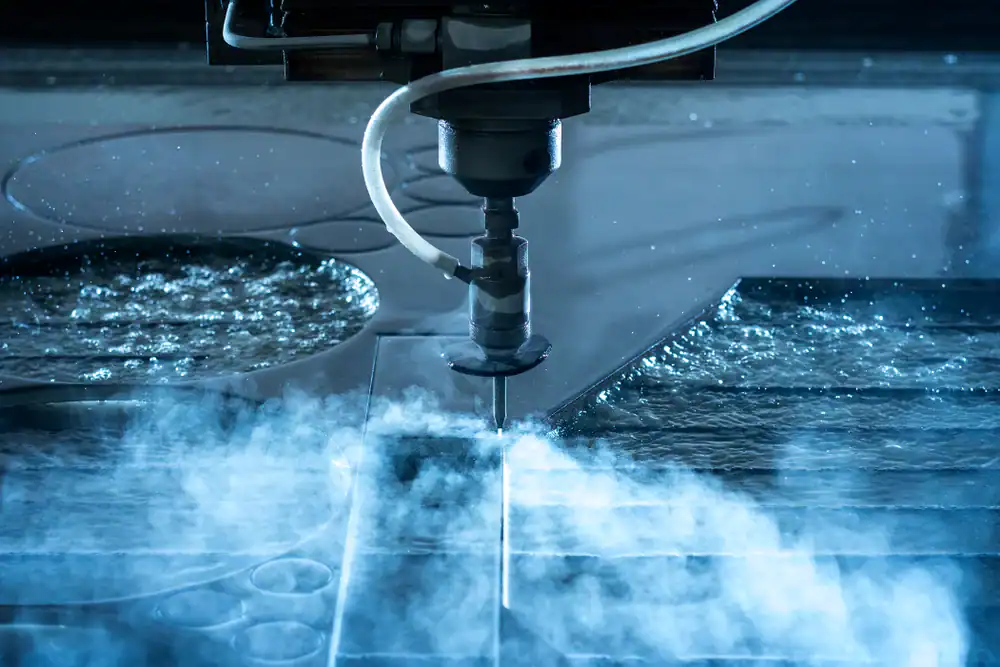
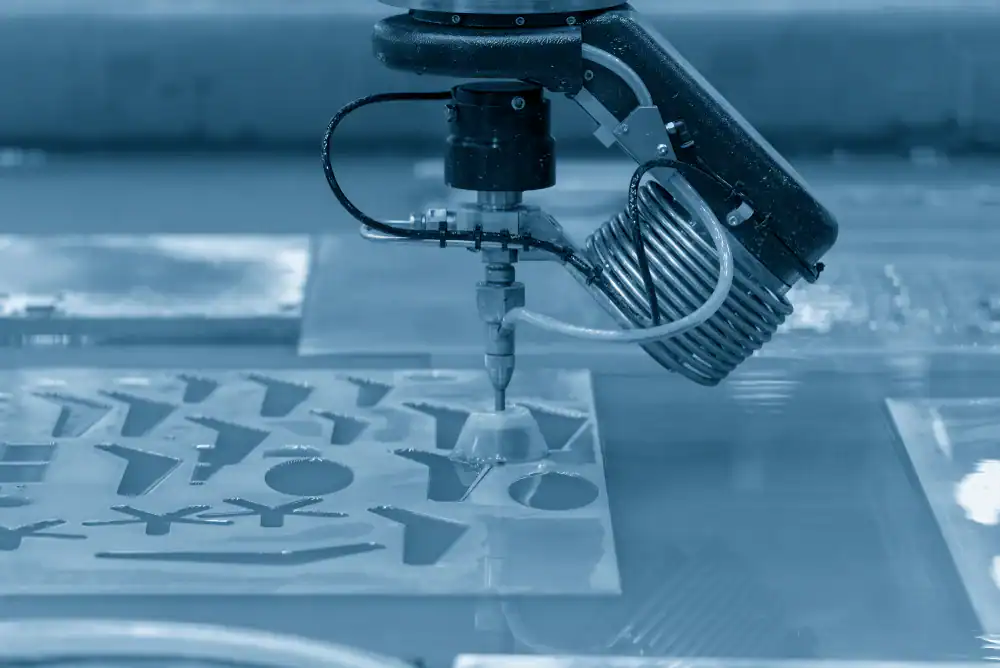
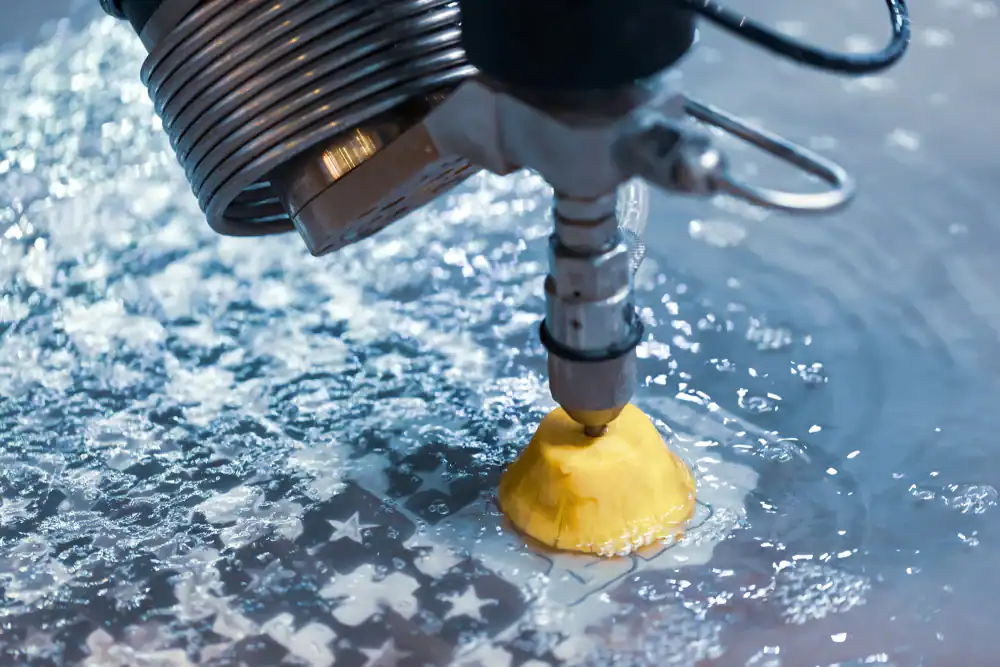
Once the design is locked, we program the CNC waterjet system. The cutting head uses high-pressure water mixed with abrasive garnet to slice through glass without generating heat. No thermal distortion, no warping, no microfractures along the edge. The process is controlled digitally, so complex curves, precise holes, and tight inside corners all come out consistent.
After cutting, we inspect dimensions and edge quality. If secondary work is needed—polishing, beveling, or additional finishing—we handle that too. Then the glass is packaged for transport or pickup. You get material that’s ready to install, not material that needs correction on-site.
Ready to get started?
Residential glass cutting services in East Patchogue, NY cover everything from custom shower enclosures and kitchen backsplashes to decorative panels and tabletops. Waterjet handles tempered glass, laminated glass, low-iron glass, and specialty materials without the limitations of scoring or thermal cutting.
For commercial and industrial projects, we cut architectural glass for facades, partitions, balustrades, and structural glazing. The process works for thick panels, intricate patterns, and jobs where edge quality affects both safety and aesthetics. Because there’s no heat-affected zone, the material’s structural integrity stays intact—important when you’re working with load-bearing or safety-critical glass.
East Patchogue’s construction market is active. Median household income here is over $107,000, and many homes were built in the 1970s, which means renovation work is steady. Contractors working on high-end residential remodels or new commercial builds along the Montauk Highway corridor need glass that meets modern standards for fit and finish. Waterjet cutting delivers that consistency, whether you’re doing one custom piece or a full production run.
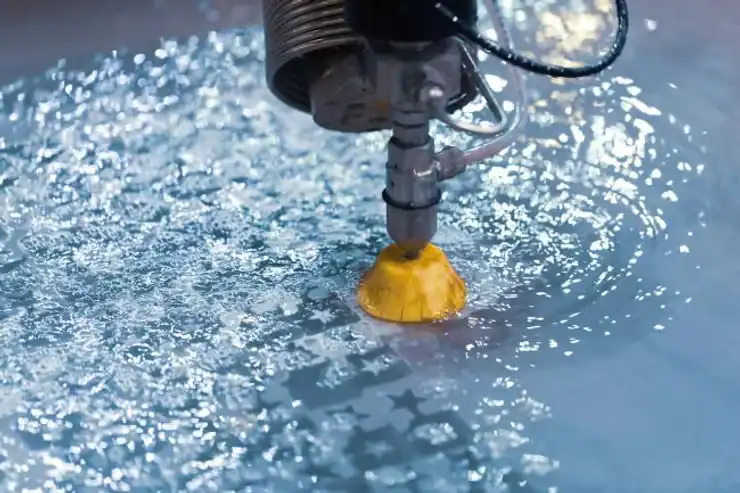
Waterjet cuts tempered glass, annealed glass, laminated glass, low-iron glass, mirrored glass, and most specialty architectural glass. The process doesn’t rely on heat, so it won’t cause thermal shock or alter the material’s properties. That’s critical for tempered glass, which can shatter if exposed to uneven heating.
Thickness isn’t a major limitation either. Waterjet systems handle everything from thin 3mm panels to thick structural glass over an inch. The cutting head adjusts pressure and speed based on material density, so you get clean edges whether you’re working with standard float glass or high-performance coated products.
If you’re using glass with embedded wire, patterns, or coatings, waterjet handles that too. The abrasive stream cuts through without delaminating layers or damaging surface treatments, which makes it ideal for custom work where the material itself is expensive or hard to source.
Traditional scoring and breaking works for straight cuts and simple shapes, but it struggles with curves, inside corners, and intricate patterns. You’re also limited by the skill of the person doing the scoring—tolerances vary, and breakage rates go up with complexity.
Waterjet cutting is CNC-controlled, so every cut follows the programmed path with precision down to a tenth of a millimeter. There’s no manual scoring, no risk of the break running off-line, and no need for secondary grinding to smooth rough edges. The edge quality coming off a waterjet is clean enough for many applications without additional polishing.
Laser cutting is another option, but it generates heat, which can cause microfractures and residual stress in glass. That’s a problem for structural applications or anywhere the glass will be under load. Waterjet uses only water and abrasive, so there’s no thermal impact and no weakening of the material. It’s a cold-cutting process, which is why it’s preferred for safety-critical and high-tolerance work.
Yes. Waterjet systems cut complex curves, sharp inside corners, precise holes, and detailed patterns that would be difficult or impossible with manual methods. The cutting stream is narrow—typically less than 1mm—so it can follow intricate paths without overcut or distortion.
Tolerances depend on material thickness and design complexity, but ±0.1mm is standard for most glass cutting work. That level of precision matters when you’re fitting panels into metal frames, creating seamless joints, or matching multiple pieces in a pattern. If the design requires tighter tolerances, we can adjust feed rates and pressure to hit those specs.
CNC control also means repeatability. If you need ten identical pieces or a hundred, each one comes out the same. There’s no variation from operator fatigue or manual inconsistency, which is important for production runs or projects where all the components need to fit together without adjustment.
Turnaround depends on design complexity, material availability, and current project load, but most custom glass cutting jobs in East Patchogue, NY are completed within a few days to a week. Simple cuts with standard glass can often be done faster. More intricate designs or specialty materials may take longer, especially if secondary finishing is involved.
We’ll give you a realistic timeline upfront based on your specs and schedule. If you’re working against a hard deadline—say, a scheduled install or a project milestone—we can often prioritize the work to meet that date. Communication is key here. The earlier you get us your drawings and confirm material specs, the smoother the process goes.
Rush jobs are possible, but they depend on machine availability and whether we need to source specific glass types. If timing is tight, it’s worth reaching out early so we can plan around your schedule instead of reacting to it.
Waterjet cutting produces a smooth edge that’s often ready to use without additional work. The quality depends on cutting speed, abrasive type, and material thickness, but in most cases, the edge is clean enough for installation as-is. You won’t see the chipping or roughness that comes from scoring and breaking.
For applications where the edge will be visible or handled frequently—like tabletops, shelves, or frameless glass doors—we can add polishing or beveling to give it a finished look. That’s a secondary step, but it’s straightforward because the waterjet edge is already smooth and uniform.
Some projects require seamed or pencil-polished edges for safety or aesthetics. We handle that in-house, so you’re not coordinating between multiple vendors. The goal is to deliver glass that’s ready for its final application, whether that means a raw waterjet edge or a fully polished finish.
Architectural glass projects demand precision, consistency, and material integrity. Waterjet cutting delivers all three without introducing heat stress, which is critical when you’re working with large panels, structural glazing, or safety glass. The process doesn’t weaken the material, so the glass performs as engineered.
You also get design flexibility. Waterjet handles curves, angles, cutouts, and complex shapes that would require multiple setups or specialized tooling with other methods. That means fewer limitations on what you can design and less time spent figuring out how to fabricate it.
For contractors and architects in East Patchogue, NY working on high-end residential builds or commercial projects, waterjet cutting reduces risk. Panels fit correctly, installations go faster, and there’s less material waste from breakage or incorrect cuts. When the job has to be right and the timeline is firm, waterjet is the method that doesn’t add variables.
Useful Links
Other Services we provide in East Patchogue