Hear from Our Customers
You’ve dealt with it before. Glass arrives on site and doesn’t fit. Gaps show up where there shouldn’t be any. Edges are rough or chipped. Now you’re looking at delays, rework, and explaining to your client why the install is taking longer than quoted.
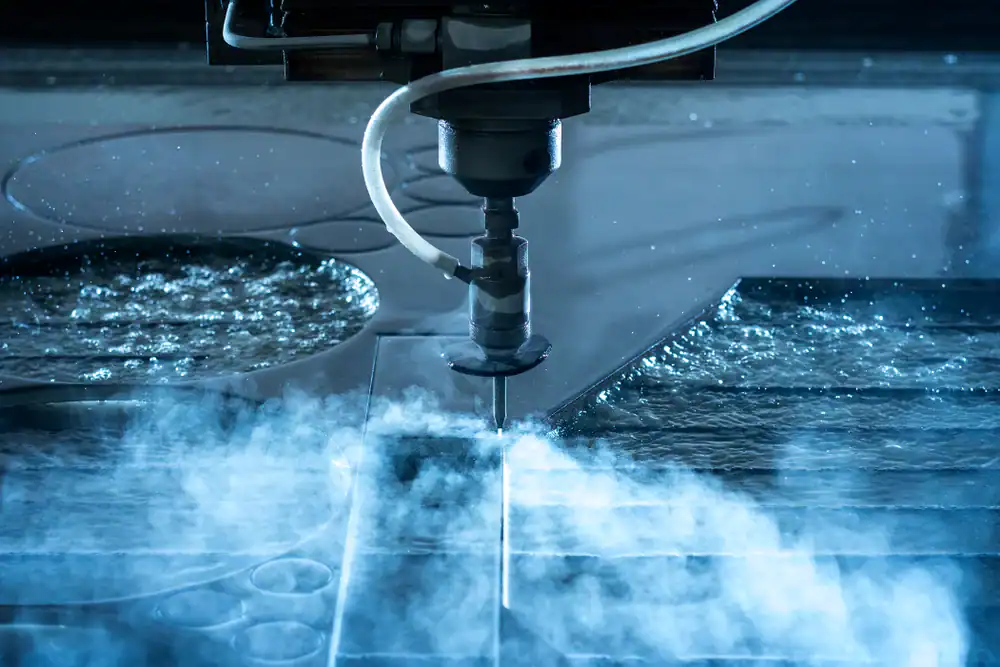
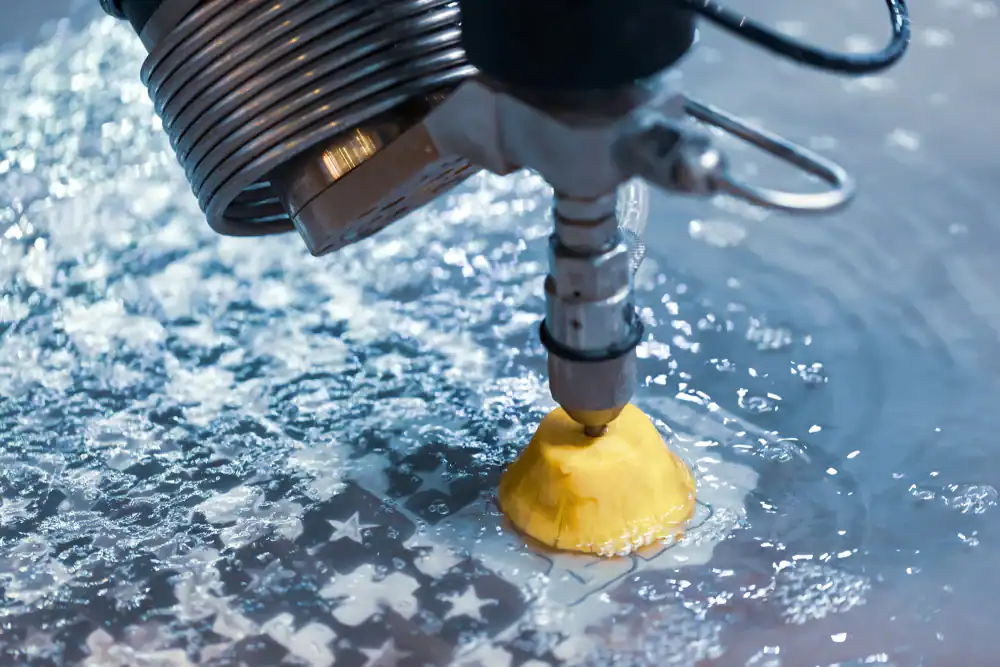
That stops when the cutting is done right from the start. Waterjet cutting uses a high-pressure stream of water mixed with abrasive to cut glass without heat, which means no warping, no micro-fractures, and no thermal stress. You get edges that are clean and dimensions that match your specs down to thousandths of an inch.
Whether it’s architectural panels for a storefront, custom interior partitions, or intricate shapes for a design feature, the glass shows up ready to install. No grinding. No adjustments. No surprises. Just glass that does exactly what you needed it to do.
We operate out of West Islip and serve contractors, architects, and fabricators throughout Greenlawn, NY and Long Island. We run Flow Dynamic Waterjet systems that hold tolerances most shops can’t touch, and we’ve built our reputation on getting complex glass cuts right the first time.
Greenlawn sits in a market where construction standards are high and timelines are tight. You’re working with clients who expect quality, and you need suppliers who understand that. We inspect every piece before it leaves our facility because we know what happens when a cut is off by even a fraction.
We’re not the cheapest option, and that’s intentional. You’re paying for precision equipment, experienced operators, and the kind of quality control that keeps your project on schedule.
Start by sending us your specs. CAD files work best, but we can work from drawings or templates if that’s what you have. We’ll review dimensions, material type, edge requirements, and any special considerations for your project.
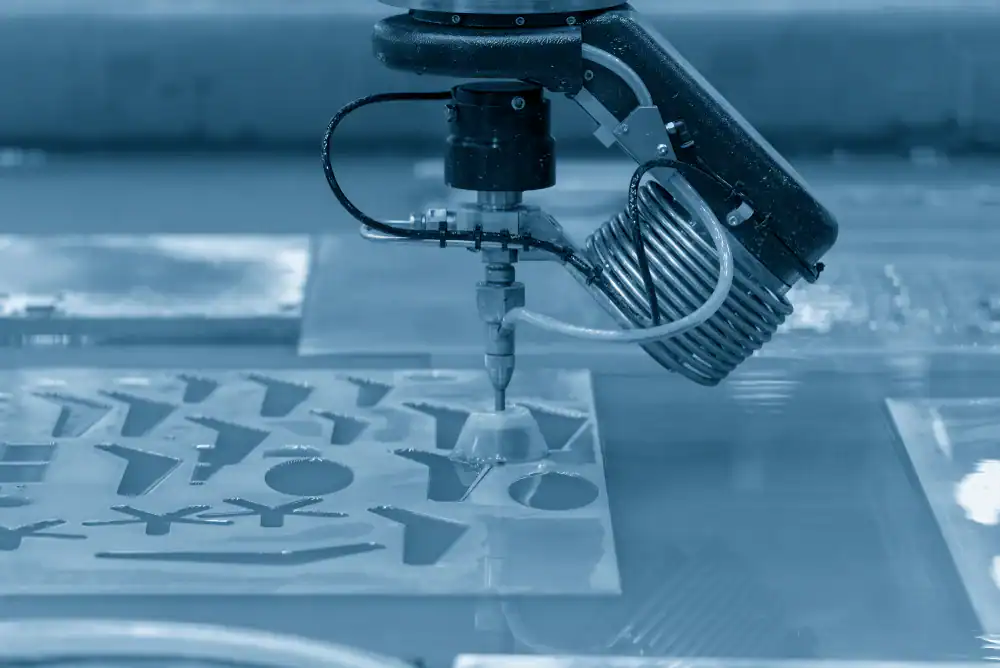
Once we confirm details, we program the cut into our CNC system. The waterjet follows that path exactly, using a stream of water pressurized up to 60,000 PSI mixed with garnet abrasive. The process is cold, so there’s no heat-affected zone and no risk of thermal distortion. Glass up to several inches thick cuts cleanly without cracking or chipping.
After cutting, we inspect each piece for dimensional accuracy, edge quality, and any surface issues. If your project requires specific edge finishes or additional processing, we handle that before packaging. Then your glass ships out, ready for installation exactly as specified.
Ready to get started?
Accuracy matters more with glass than almost any other material. Waterjet cutting delivers linear accuracy within ±0.003″ to ±0.005″, which means your panels fit without gaps and your complex shapes come out exactly as designed. That level of precision is what makes intricate architectural details possible.
You also get versatility that traditional cutting methods can’t match. Waterjet handles tempered glass, laminated glass, thick optical glass, quartz, and specialty materials without changing tooling or process. Complex curves, tight inside corners, and detailed patterns all cut the same way.
In Greenlawn and across Long Island, architectural projects increasingly demand custom glass work. Storefronts with curved panels, interior partitions with decorative cutouts, and facade elements with precise dimensions all require cutting methods that won’t compromise the material. Waterjet cutting gives you that capability without the limitations of scoring and breaking or the heat concerns of laser cutting.
Edge quality comes out clean enough for most applications without additional grinding. For projects requiring polished edges or specific finishes, that work happens after cutting. But the waterjet process itself minimizes chipping and produces edges that are structurally sound and visually clean.
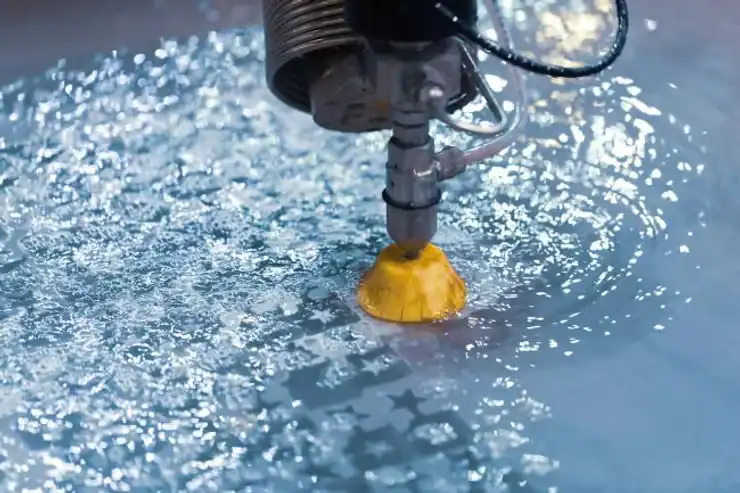
We cut virtually every type of glass used in construction and fabrication. That includes standard float glass, tempered glass, laminated safety glass, low-iron glass, mirrored glass, and specialty materials like borosilicate and quartz.
Tempered glass requires careful handling because it’s under internal stress, but waterjet cutting works as long as the glass hasn’t been fully tempered yet. Laminated glass cuts cleanly through both glass layers and the interlayer without delamination. Thick glass up to several inches cuts just as precisely as thin material.
If you’re working with optical glass, decorative art glass, or other specialty materials, waterjet handles those too. The cold cutting process doesn’t change the material properties or introduce stress, which makes it suitable for applications where material integrity matters.
Traditional glass cutting uses a scoring wheel to create a controlled fracture line, then breaks the glass along that score. It works fine for straight cuts in thinner glass, but it’s limited when you need curves, intricate shapes, or thick material. You also get rough edges that need grinding and polishing.
Waterjet cutting doesn’t rely on fracturing the material. The abrasive stream erodes through the glass in a controlled path, which means you can cut any shape the CNC system can follow. Inside corners, tight radiuses, and complex patterns all cut the same way. Edges come out smoother and more consistent than scored-and-broken glass.
Laser cutting is another option, but it uses heat to melt through material. That creates a heat-affected zone that can introduce stress and distortion in glass. Waterjet is a cold process, so the material around the cut stays unaffected. For precision work where dimensional accuracy and material integrity matter, waterjet delivers better results.
Our CNC waterjet systems hold tolerances between ±0.003″ and ±0.005″ on linear dimensions. For architectural work, that level of accuracy means panels fit together without gaps, complex shapes match your design exactly, and installation happens without field adjustments.
That precision comes from computer-controlled cutting paths and consistent water pressure. The system follows your CAD file exactly, and the cutting stream doesn’t deflect or wander like manual tools can. Repeatability is just as important as accuracy—if you need ten identical pieces, all ten come out the same.
For projects in Greenlawn where you’re working with modern architectural designs or tight installation tolerances, that accuracy matters. Curved glass panels for storefronts, custom partitions with detailed cutouts, and facade elements with multiple pieces all depend on precise cutting to look right and install correctly.
Waterjet cutting doesn’t introduce heat, stress, or micro-fractures that weaken glass. The cutting process is erosion-based, not impact-based, so the material around the cut stays intact. You don’t get the chipping or edge damage that can happen with scoring and breaking.
The edges produced by waterjet cutting are structurally sound. There’s no heat-affected zone that could create internal stress, and the cutting action doesn’t create micro-cracks that propagate over time. For safety glass and structural applications, that material integrity is critical.
Edge quality typically falls in the Q3-Q4 range for architectural work, which means smooth edges with minimal roughness. If your project requires polished edges or specific finishes, that processing happens after cutting. But the waterjet process itself produces edges that are clean and ready for most applications without additional work.
Our waterjet systems cut glass up to 9-12 inches thick depending on equipment and material type. Most architectural and industrial applications use glass between 1/4″ and 2″ thick, which cuts quickly and precisely. Thicker material takes longer but cuts with the same accuracy.
Cutting speed decreases as material thickness increases because the abrasive stream needs more time to erode through the glass. Thin glass under 1/2″ cuts fast—often several inches per minute depending on complexity. Thick glass over 2″ slows down but maintains the same edge quality and dimensional accuracy.
For projects requiring thick glass panels, laminated assemblies, or specialty applications, waterjet gives you options that other cutting methods can’t handle. The process scales from thin decorative glass to thick structural panels without changing the fundamental approach.
Turnaround depends on project complexity, material availability, and current shop schedule. Simple cuts in standard glass materials often complete within a few days. Complex projects with intricate shapes, thick material, or large quantities take longer.
Once we receive your specs and confirm material, we can give you a realistic timeline. CNC programming happens quickly, and cutting time is predictable based on material thickness and cut length. The inspection and quality control process adds time but ensures your glass meets specifications before it ships.
For projects in Greenlawn with tight deadlines, communication up front makes the difference. If you need glass by a specific date, let us know when you request a quote. We’ll tell you whether that timeline works or what adjustments might help. Rush jobs are possible when the schedule allows, but planning ahead gives you the best results and the most flexibility.
Useful Links
Other Services we provide in Greenlawn