Hear from Our Customers
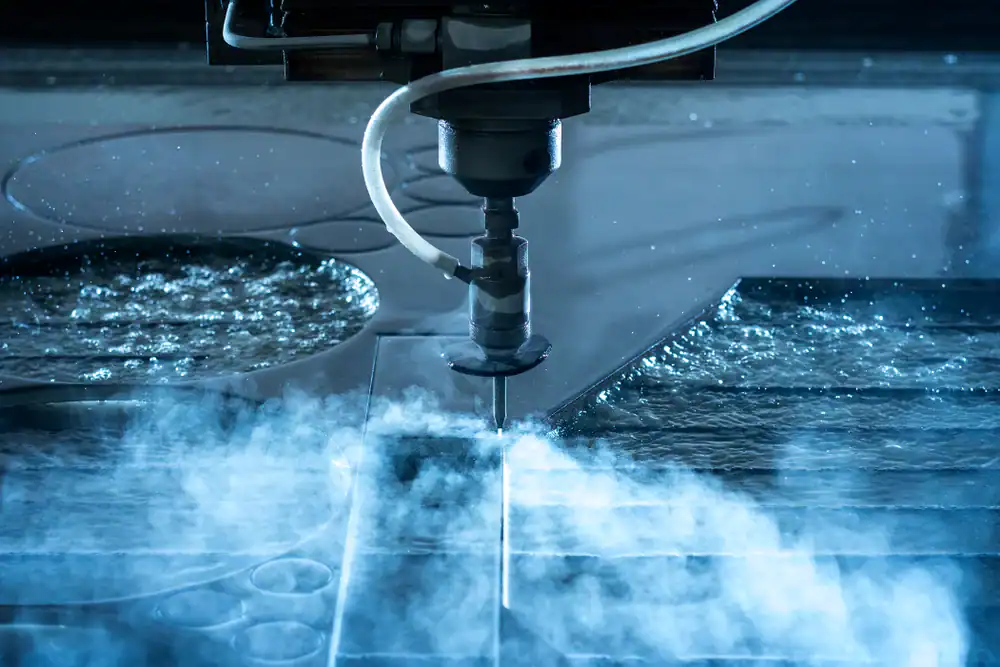
When you’re working with glass, precision isn’t optional. A tenth of a millimeter off means rework, delays, and material loss. CNC glass waterjet cutting in Hempstead, NY gives you tolerances that traditional methods can’t touch.
The process uses a high-pressure stream with abrasive particles to cut through glass without generating heat. No thermal stress means no micro-cracks forming along the cut line. No heat-affected zones means the structural integrity of your material stays intact from edge to edge.
You get smooth, clean cuts on intricate patterns—curves, angles, interior cutouts—without etching, scoring, or snapping. The kerf width is narrow enough that material waste drops significantly compared to saw cutting or routing. And because the edge quality is high right off the machine, you’re not spending extra time or money on grinding, polishing, or deburring.
Whether it’s float glass for architectural panels, acrylic for signage, or thicker structural glass for facades, the cut comes out right the first time. That means faster project timelines and fewer surprises when your glass arrives on-site.
We work with architects, contractors, designers, and fabricators across Hempstead, NY and Long Island who need custom glass waterjet cutting done right. We’re not a high-volume shop pushing parts through a line. We’re a precision operation focused on getting your specs dialed in before the water even turns on.
Hempstead’s construction and design market moves fast. Commercial builds in the area often involve custom glass for lobbies, storefronts, and interior partitions. Residential projects increasingly demand unique glass elements—countertops, backsplashes, decorative panels. When you’re coordinating trades and managing schedules, the last thing you need is a glass supplier who can’t deliver on time or within tolerance.
We handle the technical side—material consultation, CAD file prep, machine setup—so you get exactly what you ordered. No guessing. No “close enough.” Just accurate cuts that fit your project the first time.
You send us your design file—DXF, DWG, or even a detailed sketch if that’s what you’re working from. We review it for cuttability, flagging any areas where tolerances might be too tight or where the design could be optimized for the waterjet process. If your file needs adjustment, we’ll tell you before we start cutting.
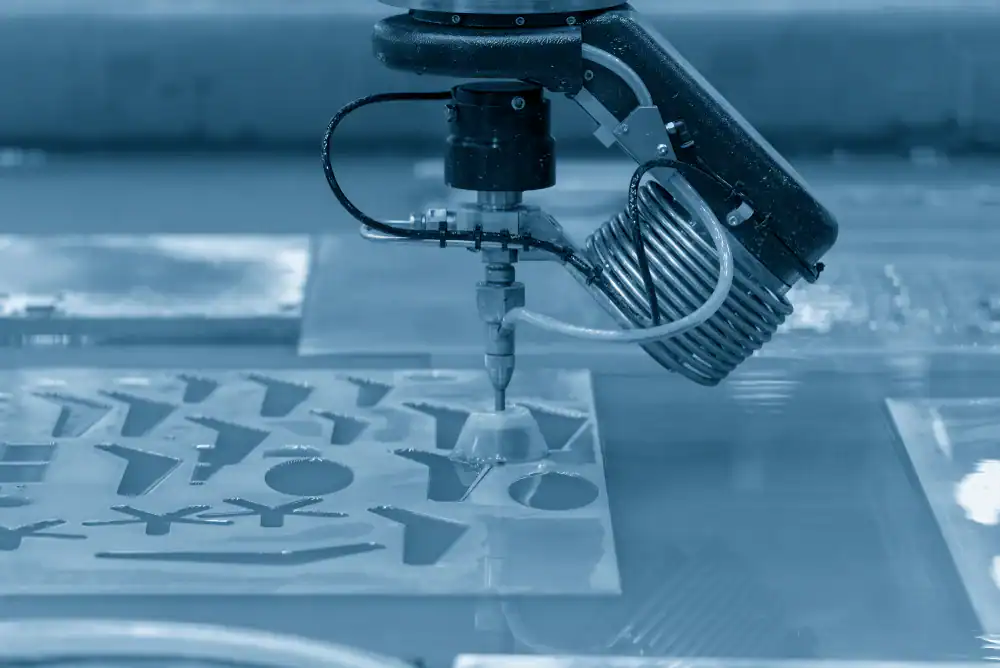
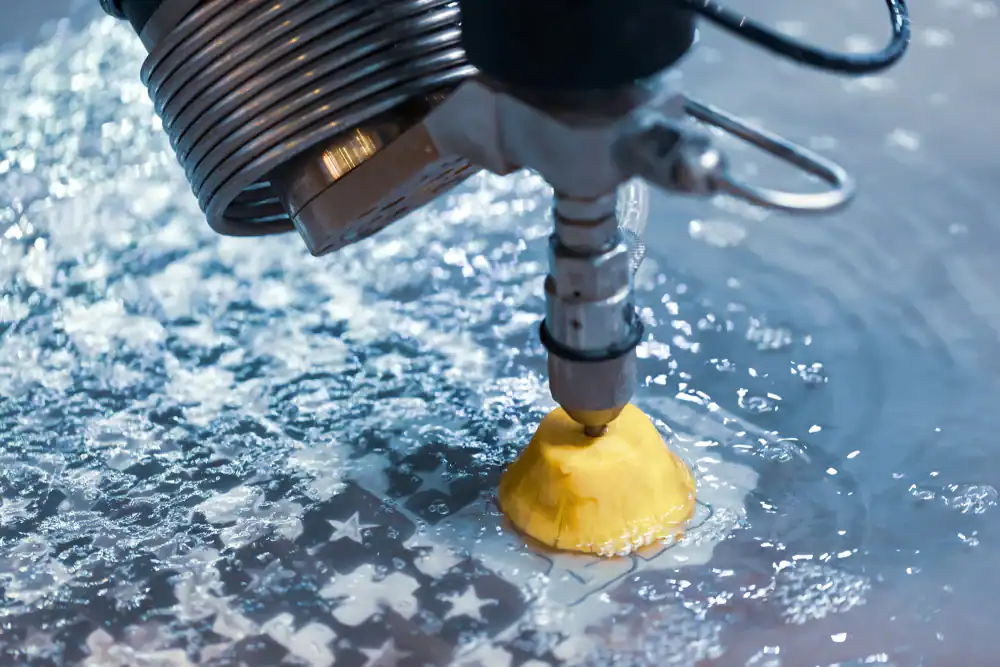
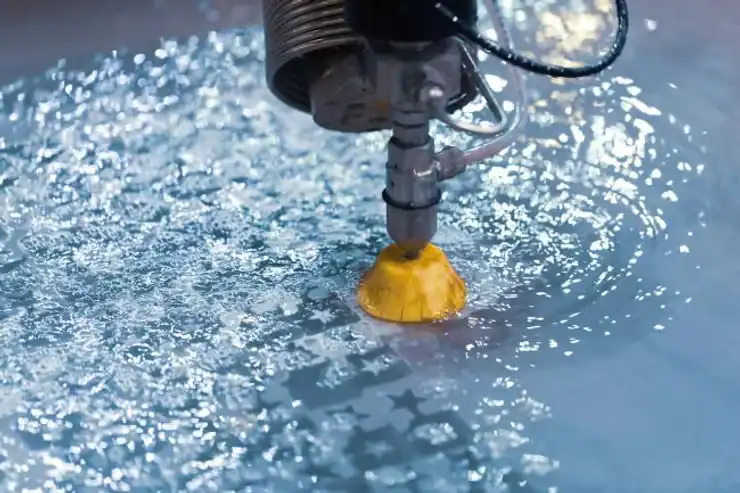
Once the design is locked in, we load your glass onto the cutting bed and secure it. The CNC system follows your programmed path using a waterjet stream mixed with garnet abrasive. The stream is thin—around 0.005 to 0.007 inches—which allows for tight curves and minimal kerf loss. There’s no blade contact, no vibration, and no heat buildup.
For industrial glass waterjet cutting in Hempstead, NY, this process handles both thin decorative glass and thick structural pieces. Single-pass cutting works for most applications, keeping cycle times short. If you’re running multiple identical parts, the CNC programming ensures every piece matches the first.
After cutting, we inspect dimensions and edge quality. In most cases, the part is ready to install as-is. If your application requires additional finishing—beveling, polishing, drilling—we can coordinate that too. You get glass that’s ready for your project, not glass that needs more work before it’s usable.
Ready to get started?
Architectural glass waterjet cutting in Hempstead, NY means handling the specific demands of commercial and residential builds across Long Island. Architects here are specifying more complex glass elements—custom facade panels, interior partitions with intricate patterns, decorative installations that require precise edge work. Waterjet cutting makes those designs feasible without the cost and lead time of traditional fabrication methods.
You get access to a process that cuts float glass, tempered glass, laminated glass, and acrylic with the same level of precision. Thickness ranges from thin decorative sheets up to structural glass several inches thick. The cold-cutting process means no risk of thermal shock or stress fractures, which is critical when you’re working with tempered or laminated materials that can’t be recut after treatment.
For contractors managing projects in Hempstead’s commercial districts or residential developments, this translates to fewer delays. Glass arrives cut to spec, ready for installation. No field adjustments. No sending pieces back because they don’t fit. The edge quality is clean enough that it reduces injury risk during handling and installation—a real consideration when your crew is working with large panels or intricate shapes.
We also handle material consultation upfront. If you’re not sure whether your design works better in acrylic or glass, or if you need guidance on thickness for a specific application, that’s part of the conversation before we cut anything. You’re not guessing on material specs or hoping it works out.
Waterjet cutting works on annealed glass, but tempered and laminated glass require different handling. Tempered glass can’t be cut after the tempering process—it will shatter. If your project requires tempered glass, the waterjet cutting happens before tempering. We cut the annealed glass to your exact specs, then it goes to a tempering facility.
Laminated glass is more forgiving. The waterjet can cut through the glass layers and the interlayer material without delamination, as long as the laminate is compatible with abrasive cutting. We’ve cut laminated architectural glass for interior partitions and decorative panels without issues.
If you’re not sure about your material’s compatibility, bring us the specs or a sample. We’ll test it and tell you whether waterjet is the right process or if you need an alternative approach. The last thing you want is to order a full run of cuts only to find out the material doesn’t respond well to the process.
Tolerances typically land in the range of ±0.005 to ±0.010 inches, depending on material thickness and design complexity. For most architectural and industrial applications, that’s more than tight enough. If you’re cutting a decorative panel with curves and interior cutouts, the CNC system follows your programmed path without deviation.
The precision comes from the combination of high-pressure water, fine abrasive particles, and CNC control. There’s no mechanical tool deflection like you’d get with a router bit, and no heat distortion like you’d see with laser or plasma cutting. The stream cuts straight through without pushing or flexing the material.
Thicker glass can see slightly wider tolerances due to stream taper, but we account for that in the programming. If your project has critical dimensions—say, a glass panel that needs to fit into a metal frame with minimal clearance—we’ll measure and verify before the full production run. You’re not gambling on whether the parts will fit.
We regularly cut glass up to 3 inches thick, and thicker pieces are possible depending on the material and design. Structural glass for architectural applications often falls in the 1 to 2-inch range, and waterjet handles that without issue. The process doesn’t struggle with thickness the way mechanical cutting does.
Thicker glass takes longer to cut because the waterjet stream needs more time to penetrate and traverse the material. But the quality stays consistent—you’re not dealing with rough edges or incomplete cuts. The cold-cutting process also means there’s no risk of thermal cracking, which is a real concern when you’re working with thick glass using heat-based methods.
If you’re working with unusually thick material or a design that pushes the limits of what’s typical, we’ll run a test cut first. That way you know exactly what the edge quality and dimensional accuracy will look like before committing to a full order.
In most cases, no. The edge quality off the waterjet is smooth enough for direct installation in architectural and industrial applications. It’s not polished-glass clear, but it’s clean, consistent, and free of sharp burrs or fractures. For interior partitions, countertops, decorative panels, and most structural uses, the as-cut edge works fine.
If your project requires a polished edge—say, for a glass tabletop or a high-end decorative piece where the edge is visible and needs to be crystal-clear—we can coordinate that finishing step. But it’s not a requirement for the majority of applications. The waterjet edge is safer to handle than a traditionally scored-and-snapped edge, and it doesn’t have the micro-chipping you often see with saw cutting.
The lack of required secondary finishing is one of the reasons waterjet cutting saves time and cost. You’re not paying for additional labor to grind, polish, or smooth edges unless your specific application demands it. The part comes off the machine ready to go.
Traditional glass cutting—scoring and snapping—works fine for straight cuts and simple shapes. But it’s limited. Curves are difficult. Interior cutouts require drilling and additional steps. Thick glass is prone to cracking. And the edge quality often needs grinding or polishing before it’s usable.
Waterjet cutting removes those limitations. You can cut any shape your CAD file defines—tight radius curves, intricate patterns, interior holes and slots—without changing tools or processes. The edge comes out smooth and consistent. There’s no risk of the glass fracturing along the score line because there is no score line. The stream cuts all the way through in a single pass.
Laser cutting is another option, but it generates heat. That heat creates a heat-affected zone around the cut, which can introduce stress and micro-cracks. For glass, that’s a problem. Waterjet stays cold, so the material’s structural integrity isn’t compromised. You’re not introducing weaknesses that could lead to failure down the line.
Architectural projects are a big part of it—custom glass facades, storefront panels, interior partitions for office buildings and retail spaces. Hempstead’s commercial development includes a lot of modern builds where designers are specifying unique glass elements that can’t be cut with traditional methods.
Residential projects are increasingly using waterjet-cut glass for countertops, backsplashes, shower enclosures, and decorative installations. Homeowners and designers want custom shapes and patterns, and waterjet makes that feasible without the cost of hand-cutting or custom tooling.
We also work with fabricators and manufacturers who need precision glass components for industrial applications—machine guards, equipment panels, display cases. Any time the design involves complex shapes, tight tolerances, or materials that can’t handle heat or mechanical stress, waterjet cutting is usually the right call. If you’re working on a project in Hempstead or across Long Island and you’re not sure whether waterjet fits, bring us the design. We’ll tell you straight whether it’s the right process or if you’d be better off with something else.
Useful Links
Other Services we provide in Hempstead