Hear from Our Customers
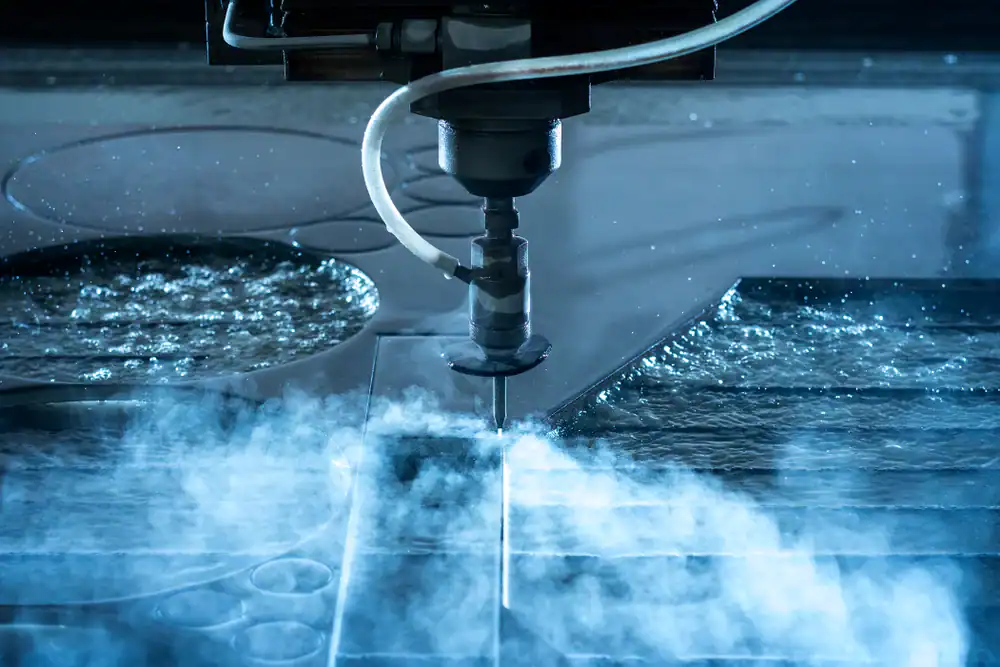
You’re not dealing with scored lines that might split wrong or heat tools that create stress fractures. Waterjet cutting uses high-pressure water mixed with abrasive to cut through glass without ever touching it with a blade or flame.
That means your architectural panels come out with smooth edges. Your custom shapes don’t need hours of secondary finishing. Your production timeline shortens because there’s no rework from cracked pieces.
The process handles thickness from delicate 3mm sheets up to heavy 50mm architectural glass. Curves, angles, cutouts—whatever the design calls for gets cut accurately the first time. You’re looking at tolerances within 0.01mm, which matters when panels need to fit into frames or align with other materials on site.
We operate out of the Long Island area, working with architects, contractors, and manufacturers who need glass cut right. We’re not the cheapest option—and that’s intentional. You’re paying for CNC-controlled accuracy and operators who understand how different glass types respond to waterjet pressure.
Hicksville sits in the middle of Nassau County’s commercial and residential development activity. When local projects need custom glass facades, decorative panels, or specialty shapes that standard cutting can’t handle, the work comes to us. We’ve cut glass for storefronts along Broadway, residential projects throughout the area, and commercial builds across Long Island.
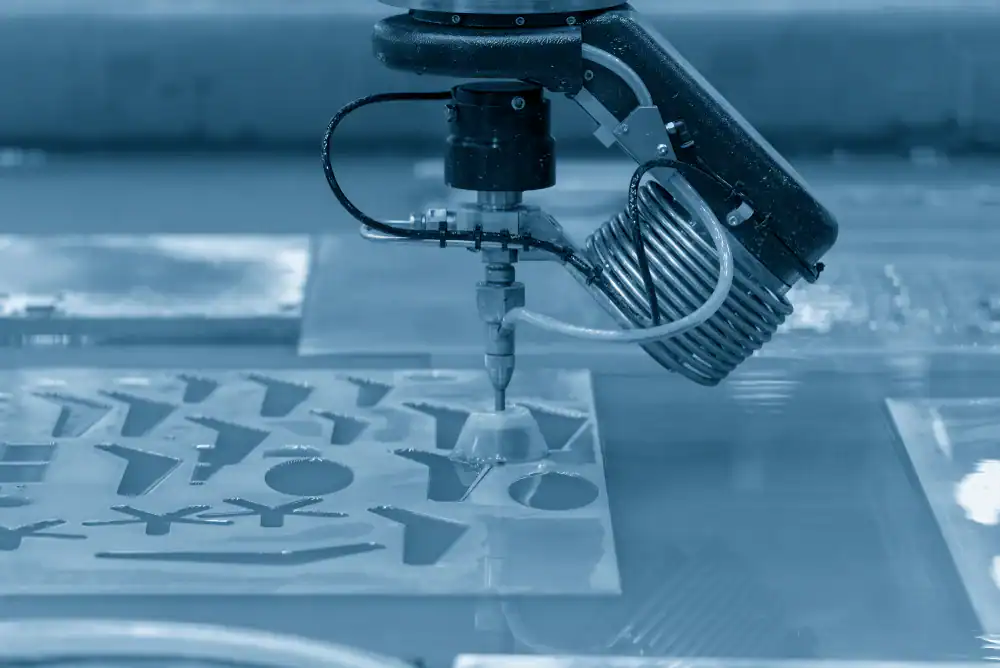
You send us your design—CAD files, drawings, or even sketches if that’s what you’re working from. We review the specs, confirm the glass type and thickness, and program the CNC system with your exact dimensions and cut paths.
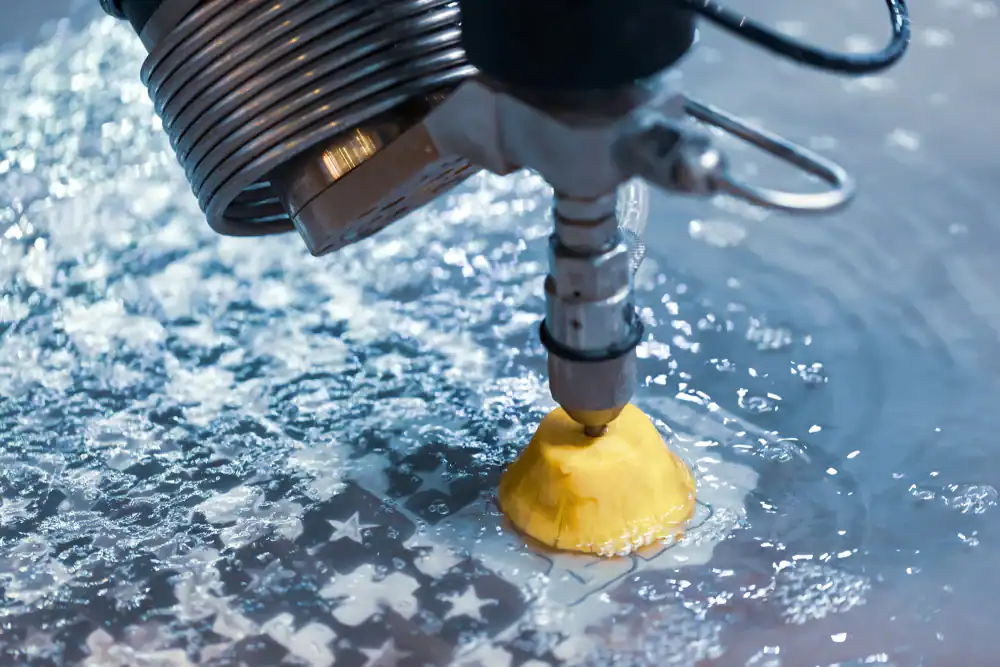
The glass gets secured on the cutting bed. The waterjet head positions itself and starts cutting, following the programmed path while the abrasive-water mixture does the work. There’s no scoring, no snapping, no heat. Just a focused stream that cuts through without creating stress points.
After cutting, we inspect edges and dimensions. Most pieces come off the table ready to install. If your project needs polished edges or specific finishing, we handle that too. Then it’s packed, labeled, and ready for pickup or delivery to your Hicksville job site.
Ready to get started?
This isn’t just about cutting glass—it’s about what that cutting method makes possible. Waterjet handles tempered glass, laminated glass, textured glass, and even glass with embedded materials. You’re not limited to straight lines or simple shapes.
For architectural projects in Hicksville and across Nassau County, that means custom window shapes, decorative wall panels, glass door inserts, and facade elements that match your design intent exactly. Industrial clients use it for equipment panels, machine guards, and precision components where dimensional accuracy matters for assembly.
The process produces minimal waste compared to traditional scoring methods. You’re not losing material to wide kerf cuts or breakage. The edges come out smooth enough that many applications don’t require additional grinding or polishing, which saves time and cost on the back end.
Traditional glass cutting uses scoring tools that create a weak line, then applies pressure to snap the glass along that line. That snapping action creates stress, and stress causes cracks—especially with thicker glass or complex curves.
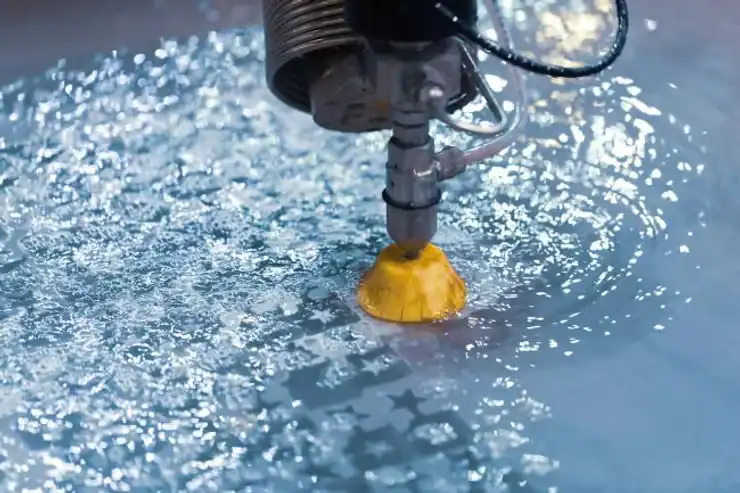
Waterjet cutting doesn’t score or snap anything. A thin stream of water mixed with fine abrasive garnet cuts through the glass by eroding material away. There’s no mechanical pressure applied to the glass surface and no heat generated that would cause thermal expansion or stress points.
The cutting head moves along your programmed path while the glass stays stationary and supported. Because there’s no physical force trying to break the glass, there’s no cracking. This is why waterjet works for intricate shapes, tight inside corners, and delicate cutouts that would be nearly impossible with traditional methods.
Laser cutting uses concentrated heat to melt or vaporize material. That works fine for metals and some plastics, but glass doesn’t respond well to localized heating. The rapid temperature change creates thermal stress, which leads to micro-fractures and edge quality issues.
Waterjet cutting is a cold process. No heat means no thermal stress, no discoloration, and no change to the glass structure. The edges come out clean without the roughness or micro-cracking you’d see from laser work.
There’s also the precision factor. Waterjet can cut tighter radiuses and more complex shapes because it’s not limited by how quickly the material can cool. For architectural glass or any application where edge quality and structural integrity matter, waterjet is the better choice.
Tempered glass is tricky. The tempering process puts the glass under internal stress, which is what gives it strength. Any cutting after tempering releases that stress and causes the entire piece to shatter. That’s true for waterjet, laser, or any other cutting method. If you need custom shapes in tempered glass, the cutting has to happen before the tempering process.
Laminated glass is a different story. Waterjet handles it without issues. The process cuts through both glass layers and the laminate interlayer cleanly. You don’t get delamination or separation at the edges like you might with mechanical cutting methods.
If your project requires tempered glass in custom shapes, we cut the glass first, then it goes out for tempering. For laminated glass, we can cut finished pieces ready to install.
The CNC system controls the cutting head position within 0.01mm—that’s one-hundredth of a millimeter. For context, a human hair is about 0.07mm thick. This level of precision means your glass panels fit into frames without gaps, align properly with adjacent materials, and meet the dimensional tolerances required for modern architectural installations.
That accuracy stays consistent across the entire cut. Whether it’s a simple rectangle or a complex curved shape with multiple cutouts, every edge follows the programmed path exactly. This matters when you’re installing glass facades on commercial buildings in Hicksville or fitting custom panels into residential projects where everything needs to line up.
CNC control also means repeatability. If you need multiple identical pieces, each one comes out the same. No variation from operator fatigue or manual measurement errors.
We cut glass from 3mm up to 50mm thick. Thinner glass like 3mm to 6mm is common for decorative panels, cabinet inserts, and interior applications. Mid-range thickness from 8mm to 12mm shows up in commercial storefronts, shower enclosures, and architectural features.
Heavy glass from 19mm to 50mm gets used in structural applications, exterior facades, and specialty projects where strength and sound dampening matter. The waterjet process handles all of it without changing the approach—just adjustments to pressure and cutting speed based on thickness.
Thicker glass takes longer to cut, but the quality stays consistent. You’re not dealing with the limitations of scoring tools that can’t handle thick material or the heat issues that come with other cutting methods on heavy glass.
Simple cuts on standard thickness glass might take 30 minutes from setup to finished piece. Complex shapes with multiple curves and cutouts on thicker glass can run several hours. The actual cutting time depends on the design complexity, glass thickness, and how tight the tolerances need to be.
Most projects in the Hicksville area run on a few days turnaround from design approval to finished glass. Rush work is possible if your timeline is tight—we just need to know upfront so we can schedule accordingly.
The programming and setup take time because accuracy matters. We’re not rushing through setups just to say the work is done faster. You’re getting glass cut to spec, inspected for quality, and ready to install when it leaves here.
Useful Links
Other Services we provide in Hicksville