Hear from Our Customers
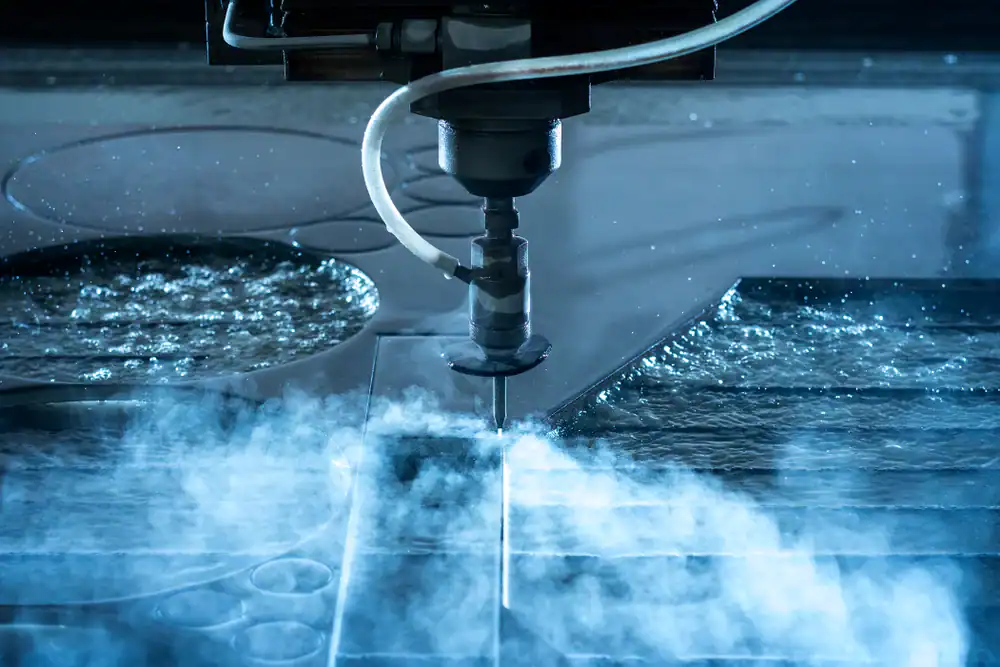
You need glass cut to exact specs without the chipping, cracking, or edge damage that comes with traditional methods. That’s where waterjet technology changes everything.
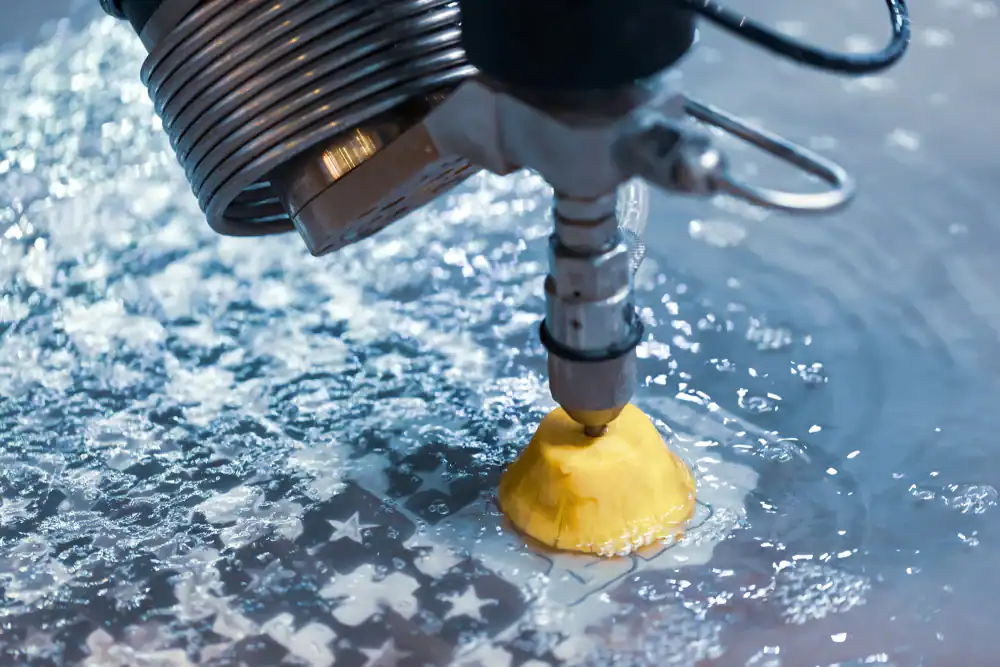
Custom glass waterjet cutting in Kings Park, NY uses pressurized water and abrasive to slice through glass with zero heat transfer. No thermal stress means no micro-cracks forming along your cut lines. No vibration means no edge chips that require grinding down later.
The result? Edges that come off the machine smooth and clean, ready for installation. Curves, cutouts, and intricate patterns that would take hours with hand tools get done in minutes with CNC precision. You’re looking at tolerances within a tenth of a millimeter, which matters when panels need to fit perfectly or when your design has tight radiuses that can’t be off by even a hair.
We’ve been handling industrial glass waterjet cutting in Kings Park, NY and across Long Island since the early 2000s. We’ve cut glass for commercial storefronts along Main Street, custom residential projects in the harbor neighborhoods, and architectural installations throughout Suffolk County.
Our facility runs CNC-controlled waterjet systems that handle everything from 3mm decorative glass to 50mm structural panels. We work directly with contractors, architects, and designers who need precision cuts without the back-and-forth of revisions or the cost of scrapped materials.
You’re working with a team that understands the difference between annealed and tempered glass, knows when laminated glass requires different cutting parameters, and can read architectural drawings to deliver exactly what your project needs.
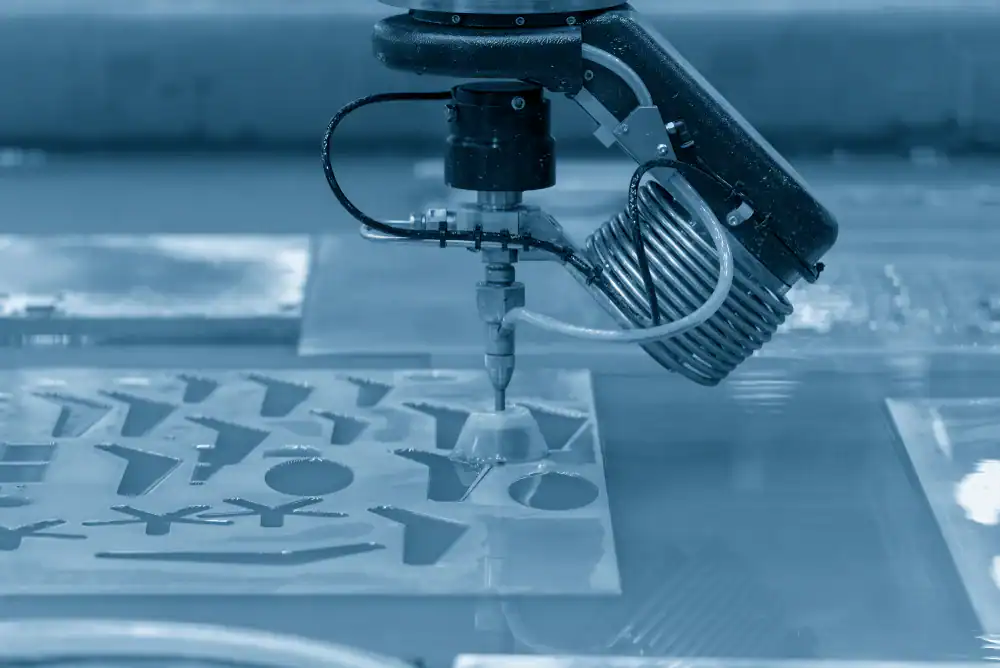
The process starts with your design file or specifications. If you’re working from architectural drawings, we translate those into CNC programming that controls the waterjet head’s exact path. If you need design assistance, we can help develop the cutting pattern based on your project requirements.
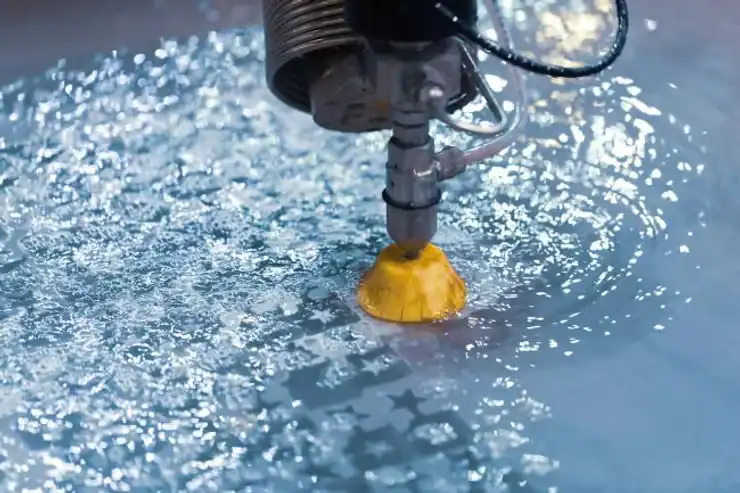
Once programming is set, your glass gets positioned on the cutting bed. The waterjet system uses a high-pressure stream—we’re talking 60,000 PSI—mixed with fine abrasive garnet to cut through the material. The CNC controls movement down to fractions of a millimeter, following your design precisely whether that’s straight lines, tight curves, or complex cutouts.
Because there’s no heat involved, the glass doesn’t experience thermal expansion or stress. The cutting happens cold, which is why you don’t see the micro-cracking or edge damage common with other methods. For architectural glass waterjet cutting in Kings Park, NY, this means panels that fit right the first time and edges that often don’t need additional finishing.
After cutting, we inspect dimensions and edge quality before your glass is ready for pickup or delivery. Most projects move from file to finished cuts within days, not weeks.
Ready to get started?
Residential glass cutting services in Kings Park, NY cover a wide range of applications. We handle custom shower enclosures with precise cutouts for fixtures, decorative glass panels with intricate patterns, tabletops with smooth finished edges, and architectural glass for home renovations throughout the Kings Park and Nissequogue areas.
The waterjet process works with standard annealed glass, tempered glass (before tempering), laminated safety glass, and even specialty materials like low-iron or textured glass. Thickness capacity runs from thin 3mm decorative pieces up to heavy 50mm structural panels, though most residential and commercial work falls in the 6mm to 19mm range.
You’re getting cuts that maintain perpendicular edges without the angled scoring lines from traditional methods. Complex shapes—think radius corners, circular cutouts, or custom patterns—get executed with the same precision as straight cuts. And because the process is CNC-controlled, repeat orders come out identical every time.
For contractors working on Kings Park projects, this means fewer site delays from glass that doesn’t fit and less time spent on edge finishing. For designers, it opens up possibilities for intricate patterns that would be cost-prohibitive with hand cutting.
Waterjet works exceptionally well with laminated glass because the cutting process doesn’t create vibration or heat that could delaminate the layers. The cold cutting action slices cleanly through both glass layers and the interlayer without compromising the bond.
Tempered glass is different. Once glass has been tempered, it can’t be cut—attempting to do so will cause the entire panel to shatter due to the internal stress pattern created during tempering. Waterjet cutting needs to happen before the tempering process.
If your project requires tempered glass with custom shapes or cutouts, we cut the glass to your exact specifications first, then it goes to a tempering facility. This is standard practice across the industry. The key advantage with waterjet is that our cuts are so precise and clean that they don’t create weak points or edge defects that could cause problems during tempering.
For laminated glass projects in Kings Park—common in commercial storefronts and safety applications—waterjet delivers clean cuts through the entire thickness without the edge separation issues you sometimes see with other cutting methods.
Traditional glass cutting uses a scoring wheel to create a controlled break line, then snaps the glass along that score. This works fine for straight cuts in standard thicknesses, but it has real limitations. You can’t easily create tight curves, the edges aren’t perfectly perpendicular, and complex shapes require multiple scores and breaks that increase the chance of unwanted fractures.
Waterjet cutting is CNC-controlled with precision down to 0.1mm. The cutting head follows your exact design path whether that’s a straight line, a tight radius, or an intricate pattern. There’s no scoring and snapping—the waterjet stream cuts completely through the glass in one pass.
The practical difference shows up in edge quality and design flexibility. Waterjet edges come off the machine smooth and perpendicular, often requiring no additional grinding or polishing. Traditional scoring leaves a rougher edge that typically needs finishing work.
For architectural and custom residential projects in Kings Park, this precision matters. Cabinet glass with radius corners, shower enclosures with fixture cutouts, or decorative panels with detailed patterns—these applications benefit from waterjet’s ability to execute complex geometry accurately. You’re not limited to what can be scored and snapped.
Modern waterjet systems can cut glass up to 150mm thick, though that’s well beyond what most commercial or residential projects require. The practical working range for architectural and custom glass projects runs from 3mm up to about 50mm.
Most residential applications—shower doors, tabletops, cabinet glass—use glass in the 6mm to 12mm range. Commercial storefronts and architectural panels typically run 10mm to 19mm. Structural glass applications might go thicker, into the 25mm to 50mm range, but that’s less common.
Cutting speed varies with thickness. Thinner glass cuts faster, thicker glass takes more time as the waterjet stream needs to maintain cutting power through the entire depth. But the quality remains consistent regardless of thickness—you get the same clean edges and precision on 6mm glass as you do on 25mm panels.
For Kings Park projects, we handle the full range of thicknesses depending on your application. The waterjet system adjusts pressure and cutting speed based on material thickness and type, which is all programmed into the CNC controls before cutting starts.
One of the biggest advantages of waterjet cutting is that it’s a cold process—there’s no heat transfer to the glass. Traditional methods like laser cutting or grinding generate significant heat, which creates thermal stress. That stress can cause micro-cracks along the cut edge that compromise strength and lead to failure down the road.
Waterjet cutting uses pressurized water mixed with fine abrasive garnet. The cutting action is mechanical, not thermal. No heat means no thermal expansion, no stress patterns, and no micro-cracking from temperature changes.
The process also doesn’t vibrate the glass the way scoring and snapping does. Vibration can propagate cracks beyond the intended cut line, especially in thicker glass or when working near edges. Waterjet’s steady cutting action eliminates that risk.
What you end up with are edges that are structurally sound with a smooth, satin finish. For architectural applications in Kings Park where glass strength and longevity matter—think commercial installations or exterior applications—this edge quality is critical. You’re not introducing weak points that could lead to failures months or years after installation.
Cutting time depends on complexity and thickness, but most projects move faster than you’d expect. A simple rectangular panel with straight cuts might take just minutes on the machine. Complex shapes with curves, cutouts, and intricate patterns take longer—the CNC head needs to follow the detailed path precisely.
For a typical residential shower enclosure with fixture cutouts and finished edges, you’re looking at a few hours of total machine time across all panels. A set of custom cabinet glass inserts with radius corners might take an hour or two. Large architectural panels with minimal complexity cut relatively quickly despite their size.
The bigger timeline factor is usually programming and setup, not the actual cutting. Converting your design into CNC programming, setting cutting parameters for your specific glass type and thickness, and positioning material on the bed all take time to do correctly.
Most Kings Park projects run from quote to finished glass within a week, sometimes faster for straightforward cuts. Rush timelines are possible when needed—the flexibility of CNC programming means we can adjust schedules based on your project deadlines. The key is getting accurate specifications upfront so programming happens right the first time.
Waterjet cutting excels when your project involves complex shapes, tight tolerances, or thicker glass that’s difficult to cut with traditional methods. Architectural installations with custom patterns, commercial storefronts with precise panel dimensions, and residential applications requiring curves or cutouts all benefit from waterjet precision.
Decorative glass projects see significant advantages. If you’re incorporating intricate designs, detailed patterns, or artistic cutouts, waterjet can execute geometry that would be extremely time-consuming or impossible with hand tools. The CNC control means repeatable accuracy if you need multiple identical pieces.
Structural applications where edge quality matters also fit well. Glass railings, floor panels, or load-bearing architectural elements need cuts that don’t introduce stress points or edge defects. The cold cutting process and clean edges from waterjet support structural integrity.
Projects throughout Kings Park that combine multiple requirements—maybe you need thick glass with complex shapes and tight tolerances—particularly benefit from waterjet capabilities. You’re not compromising on one aspect to achieve another. A contractor working on a commercial renovation can get precisely dimensioned panels with custom cutouts, all with edges that require minimal finishing, delivered on a timeline that keeps the project moving.
Useful Links
Other Services we provide in Kings Park