Hear from Our Customers
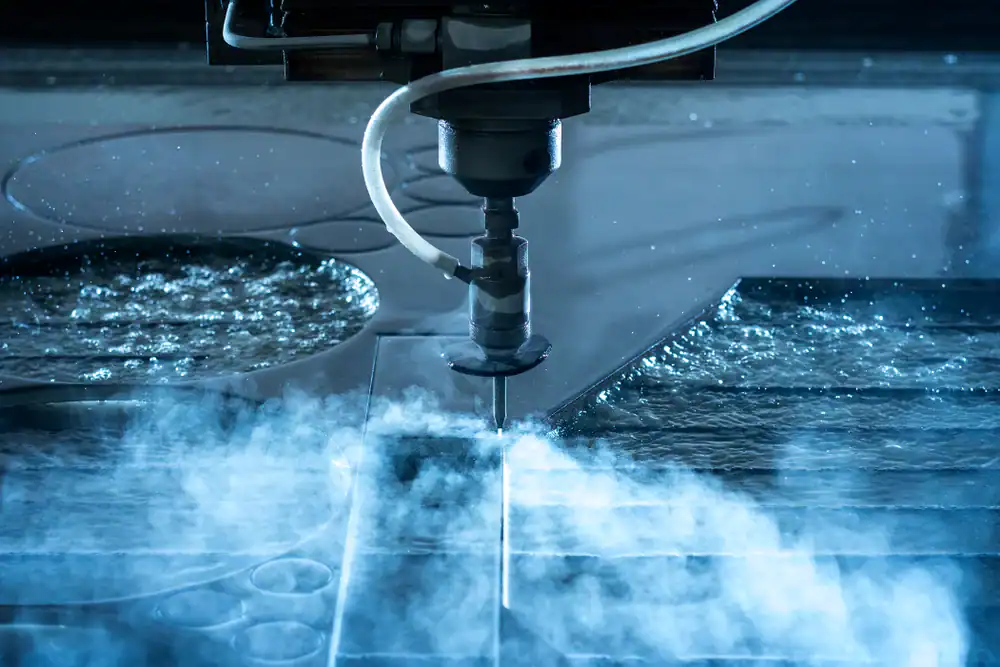
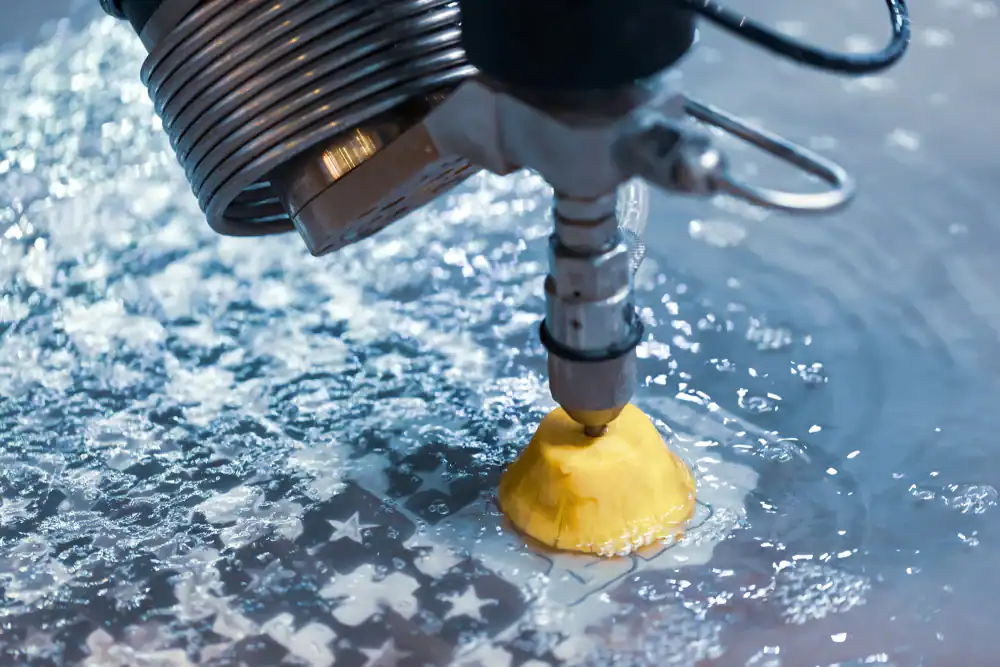
You’re not dealing with thermal stress, micro-cracks, or the limitations of traditional scoring methods. Waterjet cutting uses high-pressure water and abrasive to cut through glass without generating any heat.
That means no heat-affected zones that weaken your material. No chipping along edges that requires secondary finishing. No cracking during the cut that ruins expensive glass stock.
You get clean edges on complex shapes—curves, inside cuts, intricate patterns—that would be nearly impossible or extremely time-consuming with conventional methods. The process is CNC-controlled directly from your CAD file, so there’s no interpretation error between what you designed and what gets cut.
If you’re working on architectural glass features for a Lake Ronkonkoma, NY project, custom residential installations, or industrial glass components, you need cuts that match your specifications without compromise. Waterjet delivers that consistency across prototype runs and full production batches.
We operate from West Islip, serving architects, contractors, and designers throughout Long Island, including Lake Ronkonkoma, NY. We’re equipped with a Flow Mach 500—a CNC-controlled waterjet system that translates your design files into precise cuts without the guesswork.
We’re not a general fabrication shop that happens to have a waterjet. This is what we do. Glass, metal, stone, composites—materials that require precision and zero tolerance for error.
Lake Ronkonkoma’s mix of residential development and commercial projects means you’re often working with tight deadlines and demanding specifications. We handle both one-off custom pieces and production runs, and we provide material consultation upfront so you’re not wasting time or budget on approaches that won’t work.
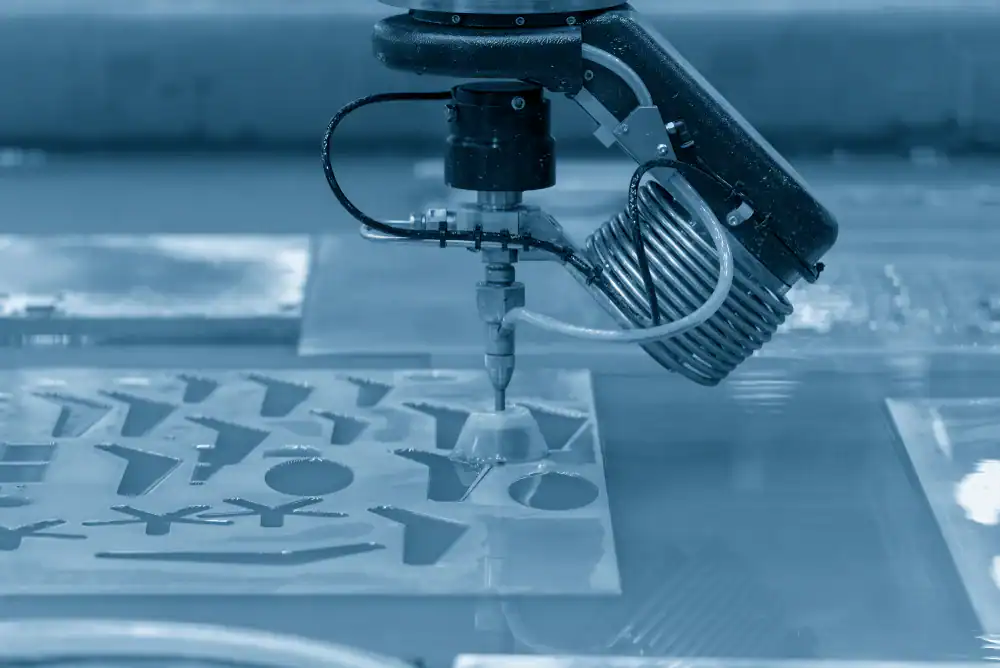
You send us your CAD file or work with our design team to create one. We review the specifications, material thickness, and project requirements to confirm the approach before any cutting starts.
Once the design is locked in, it’s loaded directly into the CNC system. The waterjet follows your exact paths—no manual tracing, no operator interpretation. The cutting head moves in an omnidirectional stream, handling curves, angles, and interior cutouts without repositioning the glass.
During the cut, high-pressure water mixed with abrasive garnet does the work. There’s no blade contact, no heat generation, no vibration that could propagate cracks. The glass stays cool and unstressed throughout the entire process.
After cutting, most pieces require minimal or no edge finishing. You’re not dealing with rough edges that need grinding or polishing. What comes off the table is typically ready for installation or assembly, which saves you time on secondary operations and keeps your project moving.
Ready to get started?
You get design consultation before the cut. If you’re not sure whether your concept is feasible or how to optimize it for waterjet cutting, we walk through that with you. It’s better to solve potential issues at the design stage than after you’ve committed to expensive materials.
CNC-controlled cutting means repeatability. If you need multiples of the same piece—whether that’s ten or a hundred—each one matches the original specifications. That consistency matters for architectural installations across Lake Ronkonkoma, NY, where panels need to align perfectly or custom residential projects where symmetry is non-negotiable.
You also get material flexibility. Waterjet handles varying glass thicknesses, from thin decorative pieces to thick structural components. Laminated glass, tempered glass, specialty glass—the process adapts without requiring different tooling or setup changes that add cost and delay.
The service includes working directly from your files, so there’s no re-drawing or manual setup that introduces error. Your DXF or DWG file becomes the cutting path. That direct translation is what gives you precision down to 0.01mm and eliminates the “close enough” problem you get with less controlled methods.
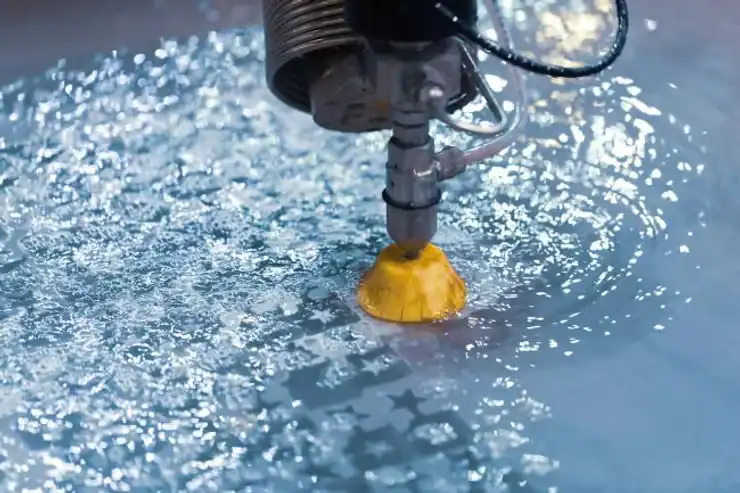
Yes, and that’s one of the main reasons architects and contractors choose waterjet for glass work. Traditional methods create stress points—either from heat or from mechanical scoring—that make thick glass prone to cracking during or after the cut.
Waterjet cutting doesn’t generate heat, so there’s no thermal gradient causing internal stress. The cutting action is also gentler than blade or laser methods, which means the glass isn’t subjected to the kind of force that propagates cracks. This is especially important for thick pieces where even small internal stresses can lead to catastrophic failure later.
We’ve cut glass ranging from thin decorative panels to thick structural components for projects throughout Lake Ronkonkoma, NY. The process scales without introducing new risk factors. Thicker glass just takes longer to cut—it doesn’t require a different approach or specialized equipment that might not deliver the same precision.
Waterjet delivers comparable precision without the thermal damage that’s inherent to laser cutting. Lasers work by melting or vaporizing material, which creates a heat-affected zone around the cut. For glass, that heat causes stress, and stress causes cracks—either immediately or down the line when the piece is handled or installed.
CNC waterjet cutting in Lake Ronkonkoma, NY uses an abrasive waterjet stream that’s controlled to 0.01mm accuracy. You get the same tight tolerances and complex shape capability as laser cutting, but without compromising the structural integrity of the glass. That means no micro-cracks, no edge discoloration, and no weakened zones that become failure points.
The CNC control also means repeatability. Once your design is programmed, every subsequent piece comes out identical. That’s critical for production runs or architectural projects where multiple panels need to fit together perfectly. Laser cutting can deliver precision, but if the heat management isn’t perfect, you’re introducing variability that shows up during installation.
Waterjet excels at anything requiring complex shapes, tight tolerances, or materials that can’t handle heat. Architectural glass features—decorative panels, custom facades, interior partitions with intricate patterns—are ideal because you can cut curves, angles, and interior voids that would be extremely difficult with traditional methods.
Industrial applications like glass components for electronics, automotive glass parts, or marine glass fabrication also benefit from waterjet’s precision and lack of thermal stress. If your project involves laminated or tempered glass, waterjet is often the only practical option because other cutting methods either can’t handle the material or compromise its structural properties.
Custom residential work in Lake Ronkonkoma, NY—things like unique shower enclosures, custom tabletops, artistic glass installations—fits waterjet cutting well because you’re usually dealing with one-off designs that need to be perfect the first time. There’s no room for trial-and-error when you’re working with expensive glass stock, and waterjet’s CNC control eliminates that risk.
In most cases, no. Waterjet cutting produces clean edges that are ready for installation or assembly without grinding, polishing, or other secondary operations. The cutting action doesn’t create the chipping or micro-fractures you get from scoring and breaking, so the edge quality is significantly better right off the machine.
There are situations where you might want additional edge treatment—if you need a specific aesthetic finish like a polished edge for a decorative piece, or if the application requires a particular edge profile for safety or functional reasons. But that’s a design choice, not a requirement to fix poor cut quality.
This matters for project timelines and costs. When you’re not adding secondary finishing steps, you’re saving labor hours and keeping the project moving. For contractors and architects working on Lake Ronkonkoma, NY projects with tight schedules, that difference between “cut and done” versus “cut, then finish” can impact whether you hit your deadlines.
The accuracy comes from CNC control and direct CAD-to-cut workflow. You provide a design file—DXF, DWG, or another CAD format—and that file is loaded directly into the waterjet’s control system. There’s no manual tracing, no operator eyeballing the cut path, no interpretation that introduces error.
The Flow Mach 500 system we use translates your design into precise machine movements. The cutting head follows your specified paths within 0.01mm tolerance, which is tighter than what most projects actually require but gives you confidence that even demanding specifications will be met.
Before cutting, we review the design with you to confirm material thickness, edge requirements, and any special considerations. If there’s something in the design that could be optimized for better results or cost efficiency, we flag it at that stage. Once cutting starts, the CNC system handles the execution, so you’re getting the same accuracy on piece one and piece one hundred. That repeatability is what makes custom glass waterjet cutting in Lake Ronkonkoma, NY viable for both prototype work and production runs.
It depends on design complexity, material thickness, and how many pieces you need, but most projects move faster than you’d expect. Simple cuts on thinner glass can often be completed within a few days. More complex designs with intricate patterns or thicker materials take longer because the cutting process itself is more time-intensive.
The advantage of waterjet is that there’s minimal setup time compared to other methods. Once your design is loaded into the CNC system, the machine runs the job without constant operator intervention. That efficiency means we can handle both rush projects and larger production runs without sacrificing quality.
For Lake Ronkonkoma, NY clients, proximity matters. You’re not shipping glass across the country and hoping it arrives intact. We’re local to Long Island, which cuts down on logistics time and reduces the risk of damage during transport. If you need to see a prototype before committing to a full run, that’s a quick turnaround rather than a multi-week process that stalls your project timeline.
Useful Links
Other Services we provide in Lake Ronkonkoma