Hear from Our Customers
Traditional glass cutting methods leave you choosing between cracked edges, limited design options, or expensive scrap rates. Laser cutting causes thermal distortion. Manual scoring only handles straight lines and simple shapes. You’re stuck redesigning around the limitations of the tool instead of getting what you actually need.
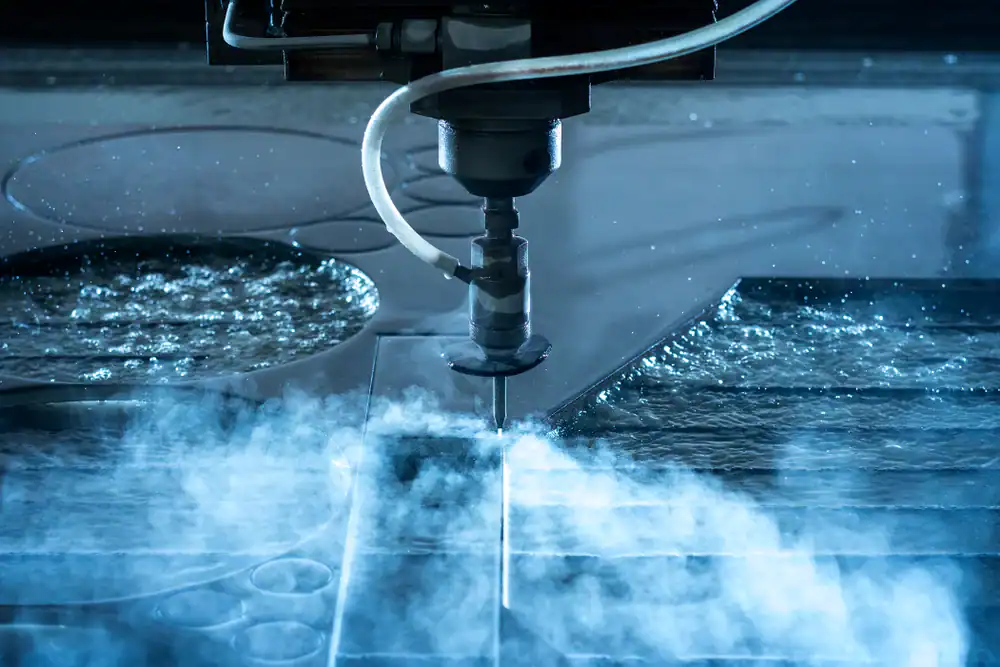
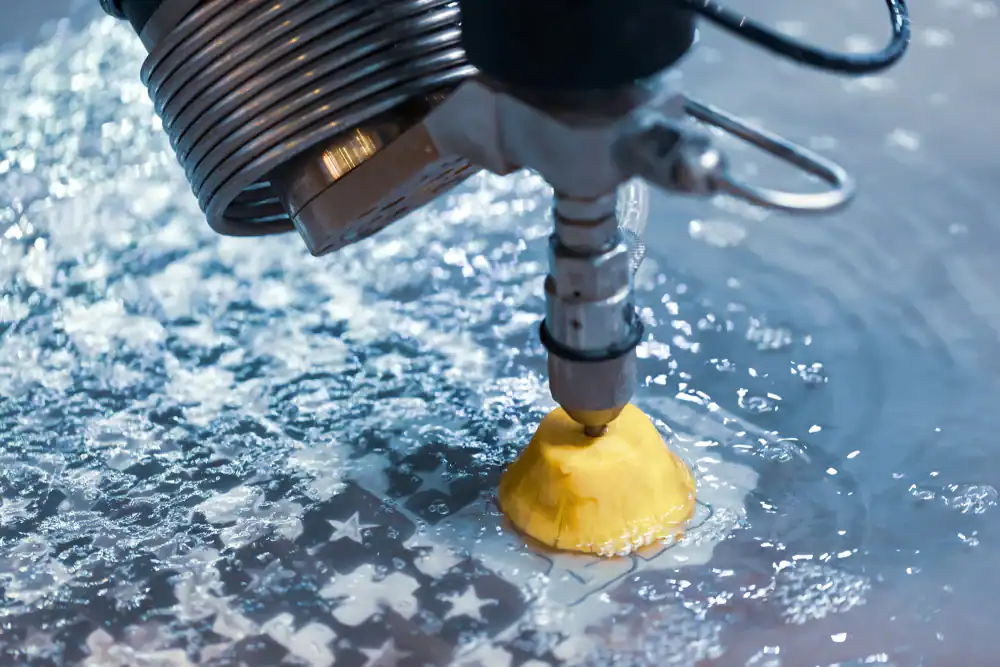
Waterjet cutting removes those constraints entirely. The high-pressure stream cuts through glass without generating heat, which means no micro-cracks, no thermal stress, and no material distortion. You get clean edges on complex curves, tight corners, bevels, and pierced holes that would be impossible or prohibitively expensive with traditional methods.
Whether you’re fabricating custom shower enclosures, architectural glass panels, storefront installations, or automotive glass components, you’re working with a process that handles intricate designs across different glass thicknesses without compromising edge quality. The cut is the cut. No secondary finishing. No rework.
We’ve been operating in Long Beach, NY for over 20 years, serving architects, contractors, manufacturers, and homeowners throughout the tri-state area. We’re ISO 9001:2015 certified and handle production runs from single custom pieces to 100,000 units.
Long Beach’s proximity to New York City’s architectural and design markets means you need fast turnarounds without sacrificing precision. We’ve completed projects for major brands and local businesses alike, cutting everything from frameless shower doors for residential renovations to complex automotive glass components for industrial manufacturers.
Our facility uses CNC-controlled waterjet systems that maintain consistent accuracy across your entire order. You’re not dealing with a shop that dabbles in glass cutting. This is what we do.
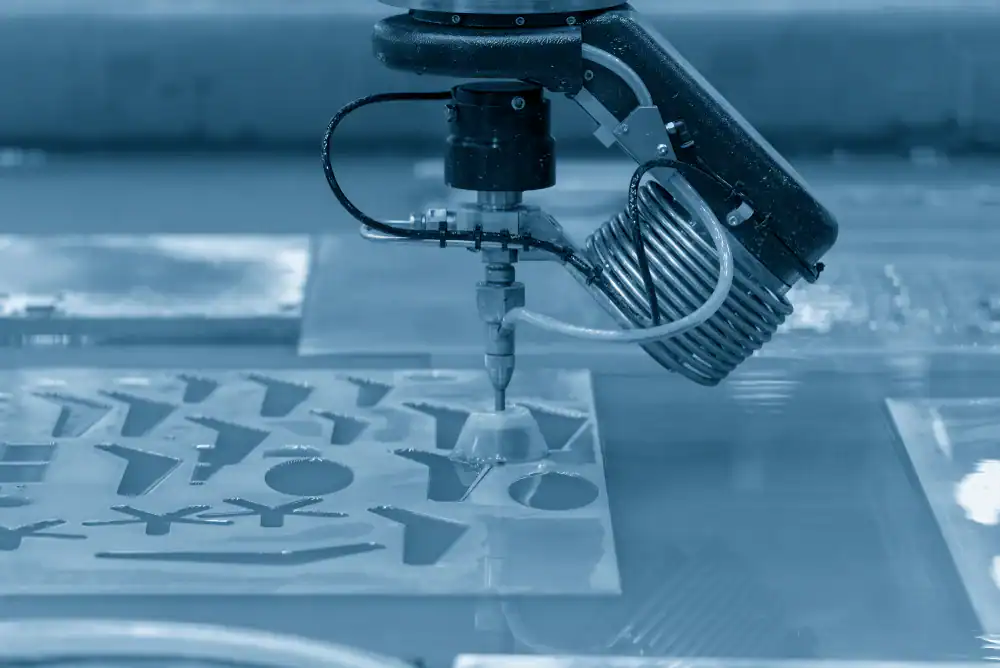
You send us your design specs, CAD files, or templates. We’ll review them to confirm feasibility, recommend any adjustments for optimal cutting, and provide a quote based on material type, thickness, and complexity.
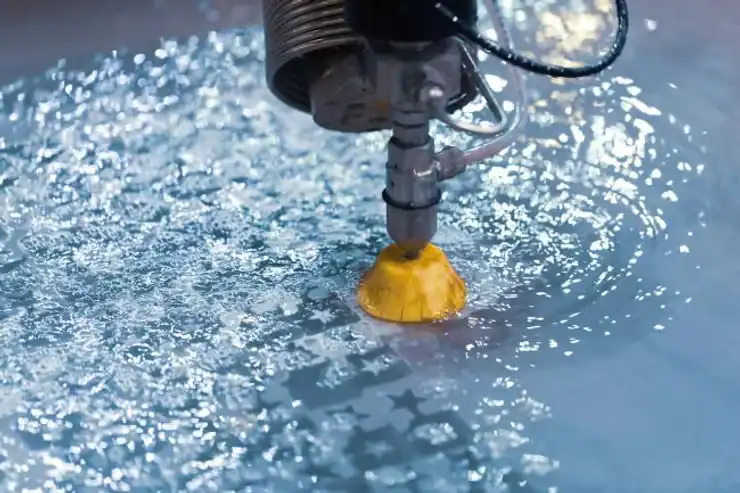
Once approved, your design gets programmed into our CNC waterjet system. The machine uses a high-pressure stream of water mixed with abrasive particles to cut through the glass with precision down to 0.1mm. There’s no blade contact, no heat generation, and no vibration that could cause cracking. The stream follows your exact specifications, handling curves, angles, and intricate patterns that traditional methods can’t touch.
After cutting, we inspect each piece for edge quality and dimensional accuracy. Most waterjet cuts don’t require secondary finishing because the edge comes out smooth and clean. You get your glass ready for installation, whether that’s a single custom piece or a full production run. Turnaround depends on complexity and volume, but our CNC systems work fast compared to conventional cutting methods.
Ready to get started?
You’re working with a process that cuts optical glass, quartz, borosilicate, fused silica, and standard glass types up to 9 inches thick. The waterjet handles tempered and non-tempered glass, though design limitations differ depending on when tempering occurs in your production timeline.
Long Beach’s coastal environment and the tri-state area’s architectural demands mean you’re often dealing with custom storefront installations, residential renovations, or commercial glass railing projects that require exact measurements. Waterjet cutting gives you the flexibility to modify designs post-production without starting over. Need a cutout added after the initial cut? Not a problem.
The process produces minimal waste compared to traditional methods. You’re not losing material to wide blade kerfs or heat-affected zones that require additional trimming. The cutting stream is narrow and precise, maximizing usable glass from each sheet. For commercial and industrial projects where material costs add up quickly, that efficiency matters.
You also get an environmentally cleaner process. No toxic fumes, no dust clouds, no heat production. The workspace stays safer, and you’re not dealing with the disposal issues that come with other cutting methods.
Tempered glass can’t be cut after the tempering process. The tempering creates internal stress that holds the glass together, and any attempt to cut it will cause the entire piece to shatter into small fragments. That’s by design for safety reasons.
If you need tempered glass with custom cuts, holes, or shapes, those features must be cut before tempering. We cut the glass to your exact specifications first, including any edge work, cutouts, or complex shapes. Then the glass goes through the tempering process. This is standard procedure across the industry, not a limitation of waterjet cutting specifically.
For projects requiring both custom cuts and tempered glass, the key is planning your design before fabrication starts. We’ll work with you to finalize all dimensions, hole placements, and edge details upfront so nothing needs to change after tempering. Once you understand the sequence, it’s straightforward.
Waterjet cutting maintains precision levels of ±0.1mm, which puts it ahead of manual scoring and on par with or better than laser cutting for glass applications. The difference is that waterjet achieves that precision without the heat-affected zone that lasers create.
Laser cutting generates intense heat at the cut line, which can cause micro-cracking and thermal stress in glass. You’ll often see edge quality issues or weakened areas around laser cuts, especially on thicker glass. Traditional scoring and breaking is limited to straight lines and gentle curves, and the break line isn’t always perfectly clean or predictable.
Waterjet uses a cold cutting process. The high-pressure stream erodes the material without changing its temperature or structure. You get smooth, clean edges on intricate shapes, tight inside corners, and complex curves that would be difficult or impossible with other methods. For architectural glass panels, custom mirrors, or precision automotive components, that combination of accuracy and edge quality is what makes the difference between a clean installation and a problem job.
Turnaround depends on the complexity of your design, the thickness and type of glass, and current production volume. Simple cuts on standard glass thickness can often be completed within a few days. More complex projects with intricate patterns, multiple pieces, or specialty glass types may take one to two weeks.
Production runs get scheduled based on volume. A single custom piece for a residential shower enclosure moves faster than a commercial order for 500 identical storefront panels. We’ll give you a specific timeline when you submit your design specs and material requirements.
Rush jobs are possible depending on our current schedule. If you’re working against a tight installation deadline or need to coordinate with other contractors on a Long Beach project, let us know upfront. We’ve handled plenty of time-sensitive architectural and commercial projects where timing was critical. The CNC waterjet process itself is fast compared to traditional methods, so the main variable is queue time and design complexity, not the actual cutting speed.
Waterjet cutting handles glass from extremely thin sheets down to 0.1mm thickness up to pieces 9 inches thick. The process adjusts for material thickness by modifying water pressure, abrasive flow rate, and cutting speed. Thicker glass takes longer to cut, but the precision and edge quality remain consistent.
Thin glass requires careful handling and proper support during cutting to prevent flexing or vibration, but the waterjet stream itself doesn’t create the mechanical stress that traditional cutting tools do. There’s no blade pressure or clamping force that could crack delicate material. For applications like electronics substrates or thin architectural glass, that matters.
Thick glass benefits from waterjet cutting because traditional methods struggle with depth. Scoring and breaking doesn’t work well beyond certain thicknesses, and laser cutting becomes less effective as material depth increases. Waterjet maintains a consistent cut quality through the entire thickness of the material, whether you’re working with standard quarter-inch glass or specialty applications requiring much thicker pieces. The stream cuts straight through without tapering or losing precision at depth.
Waterjet cutting works best when your project involves complex shapes, tight tolerances, or materials that can’t handle heat. Architectural glass panels with intricate patterns, custom shower enclosures with curved edges and precise cutouts, automotive glass components with multiple holes and angles, and decorative glass art pieces all benefit from the precision and versatility of waterjet technology.
Commercial storefront installations in Long Beach often require exact measurements to fit existing structures, especially in older buildings where dimensions aren’t perfectly square. Waterjet cutting gives you the accuracy to match those real-world conditions without forcing the glass into a shape it doesn’t want to take. Residential projects like frameless mirrors, glass countertops, or custom backsplashes with outlet cutouts and edge details get cleaner results than traditional cutting methods can deliver.
Industrial applications are another strong fit. If you’re manufacturing glass components for automotive interiors, aerospace applications, or electronics, you need repeatable precision across production runs. Our CNC waterjet systems maintain consistent accuracy whether you’re cutting one piece or ten thousand. The process also works well for prototyping, where you might need to test different designs before committing to full production. You can modify and recut without the tooling costs associated with other fabrication methods.
Waterjet cutting costs more per linear foot than simple straight cuts with traditional scoring methods. But that comparison misses the point. You’re not paying for the same thing.
Traditional methods can’t handle the complex shapes, tight tolerances, and intricate details that waterjet cutting delivers. If your project requires curves, bevels, interior cutouts, or precision edge work, traditional cutting either can’t do it or requires multiple secondary processes that add time and cost. Waterjet does it in one pass with no additional finishing in most cases.
The real cost comparison includes material waste, rework, and scrap rates. Traditional cutting methods often result in cracked edges, imprecise breaks, or damaged pieces that need to be recut. Waterjet cutting produces clean, accurate cuts the first time, which means less wasted material and fewer rejected pieces. For commercial and industrial projects where you’re cutting expensive specialty glass or working with tight material budgets, that efficiency can offset the higher per-cut cost. You’re also getting faster turnaround times compared to methods that require multiple steps or manual finishing work.
Useful Links
Other Services we provide in Long Beach