Hear from Our Customers
You get glass pieces that fit right the first time. No thermal stress means no warping, no micro-fractures, and no callbacks because a panel cracked during installation.
The waterjet stream cuts omnidirectionally, handling curves, angles, and intricate patterns that traditional scoring methods can’t touch. That means your architectural vision doesn’t get watered down by manufacturing limitations.
Edge quality comes out smooth enough that you skip secondary finishing in most cases. You’re not paying extra for grinding or polishing work after the fact. The cut is the finished product, which saves time and keeps your project moving.
Whether you’re working on a single custom residential piece or running production for a commercial build, the process scales without sacrificing accuracy. Your tenth piece looks identical to your first.
We’ve been handling precision cutting work for architects, contractors, and designers across Nassau County since the early 2000s. We’ve seen Malverne’s construction landscape evolve, and we’ve worked with local firms who need glass fabrication that doesn’t slow down their timelines.
Our shop runs advanced CNC waterjet systems that handle everything from quarter-inch residential glass to thicker architectural panels. We’re not a general fabricator trying to do glass on the side—this is what our equipment and our process are built for.
You’re working with people who understand that when you call about a glass project in Malverne, you need accurate answers about turnaround, tolerances, and whether your design is actually manufacturable. We’d rather tell you upfront if something won’t work than waste your time and material.
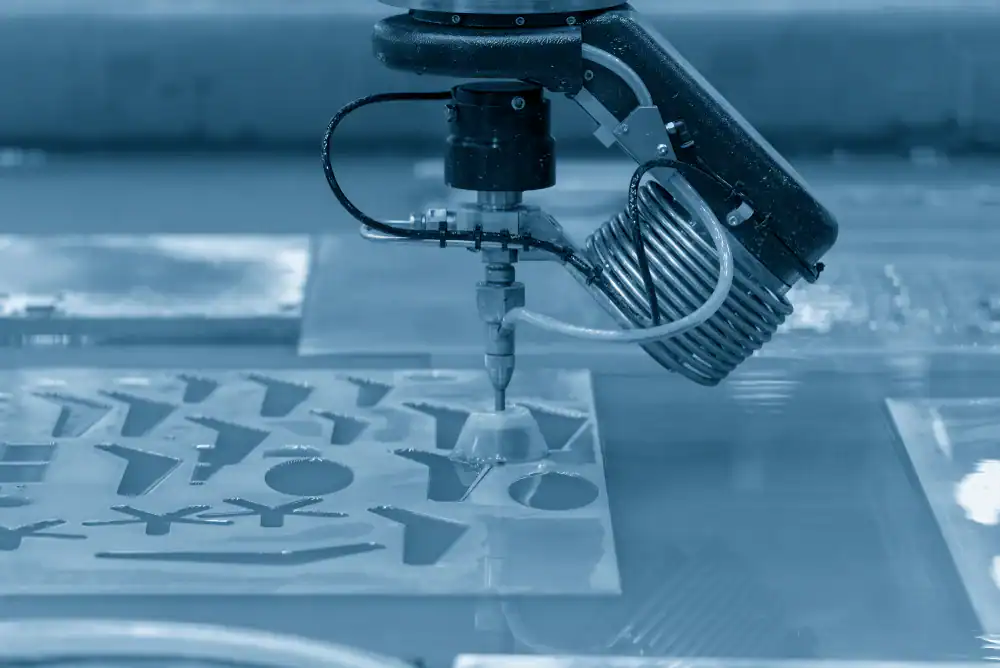
You send us your design file—CAD, DXF, or even a detailed sketch if that’s what you’re working from. We review it for manufacturability and flag anything that might cause issues before we start cutting.
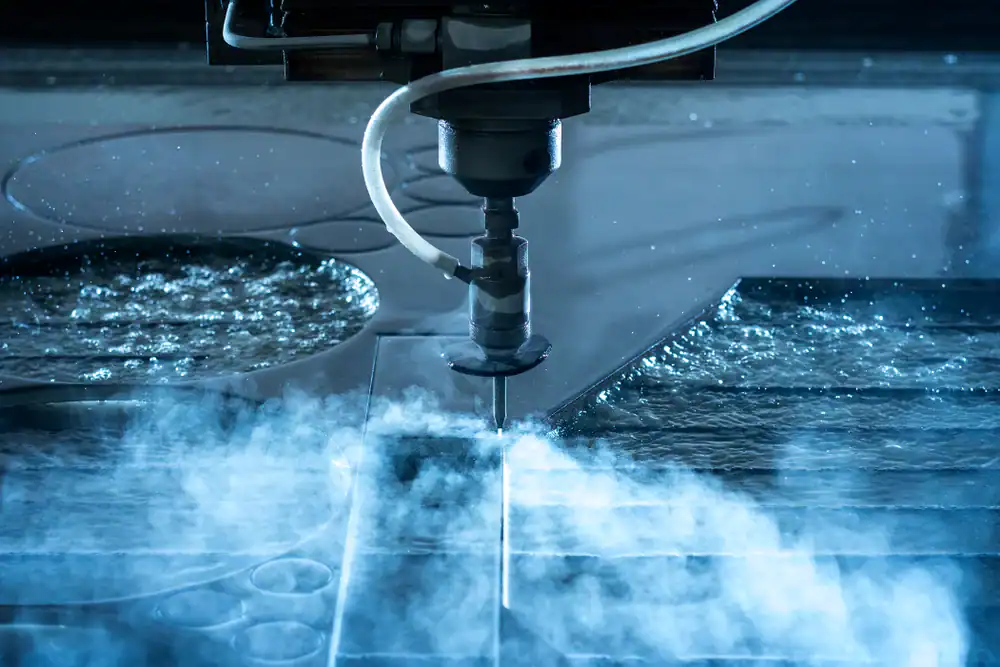
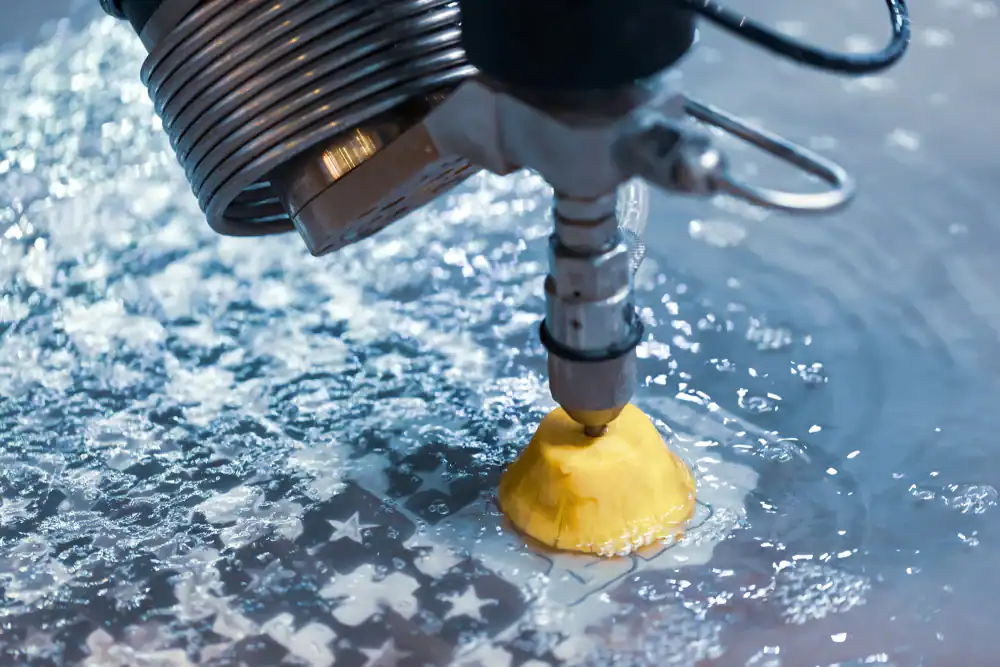
Once the design is confirmed, we program the CNC system with your exact specifications. The waterjet uses ultra-high-pressure water mixed with fine abrasive to cut through the glass without generating any heat. No torches, no blades, no thermal expansion to worry about.
The cutting head follows your programmed path with precision that holds tolerances within ±0.005 inches. Complex curves, tight inside corners, multiple holes—it all gets cut in one setup, which eliminates alignment errors from moving the material between operations.
After cutting, we inspect dimensions and edge quality. If you need additional services like beveling or drilling, we handle that before the glass leaves our shop. You receive finished pieces ready for installation, packaged to prevent damage in transit.
Ready to get started?
You get design consultation before we cut anything. If your architect or designer has created something that pushes the limits of what’s manufacturable, we’ll tell you what adjustments would make it work—or confirm that it’s good to go as-is.
Material selection matters more than most people realize. We work with various glass types and thicknesses, and we’ll recommend what makes sense for your specific application in Malverne’s climate and building requirements. Tempered glass, laminated glass, low-iron glass—each cuts differently and performs differently once installed.
The actual cutting process includes full CNC programming, setup, cutting, and quality inspection. We’re checking dimensions throughout the run, not just at the end, so if something drifts out of spec, we catch it immediately.
Malverne’s architectural projects often involve custom residential work and commercial renovations where glass plays a key design role. We’ve cut everything from decorative panels for local restaurants to precision components for storefronts along Hempstead Avenue. The village’s mix of historic buildings and modern construction means you need a fabricator who can match existing styles or execute contemporary designs with equal precision.
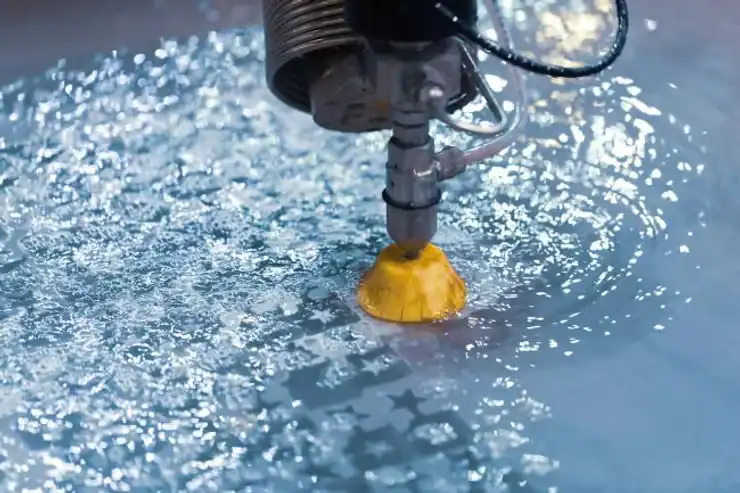
Waterjet cutting handles annealed glass, tempered glass, laminated glass, low-iron glass, and specialty architectural glass. Each type has different characteristics, but the waterjet process works across all of them because it doesn’t rely on heat.
Tempered glass is tricky—it needs to be cut before tempering, not after. The tempering process puts the glass under internal stress, and cutting it afterward causes it to shatter. If you need tempered glass with custom cuts, we cut it first, then it goes to tempering.
Laminated glass cuts cleanly through both the glass layers and the interlayer material. The waterjet doesn’t delaminate or separate the layers like some cutting methods can. You get a clean edge through the entire thickness, which is critical for safety glass applications in commercial buildings.
Waterjet cutting holds tolerances to ±0.005 inches, which is significantly tighter than traditional scoring and breaking methods. Traditional cutting might get you within a sixteenth of an inch if the operator is skilled and the glass cooperates. Waterjet cutting removes the variability.
The CNC programming means the machine follows the exact same path every time. Your fiftieth piece matches your first piece dimensionally. That repeatability matters when you’re doing production runs or need multiple panels to align perfectly during installation.
Complex shapes are where the difference becomes obvious. Traditional methods struggle with inside corners, tight curves, and intricate patterns. The waterjet stream is omnidirectional, so it cuts curves as easily as straight lines. You’re not limited to designs that can be scored and snapped.
Waterjet cutting typically produces edges smooth enough for most applications without additional finishing. The edge quality depends on cutting speed and abrasive settings, which we adjust based on your requirements.
For architectural applications where the edge will be visible, we can slow the cutting speed to produce a polished-quality edge right off the machine. For pieces where the edge will be framed or hidden, we run faster speeds that still produce clean edges but prioritize efficiency.
If you need a specific edge treatment—beveled, seamed, or polished to a particular grit—we can handle that as a secondary operation. But in many cases, the waterjet edge is the finished edge. That eliminates a processing step and reduces your overall fabrication time and cost.
Turnaround depends on design complexity, material availability, and current production schedule. Simple cuts on standard glass can be done in a few days. Complex architectural pieces with multiple operations might take a week or two.
The design review happens within 24 hours of receiving your files. We’ll confirm feasibility and provide a timeline based on current shop capacity. If you’re on a tight deadline for a Malverne project, let us know upfront—we can often accommodate rush work if we know about it early.
Material sourcing is usually the longest variable. If you’re using standard clear glass in common thicknesses, we typically have it in stock or can get it quickly. Specialty glass, custom tints, or unusual thicknesses might add a few days for procurement. We’ll tell you exactly what to expect before you commit.
Waterjet cutting costs more per linear foot than traditional scoring methods, but you’re comparing different capabilities. Traditional cutting works for straight lines and simple shapes. Waterjet handles complexity that traditional methods can’t achieve at any price.
The real cost comparison includes waste, secondary operations, and failure rates. Waterjet cutting produces less waste because of tighter nesting and precision. You’re not oversizing pieces to account for cutting variability. Edge finishing is often eliminated, which removes labor and time from your total cost.
For production runs, waterjet becomes more cost-effective as quantity increases. The CNC programming is done once, then the machine runs identical pieces without operator intervention. Traditional cutting requires skilled labor for each piece, and quality can vary based on operator fatigue or material inconsistencies.
Waterjet systems cut glass up to several inches thick, which covers virtually all architectural applications. Thicker glass takes longer to cut because the waterjet stream needs to penetrate the full depth, but the process remains consistent regardless of thickness.
Commercial projects in Malverne often use thicker glass for structural applications, safety requirements, or acoustic performance. The waterjet cuts through thick laminated assemblies, insulated glass units (before assembly), and heavy plate glass without inducing stress that could cause delayed failure.
Thick glass also benefits most from waterjet’s heat-free process. Traditional cutting methods that generate heat can create internal stresses in thick material that don’t show up immediately but cause cracking weeks or months after installation. Waterjet eliminates that risk entirely because there’s zero heat introduced during cutting.
Useful Links
Other Services we provide in Malverne