Hear from Our Customers
You need glass cut to exact specs because there’s no room for error on your project. A piece that’s off by even a fraction means delays, wasted material, and explaining to your client why things don’t line up.
Waterjet cutting gives you linear accuracy between ±0.003″ and ±0.005″. That’s the kind of precision that means your architectural panels align perfectly, your custom residential pieces fit without gaps, and your industrial components don’t require rework. The cuts are clean enough that you skip secondary finishing entirely.
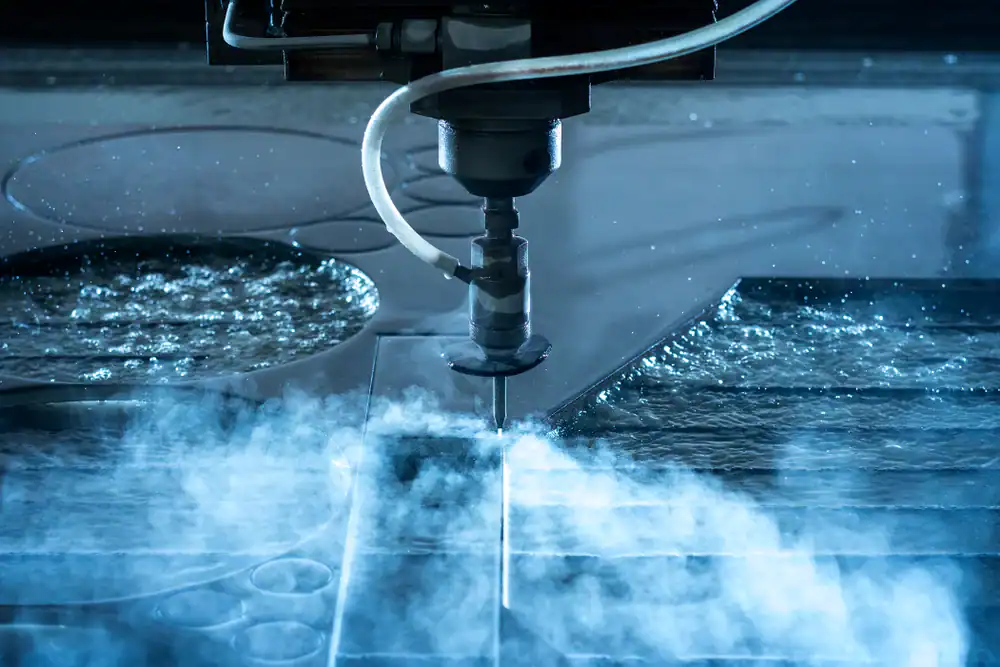
The process uses high-pressure water and abrasive to cut through glass without generating heat. No thermal stress means no microfractures forming along the edge, no warping in thick pieces, and no risk of the material cracking hours or days after you’ve already installed it. You get smooth, satin edges on shapes that would be nearly impossible to achieve with traditional scoring and breaking methods.
Whether you’re working with thin decorative glass or architectural panels several inches thick, the cut quality stays consistent. Complex curves, tight inside corners, intricate patterns—all possible without compromising the structural integrity of the material.
We specialize in precision cutting for materials that demand accuracy and care. Our CNC waterjet systems handle glass, metals, stone, composites, and ballistic laminates with the same level of control.
Every piece gets inspected for dimension, edge finish, and squareness before it leaves our shop. We verify against your tolerances because parts that don’t fit cost you time and money. Medford contractors and fabricators come to us when the job requires more than standard glass cutting can deliver—when the design is complex, the material is expensive, or the deadline is tight.
We’ve built our reputation on doing the technical work right so you can focus on your project, not on fixing mistakes.
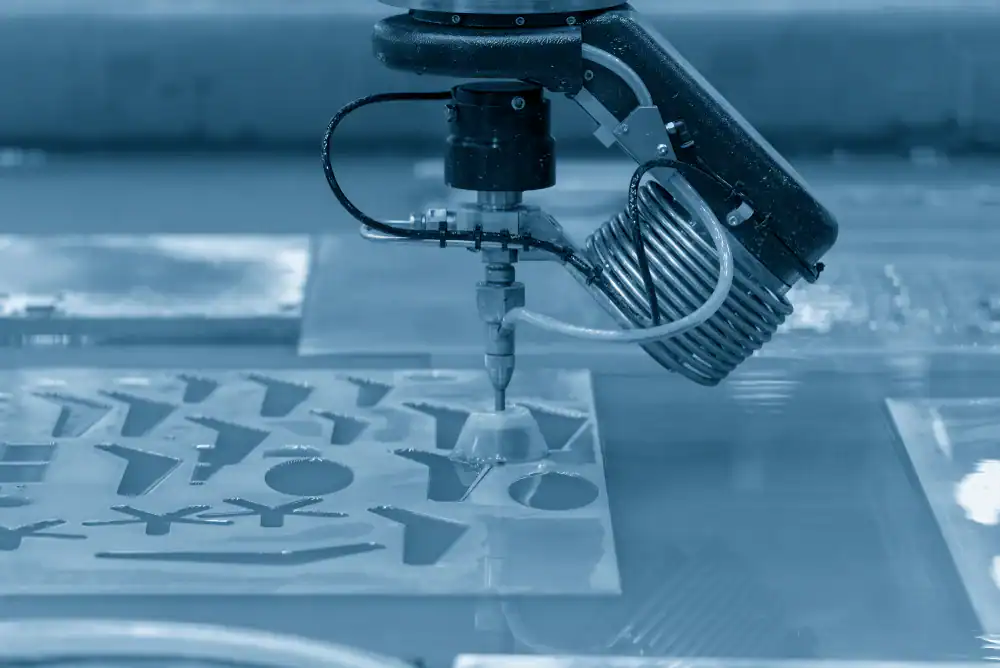
You send us your specifications—drawings, CAD files, or even a sketch with dimensions. We program the cut path into our CNC system, accounting for material thickness, edge quality requirements, and any tolerance specifications you’ve provided.
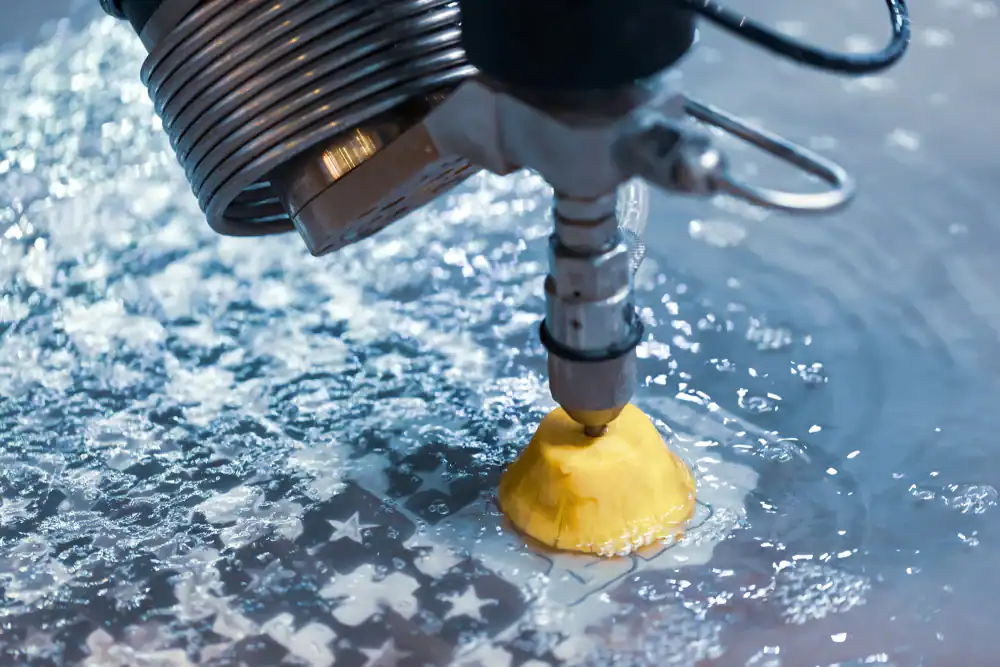
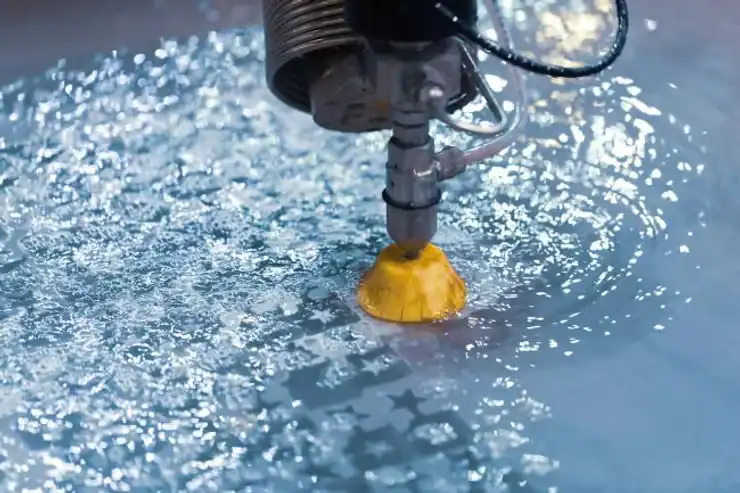
The glass gets secured on a vibration-dampened cutting table. The waterjet nozzle positions itself using servo motors that move in thousandths of an inch increments. High-pressure water mixed with fine abrasive garnet cuts through the material following your exact design. The stream is thin—between 0.020″ and 0.050″—so there’s minimal material waste.
For thicker glass or tighter tolerances, we adjust pressure, abrasive flow, and cutting speed. The system can pierce through the material without cracking it, then follow complex paths including sharp corners and intricate curves. Because there’s no heat involved, the glass properties stay unchanged throughout the entire process.
After cutting, we inspect dimensions and edge quality. If your project requires multiple identical pieces, the CNC system reproduces each one with the same precision as the first. You get consistent results across your entire order.
Ready to get started?
You get glass cut to your specifications with accuracy that traditional methods can’t match. The cold cutting process means no heat-affected zones, no thermal stress, and no structural changes to the material. Your pieces come out dimensionally accurate and structurally sound.
The edge quality is smooth enough for most applications without additional grinding or polishing. For architectural work, we deliver Q3 to Q4 quality edges. For mechanical or ballistic applications requiring tighter specs, we can achieve Q4 to Q5 quality. That’s the difference between an edge that needs work and one that’s ready to install.
Medford’s construction and renovation market includes everything from high-end residential projects in areas like Selden and Farmingville to commercial work throughout Suffolk County. Architectural firms working on Long Island projects need glass fabrication that can handle custom facades, decorative interior panels, and precision window components. Our waterjet system cuts glass up to 200mm thick, handling both standard architectural glass and specialty materials like laminated or tempered glass.
Industrial manufacturers in the area need custom glass components for equipment, machinery housings, and protective barriers. The waterjet process cuts these parts without introducing stress that could cause failure during operation. You get components that fit your assemblies correctly and perform reliably under use.
Yes, and that’s one of the main reasons architects and contractors choose waterjet over traditional methods for thick glass work. The process can cut glass up to 200mm thick without introducing thermal stress or mechanical force that causes cracking.
Traditional glass cutting uses scoring and controlled breaking, which works fine for thinner materials but becomes increasingly risky as thickness increases. Thick glass is expensive, and a crack during cutting means scrapping the entire piece. Waterjet cutting uses a thin stream of high-pressure water and abrasive that erodes through the material gradually. There’s no impact force and no heat generation.
The cutting table includes vibration dampening to keep the glass stable during the process. The CNC system controls the cutting speed based on material thickness—thicker glass gets cut more slowly to maintain edge quality and prevent any stress buildup. For architectural panels that will be installed in building facades or structural applications, this matters because even microscopic stress fractures can propagate over time and cause failure after installation.
Waterjet cuts glass without heat, while laser cutting uses focused thermal energy that can create stress points and edge defects in glass. For most glass applications, waterjet delivers better edge quality and lower risk of material damage.
Laser cutting works by melting or vaporizing material along the cut line. Glass doesn’t respond well to this because it’s a poor thermal conductor. The rapid heating creates thermal gradients that cause stress, and those stress points can lead to cracking either during cutting or after installation when the glass experiences temperature changes. You’ll often see microfractures along laser-cut glass edges that compromise structural integrity.
Waterjet cutting keeps the glass at ambient temperature throughout the entire process. The abrasive stream mechanically erodes the material without changing its properties. You get clean edges without heat-affected zones, no discoloration, and no internal stress. For thick glass, complex shapes, or applications where structural integrity matters, waterjet is the more reliable choice. The edge quality is also superior—smooth enough that many applications don’t require any secondary finishing work.
Our CNC waterjet system can cut virtually any 2D shape you can draw, including tight inside corners, intricate curves, and patterns that would be impossible with manual glass cutting methods. The limitation isn’t the machine’s capability—it’s usually the structural integrity of the glass itself.
Very thin bridges between cutouts or extremely sharp inside corners can create weak points in the finished piece. We’ll review your design and let you know if any features risk breakage during handling or installation. Sometimes a small design adjustment—like increasing a radius slightly or adding a bit more material between cutouts—makes the difference between a piece that’s fragile and one that’s durable.
The waterjet can follow complex paths including curves with varying radii, sharp direction changes, and detailed patterns. For decorative glass work, artistic installations, or custom architectural features, this opens up design possibilities that traditional cutting methods can’t achieve. The CNC programming ensures that complex shapes come out accurately and that multiple pieces match each other exactly. If you’re working on a project with repeated custom glass elements, every piece will be identical to your specifications.
For most applications, no. Waterjet cutting produces smooth edges with a satin finish that’s ready to use without additional grinding or polishing. The edge quality depends on the cutting parameters we use, which we adjust based on your application requirements.
Architectural glass for building facades, interior partitions, or decorative panels typically gets cut at Q3 to Q4 quality. These edges are smooth, dimensionally accurate, and visually acceptable for professional installations. If you run your finger along the edge, it feels slightly textured but not sharp or rough. For applications where the edge will be framed, sealed, or otherwise concealed, this finish is more than adequate.
If you need polished edges for aesthetic reasons—like glass shelving, tabletops, or displays where the edge is visible and needs to be crystal clear—you can request higher quality cuts or plan for light polishing afterward. For mechanical or safety-critical applications, we can achieve Q4 to Q5 quality edges with tighter tolerances and smoother finishes. The key point is that waterjet edges don’t have the chips, fractures, or rough spots that traditional cutting methods often create, so you’re starting from a much better baseline even if you do choose to add finishing work.
Accurate enough that your custom shower enclosures, glass railings, or decorative panels fit correctly the first time. Our CNC waterjet system maintains linear cutting accuracy between ±0.003″ and ±0.005″, which is tighter than the tolerances most residential installations require.
Residential glass cutting services in Medford, NY typically involve custom work where standard sizes don’t fit—shower doors for renovated bathrooms, glass panels for modern railing systems, custom window shapes for architectural details, or decorative glass elements for interior design. These projects need precision because you’re often fitting glass into existing openings or matching specific design dimensions.
The waterjet system positions itself using servo motors that move in thousandths of an inch. When we program your cut, we’re working from your exact measurements. The machine follows that path consistently, so if you order multiple pieces for a project, they’ll all match. This matters for residential work because you’re usually on site once for installation, and pieces that don’t fit mean delays, additional trips, and frustrated homeowners. The accuracy also means cleaner installations with proper gaps for sealing and no need for on-site adjustments that compromise the finished appearance.
We cut standard float glass, tempered glass, laminated glass, thick architectural panels, decorative art glass, and specialty materials like borosilicate or low-iron glass. The waterjet process works across different glass types because it’s a mechanical cutting method rather than a thermal one.
Each glass type has different characteristics that affect how we approach the cut. Tempered glass has internal stress from the tempering process, so it needs to be cut before tempering—we can’t cut already-tempered glass without it shattering. Laminated glass includes plastic interlayers between glass sheets, and the waterjet cuts through both the glass and the laminate cleanly without delamination. Thick architectural glass requires slower cutting speeds and careful parameter control to maintain edge quality through the entire thickness.
For specialty applications, we’ve cut glass for industrial equipment, protective barriers, ballistic laminates, and custom fabrication projects. The system handles both clear and tinted glass, textured or patterned surfaces, and coated glass where preserving the coating integrity matters. If you’re working with an unusual glass type or you’re not sure whether waterjet cutting is appropriate for your material, we can discuss the specifics of your project and determine the best approach before you commit to the work.
Useful Links
Other Services we provide in Medford