Hear from Our Customers
You stop losing time to edge chipping. You stop eating costs from thermal stress fractures. You get clean cuts on complex shapes that other methods can’t touch.
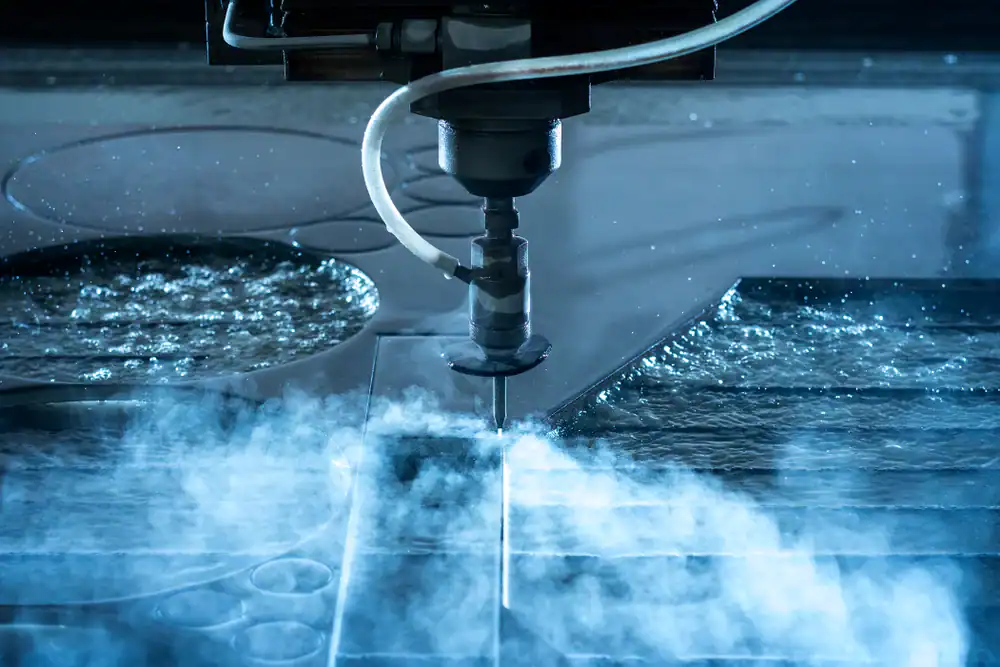
Waterjet cutting uses high-pressure water mixed with fine abrasive to slice through glass without generating heat. That means no thermal shock, no micro-fractures forming along your cut line, and no weakened edges that fail during installation. The stream is precise down to a tenth of a millimeter, so intricate patterns, tight radii, and beveled edges come out consistent across your entire run.
Architects and contractors in Mineola, NY use this for custom storefronts, decorative panels, and structural glass installations where edge quality matters. Fabricators rely on it when laser or saw cutting would compromise the material. It works on laminated glass, tempered glass, and thick architectural panels up to two inches—materials that crack under traditional methods.
We operate out of West Islip, serving architects, contractors, and fabricators across Nassau County and the greater New York metro. We’ve built our reputation on handling the projects that require both technical precision and fast turnaround—because we know delays on your end cost more than just time.
Mineola sits at the center of Long Island’s commercial corridor, where mixed-use developments and historic building renovations demand custom glass work that meets strict specifications. We work with designers on one-off architectural features and with commercial glass companies running high-volume production. Our CNC glass waterjet cutting systems handle both.
You’re not working with a middleman. You’re talking directly to the people running the equipment, reviewing your files, and making sure your material gets cut to spec.
You send us your design file—DXF, DWG, or PDF works. We review it for feasibility, flag any potential issues with radii or tolerances, and confirm material specs with you before we start. If something won’t cut cleanly or needs adjustment for structural integrity, we’ll tell you up front.
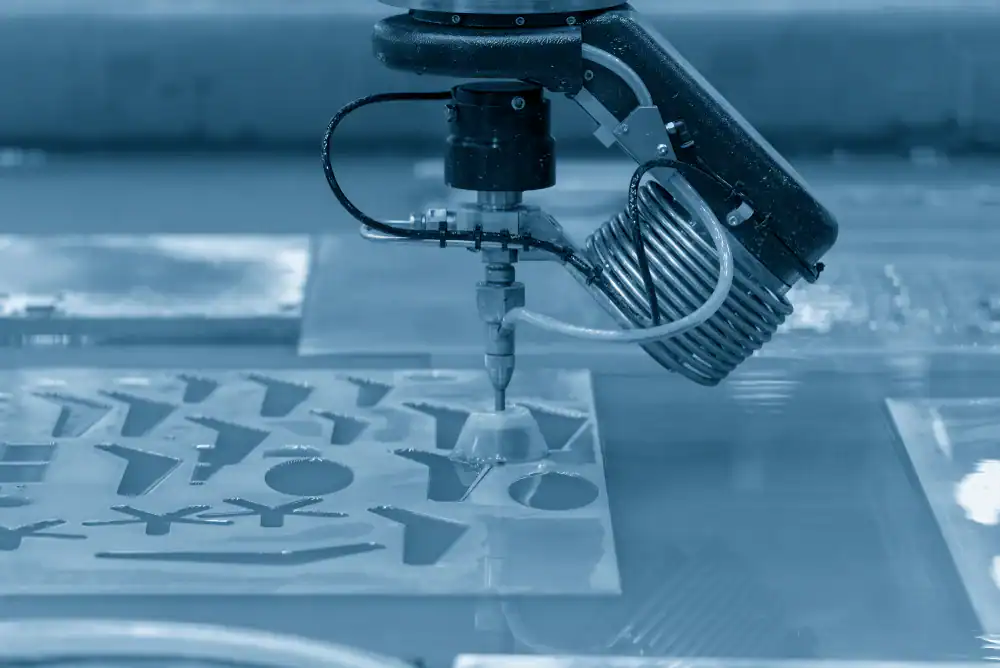
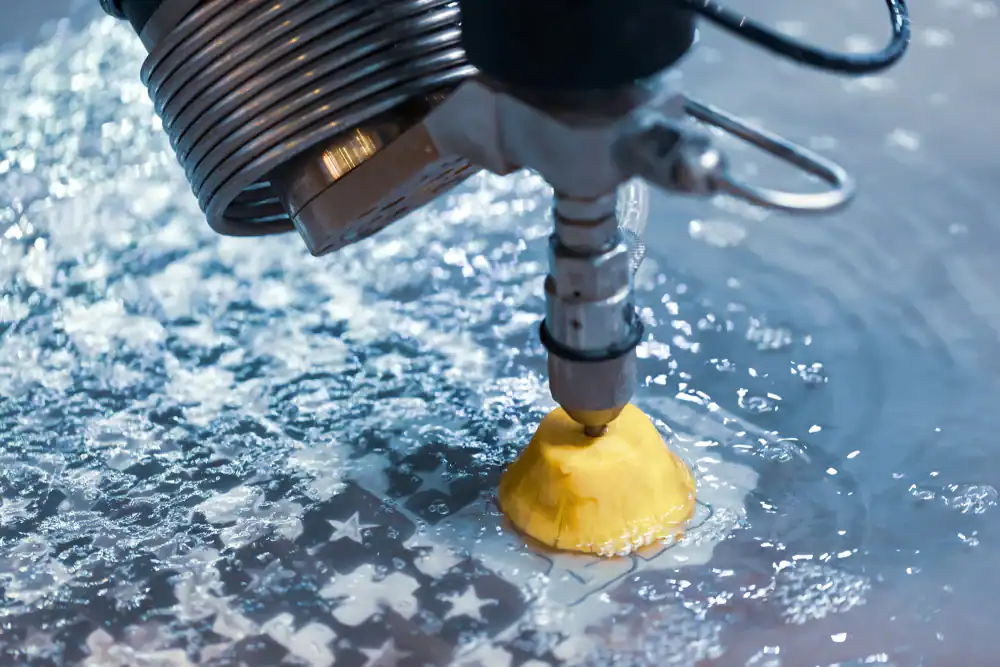
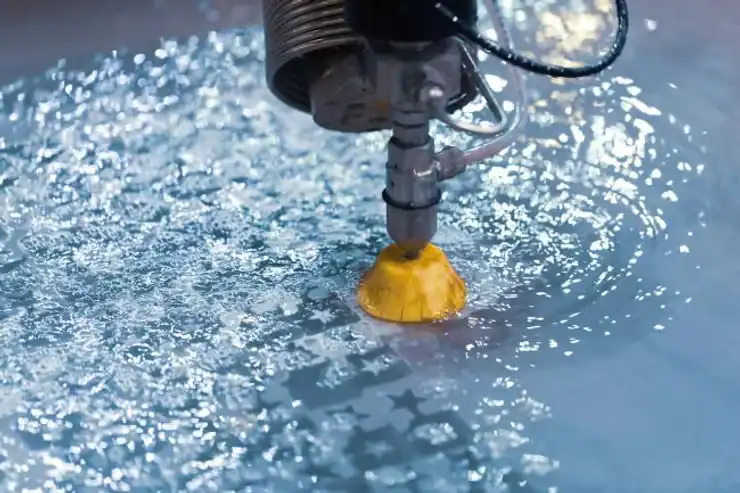
Once the file is dialed in, we load your glass onto the cutting table and secure it without clamps that would stress the material. The CNC system follows your design path using a high-pressure waterjet stream mixed with garnet abrasive. The stream stays cold, so there’s no heat-affected zone and no risk of thermal cracking. For thicker glass or tighter tolerances, we adjust pressure and speed to keep edge quality consistent.
After cutting, we inspect edges for chips or irregularities. Most waterjet cuts come off the table ready for installation or assembly, but if your project needs additional edge polishing or beveling, we can handle that too. Turnaround depends on material thickness and complexity, but most custom glass waterjet cutting projects in Mineola, NY ship within a few days of file approval.
Ready to get started?
You get cuts that don’t chip. Waterjet technology eliminates the micro-fractures and edge damage that come from mechanical scoring or thermal cutting. That means fewer rejected pieces, less rework, and faster installation times when your glass arrives on site.
You get design flexibility. Complex curves, sharp internal corners, small-diameter holes, decorative patterns—waterjet handles shapes that would crack or require multiple setups with other methods. If you can draw it, we can cut it. That matters in Mineola, NY, where architectural projects often blend modern design with older building constraints that demand custom-fit glass panels.
You get material versatility. We cut annealed glass, tempered glass, laminated safety glass, low-iron starphire, and thick architectural panels. The process works across different thicknesses without changing tooling or setup, so mixed-spec orders don’t slow down your timeline. And because there’s no heat, you avoid the warping and stress issues that plague laser cutting on thicker stock.
Waterjet cuts laminated glass cleanly, but tempered glass is a different situation. Once glass goes through the tempering process, it’s under internal stress that makes it shatter if you try to cut it. Tempering has to be the last step—any cutting, drilling, or edge work needs to happen before the glass gets tempered.
Laminated glass works well with waterjet because the process doesn’t generate heat that would delaminate or damage the interlayer. The cold cutting action slices through both glass layers and the polymer middle without causing separation or bubbling. You do need to account for slight differences in how the interlayer responds to the abrasive stream, but that’s a matter of adjusting feed rate and pressure.
If your project requires tempered glass with custom shapes, we cut it to your specs first, then you send it out for tempering. We can coordinate timing with your tempering vendor to keep your project on schedule.
We routinely cut glass up to two inches thick. Thicker material takes longer and requires adjustments to pressure and abrasive flow, but the process stays consistent. Edge quality does change slightly with thickness—thicker glass can show a bit more taper on the cut edge, where the bottom of the cut is slightly wider than the top.
For most architectural and industrial applications, that taper is within acceptable tolerance and doesn’t affect structural performance or appearance. If your project demands perfectly perpendicular edges on thick stock, we can make multiple passes or adjust cutting parameters to tighten up the edge profile. That adds time, but it’s an option when specs require it.
Thinner glass—anything under a quarter inch—actually presents more challenges because it’s more prone to vibration during cutting. We handle it with careful fixturing and slower feed rates, but thin glass always requires more attention than thicker material.
Internal corner radii down to about an eighth of an inch are achievable, though a quarter inch is more practical for most projects. The limitation isn’t the waterjet stream itself—it’s about how much stress the glass can handle as the cut progresses. Tighter radii concentrate stress at the corner, which increases the risk of cracking during or after the cut.
For decorative patterns with lots of detail, we look at the overall design to make sure there aren’t stress points where cracks could propagate. Sometimes that means slightly enlarging a radius or adjusting the cut sequence so the glass stays supported as we remove material. Small holes are similar—we can pierce down to a quarter inch diameter, but anything smaller risks fracturing the surrounding material.
If your design pushes those limits, we’ll review it with you and suggest modifications that keep the look you want while making the piece structurally sound. It’s better to adjust the design slightly than to cut a piece that cracks during handling or installation.
Edges come off the waterjet table smooth enough for most installations. You’ll see a slightly frosted finish rather than the polished clarity of a finished edge, but there’s no chipping or roughness that would cut someone handling the glass. For interior applications where edges are visible, that frosted look is often acceptable as-is.
If your project requires polished edges—storefronts, tabletops, or anywhere the edge is part of the design—we can handle that as a secondary operation. Edge polishing adds time and cost, but it’s straightforward. We can also bevel edges or apply other edge profiles if your specs call for it.
The key advantage is that waterjet edges don’t have the micro-cracks and subsurface damage that come from mechanical cutting. Even if you’re polishing the edge afterward, you’re starting with a stronger, cleaner cut that’s less likely to fail under stress. That matters for structural glass applications where edge strength is critical.
Glass sits on a support grid that holds it flat without applying pressure that would cause stress fractures. The grid spacing is tight enough that the glass doesn’t sag or flex as the waterjet stream passes over it. For larger panels, we use additional support points to prevent any movement during cutting.
We don’t clamp glass the way you would with metal. Clamps create pressure points that can cause cracking, especially as the cut progresses and removes material that was helping distribute stress. Instead, we rely on the glass’s own weight and carefully positioned supports to keep it stable. For thinner or more delicate pieces, we sometimes use a sacrificial backing material that absorbs the waterjet stream’s energy and prevents vibration.
The waterjet stream itself is surprisingly gentle in terms of lateral force. It’s cutting through erosion, not impact, so there’s no shock or vibration transferred to the material. That’s why waterjet works so well for fragile materials—the cutting action doesn’t stress the surrounding area the way sawing or grinding does.
DXF and DWG files work best because they’re vector-based and translate directly to CNC toolpaths. We can also work from PDF files if they’re drawn to scale and include dimensions. The more detail you provide up front, the fewer back-and-forth revisions we need before cutting.
Your file should show exact dimensions, specify any tolerances that matter for fit or function, and note which edges need special treatment like polishing or beveling. If there are multiple pieces that need to nest together or align precisely, call that out. We’ll catch most issues during file review, but the clearer your specs are, the faster we can move from design to finished parts.
If you’re working from a sketch or concept rather than finished CAD files, we can help develop the design. We’ve worked with enough architects and fabricators to know what will and won’t work structurally, and we can suggest modifications that make your design easier to fabricate without compromising the look. That consultation is part of the process—we’d rather spend time getting the design right than cutting parts that don’t meet your needs.
Useful Links
Other Services we provide in Mineola