
Hear from Our Customers
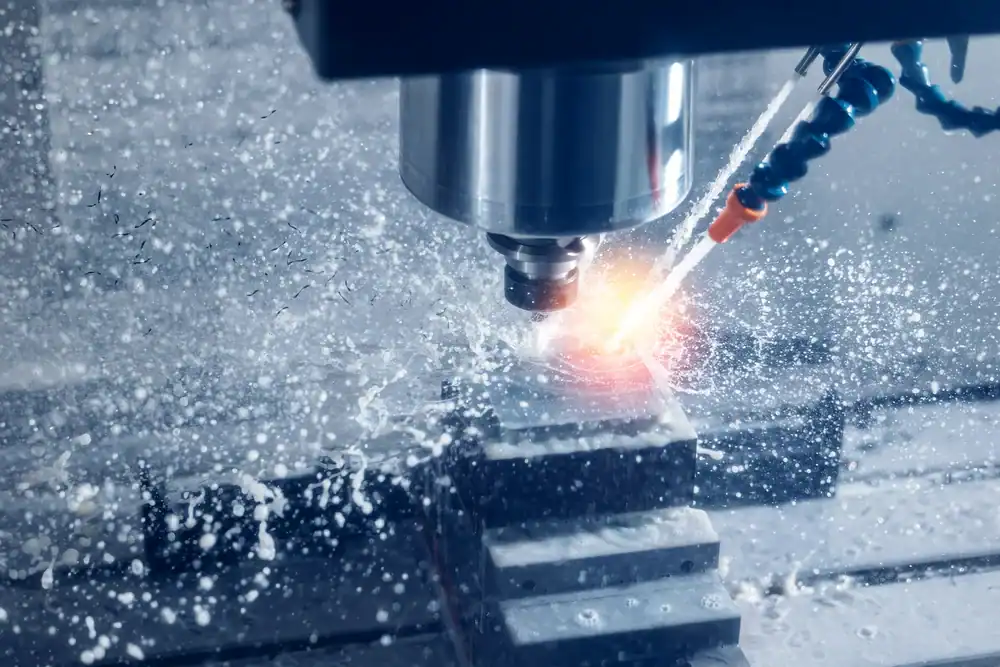
You’ve probably dealt with cracked edges from traditional scoring methods. Or chipped corners that ruin an entire piece. Maybe you’ve had to scrap expensive glass because a saw blade created micro-fractures you didn’t catch until installation.
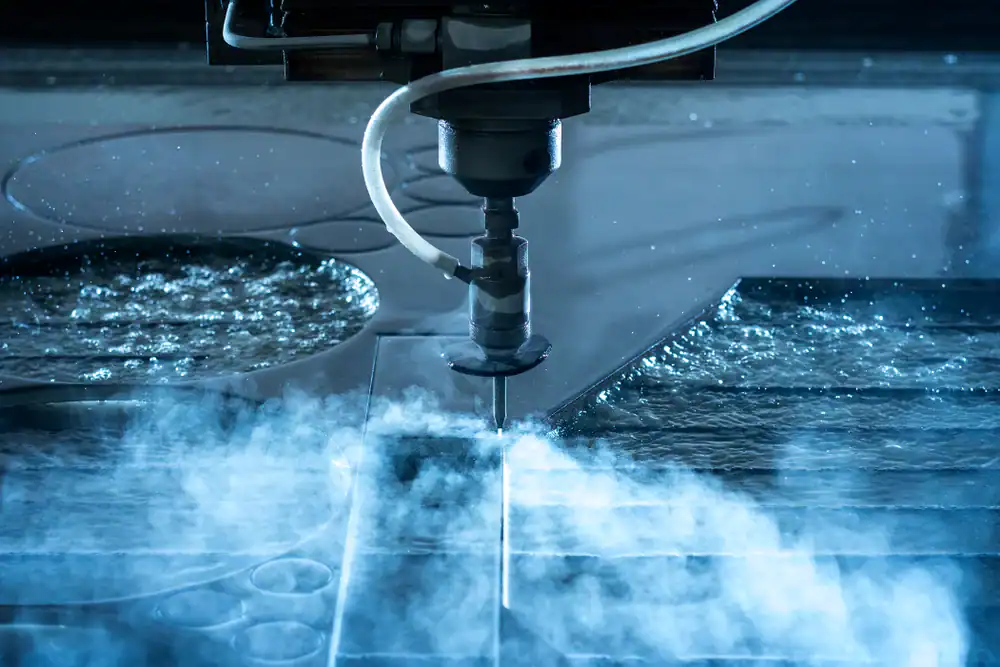
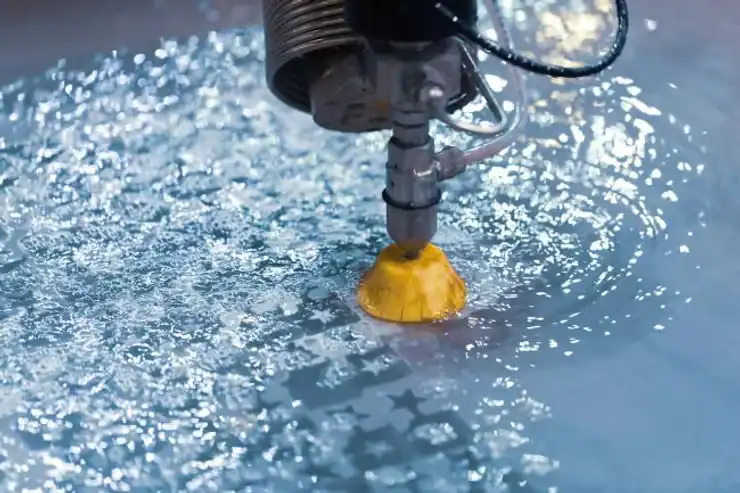
Waterjet cutting eliminates those problems entirely. The process uses a thin stream of high-pressure water mixed with fine abrasive garnet to cut through glass without any heat, vibration, or mechanical stress. That means no thermal cracks, no edge chips, and no material waste from failed cuts.
You get smooth, clean edges that don’t need secondary polishing. Complex curves and tight radiuses that would be impossible with traditional methods. And repeatability across multiple pieces that keeps your production schedule on track instead of constantly dealing with rework.
We serve manufacturers, fabricators, architects, and contractors throughout Nassau County with CNC-controlled waterjet cutting that handles everything from architectural glass panels to custom residential pieces. Our engineering team reviews every file before programming to catch potential issues before they become expensive mistakes.
We’re not the cheapest option in Nassau County, and that’s intentional. You’re paying for AI-assisted CAD programming that optimizes every cut path, quality checks that prevent material waste, and lead times you can actually plan around.
Nassau County’s construction and manufacturing sectors demand precision and reliability. We’ve built our process around those expectations because your reputation depends on parts that fit correctly the first time.
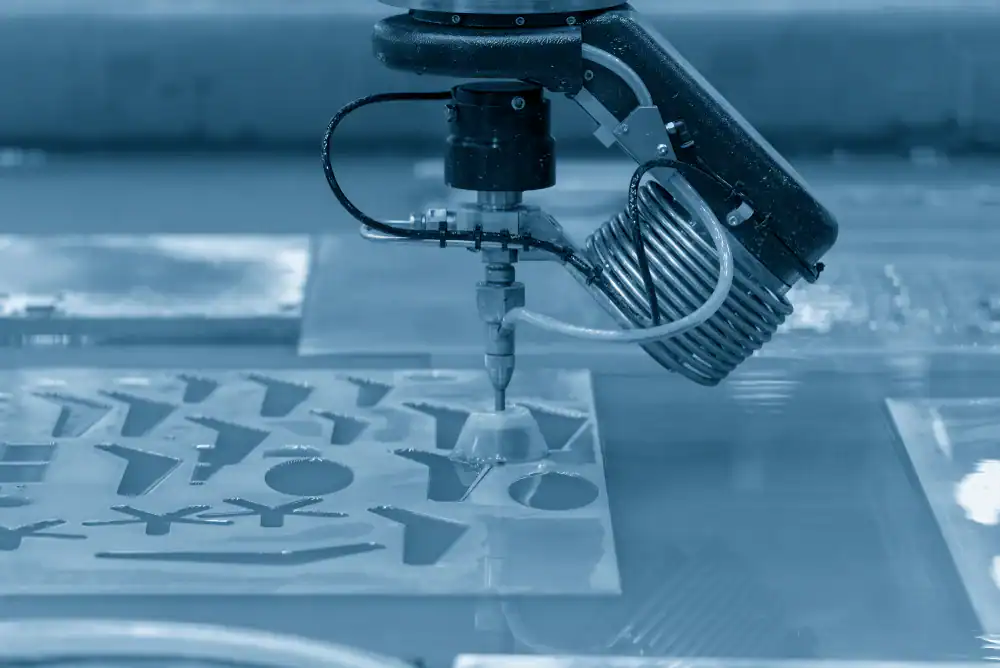
You send us your design file or specifications. Our team reviews it for any potential cutting issues, material thickness requirements, or edge quality concerns. If something won’t work as drawn, you’ll know before we start cutting.
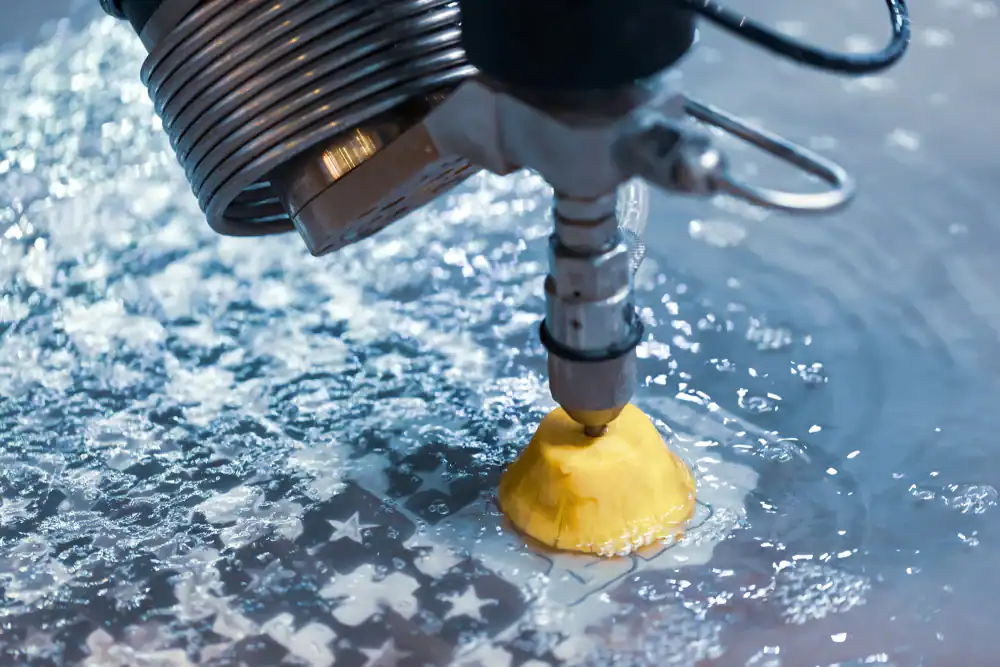
Once the file is approved, we program the CNC waterjet system with your exact specifications. The cutting head moves along your design path while a focused stream of water and garnet abrasive cuts through the glass at pressures up to 90,000 PSI. The process is cold, so there’s zero risk of thermal stress or heat-affected zones.
After cutting, we inspect edges and dimensions to confirm everything matches your specs. Most pieces come off the machine ready for installation or assembly. No grinding, no polishing, no secondary operations eating into your timeline. You get parts that fit your project requirements without the usual back-and-forth of traditional glass cutting.
Ready to get started?
Thickness capacity from 4mm up to 19mm, including laminated and ballistic glass that other methods can’t handle reliably. Intricate patterns, tight inside corners, and complex curves that traditional scoring and breaking simply can’t achieve. Edge quality smooth enough for most applications without additional finishing work.
Nassau County’s architectural projects increasingly demand custom glass shapes for facades, interior partitions, and decorative elements. Waterjet cutting handles those requirements whether you’re working on a commercial storefront in Garden City, a residential renovation in Great Neck, or an industrial facility in Westbury.
You also get material efficiency that matters when you’re working with expensive glass. The cutting stream is only .005 to .007 inches wide, which means minimal waste between parts and the ability to nest multiple pieces on a single sheet. That’s particularly valuable for custom residential glass cutting services in Nassau County where material costs add up quickly on smaller runs.
The process works for one-off custom pieces or production runs that need identical repeatability across hundreds of parts.
No, and you shouldn’t cut tempered glass with any method after it’s been heat-treated. The tempering process puts the glass under controlled internal stress that gives it strength. Any cutting, drilling, or edge work after tempering will cause the entire piece to shatter instantly.
Waterjet cutting works on annealed (non-tempered) glass, laminated glass, and ballistic glass. If your project requires tempered glass, all cutting and edge work must happen before the tempering process. We can cut your glass to exact specifications, then you send those pieces out for tempering.
This is true for any cutting method, not just waterjet. The advantage with waterjet is that you get cleaner edges and more complex shapes before tempering, which means better results after the heat treatment process. Many Nassau County glass fabricators use this workflow for architectural projects that require both custom shapes and tempered safety glass.
Laser cutting doesn’t work on glass. The material is both transparent and reflective, which means the laser beam either passes through or reflects back instead of creating the focused heat needed to cut. Some specialty lasers can etch or mark glass surfaces, but they can’t cut through it.
Waterjet is the go-to method for precision glass cutting because it’s a mechanical process that doesn’t rely on heat absorption. The abrasive particles in the water stream physically erode the glass along your cut path. You get precision down to a few thousandths of an inch with edge quality that’s often better than traditional methods.
For CNC glass waterjet cutting in Nassau County, this means you can achieve tight tolerances on complex shapes without the limitations of laser technology. The process handles everything from thin 4mm glass for picture frames to thick 19mm architectural panels without changing equipment or methods.
Our system handles glass up to 19mm thick for most commercial and architectural applications. That covers the majority of projects in Nassau County, from standard storefront glass to thick tabletops and decorative panels.
The technology itself can cut much thicker. Industrial waterjet systems running at 60,000 to 90,000 PSI have successfully cut glass up to 12 inches thick when needed for specialized applications. But those extreme thicknesses are rare outside of ballistic or scientific applications.
For practical purposes, 19mm represents the upper range of what most fabricators, contractors, and designers actually specify. If you’re working with something thicker or have a specialized application, it’s worth discussing the specifics. Material type, required edge quality, and cutting speed all factor into whether waterjet is the right approach for unusually thick glass.
The edges come off smooth enough for most applications without additional polishing. You’re not dealing with the micro-fractures and rough surfaces that traditional scoring and breaking create. The abrasive waterjet process produces a consistent edge quality that’s typically ready for installation or assembly.
That said, “smooth enough” depends on your application. Architectural glass for interior partitions or decorative pieces usually goes straight from the waterjet to installation. Glass edges that people will touch frequently, like tabletops or shelving, might benefit from light polishing depending on your quality standards and safety requirements.
The key difference from traditional methods is that you’re starting with a much better edge. Instead of heavy grinding to remove chips and fractures, you’re doing light finishing work if needed at all. For industrial glass waterjet cutting in Nassau County, this translates to faster turnaround times and lower labor costs on finishing work. Many commercial projects skip the polishing step entirely because the waterjet edge quality meets their specifications as-cut.
Cutting speed depends on glass thickness, pattern complexity, and edge quality requirements. Simple straight cuts on thin glass happen quickly. Intricate patterns with tight curves on thick material take longer because the waterjet needs time to erode through the full thickness while maintaining precision.
Here’s what matters more than raw cutting speed: total project time from design to finished parts. Traditional methods might score and break glass faster, but then you’re dealing with edge cleanup, rework on cracked pieces, and the limitations of what shapes are even possible. Waterjet produces finished parts in one operation.
For custom glass waterjet cutting in Nassau County, typical turnaround runs from a few days to a week depending on current workload and project complexity. Rush jobs can often be accommodated when you’re up against a tight installation deadline. The programming and quality check process happens before cutting starts, which means fewer delays from discovering problems mid-production. You get accurate lead times upfront instead of the usual “we’ll see how it goes” approach that makes project planning difficult.
Yes, and this is where waterjet really separates itself from traditional glass cutting methods. The system can pierce directly into the glass surface to start an interior cut, then follow your pattern without any connection to the outer edge. You can have multiple holes, slots, or cutouts anywhere in the piece.
This capability matters for architectural glass waterjet cutting in Nassau County where designers specify glass panels with mounting holes, ventilation cutouts, or decorative patterns that don’t touch the edges. Traditional methods require cutting in from an edge, which either limits your design options or forces you to piece together multiple sections.
The piercing process uses a gradual pressure ramp to avoid shocking the glass. Once the waterjet breaks through, it follows the programmed path for your interior feature. Edge quality on these interior cuts matches what you get on the outer perimeter – smooth, clean, and typically ready for use without additional work. This opens up design possibilities that simply aren’t practical with conventional glass cutting techniques.
Useful Links
Other Services we provide in Nassau County