Hear from Our Customers
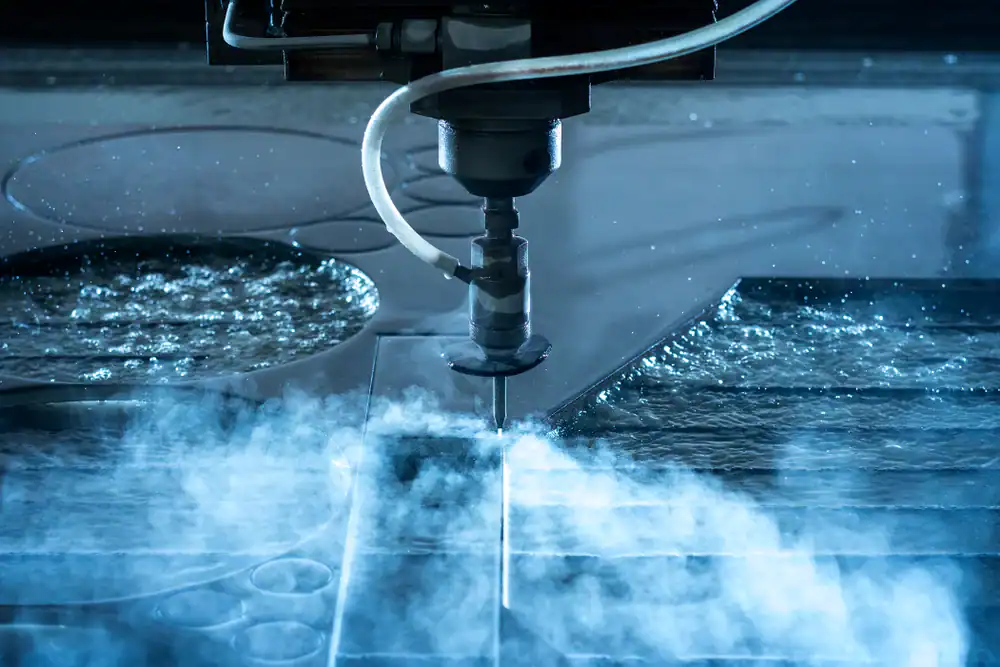
Your glass arrives cut to tolerances within ±0.003 inches. Edges come out smooth and clean, which means you skip secondary finishing steps that eat up time and budget.
Because waterjet cutting uses high-pressure water instead of heat, your glass doesn’t experience thermal shock. No micro-cracks forming along cut lines. No warping from temperature changes. The material’s structural integrity stays intact from the first cut to final installation.
Complex curves, tight inside corners, intricate patterns—waterjet handles shapes that traditional scoring and breaking can’t touch. You’re not limited by what a blade or laser can do. If you can design it, waterjet can cut it, whether you’re working with tempered glass, laminated glass, or double-pane units up to 12 inches thick.
Less waste matters when you’re working with expensive architectural glass. Waterjet cutting maximizes your material yield because the cutting stream is narrow and precise. You get more usable pieces from each sheet, which directly impacts your project costs.
We’ve spent over 20 years working with architects, contractors, and designers across Oceanside, NY who need glass components that meet exact specifications. Our facility runs KMT Streamline PRO® 90,000 psi waterjet systems—technology that cuts faster while using up to 50% less abrasive than older equipment.
Oceanside’s mix of residential renovations and commercial builds demands both precision and speed. When you’re coordinating with DOB requirements and tight construction schedules, you need a fabricator who understands those pressures. We work directly with your project timeline, from prototype samples to full production runs.
Our ISO 9001 and AS9100 certifications aren’t just paperwork. They represent consistent quality control at every stage, which matters when your reputation depends on delivering flawless glass installations to your clients.
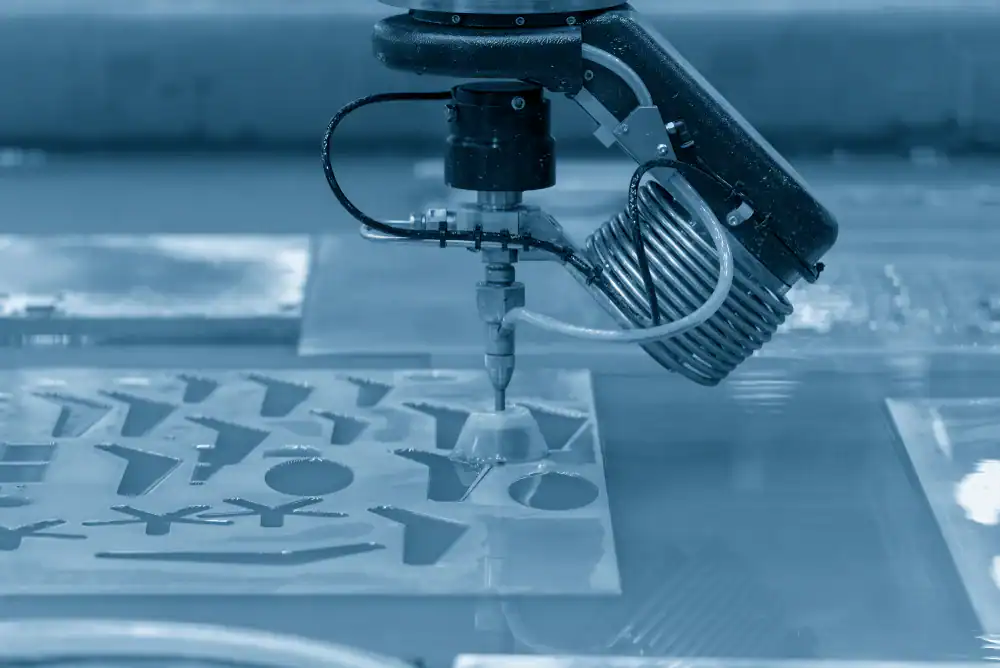
You send us your design files—CAD drawings, DXF files, or even detailed sketches. Our CNC programming team converts those specs into cutting paths that our waterjet systems follow with precision.
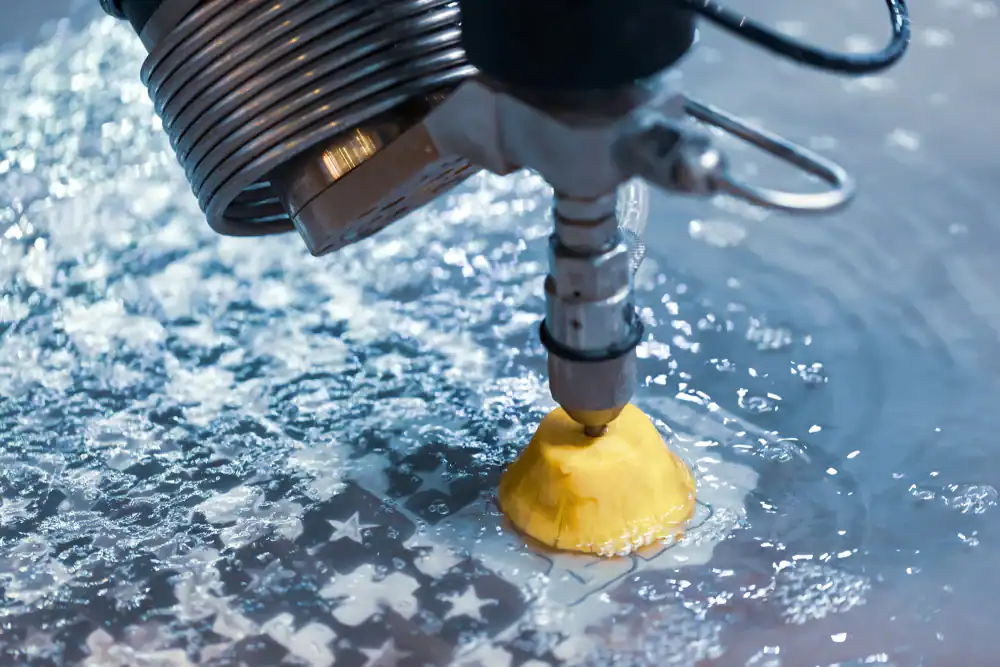
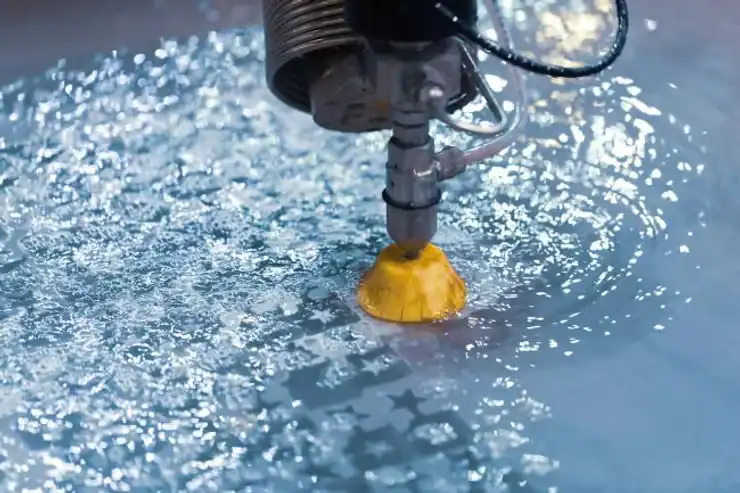
Your glass gets secured on the cutting bed. The waterjet nozzle positions itself, then releases a stream of water mixed with fine abrasive garnet at nearly 60,000 PSI. This stream cuts through the glass following your exact design, making turns and curves that would be impossible with traditional methods.
Because there’s no heat involved, your glass never experiences thermal expansion or contraction during cutting. The process is cold from start to finish. That’s why you don’t see the micro-fractures or edge damage that laser cutting or traditional scoring can cause.
After cutting, your pieces get inspected against your specifications. Edges come out smooth enough that many applications don’t require additional polishing or grinding. You receive glass components ready for installation, not halfway through the fabrication process.
The entire operation uses water and natural garnet abrasive. No toxic fumes. No hazardous byproducts. Just clean, precise cuts that meet your project requirements.
Ready to get started?
You get access to CNC glass waterjet cutting in Oceanside, NY that handles everything from single custom pieces to full production runs. Our equipment cuts glass up to 12 inches thick, which covers most architectural and industrial applications you’ll encounter.
Oceanside’s building landscape includes everything from historic home renovations along the waterfront to modern commercial developments near Long Beach Road. That variety means you might need decorative glass panels with intricate patterns one week and thick structural glass components the next. Waterjet cutting handles both without requiring different equipment or processes.
The technology works across glass types—tempered, laminated, annealed, low-iron, and specialty architectural glass. If your project involves custom shower enclosures, decorative partitions, glass countertops, or precision components for lighting fixtures, waterjet delivers the accuracy those applications demand.
For contractors working on Oceanside projects, timing matters. Our systems cut significantly faster than traditional methods while maintaining tight tolerances. That speed advantage helps you stay on schedule when coordinating multiple trades and dealing with the inevitable delays that come with any construction project in the New York area.
Waterjet works best on glass before tempering. Once glass goes through the tempering process, it develops internal stresses that make it extremely sensitive to any cutting or drilling. Even the gentle action of waterjet cutting will typically cause tempered glass to shatter.
The right sequence is to waterjet cut your glass to exact specifications first, then send it for tempering if your application requires it. This approach gives you the precision of waterjet cutting combined with the strength and safety properties of tempered glass.
If you’re working with existing tempered glass that needs modification, that’s a situation where you’ll need to start over with new glass. It’s not a limitation of waterjet technology—it’s the nature of how tempered glass is manufactured and why it can’t be cut after treatment.
Laser cutting generates significant heat, which creates thermal stress in glass. You’ll often see micro-cracks along laser-cut edges, even when they’re not immediately visible. Those micro-cracks become weak points that can lead to breakage during handling, installation, or even years later from normal thermal expansion and contraction.
Waterjet cutting is a cold process. The water stream never heats your glass, which means zero thermal stress and no micro-cracking. Edges come out structurally sound and smooth. For many applications, waterjet edges are ready to use without additional polishing.
Waterjet also handles thicker glass better than laser. While laser cutting starts to struggle with glass over a quarter-inch thick, waterjet systems cut through glass up to 12 inches thick without issue. If your project involves thick architectural glass or laminated safety glass, waterjet is typically the only viable precision cutting method.
Modern waterjet systems hold tolerances down to ±0.003 inches on glass cutting. That level of precision means your components fit together exactly as designed, without gaps or misalignment during installation.
For context, that’s tight enough for precision optical work, medical device components, and high-end architectural installations where visible gaps aren’t acceptable. Most construction and design applications have looser tolerance requirements, which means waterjet cutting provides a comfortable margin of accuracy.
The CNC control system follows your design files exactly, repeating the same cuts across multiple pieces with consistent accuracy. If you need 50 identical glass panels, piece number 50 matches piece number 1. That consistency matters for large projects where you’re installing multiple components that need to look and fit identically.
Waterjet cutting produces surprisingly smooth edges right off the machine. The quality depends partly on cutting speed—slower cuts with finer abrasive create smoother edges than faster cuts optimized for production speed.
For many applications, waterjet edges are ready to use without additional treatment. If you’re installing glass where edges will be captured in frames or channels, the as-cut edge quality is typically more than adequate. You save time and money by eliminating secondary finishing operations.
When you need polished edges for aesthetic reasons—like exposed edges on glass shelving or tabletops—waterjet-cut edges still require less finishing work than traditionally cut glass. You’re starting with a cleaner, more uniform surface, which means less grinding and polishing time to reach that final polished finish. The structural quality of the edge is already there; you’re just adding visual refinement.
Pricing depends on material thickness, cutting complexity, edge quality requirements, and project volume. A simple straight cut through quarter-inch glass costs significantly less than intricate curved patterns through inch-thick laminated glass.
Thicker glass requires more cutting time because the waterjet stream needs to penetrate deeper material. Complex designs with tight curves and detailed patterns take longer than simple geometric shapes. If you need polished edges or specific edge treatments, that adds finishing time beyond the cutting itself.
Volume matters too. Cutting one custom piece involves setup time and programming that gets amortized across larger production runs. If you’re ordering 100 identical pieces versus a single prototype, the per-piece cost drops substantially.
The best approach is to reach out with your specific project details—material type, thickness, design complexity, quantity, and timeline. That allows for accurate pricing rather than rough estimates that might not reflect your actual needs. Most custom glass waterjet cutting projects in Oceanside, NY range from a few hundred dollars for simple pieces to several thousand for complex architectural installations, but your specific requirements determine final costs.
CAD files in DXF or DWG format work best because they contain precise vector information that CNC systems read directly. These formats eliminate interpretation errors and ensure your design translates exactly to the cutting path.
If you’re working with a designer or architect who uses different software, most CAD programs can export to DXF format. That’s become the standard interchange format for CNC cutting across industries. The file should include actual dimensions and be drawn to scale—not just a visual representation of what you want.
Don’t have CAD files? Detailed technical drawings with exact dimensions work too. Our programming team can convert those specifications into cutting paths, though this adds a step to the process. For simple geometric shapes, even a clear sketch with measurements gets the job done. For complex or intricate designs, investing time in proper CAD files upfront prevents miscommunication and ensures you get exactly what you’re envisioning.
Useful Links
Other Services we provide in Oceanside