Hear from Our Customers
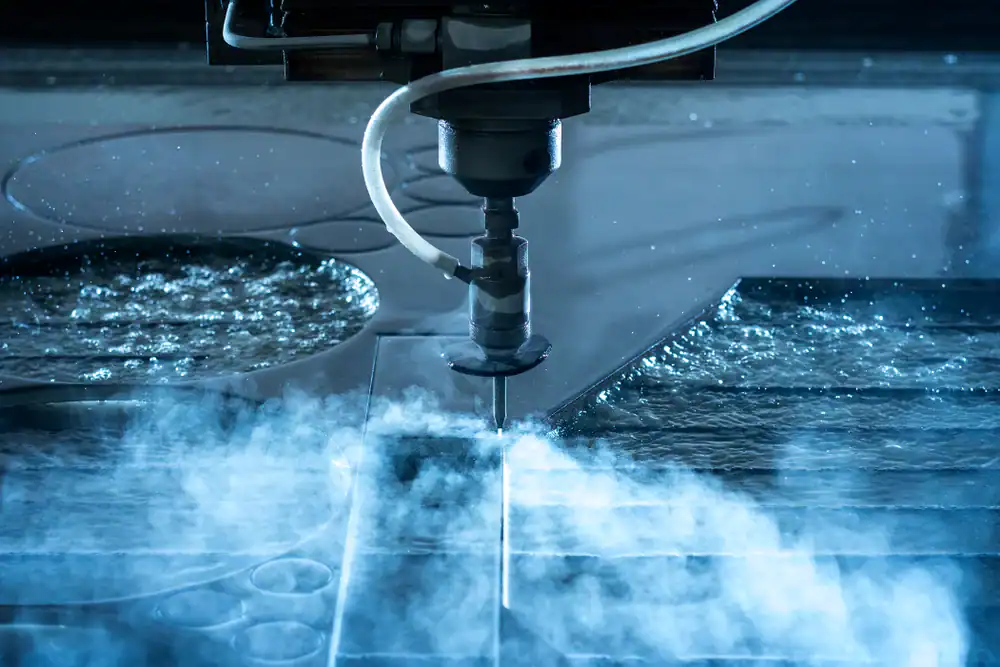
You’re working with glass that can’t afford mistakes. Edge chips ruin the piece. Cracks mean starting over. Heat distortion throws off your measurements.
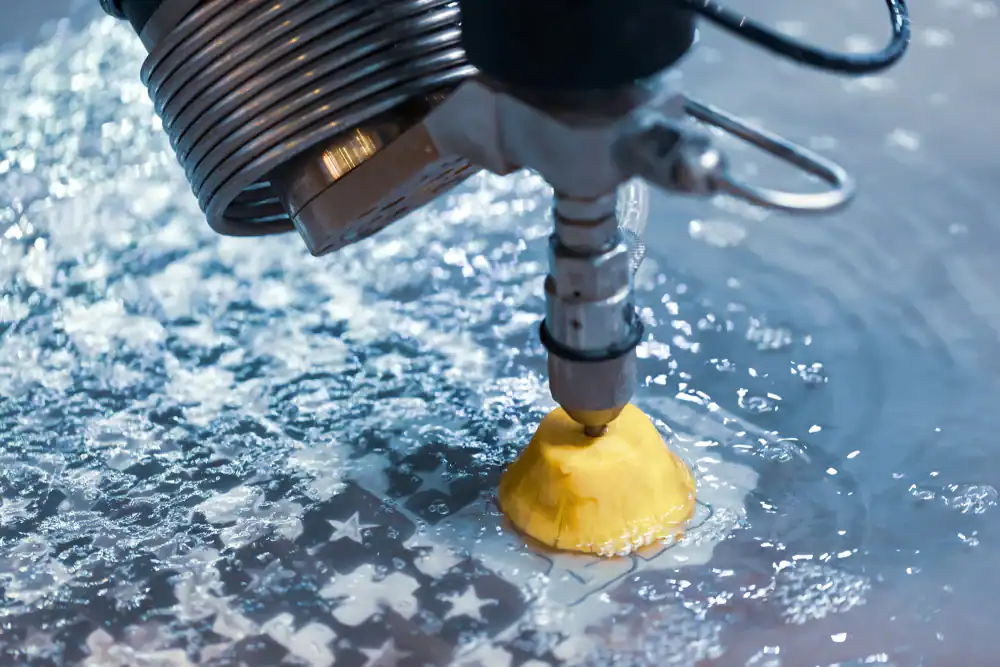
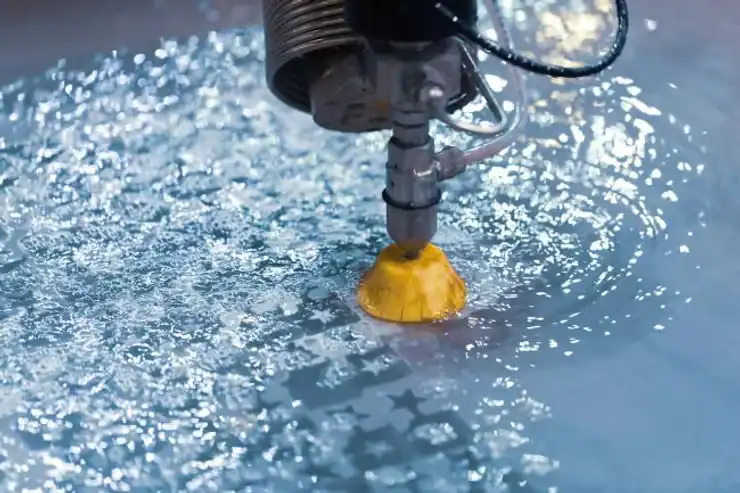
Waterjet cutting uses high-pressure water and abrasive to cut glass without introducing heat. That means no thermal stress, no warping, and no discoloration. You get clean edges that need minimal finishing, if any at all.
The process handles thickness from 3mm up to 50mm, depending on your glass type. Intricate curves, tight inside corners, precise notches—all possible because the cutting stream is CNC-controlled directly from your CAD file. Precision sits at ±0.1mm, which matters when you’re fitting architectural panels or building custom fixtures that need to align perfectly.
If you’ve been stuck with traditional scoring and snapping methods, you know the limitations. Waterjet opens up what’s possible with glass.
We operate out of West Islip, serving Patchogue and the broader Long Island area. We use Flow Mach 500 CNC waterjet systems—machines built for accuracy and repeatability across production runs.
Long Island’s architectural and construction sectors demand tight tolerances and reliable turnaround. Whether you’re an architect specifying custom glazing, a contractor managing a commercial build, or a designer creating retail displays, you need fabrication that doesn’t slow you down or waste material.
We handle residential glass cutting services and industrial glass waterjet cutting in Patchogue, NY with the same attention to detail. CAD design support is available if you need help translating your concept into a production-ready file.
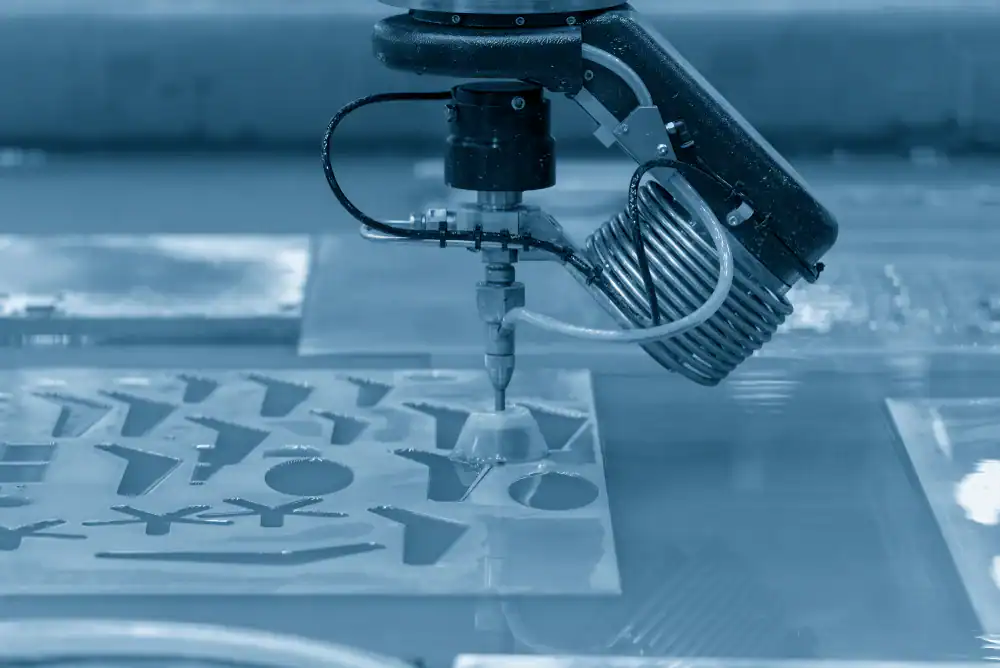
You start by sending over your design. If you’ve got a CAD file, that’s ideal. If not, our design team can work with sketches or specifications to build out what you need.
Once the file is dialed in, it goes straight to the CNC system. The waterjet cuts using a stream of water mixed with fine abrasive garnet. Pressure runs high—up to 60,000 PSI—but the process stays cold. No heat means no stress fractures and no change to the glass properties.
Piercing happens with a controlled routine that prevents crack initiation. Feed rates adjust based on thickness and material type. The system optimizes abrasive flow to balance speed with edge quality.
After cutting, most pieces come off the table ready to install. Depending on your application, you might want light edge polishing, but secondary operations are minimal compared to other methods. For production runs, the CNC ensures every piece matches the first.
Ready to get started?
You’re looking at a process that cuts nearly any shape without tooling changes. Complex geometries that would require multiple setups on traditional equipment get handled in one pass. That reduces your lead time and keeps costs predictable.
Material waste drops significantly because parts can be nested on the sheet. You’re not losing large sections to kerf width or setup scrap. For custom glass waterjet cutting in Patchogue, NY, that efficiency matters when material costs are high.
Patchogue sits in Suffolk County, where both residential renovations and commercial construction stay active year-round. Architects working on Long Island projects often spec custom glass for storefronts, interior partitions, and decorative elements. We handle laminated glass, tempered glass (before tempering), and specialty materials without the risk of shattering during fabrication.
The local market also includes industrial manufacturers who need precision-cut glass for equipment guards, noise reduction panels, and lighting assemblies. Repeatability across medium and high-volume runs keeps production schedules on track.
Tempered glass is designed to shatter when cut, so waterjet cutting happens before the tempering process. You cut the glass to shape first, then send it out for tempering.
If you’re working with glass that’s already tempered, cutting isn’t an option with any method—waterjet included. The internal stress pattern in tempered glass means any attempt to cut or drill will cause it to break into small pieces.
For projects requiring tempered glass, the workflow is: design, waterjet cut, edge finishing if needed, then tempering. That sequence gives you the strength of tempered glass with the precision of waterjet fabrication.
Laser cutting introduces heat, which creates thermal stress in glass. That stress can cause micro-cracks, edge chipping, or even full fractures depending on the glass type and thickness.
Waterjet stays cold throughout the entire process. No heat means no thermal expansion, no stress points, and no risk of heat-affected zones that weaken the material. Edge quality is cleaner, and you avoid the discoloration that sometimes shows up with laser cutting.
For thicker glass or intricate cuts where precision matters, waterjet handles it better. Laser works for some applications, but if you’re cutting architectural or structural glass, waterjet gives you more control and better results.
Waterjet systems can cut glass up to 150mm thick, though most commercial work falls between 3mm and 50mm. The optimal thickness depends on the glass type and the level of detail in your design.
Thicker glass takes longer to cut because the waterjet stream needs more time to penetrate and maintain a clean kerf. Feed rates slow down, but the precision stays consistent. For architectural applications, 12mm to 25mm is common. Industrial guards and equipment panels often use thicker stock.
If you’re working with laminated glass, waterjet handles the multiple layers without delaminating the interlayer. The cold cutting process keeps everything intact, which matters when you need the structural integrity of the laminate to stay in place.
CNC waterjet cutting holds precision at ±0.1mm, which is tight enough for most architectural and industrial applications. That level of accuracy means parts fit together without gaps, panels align correctly, and assemblies go together without forced adjustments.
The CNC system controls the cutting head position based directly on your CAD file. There’s no manual interpretation or operator variance between pieces. Once the program is set, every part comes out the same.
For projects where you’re cutting multiple pieces that need to match—like a series of glass panels for a storefront or repeated components for a production run—that repeatability saves time during installation and reduces the risk of ordering replacement pieces.
Waterjet cutting produces edge quality that’s significantly better than traditional scoring and breaking methods. Most applications use the edges as-cut, especially for pieces that will be framed or set into channels.
If your project requires polished edges for aesthetic reasons—like exposed glass shelving or decorative panels—light polishing can bring the edge to a finished state. But the amount of secondary work is minimal compared to other cutting methods that leave rough, chipped, or uneven edges.
The abrasive waterjet stream creates a slightly frosted edge finish. It’s smooth to the touch and structurally sound. For industrial applications, safety glass, or any installation where the edge won’t be visible, no additional finishing is needed.
Turnaround depends on the complexity of your design, the thickness of the glass, and the current production schedule. Simple cuts on thinner glass can often be completed within a few days. More intricate designs or thicker materials take longer.
CNC waterjet cutting is faster than traditional glass fabrication methods because there’s no tooling to build or change. Once your CAD file is loaded, cutting starts. For production runs, the first piece takes the same time as the last piece—no setup changes between parts.
If you’re on a tight deadline, communicate that upfront. We can often prioritize rush jobs or adjust the schedule to meet your installation date. For ongoing projects or repeat orders, lead times get more predictable once the initial setup is complete.
Useful Links
Other Services we provide in Patchogue